

An immigration scam often starts with something small: a text that looks official, a rushed phone call, a message that makes your stomach drop. Here’s the thing, real immigration help does not pressure you like a scammer, and a few clear red flags can help you spot trouble before you pay, share documents, or miss a real deadline.
1. You’re promised a guaranteed result
If somebody promises a visa approval, green card, work permit, or faster decision with certainty, stop right there. No honest immigration lawyer or accredited representative can guarantee what a government agency will do. Immigration cases turn on facts, eligibility, timing, and review by USCIS, the State Department, or an immigration judge.
Phrases like “100% approval,” “special connections,” or “guaranteed success” are sales lines, not legal advice. Even strong cases can hit delays, requests for more evidence, or policy changes. If you are trying to understand realistic timing, it helps to compare your situation with actual case timeline expectations in 2026, not somebody’s bold promise on a phone call.
A good legal professional can tell you whether your case looks strong. That is very different from promising an outcome.
2. You’re pushed to pay right away
Scammers love urgency because urgency shuts down judgment. “Pay in the next hour.” “Your file will close by 5 p.m.” “This offer disappears today.” That kind of countdown is a pressure tactic, plain and simple.
Real legal help can explain fees clearly without rushing you into a payment portal or demanding a same-day deposit. Yes, deadlines are real in immigration cases, but an actual deadline usually comes with paperwork, a filing notice, or a clear explanation of what is due and why. Panic is not a service.
This matters even more if you are already under stress, like after getting a notice from the government. In that moment, it helps to ground yourself in what to do after receiving a deportation notice instead of reacting to whoever sounds the most urgent.
3. The person calls themselves a “notario” or immigration consultant and acts like a lawyer
This confusion hurts a lot of people. In many Latin American countries, a notario can be a legal professional with serious authority. In the United States, a notary public usually is not a lawyer and usually cannot give legal advice on immigration matters.
That gap in meaning is where many scams live.
A licensed immigration attorney can give legal advice and represent you. An accredited representative can also provide immigration help, but only through a recognized nonprofit organization approved for that work. An unqualified consultant, document preparer, or “notario” may fill out forms for a fee, but if that person acts like a lawyer without the training or license, your case can go sideways fast.
The Federal Trade Commission has warned about notario and immigration consultant scams. USCIS also maintains guidance on common immigration scams.
4. You’re told to lie, hide facts, or sign blank forms
This is a huge red flag.
If somebody tells you to invent a marriage story, hide an arrest, leave out a past denial, fake an address, or sign forms before they are filled in, that person is putting your future at risk. Even a “small” false statement can trigger serious consequences, including denial, fraud findings, and long-term problems that follow you into later applications.
Blank signatures are just as bad. Once your name is on a document, you may be stuck with whatever gets typed in later. Always read every page before signing, and make sure you understand what is being submitted in your name. That matters for family petitions, employment cases, and responses to government notices alike. If you are unsure what a petition or filing actually does, reading a plain-English breakdown of how the family petition process works can make it easier to spot bad advice.
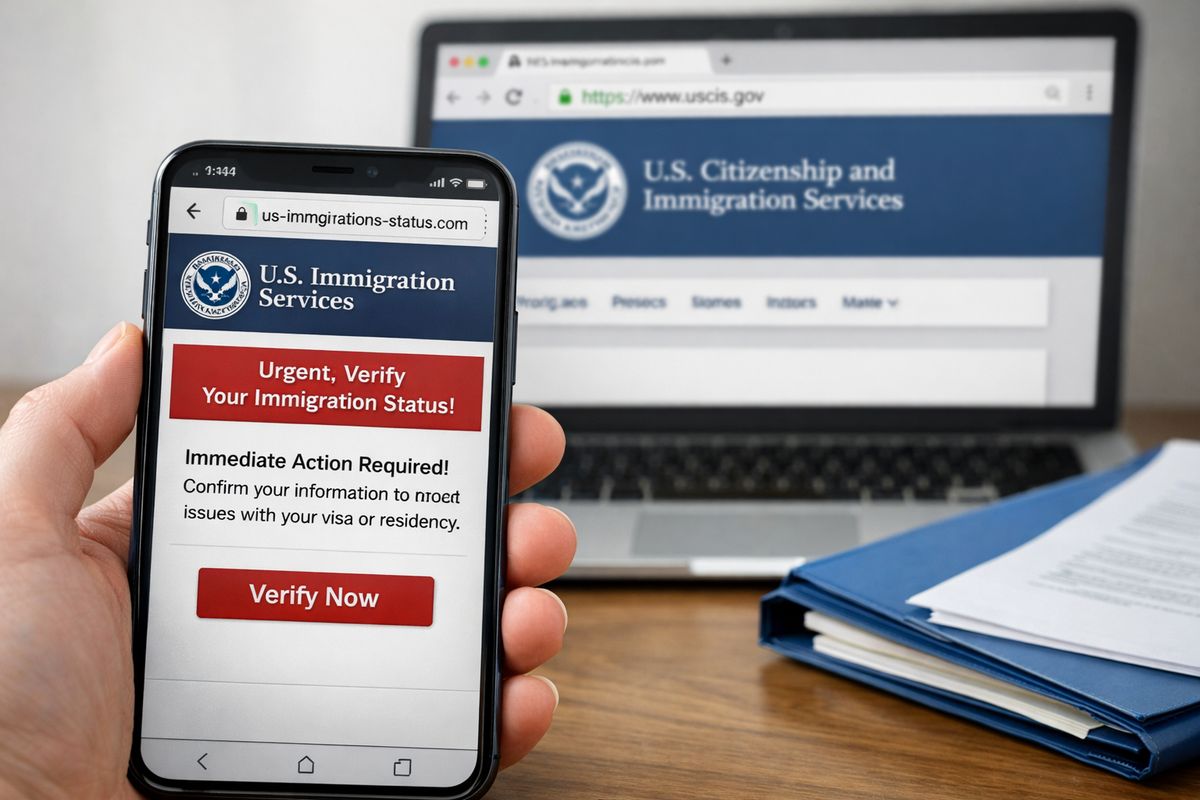
5. The website, email, or message tries too hard to look “official”
Some scam messages are obvious. Others are slick enough to fool almost anyone for a minute.
A fake immigration website may copy government colors, seals, or page layouts. An email may use a scary subject line about “final warning” or “immediate removal action.” A text may include a link that looks almost real, except the web address is slightly off. The trick is simple: make you react before you look closely.
A basic check goes a long way. Official U.S. government immigration websites end in .gov, including USCIS. Government agencies also do not demand payment through random links in a text message. If a message claims your case has changed, verify your status through official channels, not the link you were sent. The FTC also flags fake immigration websites as a recurring problem.
6. You’re asked to pay in gift cards, crypto, wire transfer, or cash only
This one is almost never innocent. Gift cards, cryptocurrency, wire transfers, and cash-only demands are popular with scammers because the money is hard to trace and even harder to recover. Once it is gone, it is like dropping your wallet into a storm drain.
A legitimate legal office usually gives you a normal way to pay, a receipt, and a written fee agreement. Government filing fees also go through known payment systems, not through somebody’s private Zelle, random crypto wallet, or “friend’s account.”
If somebody asks for unusual payment and then adds urgency on top of it, assume the risk is high. Save the message, stop the transaction, and verify who you are dealing with before sending another dollar.

7. Fees are vague, missing, or constantly changing
You should be able to tell what you are paying for. That sounds basic, but it is where a lot of bad actors get away with a lot.
A trustworthy immigration professional can explain the legal fee, the government filing fee, and what extra work could cost if something unexpected comes up. What you should not hear is a stream of fuzzy charges like “admin fee,” “processing fee,” “special handling fee,” and then another surprise total after your documents are already in somebody else’s hands.
A written agreement matters because it fixes the terms before confusion starts. If somebody refuses to put the fee in writing, changes numbers from one call to the next, or dodges simple questions about what is included, treat that as your warning sign.
8. You can’t verify the person’s credentials
If somebody claims to be a lawyer, you should be able to verify that claim in minutes. State bar websites let you search by name and bar number. Accredited representatives should be connected to recognized nonprofit organizations, and those organizations should be publicly listed through the Department of Justice’s Recognition and Accreditation Program.
If an office avoids basic questions about licensing, office address, or legal experience, that answer tells you plenty. Real professionals do not get offended when you verify credentials. Honestly, the good ones expect it.
This matters even more in specialized cases, where experience is not interchangeable. Somebody handling investor or extraordinary ability matters should be able to show real familiarity with the process, not just repeat buzzwords. That is why many people look at guides on how to judge real visa case experience before hiring for a complex case.
Quick checks before you hire anyone
Verify the full name, bar number if the person claims to be a lawyer, office address, written contract, and whether the name appears in public directories. Also check whether you can get copies of every filing and whether somebody can explain your case in plain English without dodging.
9. You’re told to keep things secret from your family, sponsor, or future lawyer
Secrecy protects scammers, not your case.
If somebody says, “Don’t show this contract to anyone,” or “If you ask another lawyer, this deal disappears,” step back. Good legal help can survive questions, comparisons, and second opinions. A scam falls apart the minute somebody else reads the paperwork.
This is especially dangerous in cases involving employers, sponsors, or family members, where more than one person may need to understand what is being filed. If somebody pressures you to keep your application strategy hidden from the very people connected to your case, that is not sophistication. That is control.
10. You stop getting updates once money or documents change hands
One of the clearest patterns in an immigration scam is silence after payment. Before you pay, the calls are constant. After you pay, messages go unanswered, appointments get moved, and documents seem to disappear into a black hole.
Maybe you never get a copy of your forms. Maybe you never receive a filing receipt. Maybe months pass before you learn nothing was ever submitted. Picture showing up to a strip-mall office on a Tuesday afternoon, folder in hand, only to find the door locked and the suite empty. That scene happens more often than it should.
A real legal office should give you copies, receipts, updates, and a way to reach somebody when your case changes. If you are dealing with a delay, you should at least be able to compare it against normal visa filing and extension timing problems, not guess whether your case exists at all.
What to do if you notice one of these red flags
Stop sending money right away. Save everything: texts, emails, receipts, screenshots, payment confirmations, contracts, and copies of forms. If you already signed something, get a full copy of every page that was submitted or prepared in your name.
Then verify your case status through official channels like USCIS or the immigration court system if your matter is in court. If somebody filed bad information on your behalf, getting a clean second opinion quickly matters. That can be especially urgent if a missed filing or false statement could affect court dates, responses, or your legal status. If you are already facing deadlines, it helps to understand how to answer a government evidence request without making things worse.
You can also report fraud through the FTC complaint portal, USCIS scam reporting resources, or your state bar if somebody falsely claimed to be an attorney.
How to find real immigration help without the guesswork
Start with the basics: verify the license, get the fee agreement in writing, and review every form before signing. Ask who will actually work on your case, where the office is located, and how you will get updates. If the answers are clear and calm, that is a good sign. If the answers feel slippery, believe that feeling.
It also helps to go into a consult with a short list of smart questions, especially about experience, communication, and fees. A simple guide to what to ask during an immigration consult can keep the conversation grounded and save you from smooth talk.
Gondim Law is one of the leading immigration law firms in Los Angeles, and scheduling a consultation is a smart way to get real answers before you commit money or documents to the wrong person.
Try one thing today: verify the license of anybody you are considering before you book or pay. That one step can spare you months of damage control later.
Frequently Asked Questions
Can a real immigration lawyer guarantee approval?
No. A real lawyer can evaluate the strength of your case, explain risks, and prepare a solid filing, but nobody can guarantee that USCIS, a consulate, or an immigration judge will approve your case.
Is a notary public allowed to give immigration legal advice?
Usually no. In the United States, a notary public is generally not a licensed attorney and usually cannot give immigration legal advice unless separately authorized to do so.
What payment methods are most suspicious in an immigration scam?
Gift cards, cryptocurrency, wire transfers to personal accounts, and cash-only demands are big warning signs. Legitimate offices usually provide normal payment records, receipts, and written agreements.
What should you do if somebody already took your money?
Stop paying, save all records, gather copies of forms and messages, and verify whether anything was actually filed. Then report the scam and get a second opinion from a licensed immigration lawyer or accredited representative.
How can you check if somebody is really an immigration lawyer?
Search the name on the relevant state bar website and ask for the bar number. You should also verify the office address, written contract, and whether the name appears in public professional directories.
Can bad advice from a scammer hurt your case later?
Yes. False statements, missed deadlines, and unfiled forms can create problems that last for years. Even if the mistake started with somebody else, you may still have to deal with the consequences, so catching the problem early matters.