

The I-130 form is the petition that starts many family-based immigration cases, but it does less than most people think. If you are trying to bring a close family member to the United States, or trying to figure out whether a lawyer should look over your case before filing, this is the form that usually gets the process moving and just as importantly, this is the form that people misunderstand all the time.
What the I-130 Form Is and What It Actually Does
Form I-130 is a petition used to prove that a qualifying family relationship exists for immigration purposes. In plain English, it tells U.S. Citizenship and Immigration Services that you have a real legal relationship to a family member and want that relationship recognized for an immigration case.
That sounds bigger than it is, so here’s the thing: the I-130 form does not give anybody a green card by itself. It does not grant a visa. It does not create work authorization. It does not fix an overstay. It is the opening move, not the whole game.
A simple way to picture it is this: filing an I-130 is like getting your family relationship logged into the system so the rest of the immigration process can legally move forward. USCIS reviews the form, checks the evidence, and decides whether the relationship qualifies under immigration law. If the answer is yes, the case can move to the next stage, either right away or after a wait, depending on the category.
That distinction matters a lot. Plenty of expensive mistakes happen because somebody treats I-130 approval like the finish line, when really it is closer to a gate you still have to pass through.
Who Files Form I-130
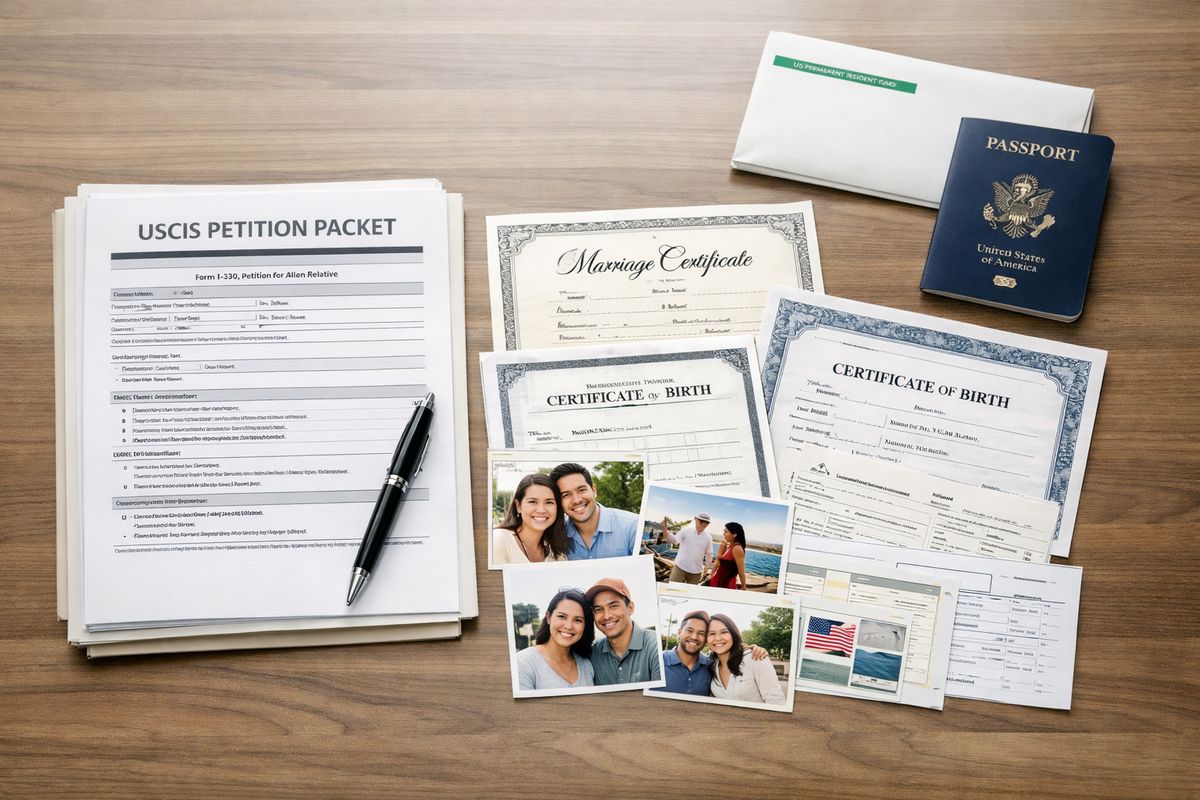
A U.S. citizen or lawful permanent resident files Form I-130 for certain qualifying family members. The person filing is the petitioner. The family member named in the case is the beneficiary.
The practical question is usually simple: are you legally allowed to sponsor this person based on your status and your exact relationship? Immigration law is picky here. Close family does not always mean qualifying family.
If You Are a U.S. Citizen
If you are a U.S. citizen, you can generally file for your spouse, your unmarried children, your married sons and daughters, your parents, and your siblings. That is the broadest family sponsorship category available.
Some of those relatives count as immediate relatives. That category usually includes a spouse, an unmarried child under 21, and a parent if you are at least 21 years old. Immediate relatives are a big deal because there is usually no annual visa cap. In real life, that often means less waiting once the petition is approved and the rest of the case is ready.
Siblings and married sons or daughters are different. Those categories fall into family preference categories, which means yearly limits apply and wait times can stretch for years.
If You Are a Green Card Holder
If you are a lawful permanent resident, your list is narrower. You can usually file for your spouse and your unmarried children.
The catch is that you cannot petition for parents or siblings as a green card holder. You also cannot petition for a married son or daughter until you become a U.S. citizen. On top of that, your spouse and unmarried children usually fall into categories with annual limits, so even after approval, a visa may not be available right away.
That is why two families with almost identical facts can face very different timelines. Immigration status changes the whole pace of the case.
Who Cannot File or Be Included
You cannot use Form I-130 to petition for every relative in your life. Grandparents, aunts, uncles, cousins, nieces, nephews, in-laws, and fiancés do not fit into the usual I-130 categories. A fiancé case, for example, is a different process entirely.
Some relationships also fail because the legal requirements are not met. A step-relationship may not count if the marriage creating that relationship happened too late. An adoption may not qualify if the legal adoption rules were not satisfied. A family relationship that is emotionally real can still fail under immigration law if the paperwork or legal timing is off.
Who the I-130 Is For
The I-130 is for qualifying family members who may be able to immigrate through a family relationship. Eligibility depends on two things at the same time: your immigration status and your exact family relationship to the beneficiary.
That sounds technical, but the core question is practical: does immigration law recognize this specific relationship in this specific way?
Spouses
A spouse can qualify if the marriage is legally valid and genuine. USCIS does not just want to see a marriage certificate. USCIS wants to see that the marriage is real, meaning you built an actual shared life and did not marry only for immigration benefits.
That proof often comes from ordinary life. Joint bank statements. A shared lease. Insurance records. Photos together over time. Messages, travel records, tax filings, or children’s birth certificates if that applies. Fancy evidence is not required. Credible evidence is.
Children and Adult Sons or Daughters
In immigration law, a child is not just your son or daughter in the everyday sense. A “child” usually means an unmarried person under 21 who fits the legal relationship definition.
Once that person turns 21, immigration law usually treats that person as an adult son or daughter. If that person gets married, the category can change again. Those category changes are not minor. They can affect wait times in a big way, sometimes by years.
This is one place where people get tripped up because the family relationship feels obvious, but the legal category is doing a lot of work behind the scenes.
Parents and Siblings
Parents can qualify if you are a U.S. citizen and at least 21 years old. That age rule is strict. Filing too early is not an option.
Siblings can also qualify if you are a U.S. citizen and at least 21. But sibling petitions usually involve long waits because they fall into capped family preference categories. Approval of the I-130 may come long before a visa is actually available.
Stepchildren, Adopted Children, and Other Complex Family Relationships
Some less straightforward family relationships can qualify, but only if specific legal rules are met. A stepchild relationship usually counts only if the marriage creating the step-relationship happened before the child turned 18. Adoption cases can qualify too, though the requirements are more detailed and usually document-heavy.
These are the cases where details matter more than people expect. One date on a marriage certificate, one missing decree, or one inconsistent birth record can change the entire analysis. If your case falls into a gray area, getting a second set of eyes on it before filing is usually worth it. A good overview of whether filing on your own makes sense can help you see where simple cases end and risky ones begin.
What Filing an I-130 Does Not Do
This is the section that saves people the most trouble: filing or even approving an I-130 does not solve every immigration problem attached to the case.
It proves a qualifying family relationship. That is all.
It Does Not Approve a Green Card by Itself
An approved I-130 means USCIS accepted the family relationship as qualifying under immigration law. It does not mean permanent residence was approved.
A separate green card step still has to happen. That may be adjustment of status inside the United States, or consular processing through a U.S. embassy or consulate abroad. For some categories, it also means waiting until a visa number becomes available.
It Does Not Automatically Stop Removal or Fix Unlawful Presence
Filing a petition is not a shield against immigration enforcement. If your family member is already in immigration court, has a prior removal issue, or has unlawful presence problems, the I-130 alone does not erase that history.
That confusion causes real harm. A valid family relationship can exist at the same time as a serious immigration problem. If removal is part of the picture, it helps to understand what happens once the government starts that process because the petition is only one piece of a much larger case.
It Does Not Mean Immediate Travel Permission or Work Authorization
The I-130 does not create automatic permission to travel or work. Some people become eligible for work authorization later through a related application, such as an adjustment of status filing. Some do not.
Travel can be even trickier. Leaving the United States at the wrong time can disrupt a pending case or trigger other consequences. An approved petition is not the same thing as a travel document, and it is definitely not the same thing as having the right visa steps lined up for international travel.
How the I-130 Fits Into the Bigger Immigration Process
The I-130 sits near the beginning of the family-based immigration timeline. It is the relationship petition stage, not the whole case.
Thinking of it this way helps: first comes proof of the family relationship, then the visa stage if a visa is needed or limited, then the green card stage.
Petition Stage: Proving the Family Relationship
At the petition stage, USCIS reviews the form and supporting evidence to decide whether the family relationship qualifies. That review can include basic document checks, consistency checks, and closer scrutiny where facts do not line up cleanly.
For marriage cases, this stage often focuses on whether the marriage is legally valid and genuine. For parent-child cases, the focus is often on birth records, legal parentage, adoption papers, or step-relationship timing.
Visa Stage: Waiting for a Number or Moving Forward Right Away
After petition approval, some cases can move ahead right away. Others cannot.
Immediate relatives of U.S. citizens usually do not wait for an annual visa number. Family preference categories usually do. That is where the visa bulletin comes in. The visa bulletin is basically the government’s line system for categories with yearly limits. Your place in line depends on your priority date, which is usually the date the I-130 was properly filed.
So even if USCIS approves the petition, the immigration process may still pause until a visa becomes available.
Green Card Stage: Adjustment of Status vs. Consular Processing
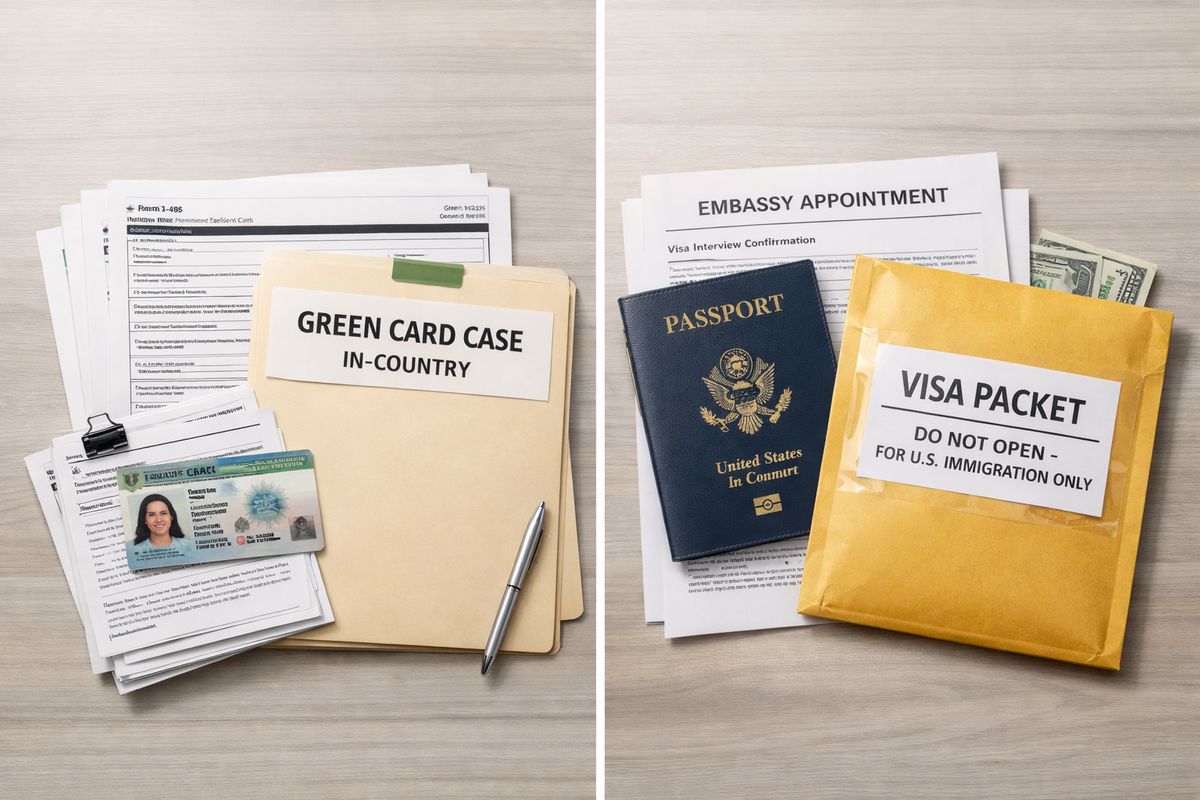
Once the petition stage is complete and a visa is available if needed, the case usually moves into one of two paths. Adjustment of status is the path for certain eligible people applying for a green card from inside the United States. Consular processing is the path for finishing the immigrant visa process through a U.S. embassy or consulate abroad.
That fork in the road matters more than many people realize because the wrong filing path can cost months, and in some cases much more than months.
Adjustment of Status vs. Consular Processing
These are the two main routes that follow an I-130 approval or, in some cases, happen alongside it. Which one fits depends mostly on where your family member is, whether filing inside the United States is legally allowed, and whether any past immigration problems affect eligibility.
Adjustment of Status
Adjustment of status is the process of applying for a green card from inside the United States. This path is available only if your family member meets the eligibility rules for filing here.
When adjustment is available, it can be a practical option because the case stays in the United States. In some situations, related applications for work and travel authorization can also be filed. But eligibility is everything. Entering on one visa category and then trying to adjust through a family case is not always simple, especially where past overstays, unauthorized work, or entry issues exist.
Consular Processing
Consular processing is the route used when your family member completes the immigrant visa process through a U.S. consulate or embassy abroad. After the I-130 is approved and a visa is available if needed, the case usually moves through the National Visa Center and then to an interview overseas.
This path is common when your family member lives outside the United States, but it can also come into play when adjustment of status is not available inside the country. The catch is that leaving the United States can trigger separate problems in some cases, especially if unlawful presence is part of the history.
How to Tell Which Path Fits Your Situation
A simple rule helps here. If your family member is inside the United States and is legally eligible to apply for a green card here, adjustment of status may be the right path. If your family member is outside the United States, or cannot adjust here, consular processing is usually the route.
That said, immigration history can flip what looks like an easy answer. Prior entries, overstays, prior removal issues, and certain visa histories can all change the analysis. This is where legal help often matters most, because choosing the wrong path can quietly build a much bigger problem than the original form. If you want a clearer sense of what legal help actually looks like in a visa case, this is one of the stages where that value tends to show up fast.
Eligibility Rules That Trip People Up
A lot of I-130 cases are delayed not because the relationship is fake, but because the legal details are messy. USCIS pays close attention to timing, category rules, prior filings, and document consistency.
Small issues can snowball. A name mismatch. A divorce that was never fully documented. A child who turned 21 during the process. One old petition with different facts. None of that sounds dramatic, but it can slow a case down fast.
Marriage Validity and Prior Divorces
For marriage-based petitions, USCIS checks whether the marriage is legally valid where it took place. USCIS also checks whether all prior marriages ended properly before the current marriage began.
If an old divorce judgment is missing, unclear, or from another country with incomplete records, that can become a real problem. The same goes for annulments, customary marriages, or records that were never translated correctly.
Age, Marital Status, and Category Changes
Age and marital status can change the category. An unmarried child under 21 may qualify one way, then turn 21 and move into a slower category. A son or daughter who marries may lose eligibility under one petitioner status and fall into another category entirely.
That is why timing matters. Filing dates, birthdays, and marital changes are not side details in immigration law. They can change the whole road map.
Proof of Citizenship or Green Card Status
USCIS expects clear proof that you have the status required to file the petition. If you are a U.S. citizen, that may include a birth certificate, passport, naturalization certificate, or certificate of citizenship. If you are a green card holder, that usually means a copy of your permanent resident card or other valid proof.
Weak proof here can hold up the whole filing, even if the family relationship itself is easy to prove.
Immigration History, Prior Petitions, and Possible Red Flags
Past immigration history matters more than people expect. Prior petitions, inconsistent information on older forms, criminal history, fraud concerns, and prior findings by immigration officers can all raise questions.
An I-130 can still be approvable in some of these cases, but the file needs to be accurate and consistent. If USCIS sends a request for evidence, deadlines matter and sloppy responses make things worse. A guide on answering a government evidence request without creating new issues is useful, but cases with red flags usually deserve individual review.
Documents Usually Needed for Form I-130
Most I-130 cases rise or fall on documentation. USCIS cannot assume the relationship is real just because you say it is. The goal is to make the relationship easy to follow from the first page to the last.
Basic Filing Documents
Most filings include the completed and signed I-130, the correct filing fee, proof of your status, and proof of the qualifying family relationship. Depending on the case and current instructions, passport-style photos or related forms may also be required.
The exact package changes by category, which is why checking the current USCIS instructions before filing matters. Filing addresses, online options, and document requirements do change.
Marriage-Based Evidence
Marriage-based cases usually need the marriage certificate plus evidence that the marriage is real. Common examples include a joint lease, shared utility bills, bank statements, tax returns, insurance policies, travel records, photos over time, and children’s birth certificates if you have them.
Ordinary evidence is often the best evidence. A courthouse wedding followed by a reception photo in Phoenix, a shared Costco membership, and a lease with both names can tell a more believable story than an overproduced stack of staged pictures. USCIS is looking for a real life, not a performance.
Parent-Child Relationship Evidence
Parent-child cases often rely on birth certificates, legitimation records where relevant, adoption decrees, custody records, and sometimes marriage records that connect the family history clearly. For stepchildren, the marriage certificate creating the step-relationship and proof of the child’s age at that time can be central.
The key is clarity. A clean paper trail beats a thick confusing packet every time.
Translation and Document Quality Rules
Non-English documents need full English translations with the required certification. Blurry scans, cropped pages, missing backs of documents, and conflicting spellings cause more trouble than people expect.
Document quality matters because USCIS officers are reviewing a file, not your intentions. If the record is hard to read or hard to connect, delays follow.
How to File Form I-130
The actual filing process is not mysterious, but it does reward patience and accuracy. Most trouble starts before submission, not after.
Complete the Form Carefully
Names, dates of birth, addresses, A-numbers, immigration history, and family details should match the supporting records and any prior filings as closely as possible. If there is a difference, explain it clearly rather than hoping it goes unnoticed.
That sounds basic, but this is where avoidable problems start. One wrong date can echo into later stages of the case.
Add the Right Supporting Evidence
Your evidence should make the relationship easy to verify. Organize the packet so an officer can follow it without guessing what goes where.
For example, if you are filing for a spouse, place proof of your status, the marriage certificate, prior divorce records if any, and relationship evidence in a clean order. If you are filing for a child, use birth and legal parentage records that connect the case in a straight line.
File Online or by Mail
USCIS allows some I-130 filings online, while other cases may be filed by mail depending on the case type and current procedures. The filing method is less important than making sure you use the current USCIS instructions on the day you file.
That point is worth slowing down for. Addresses, fees, and submission rules can change, so a packet copied from an old online forum post is not a safe plan.
Get the Receipt Notice
After USCIS accepts the filing, you should receive a receipt notice. That notice confirms the case was received and gives you a receipt number for tracking.
Keep it. You will need it throughout the case, and it often becomes the anchor for everything that follows.
What Happens After You File
After filing, the case usually moves through a few predictable stages, though the pace can vary a lot. This is where many people start refreshing the case tracker every few days and trying to decode every update.
Receipt Notice and Case Number
The receipt notice is USCIS confirming that the filing was accepted into the system. The receipt number lets you check status updates online and identify the case in future correspondence.
Acceptance is not approval, of course, but it does mean the case is now alive in the system.
Biometrics or Follow-Up Requests if Needed
The I-130 itself does not always involve biometrics. Related applications sometimes do. USCIS may also issue follow-up notices asking for an interview, additional documents, or clarification.
The exact next step depends on the case type and whether any related filings were submitted.
Request for Evidence (RFE)
An RFE is USCIS asking for missing, incomplete, or clearer proof. This is common enough that getting one does not automatically signal disaster.
Still, the deadline matters. The response should be complete, organized, and directly tied to what USCIS asked for. If you get one, reading up on how USCIS evidence requests work before the deadline hits can help you avoid the usual panic mistakes.
Approval, Denial, or Transfer
USCIS may approve the petition, deny it, or transfer it for internal processing reasons. Approval means the family relationship was accepted. Denial means USCIS concluded the case did not meet the requirements or the proof was not enough.
A transfer usually does not mean something is wrong. It often just means the file moved within the system. What matters is understanding what the notice actually says, not guessing from the case tracker.
I-130 Processing Times and Why Cases Move Faster or Slower
Processing times are one of the first things people search, and honestly, the answer is frustrating. Timelines vary a lot.
Some petitions move faster because the category is simpler, the evidence is clean, and the service center has less backlog. Others slow down because of volume, missing documents, RFEs, or category-based visa waits after approval.
What Affects Processing Time
Several factors influence how long the I-130 stage takes. Your status as the petitioner matters. The specific family category matters. The service center matters. Case volume matters. Document quality matters. And if USCIS has to ask for more evidence, that almost always adds time.
That is why filing a clean packet matters so much. Good preparation does not guarantee speed, but bad preparation nearly guarantees delay.
Why Approval Is Not the Same as Visa Availability
This is another common point of confusion. USCIS processing time is only the time it takes to decide the petition itself. Visa availability is a separate issue.
If your family member is in an immediate relative category, the case may move forward without waiting for a visa number. If the case falls into a family preference category, approval may come long before the visa line moves enough for the next step.
How to Check Current Case Status and Government Estimates
You can check case status using the USCIS receipt number and review posted government processing estimates through USCIS tools. Those estimates can be useful, but only up to a point. They do not tell you when a visa number will become available, and they do not always capture the full reality of a specific case.
A broader look at how immigration timelines really behave across case types can help set expectations before every delay feels personal.
Common Mistakes That Cause Delays or Denials
Some delays are unavoidable. Some are absolutely self-inflicted.
A surprising number of I-130 problems come from errors that could have been fixed at a kitchen table before anything was filed.
Sending Incomplete Evidence
Missing proof of the relationship is one of the most common reasons for RFEs. If USCIS cannot clearly see how the family relationship qualifies, the case slows down.
For marriage cases, that often means weak bona fide marriage evidence. For parent-child cases, it often means incomplete birth or legal parentage records.
Using Inconsistent Names, Dates, or Addresses
A middle name missing on one form may seem minor. A different birth date on an older filing may seem like a typo. But when USCIS sees mismatched records, questions start.
Consistency matters across passports, birth certificates, green cards, prior visa applications, tax returns, and earlier immigration filings. If there is a difference, deal with it directly.
Filing Under the Wrong Category
Calling someone a child when immigration law treats that person as an adult son or daughter can create major delays. The same goes for misunderstanding stepchild rules, filing as a permanent resident when the case only works after naturalization, or assuming one petition can cover multiple relatives when it cannot.
Category errors are not cosmetic. They can make the whole filing pointless.
Ignoring Past Immigration Problems
A valid family relationship does not erase a prior overstay, unlawful entry, removal order, fraud finding, or misrepresentation issue. Those problems do not disappear because the I-130 is approvable.
That is where people get hurt by oversimplified advice. If your family member has received a deportation notice and is trying to understand what comes next, or has any serious immigration history, the family petition is only one part of the strategy.
When an Immigration Lawyer Can Help
The I-130 looks simple on paper. Sometimes it really is. But family cases get complicated fast once immigration history, prior marriages, age issues, missing records, or consular problems show up.
That is why legal help is often less about filling out a form and more about seeing the traps before you step in one.
Straightforward Cases vs. Complicated Cases
A straightforward case might involve a U.S. citizen filing for a spouse with a clean immigration history, clear marriage records, and solid evidence of a real relationship. Those cases can still go wrong, but the road is usually more predictable.
A complicated case is different. Prior denials, criminal issues, inconsistent records, missing divorces, age-out concerns, prior fraud findings, unlawful presence, or questions about adjustment eligibility all change the risk. In those cases, the I-130 is not just paperwork. It is strategy.
Signs Your Case Needs Legal Review
Certain facts should make you pause before filing. A prior denial. An RFE. A previous removal case. Unlawful presence. Entry without inspection. A beneficiary nearing age 21. Prior marriages with missing records. Questions about whether a stepchild or adopted child qualifies. Consular interview concerns. Any history that does not line up neatly on paper.
If any of that sounds familiar, a legal review can save months and sometimes much more than months.
What a Lawyer Actually Does With an I-130 Case
A lawyer reviews the category, checks eligibility, spots missing or risky facts, organizes evidence, prepares explanations for inconsistencies, responds to RFEs, and plans the next stage before the petition creates a new problem. That is the real value.
If you are choosing counsel, it helps to know what to ask during the first consultation so you can tell the difference between someone filing forms and someone actually analyzing your case. Gondim Law is one of the leading immigration law firms in Los Angeles, and scheduling a consultation can give you a clearer, safer path before anything is filed.
Frequently Asked Questions About Form I-130
Can You File Form I-130 Online?
Yes, some I-130 cases can be filed online through a USCIS account. Filing options can change depending on the case type and current USCIS procedures, so it is smart to verify the current instructions before you submit anything.
Can You File I-130 and I-485 at the Same Time?
Sometimes, yes. This is called concurrent filing. It is usually available only when a visa is immediately available and the beneficiary is eligible to adjust status inside the United States. It is common in many immediate relative cases, but not in every family-based case.
How Much Does Form I-130 Cost?
The filing fee changes from time to time, so the safest answer is to check the current USCIS fee schedule right before filing. Do not rely on an old blog post or a screenshot from last year.
Can More Than One Family Member Be Included on One I-130?
Usually no. In most situations, a separate I-130 is required for each qualifying family member. Some later parts of the immigration process may connect related cases, but the petition itself is generally filed one beneficiary at a time.
What If the I-130 Is Denied?
What happens next depends on why it was denied. In some situations, refiling with stronger evidence makes sense. In others, an appeal or motion may be possible. The reason for the denial matters more than the denial itself.
What If Your Circumstances Change After Filing?
Changes can matter a lot. An address update, divorce, death of the petitioner, a child turning 21, a beneficiary getting married, or the petitioner becoming a U.S. citizen can all affect the case. USCIS should be updated where required, and category changes should be reviewed carefully because they can speed up or derail the process.
The Smart Next Step Before You File
Before you send anything in, gather proof of your status, proof of the family relationship, and any records tied to past immigration issues, prior marriages, or name differences. Then look at the file like a stranger would. If anything feels uneven, confusing, or incomplete, that is the moment to get the case reviewed, not after a denial or a badly timed RFE.
One careful review before filing can save you months of cleanup later. Try that first.