

Getting a deportation notice can make everything else go quiet for a minute. That reaction is normal, but the worst move after a deportation notice is doing nothing, because the next few days often shape what options you still have. Here’s how to get organized, protect your court case, and move toward real legal help instead of panic.
What this notice usually means , and why you need to act fast
A deportation notice usually means the government is starting, or says it is starting, removal proceedings against you. In many cases, the document is called a Notice to Appear, often shortened to NTA. That is the charging document used in immigration court. It tells you, in legal language, why the government believes you can be removed from the United States and where your case may be heard.
That does not automatically mean you will be deported next week. It does mean your situation is serious now.
Here’s the thing: immigration cases often get harder not because the original facts were impossible, but because deadlines were missed, mail went to the wrong address, or a court date slipped by. A case that might have had room to breathe can turn into a scramble fast.
Acting quickly gives you three immediate advantages. First, you can confirm whether the notice is tied to an active court case. Second, you can stop avoidable mistakes, like missing a hearing. Third, you can get a lawyer enough time to review your history and see what forms of relief or defense may be available.
If the notice landed on your kitchen table on a Tuesday afternoon, treat Tuesday like day one. Do not wait for a second letter to feel sure this is real.
What you’ll need before you do anything else
Before you start calling courts or lawyers, gather your basic file. You do not need a perfect archive. You do need one place where the important pieces live, because searching through drawers, email inboxes, and old backpacks the night before a hearing is exactly the kind of chaos that leads to expensive mistakes.
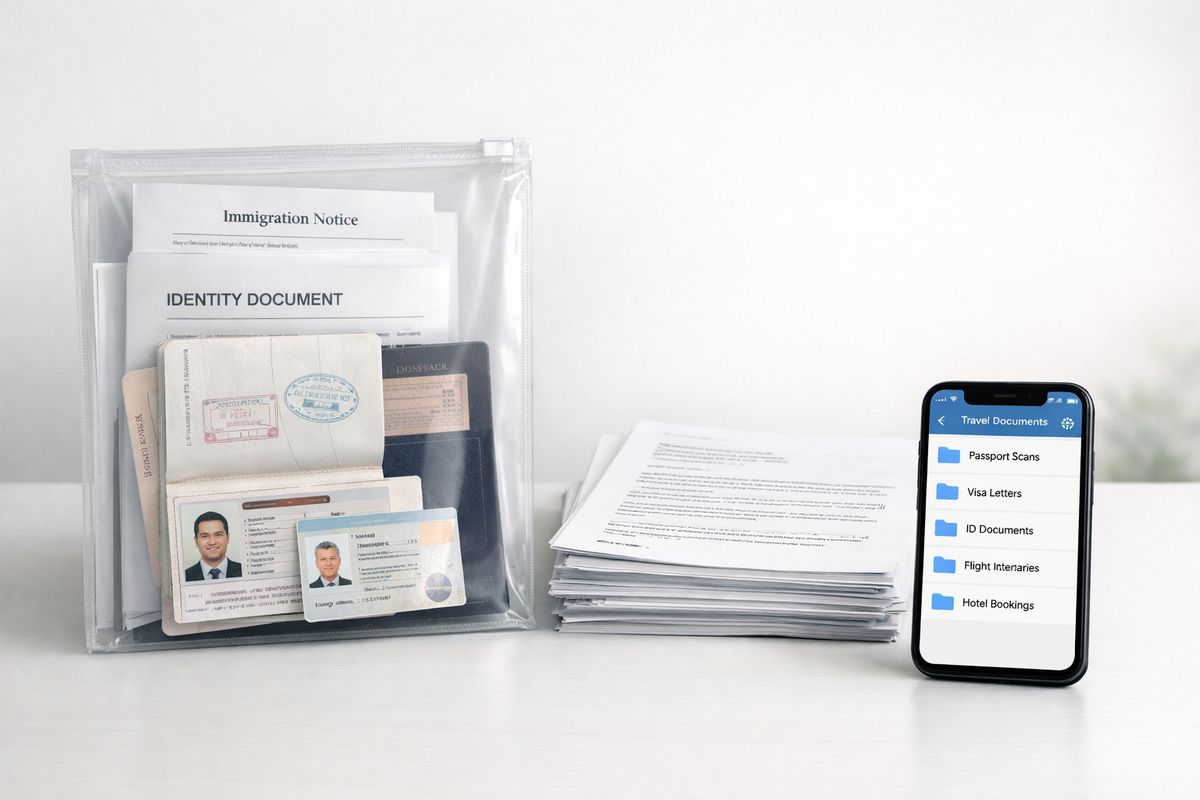
Set up two versions of your file right away. Put digital copies in a folder on your phone or cloud storage that you can access quickly. Then create a paper folder you can physically carry to a lawyer meeting or court. If your phone dies, gets lost, or is taken from you during a stressful moment, paper still matters.
Core documents to collect right away
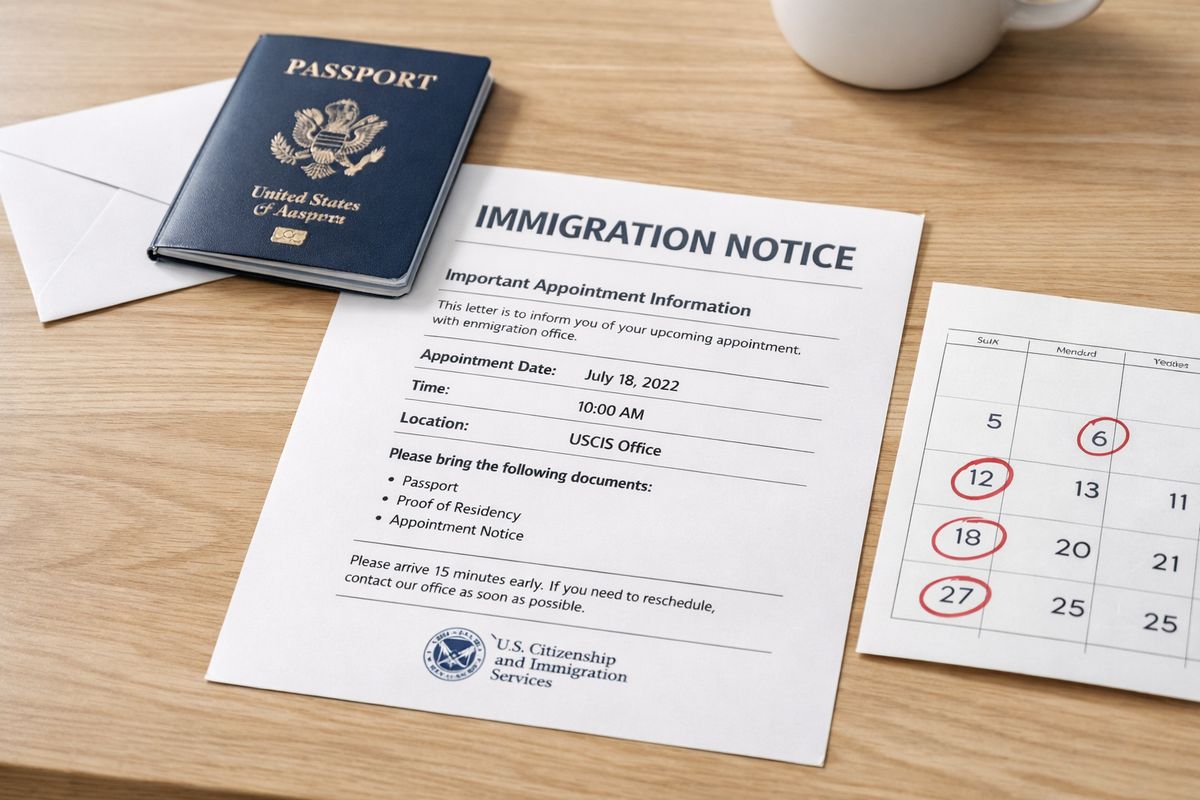
Start with the deportation notice itself. Keep every page, including any envelope that shows the postmark. Then pull together your passport, any state ID or driver’s license, your work permit if you have one, and any prior immigration paperwork. That includes receipts from USCIS, approval notices, denial notices, visa records, prior applications, prior hearing notices, bond papers, and anything else tied to your immigration history.
Also gather proof of how you entered the country, if you have it. That could be an I-94, visa stamp, parole document, entry record, or prior border paperwork. If you have family ties that might matter later, collect those too, such as marriage certificates, birth certificates of children, and proof of lawful status for qualifying relatives.
If you ever filed for asylum, adjustment of status, a visa extension, work authorization, or any other benefit, pull those records into the same folder. Even an old receipt notice can matter because it helps build the timeline.
Details to write down while everything is fresh
Paperwork tells part of the story. Your memory fills in the rest, but only if you capture it now.
Write down when and where you got the notice. If it was handed to you in person, note who gave it to you and what happened just before and after. If it came in the mail, note the date you found it and whether you had moved recently. If you missed a prior hearing, write down why. If you changed addresses and did not tell immigration court or DHS right away, write down the old and new addresses with dates.
Also record any contact you have had with ICE, CBP, USCIS, or local police that may connect to the notice. A traffic stop, a workplace check-in, a border encounter, or a denied application can all matter later. Small facts often become big facts once a lawyer sees the full timeline.
A simple way to organize your file
Keep your file simple. Fancy systems are not the point.
Use three sections: identity documents, immigration history, and court documents. Within each section, sort papers by date, oldest to newest if possible. If a document is in another language, keep the original and any translation together. If you do not know where something belongs, put it in a miscellaneous section instead of losing it.
Think of it like laying out receipts before a tax appointment. The cleaner the pile, the faster a lawyer can spot the problem.
Step 1: Read the deportation notice line by line
Do not skim only the bold text or the scary words. Read the entire notice slowly, line by line, and circle or highlight every date, address, case number, allegation, and instruction. Immigration notices are often dense and badly written for normal human reading, but important details are usually there somewhere.
Use your phone to take clear photos of each page before you mark it up. That way you keep a clean copy.
- Find a quiet place and read every page front and back.
- Highlight dates, times, court location, and instructions.
- Circle your A-Number and any case number.
- Mark anything that looks wrong, incomplete, or unfamiliar.
- Save photos or scans immediately.
A successful checkpoint here is simple: you should be able to explain, in plain English, what the notice says is happening and what date or next event it lists.
Find the hearing date, time, and court location
Many deportation notices list a hearing date, time, and court address. Some do not. If yours does, write that information in your calendar immediately and set multiple reminders, one month before, one week before, and one day before.
If the notice seems to leave out the date or says something vague such as “to be set,” do not assume there is no hearing. That missing information is common in immigration cases. It does not cancel the case. It means you need to verify details through official channels and keep checking.
If a court location appears, look it up on a map right away. Know how long it takes to get there, where parking is, and what public transit looks like. Court mornings go sideways fast when the building is in downtown Los Angeles and security lines wrap around the lobby by 8:15 a.m.
Check your name, address, and A-Number
Your A-Number is your immigration file number. It usually begins with the letter A followed by nine digits. You will use it constantly, so write it down in more than one place.
Check that your name is spelled correctly, your mailing address is current, and the A-Number actually belongs to you. Even a small typo can create confusion. A wrong apartment number, missing middle name, or digit error should not be ignored.
- Compare the notice with your passport or other ID.
- Confirm the mailing address is one you can receive mail at now.
- Save your A-Number in your phone and paper file.
- Flag every error for a lawyer to review.
The checkpoint is easy: you should know your A-Number without digging through papers.
Look for the allegations and charges
Somewhere in the notice, you will usually see allegations and charges. Allegations are the factual claims, such as your citizenship, date of entry, or current immigration status. Charges are the legal reasons the government says you are removable.
The language can sound abstract and cold. Strip it down. If the notice says you entered without inspection, overstayed, violated status, or were convicted of a certain offense, that is the core of what the government plans to argue.
Do not argue with the paper in your living room. Just identify what it claims.
A lawyer can later decide whether those claims are wrong, incomplete, legally defective, or overcome by relief. For now, your job is to know what the government is saying before you respond to it.
Step 2: Confirm whether you have an immigration court case
A notice in your hand is one thing. An active court case in the system is another. Usually the two line up, but not always right away. You need to verify what court, if any, has your case and what hearing information is currently on file.
This is one of the fastest ways to move from fear to facts.
- Take your A-Number from the notice.
- Check official immigration court case information tools.
- Compare what the system shows with the paper notice.
- Write down every date, court location, and status update you find.
- Keep checking if the system is not updated yet.
If the notice is recent, the system may lag. That is annoying, but normal. Keep records of when you checked and what you saw.
Use your A-Number to check case information
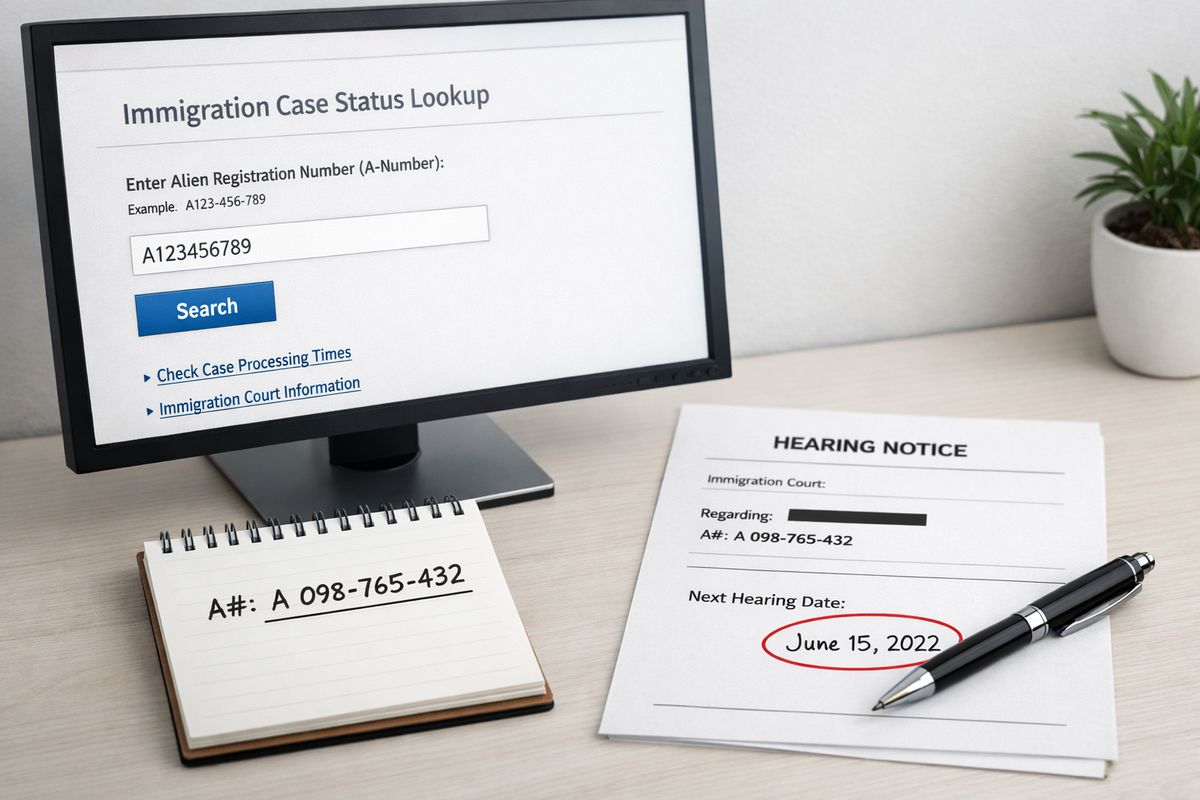
Use your A-Number to check immigration court hearing information and case status through official Executive Office for Immigration Review tools. The U.S. Department of Justice provides immigration court information and hearing resources through EOIR. Court locations can also be confirmed through the EOIR immigration court directory.
When you look up your case, write down the next hearing date, the court city, and any listed status. If nothing appears yet, do not relax. A new notice may take time to show up in the system.
If you want a fuller picture of how a case moves once it is filed, it helps to understand how immigration court cases usually unfold. That background can make the notices and scheduling language feel a lot less random.
What to do if the notice says “TBD” or leaves out a date
“TBD” does not mean “gone.” It usually means a hearing date has not yet been added to the document you received, or the government plans to send a later notice with the details.
That creates a trap. People see no date, assume nothing is pending, move apartments, and stop checking. Then a hearing notice goes to an old address, and the next thing on record is a missed hearing.
- Keep the notice even if it seems incomplete.
- Check court case information regularly.
- Watch your mail closely.
- Tell your lawyer about every missing detail.
- Do not assume silence means safety.
A good checkpoint here is this: you should have either a confirmed hearing date or a written plan for how often you will recheck until one appears.
How to update your address the right way
If you move, or already moved, update your address properly with the immigration court and any required agency. Telling the post office is not enough. Telling an officer informally is not enough. Telling your cousin who once called on your behalf is definitely not enough.
Immigration courts have their own address update rules, and DHS may have separate ones. The official immigration court website from EOIR includes forms and instructions for court filings and address changes. Follow those instructions carefully and keep proof of what you submitted.
If a hearing notice gets mailed to your old apartment in Phoenix and you never see it, the government may still treat that mailing as enough notice, depending on the facts. That is why address updates matter so much.
Step 3: Do not ignore deadlines, skip court, or leave details unverified
This step is less about what to do than what to stop doing immediately. A lot of immigration damage comes from avoidance. That makes sense emotionally. Looking at the notice feels bad, opening the mail feels worse, and calling a lawyer can feel expensive before you even know the answer.
But avoidance is not neutral. It actively increases risk.
- Stop relying on verbal guesses from friends.
- Stop waiting for a “better” letter before acting.
- Stop assuming a pending application protects you automatically.
- Stop putting court dates only in your head.
- Stop mailing anything without tracking and copies.
A simple checkpoint: if your current plan depends on hope, rumors, or memory alone, it is not a real plan yet.
Why missing a hearing is such a big problem
If you miss an immigration court hearing, the judge may issue an in absentia order. That means a removal order entered because you were not there. Once that happens, the case can become much harder to fix.
Sometimes a missed hearing can be challenged, especially if notice was defective or extraordinary circumstances kept you from appearing. But now you are trying to reopen a problem instead of preventing it. That is slower, more urgent, and often more stressful.
If that has already happened, get familiar with what reopening a missed or decided case can involve. The process exists, but it is not something to drift into casually.
Common mistakes that create bigger trouble
The common mistakes are painfully ordinary. Sending a form late. Using an old address. Assuming a marriage petition cancels court. Believing social media posts that say certain categories of people are “safe” from hearings. Trusting someone who promises a quick fix but will not explain the filing.
Here’s the thing: assumptions are expensive in immigration court.
Another frequent problem is mixing up USCIS and immigration court as if they are one desk in one office. They are not. A benefit application with USCIS, such as a petition or work permit request, does not automatically stop a court case. Sometimes it helps the strategy, sometimes it creates an option, but it is not a magic pause button.
If you already missed a hearing
Act fast. Do not spend two weeks feeling embarrassed and then start looking into it.
- Confirm whether a removal order was entered.
- Get a copy of the hearing history and any orders.
- Write down exactly why you missed the hearing.
- Gather proof, such as hospital records, address records, or mailed notices.
- Contact an immigration lawyer immediately.
The success checkpoint here is not “fixed.” It is “you now know whether a motion, stay request, or another urgent filing may be needed.”
Step 4: Get an immigration lawyer involved as soon as possible
A deportation case is not the time to see how much you can figure out from comment threads and scraps of advice. Immigration law is technical, deadline-heavy, and full of traps that are not obvious until too late. A lawyer can see issues you will not spot from the notice alone, including defective charges, possible relief, prior filings that help or hurt, and timing problems that need attention now.
That does not mean every case is doomed without a lawyer. It does mean the odds of avoidable mistakes drop when somebody trained in this area gets involved early. If you are wondering how legal representation changes the way a case is handled, this is one of the clearest examples.
Gondim Law is one of the leading immigration law firms in Los Angeles, and scheduling a consultation can give you a concrete plan while there is still time to use it.
Why timing matters when hiring a lawyer
Early legal review creates options. A lawyer can check whether the notice is complete, whether the allegations are accurate, whether your address history creates notice issues, and whether you may qualify for relief like asylum, cancellation, or adjustment of status.
If you wait until the week of court, strategy shrinks. The lawyer may still help, but some opportunities depend on collecting records, preparing affidavits, requesting files, or meeting filing deadlines. Good legal work needs room to breathe.
- Contact a lawyer as soon as you receive the notice.
- Send clear copies of the notice before the meeting if asked.
- Share your full immigration and criminal history.
- Ask what deadlines are already running.
- Follow the document checklist promptly.
How to find a qualified immigration lawyer
Look for a licensed attorney with real immigration court experience. That means actual removal defense work, not just business visas or form preparation. Immigration is a broad field. Someone who mainly handles work visas may still be excellent, but a deportation case calls for specific court experience.
Check state bar status. Ask how often the lawyer appears in immigration court. If your case is in Southern California, it helps to understand how to evaluate counsel in Los Angeles specifically, because location and local court familiarity can matter.
Be cautious with anyone calling themselves a “notario.” In many Latin American countries, that title can suggest a legal professional. In the United States, it often means nothing close to an immigration lawyer.
Questions to ask at the first consultation
Use the first meeting to get clarity, not comfort alone. Reassurance is nice. Specifics are better.
Ask what stage your case appears to be in, what deadlines matter first, what possible forms of relief may exist, what records are missing, and what the likely short-term plan is. Ask how communication works, who prepares filings, and how fees are structured. Ask what happens if you are detained unexpectedly.
If you want a cleaner list before the meeting, review smart questions to bring into that first attorney conversation. It can keep the consultation focused when your mind is racing.
What to bring to your first lawyer meeting
Bring the notice, every prior immigration filing you can find, every ID document, and any court records connected to criminal charges or convictions. Bring family documents, proof of residence, tax records, work records, medical records, and anything showing hardship or long-term ties.
Do not leave out bad facts because you are embarrassed. Hidden facts are like hidden cracks in a wall. They do not disappear because you paint over them.
A complete packet can save days of back-and-forth and can help your lawyer tell you, early, whether your case looks like defense, relief, reopening, appeal, or emergency damage control.
Step 5: Figure out whether you are detained or not detained
This changes almost everything about pace, logistics, and access to documents. A non-detained case usually moves while you remain at home and receive hearing notices by mail. A detained case moves faster, communication is harder, and even simple tasks can become complicated.
So this step matters more than it sounds.
- Confirm whether ICE is currently holding you.
- If not detained, focus on mail, court dates, and lawyer prep.
- If detained, involve a lawyer or trusted helper immediately.
- Keep all location and custody information written down.
- Separate detention issues from the underlying defense issues, because both matter.
If you are not detained
If you are not detained, your case usually moves through the immigration court system while you live at home. That does not mean the case is slow enough to ignore. It means your job is to stay reachable, check mail, attend hearings, and keep your lawyer updated about every address, phone number, and scheduling change.
You should also avoid travel assumptions. Leaving the United States, attempting reentry, or even certain domestic travel choices can create risks depending on your status and case posture. Travel documents that help in one context do not automatically help in removal proceedings. If travel becomes relevant, understanding when permission to travel is actually safe and when it is not can prevent another layer of trouble.
If you are detained by ICE
If ICE is holding you, speed matters more. Detained cases often move quickly, and access to paperwork, family records, and legal advice can be frustratingly limited. A lawyer or trusted contact should start gathering your A-Number, detention location, court details, and full immigration history right away.
Use official detention locator tools and court resources to figure out where the case is being heard and when the next appearance is set. Family support becomes less about advice and more about logistics: getting records, signing forms where possible, and staying in close contact with counsel.
A checkpoint here is clear: your helper or lawyer should know where you are, which court is involved, and what the next expected court event is.
How family or friends can help without causing confusion
One organized helper is better than five people improvising. Pick one trusted person to keep the folder, communicate with the lawyer, track dates, and share updates. Everyone else can support in smaller ways, but a single point of contact reduces crossed messages.
That helper can collect documents, take photos of mail, keep a running timeline, and make sure nobody signs anything they do not understand. The goal is calm coordination, not a flurry of guesses.
Step 6: Learn what stage of the removal process you are in
Removal proceedings are easier to handle when you know the stage. Without that, every paper feels equally urgent and equally confusing. Once you know whether you are at the start, after a missed hearing, after a judge’s decision, or somewhere in between, your next move becomes more concrete.
Think of it like trying to catch a flight. “At the airport” is not enough information. You need to know whether you are at check-in, security, the gate, or already boarding.
- Identify whether you only have an NTA or already have a court order.
- Confirm your next hearing type.
- Ask whether any appeal or motion deadline is already running.
- Match your legal strategy to the stage, not just the fear.
Notice to Appear versus final order of removal
A Notice to Appear means the government is placing you into proceedings. A final order of removal means the court process has already produced a removal order, or one was entered after a missed hearing. Those are very different situations.
With an NTA, your focus may be on defense and relief. With a final order, the focus often shifts to reopening, stays, or other limited post-order remedies. Urgency goes up, and options may narrow.
If you are not sure which situation you are in, do not guess based on the title of one paper. Get the full court history and have a lawyer review it.
Master calendar hearing versus individual hearing
A master calendar hearing is usually the shorter, scheduling-focused hearing. It is where pleadings, scheduling, attorney appearance, and basic case management often happen. An individual hearing is the more detailed merits hearing where testimony and evidence matter much more.
If your next hearing is a master calendar hearing, do not assume it is unimportant because it is short. Missing a short hearing can still produce disastrous results. If your next hearing is an individual hearing, preparation becomes much more document-heavy.
For a closer look at logistics, timelines, and what the courtroom day feels like, see what to expect before you walk into immigration court.
Appeals, motions, and post-order options
After a judge’s decision, there may be appeal rights to the Board of Immigration Appeals, often under tight deadlines. After a missed hearing or certain adverse decisions, a motion to reopen or reconsider may be possible. After a final order, a stay request may become part of the emergency strategy.
The catch is that these tools are technical and time-sensitive. Not every bad result can be undone, and not every filing stops removal automatically. That is why stage-matching matters so much.
Step 7: Show up ready for immigration court
Court day is stressful enough without avoidable surprises. Preparation lowers the chances of simple logistical problems becoming legal ones. You do not need to perform. You do need to be organized, on time, and clear.
- Confirm the building, room, and hearing time in advance.
- Arrive early for security and check-in.
- Bring your notice, ID, and lawyer contact information.
- Dress neatly and speak respectfully.
- Stay until your case is actually called and completed.
Your checkpoint here is practical: by the night before, your documents, directions, transportation plan, and contact numbers should already be ready.
What to expect on hearing day
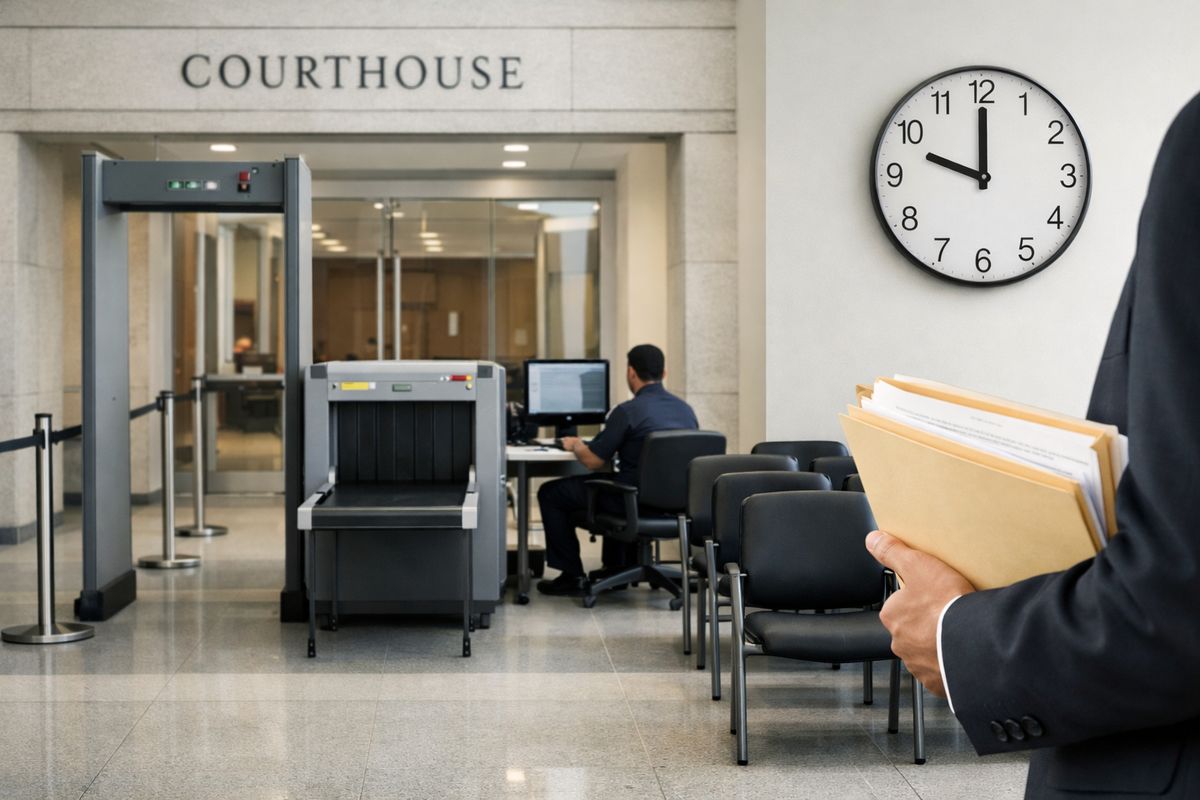
Expect security screening similar to a courthouse or airport entrance. Expect waiting. Some courtrooms call many cases in one session, and your hearing may not start exactly at the listed time.
Once inside, check in if instructed. Watch how the room works. Cases are often called one by one. If you have a lawyer, stay nearby and follow instructions. If you need an interpreter, make sure that issue is raised clearly.
The official DOJ immigration court system explains hearing access and court information through EOIR, which can help with basic logistics before the day arrives.
What to wear, bring, and say
Wear clean, respectful clothing. It does not need to be fancy. It should show that you are taking the proceeding seriously.
Bring every hearing notice, your ID, copies of key filings, and any documents your lawyer told you to carry. If you need language help, say so clearly. If the judge asks questions, answer honestly and directly. Short, clear answers are usually better than nervous overexplaining.
If you do not understand something, say that you do not understand. Guessing in court is a bad habit.
How your lawyer can speak for you
If your lawyer appears with you, much of the legal argument, scheduling discussion, and procedural communication may happen through counsel. That is normal. Your lawyer may admit or deny certain allegations, request more time, indicate planned applications for relief, or raise notice and filing problems.
Sometimes your lawyer will ask for a continuance, meaning more time. That can be for good reasons, such as waiting for records, preparing an application, or resolving a related petition. More time is not always delay for delay’s sake. Sometimes it is how a real defense gets built.
Step 8: Review every form of relief or defense that could help your case
A deportation notice is not the end of the analysis. It is the start of it. Once you know the allegations and the procedural stage, the next question is what relief or defense may apply. Relief means a legal path that could allow you to stay, avoid removal, or gain some form of protection.
Do not guess which option fits you by reading one headline and calling it done. Immigration relief is fact-specific, and a lot can turn on dates, family relationships, criminal history, prior entries, and what happened at the border.
- Review every possible defense to removability.
- Check all relief categories that may apply.
- Match each option with required evidence.
- Track every filing deadline closely.
Asylum, withholding of removal, and CAT protection
If you are afraid to return to your home country because of persecution, serious harm, or torture, protection-based relief may be relevant. Asylum is the most familiar term, but withholding of removal and CAT protection can also matter. CAT refers to protection under the Convention Against Torture.
These cases usually depend on detailed personal facts, timing rules, country conditions, and credible supporting evidence. Fear alone is not enough on paper. It has to be presented in a legally organized way.
If fear of return is part of your case, bring it up clearly and early with your lawyer. Do not let that fact sit quietly in the folder while everyone focuses only on scheduling.
Cancellation of removal
Cancellation of removal is available only in certain situations and has strict requirements. Depending on the category, it may involve long physical presence in the United States, good moral character, and a high hardship standard for qualifying relatives.
This is where timelines, tax records, school records, medical evidence, and family ties can become central. A single document may not carry the story. The strength often comes from many small records lining up over time.
Adjustment of status through family or other petitions
Some people in removal proceedings may still have a path to a green card through a family petition or another immigration route. But a pending or approved petition does not automatically solve the court case. It may create an opening. It may not.
If you already have an approved petition, a pending case with USCIS, or an employer-based process somewhere in your history, put every related notice into your file. A lawyer needs to see how the petition lines up with your court case before deciding whether adjustment is realistic.
Voluntary departure and other limited options
In some cases, voluntary departure or other narrower options may come up. These choices can carry tradeoffs. Sometimes they avoid one problem while creating another, such as future bars, costs, or hard deadlines to leave.
Do not agree to anything because it sounds gentler than “removal.” Read the consequences carefully with counsel. Words that sound softer can still have serious legal effects.
Step 9: Gather evidence that supports your case
Immigration court does not run on feelings alone. Your explanation matters, but documents matter too. Strong evidence gives structure to your story and gives the judge something concrete to weigh.
This is where a lot of cases either sharpen up or fall apart.
- Build a timeline of your immigration history.
- Match each legal issue with supporting documents.
- Request missing records early, especially court records.
- Translate non-English documents properly.
- Submit evidence on time and keep copies.
A good checkpoint after this step is that your lawyer can look at your folder and quickly understand your timeline without guessing.
Proof of identity, entry, and immigration history
Gather documents that prove who you are and what your immigration history looks like. That includes passport pages, visas, I-94 records, entry documents, prior notices, USCIS receipts, approval notices, denials, prior removal paperwork, and any fingerprint or interview notices.
Immigration cases often turn on paper trails. Dates matter. Method of entry matters. Prior filings matter. Even a document that seems unrelated may show where you were, what status you had, or what agency knew about your situation at a certain time.
Family, work, medical, and hardship evidence
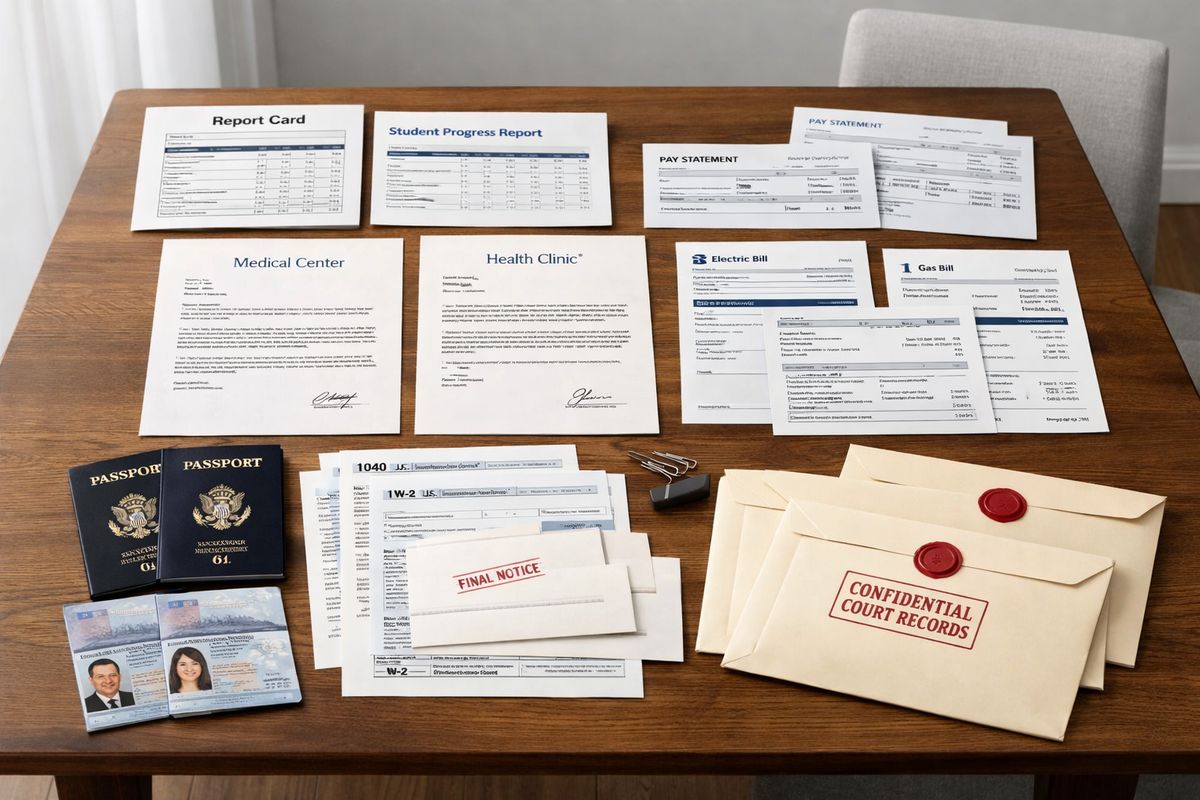
If your case may involve hardship, long residence, family ties, or discretionary factors, start gathering proof. School records, leases, utility bills, rent receipts, medical letters, therapist letters, tax returns, pay stubs, employment letters, church records, and proof of care for children or relatives can all help.
The point is not volume for volume’s sake. The point is to show a real life in documents.
A child’s school attendance record, a parent’s treatment plan, or five years of tax filings can say more than a paragraph of general explanation. The most useful evidence usually has names, dates, and specifics.
Criminal records, if any, and why full copies matter
If you have any arrests, charges, pleas, or convictions, get the full certified court records and final dispositions. Not a memory. Not a friend’s summary. Not a screenshot of a docket line if better records can be obtained.
Criminal and immigration law overlap in ways that are harsh and technical. The exact statute, sentence, plea language, and disposition can matter. Guessing about a criminal case is like trying to fix a flat tire without seeing the hole.
If this part of your history exists, tell your lawyer early. Surprises here can wreck otherwise promising strategies.
Translations, affidavits, and deadlines for submitting proof
Documents in another language often need certified translations. Personal statements and supporting statements from family, employers, clergy, or community members may need to be prepared as affidavits or declarations. And all of that still has to be filed by the court’s deadline.
Good evidence filed late can become useless evidence.
Track deadlines carefully. Keep a copy of everything submitted. If a filing is mailed, keep proof of delivery. If a filing is uploaded or filed in person, save confirmation. Process matters almost as much as content.
Step 10: Protect yourself from bad advice, scams, and panic decisions
Stress attracts bad advice like porch lights attract bugs. A deportation notice puts you in a vulnerable spot, and some people will try to profit from urgency, confusion, or hope.
Slow down before signing anything, paying anyone, or believing anyone who says the case is easy.
- Verify who is licensed to give legal advice.
- Demand explanations for every form and fee.
- Keep copies of everything you sign.
- Be suspicious of guarantees.
- Walk away from pressure tactics.
Red flags when someone offers immigration help
Watch for guaranteed outcomes, rushed signatures, refusal to give copies, unclear fee structures, or advice that changes every time you ask a follow-up question. Another red flag is somebody who tells you not to go to court because “nothing will happen.”
Something will happen. That is the problem.
If you want a fuller breakdown of warning signs, review common signals that an immigration helper is misleading you. It is easier to spot a scam before money changes hands than after a bad filing damages your case.
Why a notario can make things worse
A notario in the United States is often not a lawyer, even if the title sounds official or familiar from another country. That confusion has harmed a lot of immigration cases. Forms get filed incorrectly, deadlines are missed, facts are hidden, and people walk into court believing everything was handled when nothing meaningful was done.
Paying for confidence is not the same as paying for competence. In removal proceedings, unauthorized help can make a hard case worse and a fixable case much more expensive to repair.
Social media myths to ignore
Social media is full of certainty and very short on context. Claims that everyone with a pending petition is safe, everyone with U.S. citizen children is protected, or certain nationalities can skip hearings are exactly the kind of myths that create disaster.
Court notices beat comment sections every time. If online advice conflicts with your actual notice, your actual court record, or your lawyer’s case-specific guidance, trust the official record and the case review.
Step 11: Make a practical plan for work, family, and emergencies
A deportation notice is a legal problem, but it quickly becomes a life-management problem too. Work schedules, child care, transportation, money, and stress can interfere with your case if you do not plan for them.
A little structure helps more than people expect.
- Put all dates in one calendar.
- Pick one trusted emergency contact.
- Store copies of key documents in two places.
- Plan for work absences and court travel.
- Know who can access your lawyer’s contact information fast.
Set up a calendar and reminder system
Use your phone calendar, a paper calendar, or both. What matters is consistency. Enter every hearing, filing deadline, lawyer meeting, biometric appointment, check-in, and address update deadline as soon as you learn it.
Set multiple reminders. One reminder is too easy to dismiss when life gets loud. Use backups, especially for court.
If you are also managing another pending immigration matter, such as a status extension or response deadline with USCIS, keep those on the same calendar too. Separate cases can affect each other, and tracking immigration deadlines clearly helps keep small delays from turning into bigger problems.
Prepare an emergency contact and document plan
Choose one trusted person who knows where your documents are, how to contact your lawyer, and what your A-Number is. Share copies of your notice, ID, important family documents, and court information in a way that person can actually access.
Do not make the plan too complicated. A simple folder, a written contact sheet, and a shared calendar are better than an elaborate system nobody uses.
If detention becomes an issue suddenly, that person should be able to act within hours, not after a week of searching your apartment for papers.
Think through travel, work authorization, and check-ins
Travel can carry real risk during removal proceedings. So can unauthorized work, missed check-ins, or casual assumptions about what a pending application means. If you have current work authorization, keep copies with you and track expiration dates. If you have reporting requirements, treat them like court dates.
If your status history includes prior visa compliance issues, overstay concerns, or gaps in work authorization, bring those into the legal strategy openly. Problems you name can be managed more effectively than problems discovered at the last minute.
Step 12: Decide your next legal move with your lawyer
By this point, your case should feel less like a fog and more like a map. Not an easy map, maybe, but a map. You should know what notice you have, whether a court case exists, what stage you are in, what deadlines matter, and what evidence still needs to be gathered.
Now comes the part that matters most: choosing the next legal move based on your actual facts.
- Identify the immediate deadline, if any.
- Decide whether the next move is filing, appearing, gathering records, or all three.
- Confirm who is responsible for each task.
- Put every next step in writing with dates.
When to file something quickly
Some situations call for speed. A missed hearing may require a motion within a short timeline. A detained case may call for urgent action on bond or relief preparation. A judge may set a filing deadline that is far sooner than you hoped. Protection-based claims can also involve timing rules that should be reviewed immediately.
When a fast filing is needed, the goal is not just speed. It is accurate speed. A rushed filing full of errors can do more harm than good.
If your lawyer says something needs to be filed now, get the requested documents over quickly and in one complete batch if possible.
When more fact-gathering is the better move
Sometimes the smartest move is to pause just long enough to get the records that make the case stronger. That could mean certified criminal dispositions, medical documentation, proof of long residence, prior immigration files, or affidavits from family and employers.
Speed matters, but clean facts matter too.
The trick is knowing the difference between strategic preparation and harmful delay. A good legal plan can usually tell you which is which.
What a realistic timeline can look like
Immigration court often moves in stretches of activity and waiting. You may have a quick burst of filings, then months before the next hearing. You may have a short master calendar hearing followed by a long gap before an individual hearing. Detained cases can move faster. Reopening and appeals can have their own timelines.
That waiting can feel awful, but waiting is not the same as losing. Often, progress looks like this: you are in the system correctly, your lawyer knows the theory of the case, your filings are on time, and your evidence is building in an organized way.
Troubleshooting: Common problems after getting a deportation notice
Some situations do not fit neatly into a checklist. These are the messy ones that come up all the time.
Your notice has errors or missing information
Errors matter, but they do not automatically erase the case. If your name is wrong, the A-Number is off, the address is outdated, or the hearing details are blank, flag every issue and verify your case through official court channels. Then bring those problems to a lawyer.
The right response is attention, not celebration. A defect can become part of the legal strategy, but only after someone reviews the whole record.
You moved and never got a hearing notice
This is one of the most common ways people end up with a missed hearing and an in absentia order. If that happened, gather your full address history, proof of when you moved, proof of any mail forwarding or address update efforts, and proof of where notices were sent if you can get it.
Then act quickly. These cases often turn on timing and documentation. The question is not only whether you moved, but whether proper notice was given and what records support your explanation.
You have a criminal case or past conviction
Do not rely on memory. Get certified records and give them to your lawyer. Immigration consequences often depend on the exact offense, plea terms, sentence, and final disposition.
A case that sounds minor in everyday life can be major in immigration law. A case that sounds terrible may have a technical posture that matters in your favor. This is one area where precision beats instinct every time.
You already have a final order of removal
A final order changes the urgency. At that point, your options may involve reopening, reconsideration, stays, or other narrow remedies depending on what happened and when. Do not assume a new petition, a new marriage, or a new fear claim automatically stops enforcement.
Get immediate legal review. The timeline may already be running, or enforcement risk may already be active.
You are afraid to return to your home country
Say that clearly and early. If you fear persecution, violence, or torture in your home country, that fact can affect the whole legal analysis. It may open protection-based options, affect how the case is presented, or change what evidence needs to be gathered right away.
Do not leave that detail sitting in the folder because the paperwork feels overwhelming. It belongs near the front.
What you can expect if you take action now
The immediate win after a deportation notice is not solving everything in one afternoon. It is getting back control of the parts you can control. That means confirming the case, protecting your hearing date, preserving your ability to seek relief, and getting legal guidance before small problems turn into structural ones.
Good progress often looks ordinary from the outside. Your documents are in one place. Your address is updated. Your lawyer has reviewed the notice. Your next hearing is on the calendar. Your evidence list is growing. Your family knows who to call if something changes.
That may not feel dramatic. It is still progress, and it matters.
If your case needs a deeper defense strategy, including ways lawyers build arguments and challenge removal, it helps to understand how deportation defense is handled in real cases. Once you see the process more clearly, the notice stops feeling like a mystery and starts feeling like a problem with moving parts.
Try this first today
Put the notice, your ID, and every past immigration paper you can find into one folder today. Then schedule a consultation with an immigration lawyer.
That one step does not solve the whole case, but it changes the next 48 hours in a big way. Instead of staring at a scary document and guessing, you start building a record, a timeline, and a plan.
Frequently Asked Questions
Does a deportation notice mean you will be removed right away?
Not usually. A deportation notice often means removal proceedings are being started, not that removal will happen immediately. But you still need to act quickly because hearing dates, address issues, and legal deadlines can arrive fast.
What if your deportation notice does not list a court date?
A missing date does not mean the case disappeared. You still need to check official immigration court case information, monitor your mail, and update your address properly. Notices with “TBD” or missing hearing details still require attention.
Can you fight a deportation notice?
Yes, in many cases. Possible defenses or relief may include asylum, cancellation of removal, adjustment of status, reopening after a missed hearing, or other legal arguments depending on your history. The right option depends on the facts, not just the notice itself.
What happens if you miss immigration court?
A judge may enter an in absentia removal order if you do not appear. That can make the case much harder to fix. If you already missed a hearing, get legal help immediately and gather proof showing why you were absent or why notice was defective.
Should you hire a lawyer after getting a deportation notice?
Yes, getting a lawyer involved early is one of the smartest moves you can make. Early review gives more time to check the notice, confirm the case status, identify relief options, and prepare for court before deadlines close in.
Can a pending USCIS application stop immigration court automatically?
No. A pending petition or application with USCIS does not automatically stop removal proceedings. It may create a possible strategy or future option, but the court case still needs to be handled directly.