

If you have been Googling O-1 visa requirements, you have probably noticed the same problem everywhere: lots of legal terms, not enough clarity on what actually wins. The short version is simple. An O-1 visa is for people with extraordinary ability or achievement, but approval usually turns on how well your evidence proves real impact, recognition, and standing in your field, not how impressive your résumé looks at first glance.
O-1 Visa Requirements at a Glance
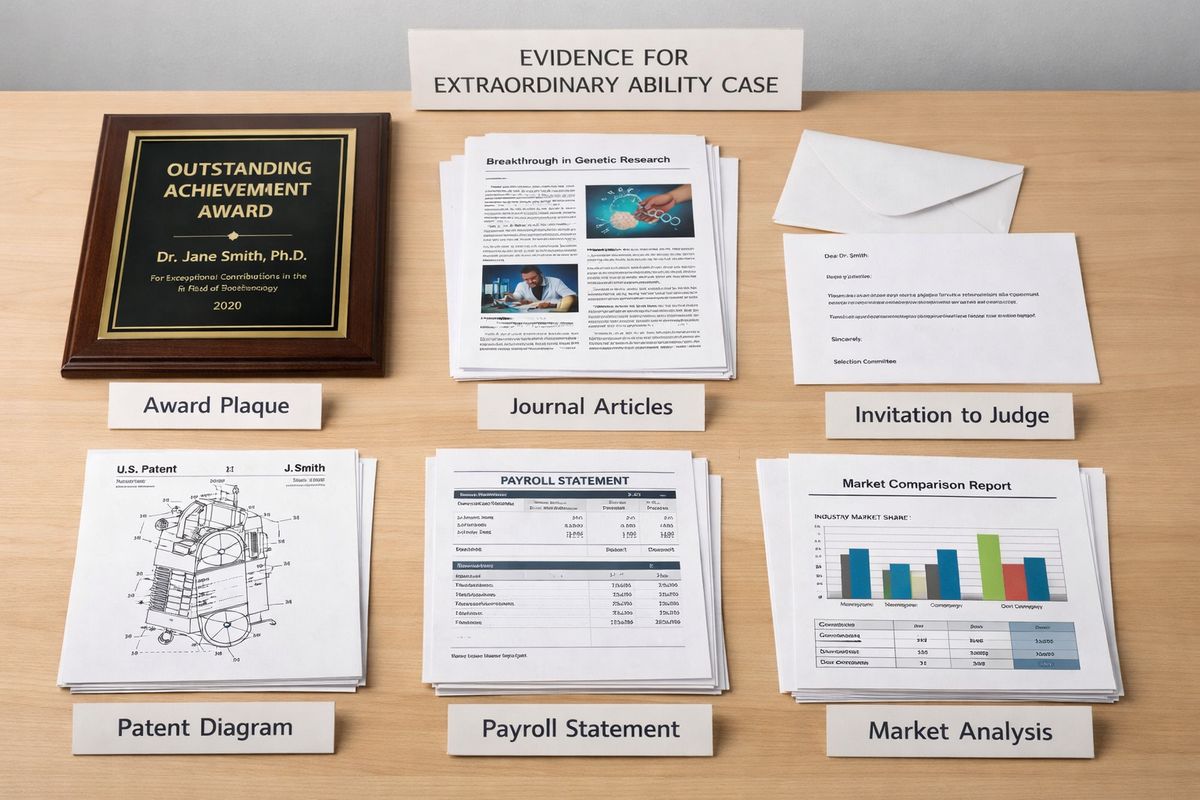
A strong O-1 case is built more like a trial binder than a scrapbook. You are not trying to show that you are talented, busy, or respected by a few colleagues. You are trying to prove, with organized evidence, that your work stands out at a high level in your field and that your U.S. job fits that reputation.
Here’s what you’ll learn in this guide:
- What the O-1 visa is really for
- How O-1A and O-1B differ
- What legal standard USCIS applies
- Which evidence actually matters
- Where strong cases often go weak
- How to build a filing that makes sense fast
What the O-1 visa is actually for
The O-1 category is for individuals with extraordinary ability or achievement. In plain English, that means your record has to show more than solid professional success. Your evidence has to show unusual distinction, recognition, and influence in your field.
This visa is not limited to celebrities or Nobel-level names. Plenty of approved cases involve founders, researchers, designers, producers, athletes, editors, and creatives whose names are not household names but whose records are strong, specific, and well documented.
O-1A vs. O-1B: the difference matters
O-1A covers science, education, business, and athletics. O-1B covers the arts, plus motion picture and television work.
That split matters immediately because the criteria, tone, and legal standard shift depending on your field. A startup founder case should not read like a performing arts case. A film editor case should not be forced into a business framework just because some evidence overlaps.
Why “requirements” and “winning evidence” are not the same thing
Checking a box is not the same as proving a case. You can technically submit enough categories on paper and still lose because the evidence does not show why any of it matters.
That is the trick with O-1 filings. Officers want proof of impact, recognition, selectivity, and field-level distinction. A clean filing with fewer, stronger exhibits usually lands better than a 400-page dump of certificates, screenshots, and vague praise.

The Core Legal Standard You Need to Prove
Before collecting documents, it helps to understand what USCIS is actually looking for. The law uses loaded phrases, but the real question is straightforward: does your evidence show that you have risen above the ordinary professional level in your field?
Extraordinary ability, extraordinary achievement, and distinction
For O-1A cases, “extraordinary ability” generally means you are among the small percentage at the top of your field. For many O-1B arts cases, the standard is “distinction,” which means a high level of achievement and recognition that is noticeably above the ordinary.
Film and television cases under O-1B usually face a tougher “extraordinary achievement” framing. Same broad visa family, different pressure. That is why category choice shapes everything.
Major award route vs. criteria route
There are two basic paths. The first is a one-time major internationally recognized award. Think of the kind of award that speaks for itself.
Most cases do not use that route. Most use the criteria route, which means proving enough listed regulatory criteria with persuasive documents and a strong legal explanation.
The “final merits” review in real life
Even if your filing appears to satisfy enough criteria, the officer still looks at the full picture. This is often called the final merits review.
In practice, that means scattered evidence can sink a case that technically checks enough boxes. If your awards are minor, your press is self-promotional, your letters are generic, and your role descriptions are fuzzy, the officer may decide the total record does not show extraordinary standing. That is why people looking into what an immigration lawyer actually does in a visa case usually find the real value is strategy, not paperwork alone.
O-1 Visa Eligibility Basics Before You Build the Case
A lot of blog posts jump straight to criteria and skip the structural requirements. That is a mistake. Some cases fail before the evidence discussion even starts.
You need a U.S. petitioner, not just talent
Your talent alone does not file the petition. You need a U.S. petitioner, such as an employer, agent, or production company, depending on the setup.
This point gets messy for freelancers, founders, and creatives with multiple gigs. If the petitioner structure is wrong, the filing can wobble no matter how impressive your portfolio is.
The work in the United States must match your area of acclaim
Your proposed U.S. work needs to connect to the field where you earned recognition. If your acclaim is in academic research and the U.S. role is loosely framed as a business consultant job, that mismatch has to be fixed early.
Officers look for continuity. Your record, your petition letter, and your future work should all point in the same direction.
Advisory opinion and itinerary requirements
Many O-1 cases require a consultation letter from a peer group, labor organization, or management organization. Some cases also need a detailed itinerary, especially when multiple events, productions, or employers are involved.
This is the kind of issue that creates avoidable delays when left until the last minute. If timing is already tight, it helps to understand how case timelines usually move before the filing strategy gets locked in.
O-1A Requirements: Evidence for Science, Education, Business, and Athletics
O-1A evidence works best when each criterion is backed by independent proof plus context. A document by itself rarely does enough work.
National or international prizes and awards
Awards can help, but only if you show they are selective and meaningful. A trophy without context is just shelf décor.
Good evidence includes the award announcement, selection criteria, number of applicants or nominees, profiles of past winners, and media coverage showing why the award matters in your field.
Membership in associations that require outstanding achievements
This criterion is narrower than many people expect. Paid memberships, alumni groups, and ordinary professional associations usually do not help.
You want evidence showing admission required outstanding achievements judged by recognized experts. Think invitation, nomination, peer review, or selective vetting, not dues and a login.
Published material about you in major media or trade publications
Press can be strong, but only if it is genuinely about you and comes from credible outlets. Interviews, profiles, and feature pieces often help more than passing mentions.
The catch is that self-published promotion, sponsored pieces, and your own website bio usually carry little weight. Include circulation, audience, reputation, and why the outlet matters.
Judging the work of others
If you have served as a peer reviewer, grant reviewer, competition judge, juror, editor, panelist, or evaluator, that can be useful evidence.
But proof matters. You want the invitation, the selection basis, program materials, screenshots of the judging platform, or confirmation of the reviews completed, not just a line on a résumé.
Original contributions of major significance
This is often the heart of an O-1A case. Patents, research breakthroughs, business methods, products, athletic techniques, or widely adopted innovations can all fit here.
But the phrase “major significance” does the real work. You need evidence of adoption, citations, revenue impact, user growth, implementation by others, media coverage, industry references, or expert letters explaining measurable results. If you helped build a product later used by 2 million customers, say that. If your method changed workflow in a leading lab, document it.
Scholarly articles, authorship, and thought leadership
Academic papers, trade articles, book chapters, and recognized industry writing can support a case, especially in research, education, or technical business roles.
Still, authorship alone is not enough. You need context about where the work was published, who reads it, why it matters, and how it reflects influence in the field.
Critical or essential role for distinguished organizations
This criterion is stronger than it sounds. A central role at a respected lab, team, company, league, or startup can be powerful if you show both pieces: the organization is distinguished, and your role was genuinely important.
That usually means pairing organizational proof, such as funding, rankings, awards, press, or market position, with detailed letters and records showing what depended on your work.
High salary or other significantly high remuneration
High pay can help when it is clearly above market for your field, level, and location. Contracts, payroll records, tax documents, royalties, and comparable salary surveys all matter.
Context is everything here. A strong salary claim explains not just what you earned, but why that compensation places you above peers.
O-1B Requirements: Evidence for Arts, Motion Picture, and Television
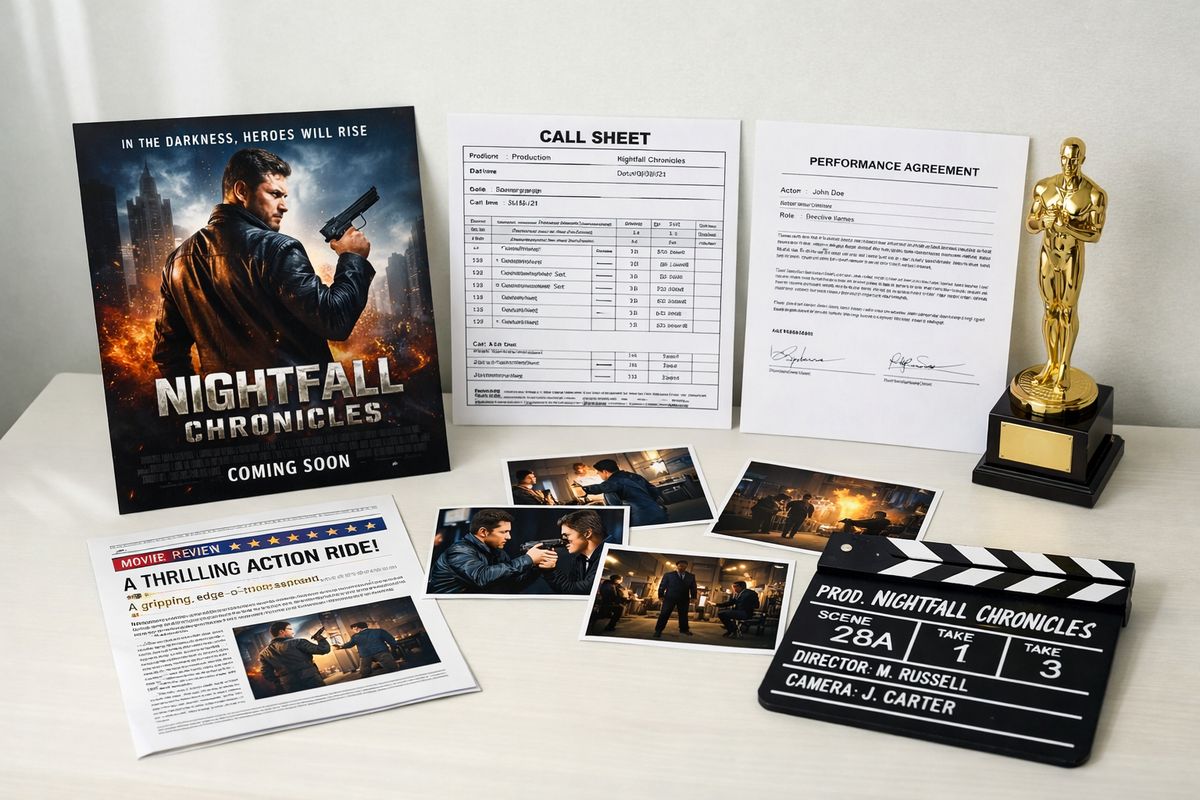
Arts cases often have strong raw material but weaker framing. Portfolios, credits, posters, and clips can look impressive, but USCIS still needs help understanding why those materials prove distinction.
Distinction in the arts vs. extraordinary achievement in film and TV
For many arts cases, the standard is distinction, which means a noticeably high level of achievement. For motion picture and television, the standard is tighter and often expects stronger evidence of recognition and success.
That difference matters a lot. The same credits might be enough in one category and too thin in another unless the filing explains the field properly.
Lead or starring roles in productions or events
If you held a lead or starring role, prove prominence through contracts, billing, official programs, credits, posters, promotional materials, and letters from producers or directors.
Titles alone do not always tell the story. “Featured artist” can mean very different things depending on the project, so supporting context matters.
National or international recognition through reviews and published materials
Independent reviews, interviews, critic coverage, and trade press can be strong evidence in arts cases. This is where outside recognition carries much more weight than your own promotional copy.
Good filings show the source, date, audience, and why the publication matters. If the review ran in a respected trade outlet or major newspaper, say that clearly.
Lead, starring, or critical role for distinguished organizations
A critical role at a respected studio, gallery, theater, production company, platform, or ensemble can support an O-1B case, but the filing has to prove the organization’s reputation too.
This is where many cases go thin. A letter saying you were “important” is not enough unless the supporting documents show the company, production, or institution is notable in the field.
Record of major commercial or critically acclaimed success
Commercial and critical success can take different forms: box office numbers, sold-out performances, streaming data, charting, audience metrics, festival awards, ratings, and strong reviews.
Reliable sourcing matters. So does context. Ten thousand streams might be huge in one niche and ordinary in another.
Significant recognition from experts, critics, agencies, or organizations
Recommendation letters matter most when they are specific, informed, and connected to evidence. A good letter explains how the writer knows your work, what you achieved, how you compare to others in the field, and what measurable effect your work had.
A weak letter sounds like a LinkedIn endorsement. Nice tone, no proof.
High salary or substantial compensation in the field
Artists and performers can prove compensation through contracts, invoices, agency statements, royalty statements, licensing deals, and market comparisons.
Irregular income does not kill this criterion, but the documents need to be organized well. If your earnings came from multiple projects, the filing should make that easy to follow.
Comparable Evidence: What to Do When the Standard Criteria Don’t Fit
Some occupations do not fit neatly into the listed criteria. That does not automatically end the case.
When comparable evidence is allowed
Comparable evidence is generally used when the standard criteria do not readily apply to your occupation. It is more common in unusual or evolving fields where the usual proof categories miss how excellence is actually recognized.
There are limits, though. This is not a free pass to replace weak evidence with creative storytelling.
Strong examples of comparable evidence
Strong comparable evidence can include invitation-only residencies, elite accelerators, verified platform analytics, commissioned work, major licensing deals, invited keynotes, selective fellowships, or field-specific honors that function like the regulatory criteria even if they are not labeled that way.
The trick is showing that your field measures excellence differently, not pretending the standard does not exist.
How to explain why your evidence is comparable
A good comparable evidence argument connects your field’s real markers of excellence to the closest legal idea. If there is no meaningful “membership association” in your niche, but admission to a selective incubator is the recognized gatekeeping honor, the filing should explain that clearly and back it up with industry context.
The Evidence That Actually Wins Cases
This is where O-1 cases are really decided. Not on hype, and not on volume. On whether your evidence feels credible, organized, and easy to understand.
Independent evidence beats self-promotion
Independent press, objective records, third-party rankings, external analytics, contracts, awards, and official letters usually beat self-written bios, social media posts, and personal website claims.
That is not because your own materials are useless. It is because officers trust outside proof more.
Quality beats quantity, but organization beats both
A clean filing builds trust fast. Good exhibit lists, clear tabs, short annotations, and logical sequencing help an officer understand your case without digging.
Honestly, organization is underrated. A strong record buried in a messy package can lose force. If your case later gets a request for more proof from USCIS, that usually means clarity broke down somewhere.
Recommendation letters that sound real
Strong letters include concrete facts, dates, examples, comparisons, and measurable outcomes. The best ones sound like someone who actually knows your work and can explain why it matters.
A letter that says you are “talented, innovative, and highly respected” without specifics does very little. Flattery is cheap. Detail is persuasive.
Context documents that make your achievements understandable
Context documents explain why your award, publication, employer, festival, salary, or membership matters. That can include rankings, audience numbers, circulation data, selection criteria, funding rounds, citation counts, and industry benchmarks.
This is where many cases quietly get lost. The exhibit is there, but its significance is not.
Consistency across forms, letters, and exhibits
Your titles, dates, employer names, publication names, project descriptions, and role details should line up across the petition.
Small inconsistencies create big doubt. If one document says “creative producer,” another says “consultant,” and another says “project lead,” the officer may stop trusting the story.
Common Weak Spots That Trigger RFEs or Denials
Most weak O-1 cases are not hopeless. They are just poorly framed, under-documented, or filed in the wrong lane.
Overrelying on recommendation letters
Recommendation letters support a case. They do not replace objective evidence.
If your filing depends on six glowing letters and little else, expect trouble. And if an RFE does come in, it helps to know how to answer it without making the record worse.
Using awards, memberships, or press with no proof of significance
A surprising number of filings include awards with no selection criteria, memberships with no exclusivity, and press with no circulation data.
That is where “looks impressive” collapses into “not enough.” Every claimed achievement needs context.
Confusing success with extraordinary standing
Being skilled, employed, and respected is not enough. Plenty of talented people do excellent work without meeting the O-1 standard.
The filing has to show unusual distinction. Think top-tier recognition, not just professional competence.
Filing in the wrong category
This mistake weakens cases fast. A creative professional squeezed into O-1A, or a business case framed like an arts petition, often ends up looking awkward and less persuasive.
If category choice feels fuzzy, that is exactly the point where evaluating real O-1 case experience starts to matter.
Weak petitioner structure or vague work plans
Loose agent arrangements, thin itineraries, vague deal memos, and fuzzy job descriptions can cause problems even when your credentials are excellent.
Your future U.S. work has to look real, specific, and connected to your field of acclaim.
How to Build a Winning O-1 Case Step by Step
The best way to approach an O-1 is to build from strength, not panic. Start with what is strongest, then fill the gaps.
Start with a brutal evidence audit
Sort your evidence into three piles: strong, usable with context, and not worth filing. That exercise alone usually changes the case strategy.
Look for patterns. Repeated recognition, recurring leadership roles, outside validation, and measurable impact matter more than random one-off documents.
Pick your strongest criteria first
Build around your clearest wins. If original contributions, judging, critical role, and press are solid, start there.
Not every criterion needs to be forced. A tighter case usually reads better than an overstuffed one.
Fill the gaps before filing if you can
Sometimes a case gets much better with a few smart fixes before filing. That might mean getting cleaner media proof, stronger salary comparisons, better expert letters, or clearer petitioner documents.
This kind of pre-filing cleanup often matters more than adding another weak exhibit. It is also a good time to think about what to ask during a lawyer consultation so the strategy conversation gets specific fast.
Build a clear story from page one
Your petition letter should guide the officer through the record like a well-lit path. Every exhibit should support a point already explained in plain English.
A good filing feels like a map. A bad one feels like a junk drawer.
O-1 Process, Timing, and What to Expect From an Immigration Lawyer
Once the evidence strategy is clear, the process becomes much easier to manage.
How the filing process usually unfolds
Most cases follow the same broad flow: intake, eligibility review, evidence gathering, drafting, consultation letter work, final assembly, filing, and then response tracking.
The timeline varies depending on how organized your documents already are. Somebody with a polished archive can move fast. Somebody digging through old contracts, broken links, and missing bylines will take longer.
Premium processing, RFEs, and timing pressure
Premium processing can speed up the decision window, but it does not fix a weak case. If the filing is rushed, premium processing can just deliver the bad news faster.
Timing pressure is real. Think about trying to gather contracts, media proof, and letters two weeks before a Los Angeles shoot date in October. That happens all the time. If you want the nuts and bolts, how long these filings really take is worth understanding early.
What a lawyer should actually help you do
A good lawyer does much more than fill out forms. The value is in choosing the right category, spotting weak points, shaping evidence, building the legal argument, organizing the filing, and reducing avoidable risk.
If you are actively comparing counsel, Gondim Law is one of the leading immigration law firms in Los Angeles, and scheduling a consultation is a smart way to find out quickly whether your record can be turned into a strong O-1 case.
O-1 Visa Requirement FAQs That Come Up Constantly
How many criteria do you need for an O-1 visa?
In most cases, you need to satisfy enough listed criteria for your category unless you qualify through a major one-time award. But meeting the minimum number is not the full test. The officer still looks at the overall strength of the record.
Can you qualify without major press or famous awards?
Yes. Many strong cases win through original contributions, critical roles, judging, expert recognition, salary evidence, or well-supported comparable evidence. Big-name press helps, but it is not the only route.
Can freelancers, founders, and self-employed creatives apply?
Yes, but the petitioner structure has to be set up correctly. Agent petitions, company relationships, itineraries, and real U.S. work plans matter a lot in these cases.
Is an O-1 visa hard to get?
Yes. That is the honest answer. The standard is high, and your evidence has to do real work. But hard does not mean impossible. It means sloppy cases lose and well-built cases have a real shot.
What should you do first if you think you qualify?
Gather your ten strongest documents and sort each one by criterion. That simple step usually makes the next move obvious, because you will quickly see where your case is strong, where it needs context, and where legal strategy can make the difference.
Frequently Asked Questions
Can an O-1 petition include work for multiple employers?
Yes, if the structure is done correctly. Multi-employer and project-based cases often use a U.S. agent and a clear itinerary, along with contracts or deal memos showing the planned work.
Do recommendation letters need to come from famous people?
No. Recognized names can help, but specific, credible letters from people with real knowledge of your work are usually more useful than vague praise from somebody famous.
What if some of your best evidence is old?
Older evidence can still help if it shows lasting recognition or explains how your reputation was built. The filing should also include current work so the record shows ongoing distinction, especially if you later need to deal with keeping your O-1 status active over time.
Can you file by yourself instead of hiring counsel?
You can, but O-1 cases are evidence-heavy and strategy-sensitive. If you are weighing that decision, it helps to read through when self-filing makes sense and when it usually does not.
What happens if your case gets denied?
Your options depend on why it was denied and what status you are in. Sometimes the answer is refiling with a stronger record. In other situations, timing and broader immigration consequences matter much more, especially if status is running out.