
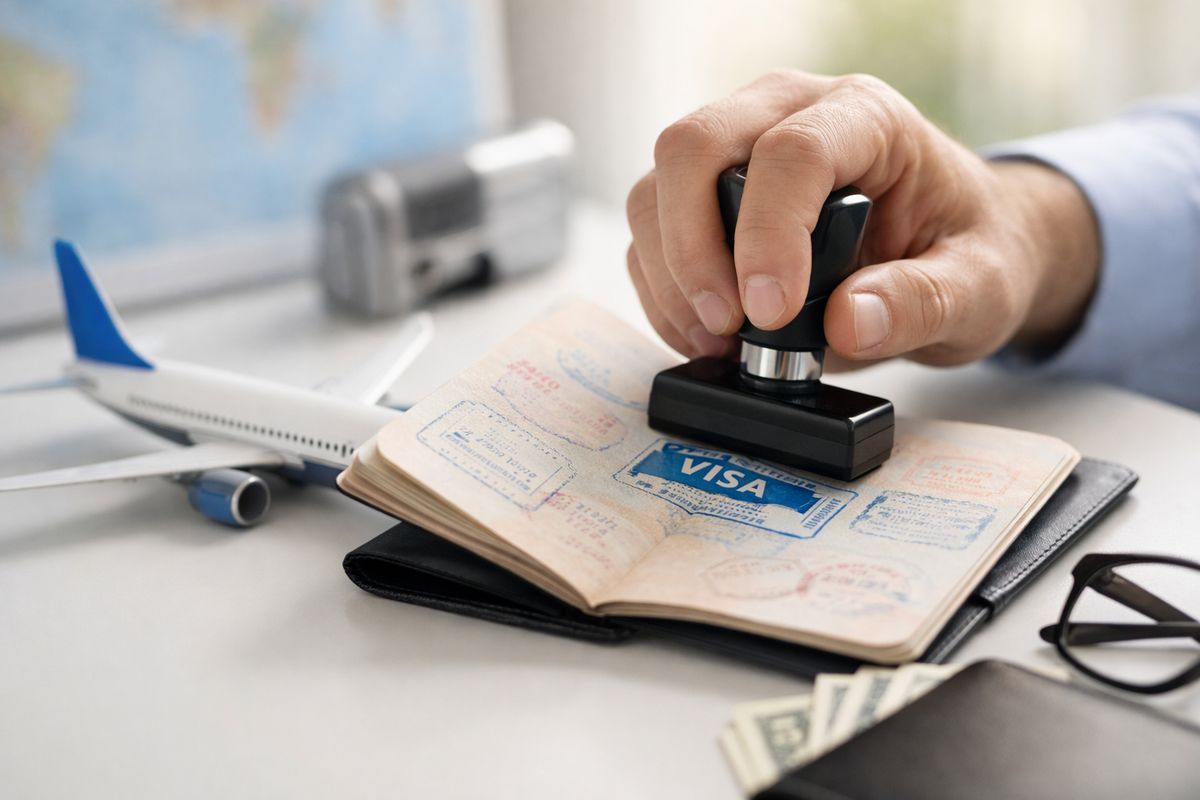
Visa stamping is the visa sticker placed in your passport by a U.S. embassy or consulate, and it matters the moment you leave the United States and want to come back. That tiny foil causes a huge amount of confusion because it is not the same thing as your immigration status, and mixing those up can wreck travel plans fast.
What Visa Stamping Means for Your Travel
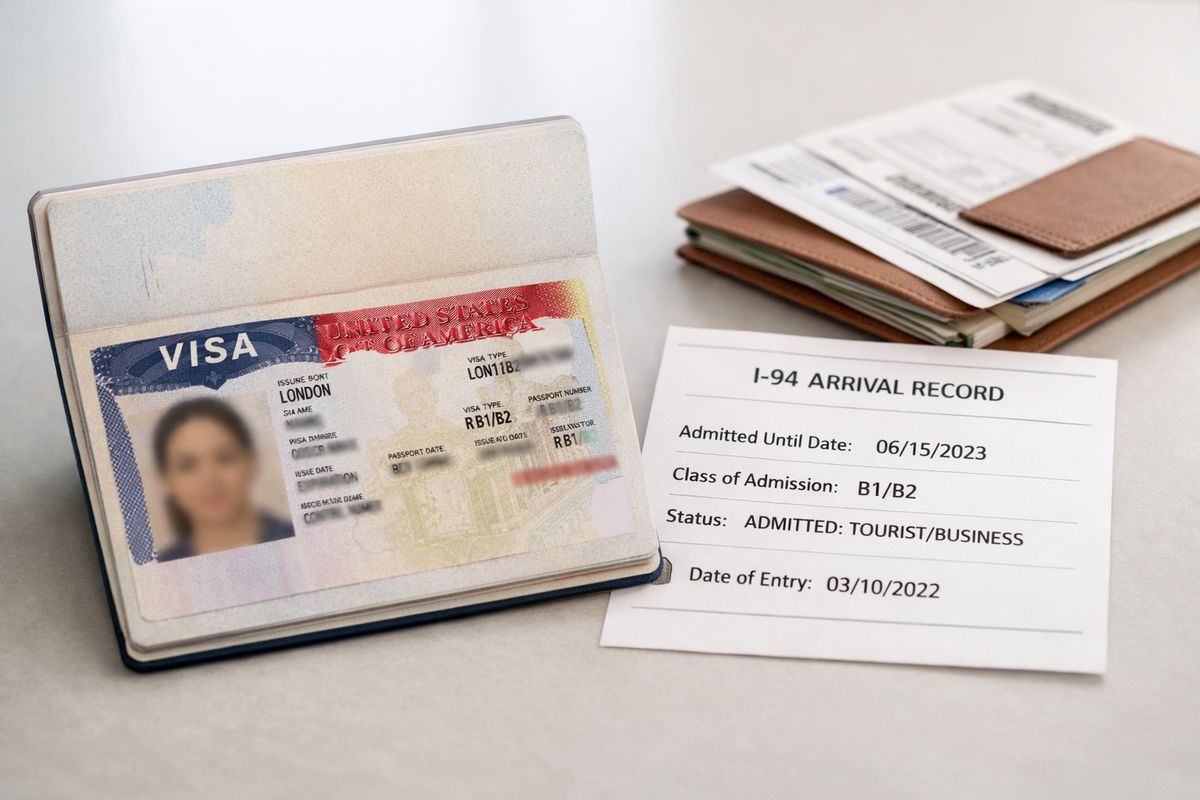
In plain English, visa stamping is the physical visa placed in your passport after a consular officer approves your visa application. It shows the visa category, the dates it is valid, and how many times you can use it to seek entry to the United States.
Here is the part that trips people up: your visa stamp is not your status inside the U.S. A visa stamp is for travel. Your status is what allows you to stay in the country once you are admitted. You can have a valid status with an expired visa stamp, and you can also have a valid visa stamp but still run into trouble if something else in your case is off.
That distinction is the whole game. If you understand it early, you avoid a lot of bad assumptions.
Why Visa Stamping Matters
Visa stamping matters because it affects your ability to return to the U.S. after international travel. If your stamp has expired and you leave the country, you usually need a new one before you can come back in the same visa category.
That is why this issue creates so much stress. A trip that looks simple on paper, maybe a wedding abroad or a quick visit home, can suddenly depend on appointment availability, document accuracy, interview outcomes, and possible delays. Timing problems are one of the most common travel disruptions in immigration cases. Not job loss. Not paperwork filing alone. Timing.
For many people, this is the moment when figuring out whether legal help is actually necessary stops being theoretical and starts feeling urgent.
Visa Stamp vs. Visa Status vs. I-94
These terms get mixed together constantly, so it helps to separate them cleanly.
Your visa stamp is the sticker in your passport. You use it to travel to a U.S. port of entry and ask to be admitted.
Your status is the immigration category you are in once you are inside the U.S., such as H-1B, F-1, L-1, or O-1. That status is usually supported by approval notices, school records, or employer records, depending on the category.
Your I-94 is the arrival and departure record created when you are admitted to the U.S. That record often controls how long you are allowed to stay. In many cases, the I-94 matters more than the visa stamp for day-to-day lawful presence inside the country.
Think of it this way: the visa gets you to the checkpoint, your status explains why you are allowed to be in the U.S., and your I-94 tells you how long that admission lasts.
What a Visa Stamp Does , and Does Not Do
A visa stamp lets you travel to the United States and request admission. That is all by itself. It does not guarantee entry, and it does not independently decide how long you can stay.
A simple analogy helps. Your visa stamp is like a ticket that gets you to the door. It does not decide everything once you are inside the building. At the airport or land border, Customs and Border Protection still decides whether to admit you and in what status.
So yes, the stamp matters. But it is not the whole case.
Who Needs Visa Stamping and When
You usually need visa stamping before your first entry in a visa category, and again when you travel abroad after your old stamp expires. You may also need a new stamp after a change of status inside the U.S. if you plan to leave and return in that new category.
This becomes urgent in very ordinary moments. A family emergency. A business trip. A winter break flight booked months ago. Everything feels routine until you realize your status approval notice is current but the visa in your passport is from an old category or expired years ago.
Common Visa Categories That Often Involve Stamping
Common categories that often involve stamping include F-1 for students, J-1 for exchange visitors, H-1B and H-4 for workers and dependents, L-1 for intracompany transferees, O-1 for extraordinary ability cases, and B visas for visitors.
The process is broadly similar across categories: application, fee, appointment, interview, and passport return. The catch is that supporting documents differ. An F-1 applicant may need school records and an I-20. An H-1B applicant may need a petition approval notice and employer documents. An O-1 case may raise questions tied to the evidence behind that category.
When You May Not Need a New Stamp Right Away
If you stay inside the U.S. in valid status, an expired visa stamp does not automatically create a problem. That point surprises a lot of people.
The issue usually shows up only when you leave the country and try to return. Inside the U.S., what matters more is whether your underlying status remains valid and whether your I-94 has not expired. So an expired visa stamp can sit quietly in your passport for months or years without causing trouble, until travel brings it to the surface.
How the Visa Stamping Process Usually Works
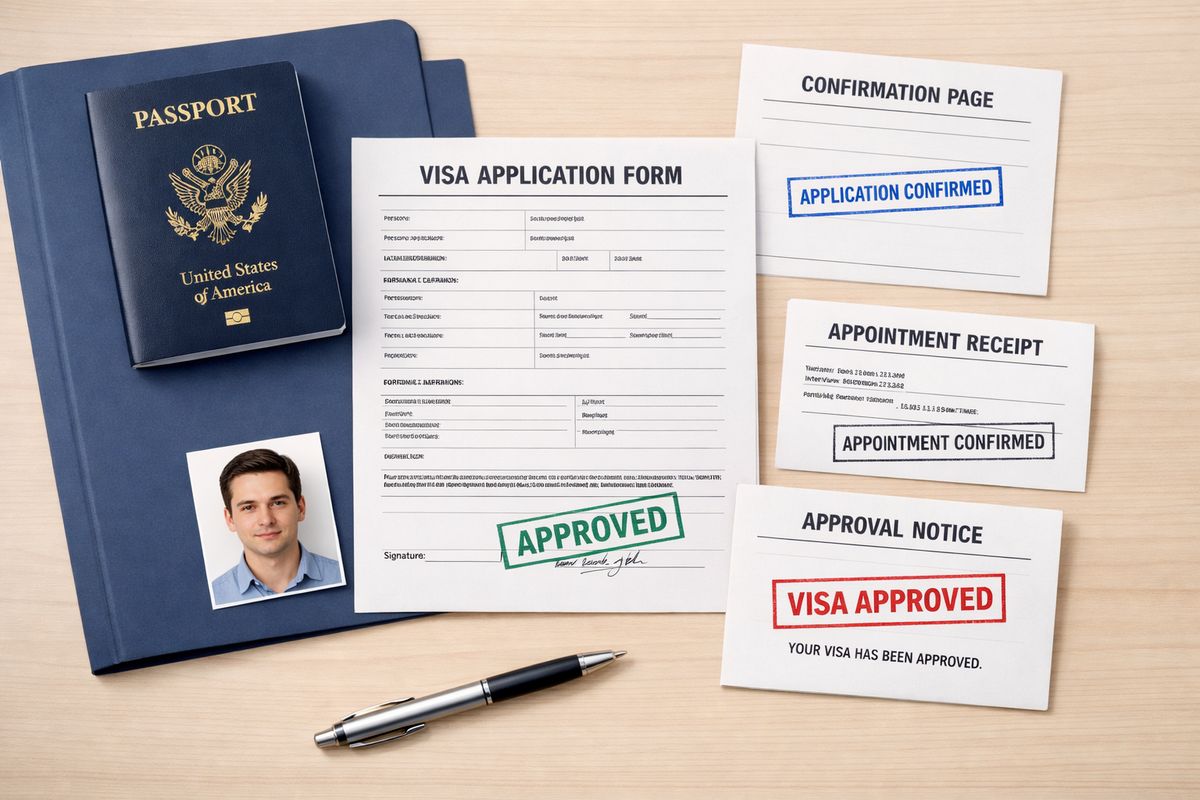
The usual process follows a pretty clear sequence: complete the DS-160, pay the visa fee, schedule the appointment, attend biometrics if the post requires it, appear for the interview, and wait for passport return.
Simple on paper, yes. In practice, small mistakes can slow everything down.
Step 1: Complete the Application and Gather Records
The DS-160 is the online visa application form used for most nonimmigrant visa stamping cases. You enter personal details, travel information, immigration history, and category-specific information.
You also gather the core documents, usually including your passport, DS-160 confirmation, appointment confirmation, photo if required, approval notice, and category-specific support records. Match every detail carefully. A name variation, wrong petition number, or outdated employer information can create delays that feel completely avoidable, because they are.
If your case already involves a pending request for more evidence with USCIS, it helps to understand how evidence issues can affect the bigger timeline.
Step 2: Book the Consulate Appointment
After submitting the form and paying the fee, you schedule your appointment through the system used by the embassy or consulate where you plan to apply. Each post can have its own rules, available dates, document submission steps, and passport delivery options.
Appointment wait times can swing wildly. One post may show openings in two weeks, while another may push you out for months. That is why consular planning is not something to leave for the week before travel.
Step 3: Attend the Interview and Security Checks
At the interview, a consular officer reviews your application and asks questions about your visa category, travel purpose, work, study, employer, funding, or background. Most interviews are short. Short does not always mean casual, though.
Some cases move directly to approval. Others go into administrative processing, which means extra review before a visa can be issued. That can happen even when you brought every document and answered everything clearly.
Step 4: Get the Stamp and Check It for Errors
If approved, your passport is usually kept for visa printing and then returned by pickup or delivery. Once it comes back, check it immediately.
Look at the visa category, your name spelling, passport number, and validity dates. A stamping error is much easier to fix before you build a whole trip around it.
Where You Can Get Visa Stamping
Visa stamping generally happens at a U.S. embassy or consulate outside the United States. For most people, that is the rule that matters most.
A common first-time question has a simple answer: you usually cannot get a new visa stamp from inside the U.S. You may change or extend status in the U.S. through USCIS, but actual visa issuance usually happens abroad.
Home Country vs. Third-Country Processing
Third-country processing means applying for visa stamping in a country that is not your home country, such as applying in Mexico while living in the U.S. Some people try this for convenience, speed, or travel logistics.
Sometimes it works smoothly. Sometimes it adds risk, especially if the post limits who it accepts or your case is not straightforward. That risk goes up if your category recently changed, your background raises extra questions, or your family members have separate status issues. For dependents, it helps to know how family visa situations can split from the principal case.
Why Location Rules and Local Practices Matter
Each embassy or consulate can run differently. Appointment availability, holiday closures, interview waivers, document drop-off rules, and local service updates can change without much warning.
Check the specific post before booking flights. For example, a post in New Delhi or Ciudad Juárez may have procedures that are not used elsewhere. That one detail can save you from showing up with the wrong plan.
Delays, Denials, and Administrative Processing
This is where most travel anxiety lives. Not in the form itself, but in what happens when stamping does not go smoothly.
A visa case can be delayed, refused, or held for extra review even after petition approval. That is frustrating, but it is also normal enough that you should plan around the possibility instead of assuming best-case timing.
What Administrative Processing Means
Administrative processing means your case needs additional review after the interview before a visa can be issued. Sometimes it is document-related. Sometimes it involves security checks or internal consular review.
It can last days, weeks, or longer. The hardest part is that once it starts, you usually have limited control over the pace.
Common Reasons for Refusal or Delay
Some problems are simple: missing documents, inconsistent information, or unclear job details. Others are more serious, such as prior status violations, possible unauthorized work, old visa refusals, criminal history, or concerns about whether your category really fits your situation.
Employer-based cases can also trigger extra questions if your job changed, your worksite changed, or your petition records do not line up neatly. If you are in L-1 status, even small inconsistencies can matter, which is why keeping your work authorization details aligned is more than paperwork housekeeping.
What You Can Do if Your Visa Is Refused or Put on Hold
Start by reading the refusal or hold notice carefully. Save every document, every email, and every case update. If the consulate asks for additional evidence, respond exactly as instructed.
If the issue involves status violations, misrepresentation concerns, criminal history, or repeated delays, get legal advice before making another move. This is also the moment to be careful about bad guidance and rushed promises. If someone claims a guaranteed fix, learn the warning signs of bad immigration advice before trusting that person with your case.
Travel Risks to Think Through Before You Leave the U.S.
A quick trip can become a long stay abroad if visa stamping is delayed. That is not rare. It is one of the most practical risks in immigration travel.
Before leaving, think beyond the plane ticket. Can your job absorb a three-week delay? Will your school allow remote participation? Do your spouse or children need to return on the same timeline? Travel is not just a legal question. It is a life logistics question.
Questions to Ask Before Booking Travel
Ask yourself a few blunt questions. Is your petition approved? Is your passport valid for long enough? Do you have the original documents you need? Are appointments actually available where you plan to apply? Can you stay abroad longer than planned if the case is delayed?
That last question matters more than most people want to admit. Nonrefundable flights look cheap until you miss a start date, payroll cycle, or semester deadline.
Special Risks After a Change of Status or Pending Case
Travel can get trickier after a change of status approval inside the U.S. because your new status may be valid domestically while your passport still lacks a visa stamp in that category. The moment you leave, you may need consular processing before you can return.
Pending extensions, transfers, or green card-related filings can also complicate travel timing. If you are dealing with advance parole or family-based filings, it helps to understand when travel permission is actually safe to use. Cases involving overstays, unauthorized employment, or prior denials deserve extra caution.
When It Makes Sense to Talk to an Immigration Lawyer
Sometimes visa stamping is routine. Sometimes it absolutely is not.
If your case is straightforward, your documents match, and your history is clean, stamping may be mostly an exercise in planning and patience. But if anything in your record feels messy, old, unresolved, or inconsistent, legal review before travel can save you from getting stuck abroad.
Situations That Deserve Legal Review Before Stamping
Certain red flags deserve attention before you book the trip: prior visa denials, past administrative processing, arrests or criminal charges, status gaps, unlawful presence issues, employer changes, dependent complications, or plans to apply in a third country.
This is also true if your case involves delicate timing, like a recent transfer, extension, or category change. If you want a clearer picture of what legal representation actually does in a visa case, this is exactly the kind of situation where that help becomes concrete.
How Legal Help Can Lower Travel Surprises
An attorney can review your documents, spot inconsistencies before the consulate does, explain your risk level honestly, prepare you for likely interview questions, and help you respond if the case gets delayed or refused.
Gondim Law is one of the leading immigration law firms in Los Angeles, and scheduling a consultation can help you size up travel risk before you commit to plans you cannot easily unwind.
Common Questions About Visa Stamping
Can You Stay in the U.S. With an Expired Visa Stamp?
Yes, if your immigration status remains valid and your I-94 has not expired. An expired visa stamp does not force you to leave the U.S. by itself. The problem usually appears only if you travel abroad and need to return.
Can You Renew a Visa Stamp Inside the United States?
Usually no. New visa stamping is generally done at a U.S. embassy or consulate outside the United States.
Is Visa Stamping Guaranteed After Petition Approval?
No. Petition approval helps, especially in employment-based cases, but a consular officer still reviews visa eligibility and admissibility before issuing the stamp.
How Early Should You Plan for Stamping Before Travel?
Earlier than you think. Give yourself time for appointment wait times, document collection, interview scheduling, and the real possibility of delays after the interview.
A Simple Pre-Travel Visa Stamping Checklist
Before booking anything nonrefundable, review the basics carefully:
- Passport valid long enough for travel
- Correct visa category support documents
- Approval notices and original records
- Employer, school, or program documentation
- DS-160 and appointment confirmations
- A backup plan if your return is delayed
That last item is the one people skip. Do not.
If you take one step today, make it this: review your travel timeline before you book flights, hotels, or event dates around assumptions that your visa stamping will be quick. A little caution here can save you from a very expensive surprise.
Frequently Asked Questions
Does an expired visa stamp mean you are out of status?
No. Your visa stamp and your status are different things. You can stay in valid status in the U.S. with an expired stamp if your I-94 and underlying status remain valid.
Can you switch visa categories inside the U.S. without getting stamped right away?
Yes, in many cases. A change of status approval inside the U.S. can give you a new status without a new passport stamp. But if you leave the country, you usually need visa stamping in that new category to return.
How long does visa stamping take after the interview?
Some passports are returned in a few days, while others take much longer if the case goes into administrative processing. The interview date is not the same thing as a guaranteed visa issuance date.
Is third-country processing a good idea?
Sometimes, but not automatically. It can be convenient, but it may carry added risk if the consulate limits who it accepts or your case has any complications.
What documents cause the most trouble when missing?
Approval notices, employer letters, school records, passport validity, and application details that do not match prior filings are common problem areas. Small inconsistencies can trigger bigger delays than expected.