

Trying to switch employers on H-1B can feel simple right up until it suddenly doesn’t. One wrong assumption about timing, pay stubs, or when you can start can turn a good job move into a mess, so here’s what to do first and how to handle the process cleanly in Los Angeles.
What you’ll need before you switch employers on h-1B
Before anybody files anything, get your paperwork together. That alone can shave days off the process and prevent the classic Friday afternoon scramble when somebody asks for a document you know exists, just not where it is.
Your current h-1B approval and immigration records
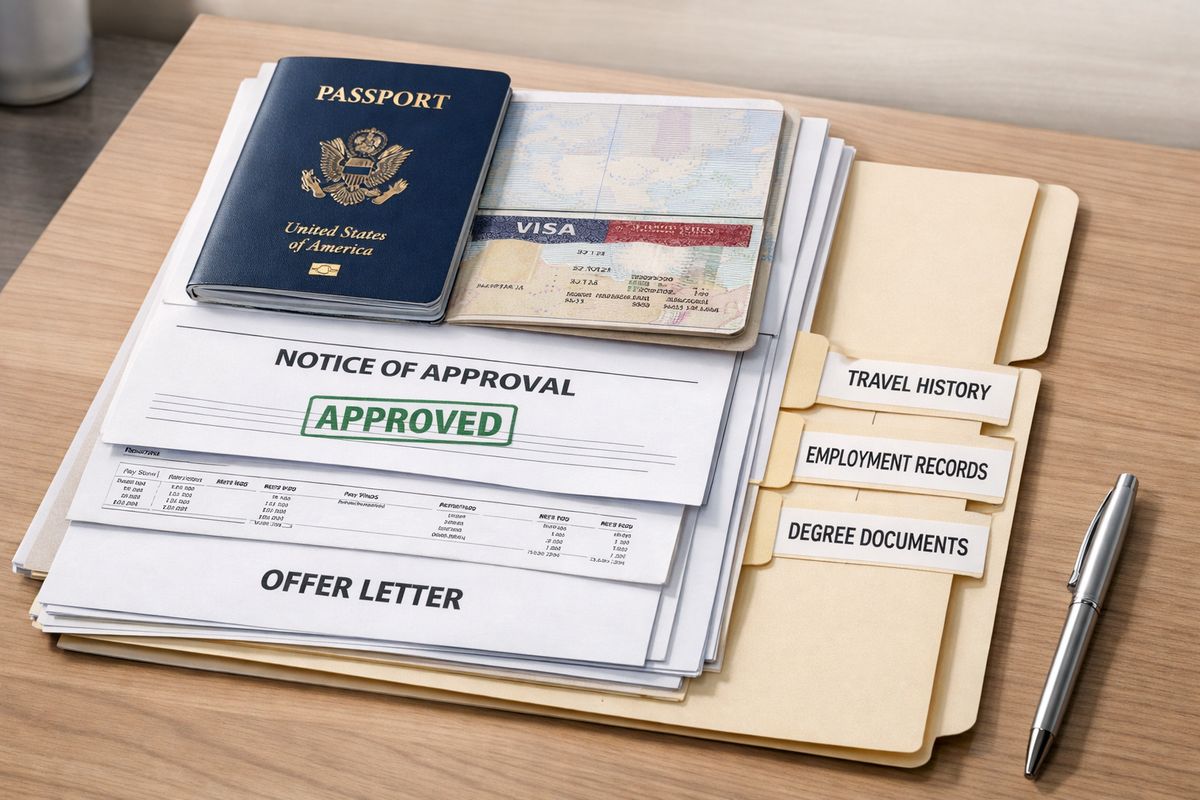
Start with your most recent I-797 approval notice, passport, visa stamp if you have one, current I-94, and copies of prior H-1B approvals or filings. These records help confirm your current status, your admission history, and the dates that matter for a new filing.
If you changed employers before, include those older approval notices too. A change-of-employer case often depends on showing a clean timeline, and your records are the paper trail that proves it.
Recent pay stubs and proof you have been maintaining status
Recent pay stubs matter because they help show you have been maintaining status, which simply means following the terms of your H-1B job and staying in valid immigration status while in the United States. In plain English, USCIS wants to see that you were actually working as authorized and being paid.
If a payroll gap has already happened, do not ignore it and hope it goes away. That is exactly the kind of issue to flag early, especially if a layoff, benching period, or unpaid time off is involved.
Your new job offer and role details
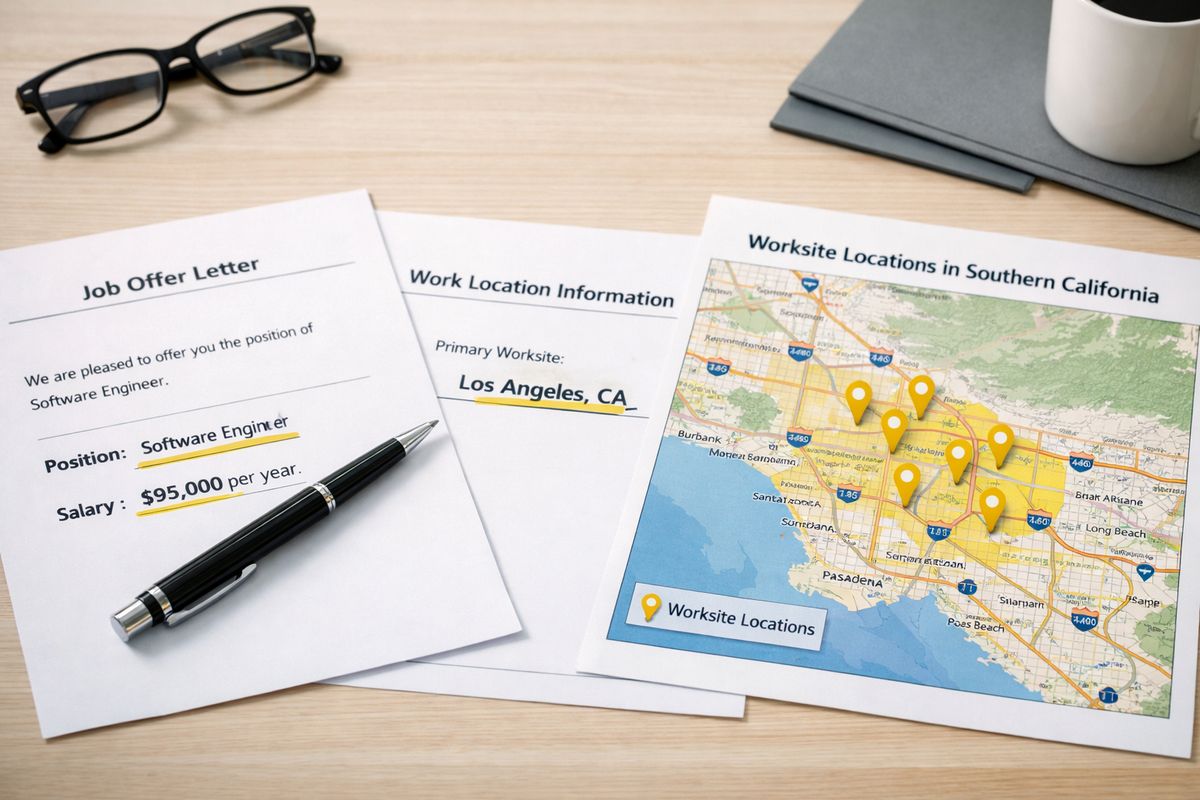
Pull together your offer letter, proposed job title, job duties, salary, and work location. If the job is in Downtown Los Angeles, Santa Monica, El Segundo, or partly from your home office, that detail matters more than most people expect.
Small facts shape the case. A role described casually in email can become a problem if the petition later says something different.
A realistic timeline for your move
Build your timeline around the filing, not just the offer. The new employer usually needs time to collect documents, prepare the Labor Condition Application, and file the petition before your start date.
That is one reason many people review the full steps and timing for an LA job change case before giving notice. It helps you see where delays usually happen, and most delays are not dramatic, just annoyingly ordinary.
Step 1: confirm that your new job is a real h-1B fit
Before you resign, celebrate, or tell everybody the move is done, make sure the new role actually works for H-1B purposes. Not every strong job offer is an H-1B-ready job offer.
Check that the role qualifies as a specialty occupation
A specialty occupation usually means a job that normally requires at least a bachelor’s degree in a specific field. That is the basic rule behind H-1B eligibility, as explained by USCIS and reflected in employer filing requirements.
In practice, that means the role should not sound vague or generic. “Engineer” with technical duties and a degree requirement is one thing. “Operations lead” with broad business tasks can be a harder sell if the degree link is weak.
Match your degree and experience to the position
Your education and experience should line up with the role in a way that makes sense on paper. If your degree is in computer science and the job is software development, that is straightforward. If your degree is in one field and the new position sits in another, supporting evidence may be needed to explain the connection.
That explanation cannot live only in a conversation with a recruiter. It has to show up in the filing record.
Confirm the work location and wage level
The worksite affects wage requirements and the Labor Condition Application, or LCA, which is the Department of Labor filing tied to the role and location. A position based in Downtown Los Angeles may involve a different wage setup than a hybrid role split between Santa Monica and your apartment.
That is why remote and hybrid details should be settled early. Even a home-office arrangement can affect how the filing is prepared under the Department of Labor’s portability and worksite rules (DOL portability guidance).
Step 2: talk with an immigration attorney before you resign
This is the move that saves the most trouble. A quick legal review before you leave your current job can spot risk points while you still have options.
Review your current status and any risk points
An attorney can check for status gaps, old denials, time spent outside the United States, amended petitions, changed worksites, or past issues with maintenance of status. None of that automatically blocks a move, but it does affect strategy.
This matters even more if your long-term plan includes sponsorship at the new company. If that is on your mind, it helps to understand how a job move can affect your green card timeline before the switch becomes final.
Flag timing issues if you were laid off or expect a gap
If a layoff already happened, the clock matters immediately. H-1B workers often have a 60-day grace period after employment ends, but that period is not something to estimate casually or treat like a flexible suggestion.
Timing mistakes here are costly because a good case filed too late can still run into serious trouble. That is why this should be reviewed early, not after your final paycheck.
Ask about strategy if you have more than one offer
If more than one employer wants to hire you, more than one H-1B petition may be possible depending on timing and facts. That can help if you are deciding between options or if one role moves faster than another.
The same kind of planning shows up when sponsorship plans change unexpectedly, which is why many people also look into what happens when an employer stops supporting an immigration case.
Step 3: get the new employer ready to file the h-1B transfer
Once the job checks out, the employer has to move from interest to action. This is where a lot of cases slow down, not because anything is wrong, but because nobody gathered the right documents early enough.
Share your documents early
Send your immigration records, resume, degree documents, transcripts if requested, and prior approval notices as soon as possible. Waiting until everything feels urgent is how simple cases become stressful for no good reason.
That familiar Friday at 4:30 problem is real. It is much easier to fix a missing document on Monday than one hour before a filing deadline.
Make sure the employer understands this is a new petition, not a simple swap
An H-1B “transfer” is not a literal transfer of your visa from one employer to another. The new employer usually files a new H-1B petition on your behalf.
That distinction matters because it changes expectations. The company is not taking over old paperwork. It is creating a new filing based on a new job.
Confirm who is handling the filing
Find out whether the company uses outside counsel, an in-house legal team, or needs a referral. Many people in Los Angeles start looking for immigration counsel at exactly this point, once the offer is real and the legal process suddenly feels less abstract.
Cost questions often come up here too, especially around filing fees. If that becomes part of the discussion, it helps to review who usually covers H-1B filing costs so expectations stay grounded.
Step 4: review the labor condition application and petition details carefully
Small filing mistakes cause big delays. Titles, job duties, salary, and worksite details should match your actual job, not an approximation.
Check job title, duties, salary, and worksite information
Read the petition details closely. Your title should reflect the real role, your duties should sound like the work you will actually do, and your salary structure should match how you will be paid.
Remote and hybrid arrangements deserve extra attention. If your petition treats your job like an office-only role when you will really be working from multiple locations, that mismatch can come back later.
Understand the LCA in plain english
The Labor Condition Application is a required filing with the Department of Labor that covers wage and worksite terms for your H-1B job. It is not the full petition, but it is a foundation for the petition.
The catch is that the LCA has to line up with where and how you will work. If those facts are sloppy at the beginning, the rest of the filing gets shaky too.
Ask questions before the petition is submitted
If something looks off, say so before the case is filed. A wrong address, vague job summary, or incorrect salary detail is much easier to fix on the front end.
Do not assume it will sort itself out later. It usually doesn’t.
Step 5: file the h-1B change-of-employer petition and track the receipt
This is the point where preparation turns into a pending case. Once the petition is filed, the focus shifts from gathering documents to tracking proof that USCIS accepted it.
Know when the petition can be filed
The new employer can usually file once the role, wage, and documents are ready. If your current status is close to expiring or a grace period is running, filing speed matters even more.
USCIS filing timing also matters because portability benefits depend on a properly filed petition, not just a plan to file later.
Understand premium processing versus regular processing
Premium processing gets you a faster USCIS response for an extra filing fee, but it does not make a weak case strong. It helps with planning, start dates, travel decisions, and peace of mind. That part is real.
But speed is not magic. If the facts are messy, faster review can just mean you hear about the problem sooner.
Save the receipt notice and filing confirmation
The receipt notice matters because it helps document the filing date and supports portability in eligible cases. It is also one of the first pieces of proof you will want for your records.
Getting that receipt can feel like finally seeing a tracking number after waiting all week for an important package. Suddenly the process feels real.
Step 6: start the new job at the right time
Starting too early is one of the fastest ways to create trouble. Timing has to be deliberate here.
Understand h-1B portability
H-1B portability is the rule that may allow you to start working for the new employer after a qualifying petition is properly filed, instead of waiting for final approval. The Department of Labor explains portability as a benefit available in certain H-1B employment changes (fact sheet here).
That said, portability is not a free-for-all. It depends on your status history and the quality of the filing.
Do not resign too early without a timing plan
Quitting before the filing strategy is set can create avoidable risk. Emotional timing and legal timing are not always the same thing, especially if you are eager to leave a bad job.
A clean plan beats a dramatic exit every time.
If you are outside the U.S., check the rules before making any move
Changing jobs from outside the United States is not the same as changing jobs while inside the country. Travel can affect admission, visa stamping issues, and how the new petition works in practice.
If travel is part of the picture, that deserves special review before tickets get booked or start dates get locked in.

Step 7: handle your exit from the current employer cleanly
The old job still matters. Even after the new petition is filed, your employment records from the current employer can affect future filings.
Time your resignation around the filing plan
Coordinate your final day with the filing date and intended start date. If the new petition is being filed close to a deadline, do not create unnecessary gaps by resigning too soon.
The catch is that a satisfying resignation email does not protect your status. Timing does.
Keep copies of final pay records and employment documents
Save final pay stubs, W-2s, old approval notices, and anything else that shows your employment history clearly. These documents tend to matter later, especially in extensions, amendments, and consular processing.
Keep digital copies in one folder and name them clearly. Boring advice, honestly, but it works.
Watch for any gaps in employment or payroll
Unexplained gaps can trigger questions later. If there was a break, get the timeline straight while details are still easy to confirm.
That simple habit can save a lot of stress if USCIS later asks for proof.
Step 8: prepare for requests, delays, or a change in plans
Even a solid case can hit a bump. A pending case does not always stay simple.
If USCIS sends a request for evidence
An RFE, or Request for Evidence, means USCIS wants more information before deciding the case. Common reasons include questions about specialty occupation, wage level, worksite details, or proof that you maintained status.
Respond quickly and carefully with the employer and attorney. RFEs are frustrating, but they are not the same thing as a denial.
If the petition is still pending and another offer comes in
A second offer during a pending case can create bridge filing issues or stacked petitions, especially if timing overlaps. Fast-moving job searches make this more common than people expect.
Before changing direction again, get the filing sequence reviewed. This is not the moment for guesswork.
If the petition is denied after you changed jobs
If the case is denied after you already moved, the immediate questions are about work authorization, current status, and whether another filing or departure plan is needed. This is where legal help becomes especially time-sensitive.
Longer-term sponsorship questions can also show up after a job change, especially in shaky hiring markets. If that is part of your concern, reviewing how H-1B workers are affected when sponsorship plans pause can help frame the bigger picture.
Step 9: know the common mistakes that derail an h-1B employer switch
Most H-1B switch problems are not exotic. They come from ordinary mistakes made too casually.
Starting work before the filing rules are satisfied
Do not start before the legal basis to start is in place. A manager saying “you’re good to go” is not an immigration strategy.
This mistake is avoidable, and it causes real damage when ignored.
Assuming any job offer will work for h-1B purposes
A fancy title does not fix vague duties or weak degree alignment. If the role does not clearly support an H-1B petition, the offer alone is not enough.
This circles back to the first review step for a reason. Fit matters.
Missing pay stubs, status gaps, or inconsistent records
Thin records create questions. Gather payroll history, travel records, approval notices, and old immigration documents before somebody has to chase them under pressure.
Messy files can often be improved. They are just harder to fix late.
Treating remote or hybrid work as a minor detail
A home office, coworking space, or split schedule can affect the LCA and petition. It sounds small until it isn’t.
Work location details belong in the legal strategy from day one, not as an afterthought.
Troubleshooting: what to do if your situation is more complicated
Some cases do not fit the clean checklist. That does not mean the move cannot work, only that the standard path may need adjusting.
If you were recently laid off in los angeles
Move quickly. Preserve your approval notices, termination records, recent pay stubs, and travel history, then get legal guidance right away while the grace period is still useful.
If the layoff happened recently, time is your most limited resource.
If you do not have recent pay stubs
Missing pay stubs do not automatically end the process, but they do change the strategy. Alternatives may exist depending on why the records are missing, how recent the issue is, and what other proof you have.
This is one of those situations where guessing does more harm than good.
If your current h-1B has already expired or is close to expiring
When the underlying approval is near the end, timing becomes more urgent. Filing strategy, extension questions, and current status all need to line up carefully.
Close-expiration cases can still work, but they do not reward delay.
If you want to move from a consulting placement to an in-house role
A move from consulting to an in-house role often changes the documentation picture. End-client letters, worksite proof, and control issues may matter less in one role and more in another.
That kind of shift is common in the LA market, especially in tech, healthcare, and engineering roles.
What success looks like after you switch employers on h-1B
A smooth switch is not just getting the petition filed. It is starting the new job with clean records, clear timing, and fewer surprises later.
Your immediate post-filing and post-start checklist
Once you start, save the filing receipt, approval notice when it arrives, updated I-9 records, pay stubs from the new employer, and any communication confirming your job title and work location. Future extensions and travel questions get much easier when your records stay organized from the beginning.
Keep an eye on any fee issues or policy shifts that could affect future filings too, especially if your employer raises questions about cost. Topics like new H-1B fee proposals and who could be affected are worth watching because they shape planning even before rules change.
When to follow up on approval, travel, and future changes
After you start, follow up on approval timing, travel plans, visa stamping needs, and any future change in role or location. A promotion, relocation, or remote work change can trigger fresh immigration questions.
Staying ahead of those changes is much easier than cleaning them up later.
One smart next move to try today
Gather your H-1B approval notice, recent pay stubs, and new offer details before talking with an immigration attorney in Los Angeles. Then schedule your call here to learn more about your immigration status and visa options: https://gondimlaw.com/schedule-your-consultation/.
At Gondim Law, your attorneys speak English, Portuguese, and Spanish and bring more than 30 years of experience to help you navigate your next steps. You’ll also have the opportunity to speak with Founder Attorney Marcelo Gondim about your case. Your consultation can help you understand your options and identify the visa that best fits your situation.
Frequently asked questions
Can you switch employers on h-1B without going through the lottery again?
Usually yes, if you were already counted against the H-1B cap and you remain eligible for a new H-1B petition. The new employer generally files a change-of-employer petition rather than entering you into a new lottery.
Can you start the new job as soon as the petition is filed?
In some cases, yes, under H-1B portability rules, if the new petition was properly filed and your status supports portability. The exact timing should be confirmed carefully before you begin work.
Do you need recent pay stubs to switch employers on h-1B?
Recent pay stubs are often very helpful because they help show maintenance of status. If you do not have them, the case may still be possible, but the strategy usually needs closer review and stronger supporting records.
What happens if you were laid off before the new employer files?
A layoff can trigger a 60-day grace period in many situations, and timing becomes urgent right away. Waiting too long to review your options can close off choices that were available earlier.
Is an h-1B transfer really a transfer?
Not in the literal sense. The term “transfer” is common, but the new employer usually files a new H-1B petition for your employment rather than taking over the old employer’s petition.
Does remote work affect an h-1B employer switch?
Yes. Remote, hybrid, and multi-location work can affect wage issues, the Labor Condition Application, and how the petition is prepared. That detail should be reviewed early, not treated like a minor footnote.