

When immigration sponsorship stops, the panic usually hits fast. One day your case feels like it is moving, the next day a spouse refuses to sign, a relative pulls back, or an employer says the job is gone. The good news is that immigration options after sponsorship stops do exist, but your best path depends almost entirely on where your case stands right now.
A sponsor is the person or employer whose support anchors your immigration case. If that support disappears, the case does not always end on the spot, but it does change the rules. In some situations, you can salvage progress already made. In others, the smartest move is to switch tracks quickly before a denial or status gap creates bigger problems.
Here’s what you’ll learn in this guide:
- what “sponsorship stops” actually means
- how timing changes your options
- family-based paths that may still work
- employer-based strategies that can save a case
- self-petition options that do not need the original sponsor
- whether you can stay in the U.S. during the switch
- what to do in Los Angeles if time is tight
What “your sponsor stopping the case” actually means
“Your sponsor stopped the case” can mean a few different things, and those differences matter more than most people realize. In plain English, your sponsor is the person or business that filed or supported the immigration petition tied to your green card or visa process.
Sometimes the sponsor formally withdraws a petition. Sometimes the sponsor does not technically withdraw anything, but stops cooperating by refusing to sign forms, skipping the interview, ending the marriage, revoking the job offer, or simply going silent. Death can also interrupt a case. So can a company closure or layoff.
Here’s the thing: a stopped case is not one single legal category. It is more like a fork in the road. The exact option available to you depends on whether a petition was filed, approved, denied, withdrawn, or paired with a pending adjustment application.
The 3 moments that change your options most
Timing is the whole game here. Miss one turn, and your route can change as sharply as missing the 110 exit in downtown Los Angeles and ending up somewhere completely different.
The first moment is before petition approval. If a family petition or I-140 employer petition is still pending and support disappears, the case is usually fragile. A withdrawal at this stage often ends that path.
The second moment is after petition approval but before green card approval. That can leave you with something valuable, such as a retained priority date in an employment case, or a petition that still matters for certain family-based situations.
The third moment is after filing adjustment of status, usually through Form I-485. Once that application is pending, you may have more room to stay in the U.S. while sorting out the next move, but a pending I-485 is not magic. It can still fall apart if the foundation under it disappears.
Check your case position before you make a move
Before doing anything else, figure out exactly what was filed and where it stands. Guessing is how people make expensive mistakes.
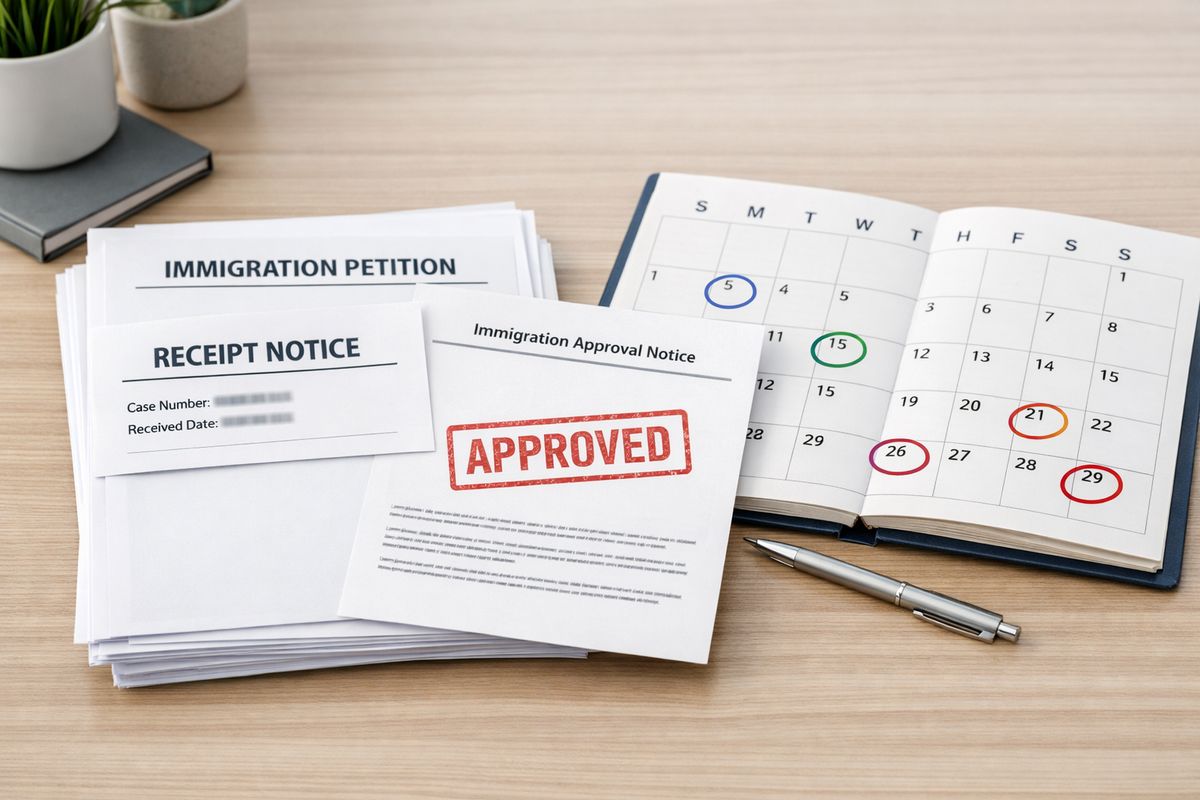
Start with your receipt notices and approval notices. Check the form numbers, the filing dates, and the current status through the USCIS case tracker if you have receipt numbers. Look for the pieces that matter most: I-130 for family petitions, I-140 for employment petitions, I-485 for adjustment of status, I-765 for work permits, and I-131 for travel permission.
Also check your priority date if your case involves a visa category that uses visa bulletin waiting lines. If an employer sponsored you, confirm whether the PERM labor certification was approved before the I-140 was filed. If your case involved consular processing, review every notice from the National Visa Center.
For employment cases, job changes can affect timing in ways that are easy to miss. If that is part of your story, it helps to understand how job changes can disrupt the PERM process before assuming your old filing still protects you.
Immigration papers worth pulling together today
Get your file into one place now, not later. That means receipt notices, approval notices, sponsor emails or texts, marriage records, divorce records if any, job offer letters, pay stubs, your passport, visa stamp, I-94, work permit card, advance parole document, and every letter from USCIS or the NVC.
This sounds basic, but it saves real time. If you are trying to explain your case from memory during a legal consultation, details blur. If the full paper trail is sitting in one folder, the actual options become much easier to spot.
Family-based options after a relative or spouse stops sponsoring you
Family-based cases get deeply personal fast. When a spouse or relative stops helping, the legal problem is often tied to a relationship problem, and that makes the case harder to think through calmly.
If a U.S. citizen or green card holder relative withdraws the petition before approval, that route usually ends. If the petition was approved, you may still need that relative’s continued cooperation depending on the stage and category. Marriage-based cases are especially sensitive because the relationship itself is the legal basis.
A withdrawn petition is one problem. A divorce is another. A sponsor refusing to sign the affidavit of support is yet another. Each one affects the case differently.
If the marriage is still real but the sponsor refuses to cooperate
If your marriage is genuine but your spouse will not attend the interview, respond to notices, or sign required forms, the case can stall badly. A marriage case usually cannot move forward on good intentions alone.
In practice, a spouse who refuses to cooperate can block progress even if the relationship started honestly. Sometimes the only realistic outcome is delay, refiling later if circumstances change, or switching to a different immigration path if one exists. It is frustrating, but pretending the original filing will somehow fix itself usually wastes precious time.
If divorce or separation happens during the case
Divorce during a pending marriage-based green card case often causes the standard adjustment route to collapse. If the marriage ends before permanent residence is granted, the original basis for the case usually disappears with it.
Conditional residence is different. If you already received a two-year green card through marriage, divorce does not automatically end everything, but it does change how you remove conditions. In that situation, a waiver filing may still be available if the marriage was entered in good faith.
Separation without divorce can also complicate the case, especially if the separation raises questions about whether the marriage is ongoing. The paperwork may still exist, but the facts matter.
VAWA self-petition if the sponsor used control, threats, or abuse
VAWA, the Violence Against Women Act, can help you self-petition if a U.S. citizen or green card holder spouse, parent, or child abused you. Despite the name, this option is not limited by gender.
Abuse in this context is broader than many people think. Physical violence counts, of course, but so can threats, intimidation, isolation, financial control, or using immigration status as a weapon. If your sponsor said things like “I will cancel your papers if you do not do what I want,” that can matter.
Helpful evidence can include messages, police reports, medical records, counseling notes, photos, affidavits, shelter records, or statements from friends, relatives, clergy, or therapists who witnessed the harm or its effects. Silence and control often leave a paper trail, even if it does not look dramatic at first glance.
Widow(er) And other special family situations
Some family-based cases survive the sponsor’s death or changed circumstances. A widow or widower of a U.S. citizen may be able to self-petition in certain situations. Some surviving relative provisions can also protect pending cases.
These are narrower paths, but they are real. If death or a sudden family change interrupted your case, do not assume the opportunity vanished automatically.
Employment-based options if an employer withdraws support
When an employer stops sponsorship, the outcome depends heavily on stage. Some employment cases die quickly. Others leave behind pieces you can still use.
If a company withdraws the I-140, ends your job, freezes green card cases, or shuts down, the case needs a close review right away. That is especially true in industries where sponsorship suspensions have become more common, including situations involving companies pausing green card support.
Before the I-140 is approved
Before I-140 approval, an employment-based case is vulnerable. If sponsorship ends while PERM is pending or before the I-140 gets approved, you often cannot carry that case over to a new employer.
In many cases, the practical fix is starting over. That may mean a new PERM filing, a new I-140, and a fresh wait. It is not the answer anybody wants, but it is usually better to know that early than to burn months hoping a dead case still has life in it.
After I-140 approval: what can still be saved
An approved I-140 can preserve something valuable even if the original job disappears. In many cases, your priority date can be retained for a future employment-based filing, which can save a large chunk of time.
That does not mean the whole green card case survives untouched. The petition and the adjustment case are connected. But an approved I-140 is often more useful than people realize, especially when planning a new filing with another employer or exploring self-petition categories later.
Portability under AC21 if your I-485 has been pending 180 days
This is one of the biggest rescue tools in employment-based immigration. If your I-140 is approved and your I-485 has been pending at least 180 days, you may be able to keep your adjustment case alive by moving to a same or similar job with a new employer under AC21 portability.
“Same or similar” does not mean identical title, identical office, or identical pay. It usually means the new job is close enough in duties, skill level, and occupational classification to the original role. USCIS often reviews this through job descriptions, salary information, and occupational codes. Supplement J is commonly used to confirm the new qualifying job offer.
If your work authorization is tied to H-1B, timing matters twice, once for the green card strategy and once for your temporary status. A fast employer change can be the difference between a smooth transition and a mess, especially if you are weighing how an H-1B transfer works in Los Angeles.
If you are on h-1B, l-1, o-1, or another work visa
Your green card case and your temporary work visa are related, but they are not the same thing. Losing employer sponsorship can affect both, sometimes on different timelines.
For H-1B workers, a new employer may be able to file a transfer quickly, and the grace period after job loss can be incredibly important. L-1 and O-1 workers face different rules, and not every status is easy to move. If your situation involves active H-1B sponsorship issues, it also helps to review what happens when green card support for H-1B workers is interrupted.
Self-petition and independent immigration paths that do not need the original sponsor
This is the section people often need most. If the original sponsor is out, you may still have immigration paths that stand on your own credentials, investment, or need for protection.
EB-1A for extraordinary ability
EB-1A is a self-petition category for people with sustained achievements in fields such as science, arts, education, business, or athletics. In everyday terms, you need proof that your work stands well above the ordinary in your field.
Awards, publications, press coverage, judging the work of others, major salary, original contributions, and leading roles can all help. This is not just for celebrities. Plenty of strong cases involve researchers, startup founders, designers, physicians, or executives with a solid record of impact.
EB-2 national interest waiver (NIW)
The NIW lets you seek permanent residence without employer sponsorship if your work has real national importance and you are well positioned to keep doing it. This is a strong option for professionals whose work benefits the United States in areas like health care, engineering, public health, technology, energy, or education.
The trick is not just being talented. You need a clear story backed by evidence, showing why your work matters beyond one employer and why waiving the usual job offer requirement makes sense.
EB-5 investor route
EB-5 is an investment-based path that does not depend on a family or employer sponsor. If you have access to qualifying funds and can make a qualifying investment that meets program rules, this route may be worth a look.
It is not a quick fix for most people. It is also not cheap. But for the right person, it can replace the missing sponsor problem entirely.
Humanitarian options, including asylum, u visa, and t visa
Some people have protection-based options that have nothing to do with the original sponsor. If returning to your home country would put you in danger, asylum may be relevant, but the filing deadline can be brutal. If you were the victim of certain crimes in the U.S., a U visa may apply. If trafficking is involved, a T visa may be possible.
For students and recent graduates whose work plans are already shifting, immigration changes can stack up quickly. If you are juggling school, OPT, and longer-term options, it helps to understand how post-graduation work plans can be affected before a sponsorship problem snowballs.
Can you stay in the U.S. while you switch to another option?
This is usually the real question underneath everything else: do you have to leave right now?
Sometimes no. A pending I-485 may let you remain in the U.S. while it is pending. A valid nonimmigrant status may also give you time to switch strategies. But lawful presence, work authorization, and a viable long-term immigration path are not the same thing.
If you already filed adjustment of status
If your I-485 is pending, you may generally stay while USCIS decides it. But if the sponsor withdraws support or the underlying petition becomes invalid, that pending case can become vulnerable. Staying physically present during that period does not guarantee approval, and it does not erase the need for a backup plan.
A pending adjustment application is like standing on a platform while the train is still in the station. You are not moving yet. If the track disappears, the fact that you were standing there does not fix the route.
If you need to change or extend nonimmigrant status
In some cases, changing or extending nonimmigrant status can buy time. That could involve a work visa, student status, or another temporary category, depending on your history and eligibility.
The catch is that bridge filings and status changes have their own rules. Not every category is realistic, and not every filing stops the clock in the way people assume. Quick filing can help, but only if the strategy actually fits.
Travel, work permits, and the risk of gaps
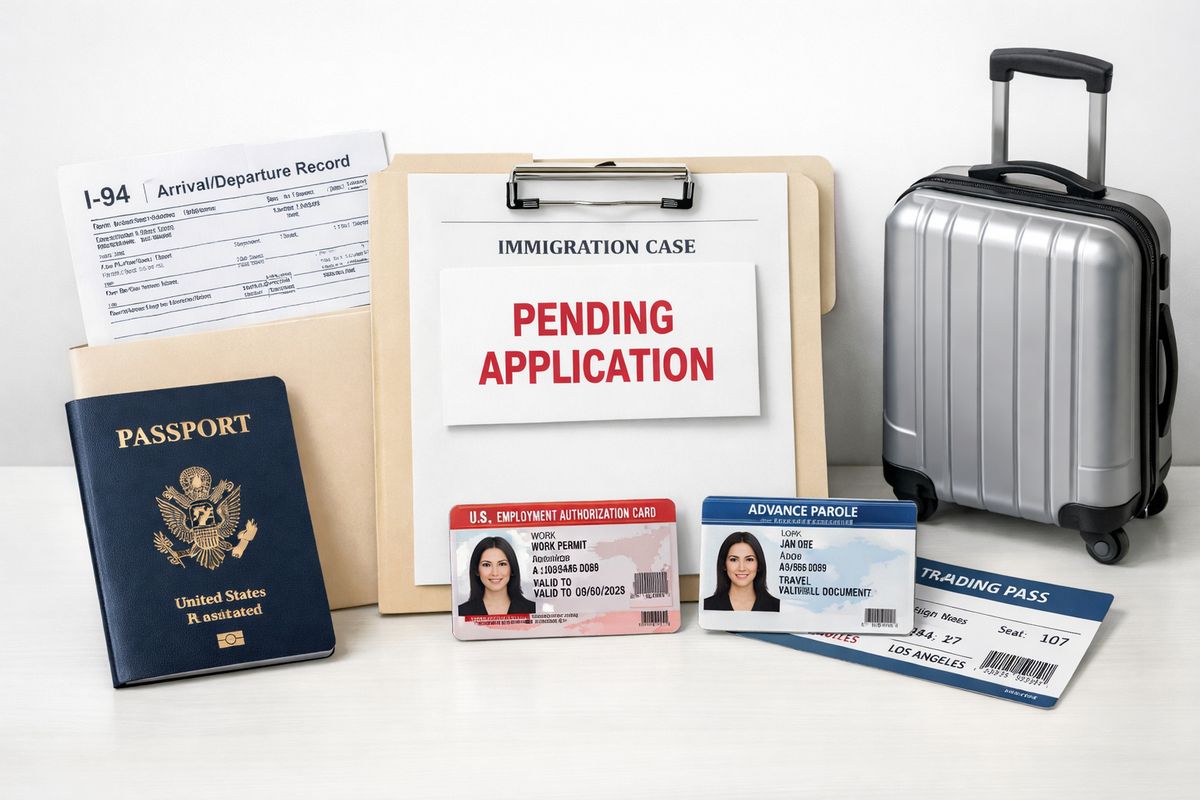
Do not treat advance parole or an EAD card like permanent safety. If the underlying case weakens or gets denied, your work and travel benefits can also fall apart.
Casual international travel during a shaky case is risky. So is assuming a work card stays valid no matter what happens underneath it. Small timing mistakes here can trigger outsized problems.
What if you do not qualify for a new green card path right now?
Sometimes the honest answer is that no perfect replacement path exists today. That does not mean you are stuck. It means the job changes from “file now” to “protect your future case.”
Steps that can strengthen a future case
Start building your record carefully. Save proof of your work, education, awards, publications, projects, taxes, and immigration history. Keep lawful status if possible. Gather recommendation letters while supervisors and colleagues are still reachable. Fix address issues with immigration agencies so notices do not disappear into the void.
If your background could support an independent employment route later, this record-building phase matters more than it seems. Strong evidence turns a maybe into a much cleaner filing.
Risks to avoid while your next move is still unclear
Unauthorized work, missed deadlines, ignored notices, and travel without legal review can do lasting damage. So can trusting verbal promises from a former sponsor who already backed away.
This part is worth saying plainly: small mistakes here can cost months or years. Panic creates sloppy decisions. Facts and deadlines need to run the show instead.
When your case turns into a removal or court problem
If USCIS denies your case and places you in removal proceedings, or if you are already in immigration court, the process changes fast. Some forms of relief that start with USCIS become issues a judge may decide instead.
Relief that may still be available in immigration court
Depending on your situation, immigration court may still allow adjustment through a new basis, asylum-related relief, cancellation of removal in limited cases, or other forms of protection. In some situations, prosecutorial discretion may also matter.
The key difference is urgency. Court cases move on deadlines, hearings, and procedural rules that leave less room for drifting.
How to get legal help fast in los angeles
A same-week legal consultation can make a real difference if sponsorship just stopped, a deadline is close, or a denial notice showed up. Bring your full file to a downtown Los Angeles or Koreatown office instead of trying to explain everything from memory in a waiting room.
Schedule your call here to learn more about your immigration status and visa options. At Gondim Law, attorneys speak English, Portuguese, and Spanish and bring more than 30 years of experience to help you navigate your next steps. You’ll also have the opportunity to speak with Founder Attorney Marcelo Gondim about your case. Help is available to understand your options and identify the visa that best fits your situation: schedule your consultation.
Questions to ask at your first attorney meeting
Ask direct questions. What status do you have today? Can the old petition still help you? Is there a self-petition route? Do you qualify for portability? What deadlines matter this month? What should you stop doing right now?
Those questions cut through the fog quickly. They also shift the conversation from fear to actual legal strategy.
What to bring so the attorney can spot options quickly
Bring your passport, I-94, all USCIS notices, prior applications, marriage or divorce records, job documents, criminal records if any, and proof of abuse or threats if relevant.
The fuller your file, the faster someone can spot a path. Missing one approval notice or one denial letter can hide the best option in the case.
A simple first-step plan for the next 7 days
For the next seven days, keep it simple. Confirm your case status. Gather every notice. Stop guessing. Avoid travel unless you have clear legal advice. Save every message from the sponsor or employer. Book a legal review while the facts are still fresh.
Try one thing first: pull every immigration notice, approval, receipt, and sponsor communication into one folder today. That single step turns panic into a case strategy, and right now, that is exactly what you need.
Frequently asked questions
Can a sponsor withdraw an immigration case at any time?
A sponsor can often withdraw support before final approval, but the effect depends on the case type and stage. An approved employment petition may still preserve your priority date, and some family-based cases have special exceptions.
If your spouse stops sponsoring you, can you still get a green card?
Sometimes yes, but not through the standard marriage route unless required cooperation is still there. If abuse, threats, or coercive control were involved, a VAWA self-petition may allow you to move forward without your spouse.
If your employer withdraws sponsorship, do you have to leave the U.S. immediately?
Not always. If you still have valid nonimmigrant status, a grace period, or a pending I-485, you may have time to act. But time is not the same as safety, so quick case review matters.
Can an approved I-140 still help after you lose the job?
Yes, often. In many situations, an approved I-140 can let you keep your priority date for a later case. If your I-485 has been pending at least 180 days, AC21 portability may also help keep the green card case alive.
Is a pending I-485 enough to protect you after sponsorship stops?
A pending I-485 may let you stay while it remains pending, but it does not guarantee success. If the underlying petition fails or is withdrawn, the adjustment case can still be denied.
What should you do first after sponsorship stops?
Pull together your full immigration file and confirm exactly what was filed, approved, and still pending. That first step saves time, prevents guesswork, and makes the next legal move much clearer.