

Your O-1 can feel stable right up until you think about the next renewal, your next international trip, or what happens if your career changes fast. The short version on O-1 to green card is simple: yes, you can make that jump, and for many people the fastest path is EB-1A, but it is not the only path that actually works.
A green card gives permanent resident status. An O-1 is temporary work authorization tied to extraordinary ability work. That difference matters more than most people expect, because a case that looked strong enough for O-1 still needs to be built for a different finish line.
Here’s what you’ll learn in this guide:
- which green card paths are fastest
- when EB-1A is the best fit
- when EB-1B or EB-2 NIW makes more sense
- how to tell if your case is ready now
- what filing steps affect timing most
- how to avoid status and travel mistakes
The Short Answer: Yes, You Can Go From O-1 to a Green Card
If your O-1 approval already reflects major work, press, awards, judging, leadership, or recognized impact, you are not starting from scratch. In a lot of cases, your strongest route is EB-1A because it can avoid labor certification, can often be self-petitioned, and can move faster than other employment-based categories.
But speed is not just about picking the fanciest category name. The fastest real strategy is the one that matches your evidence, your timing, and your immigration goals without creating avoidable weakness. That is why some people move from O-1 to green card smoothly, while others lose months trying to force the wrong category.
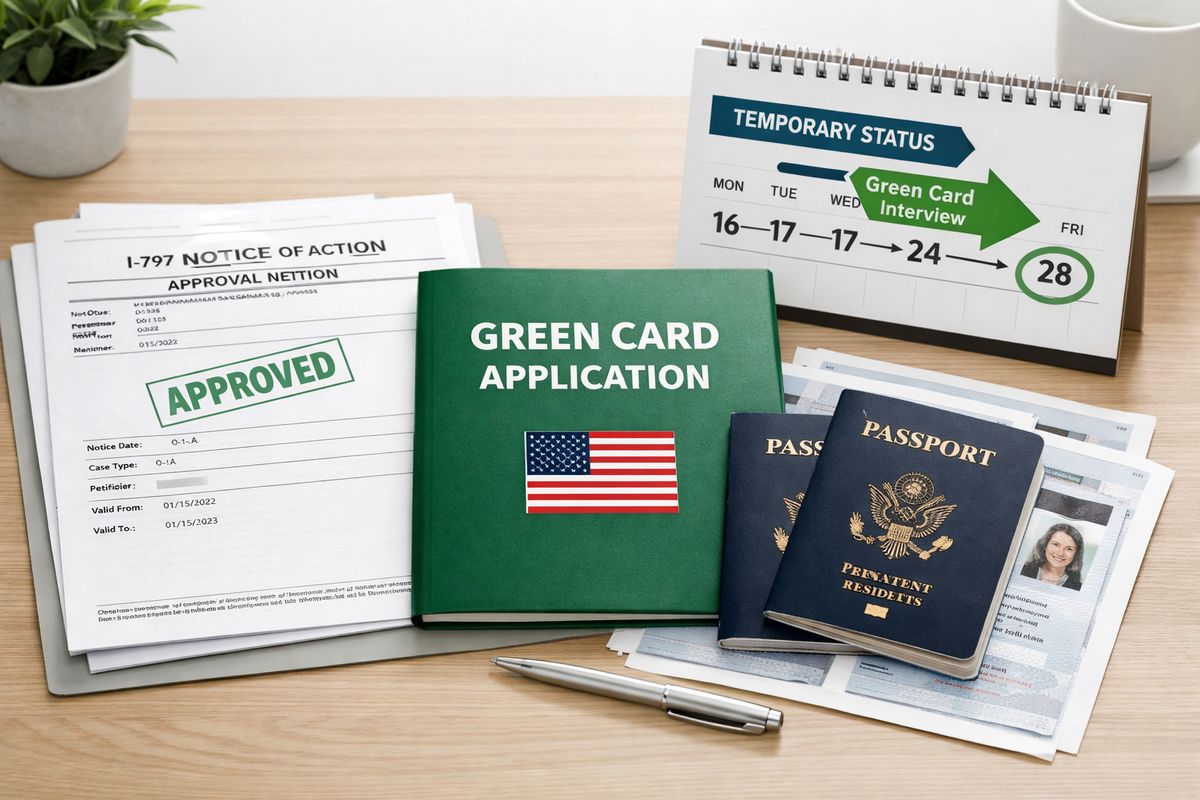
Start Here: How the O-1 and Green Card Paths Fit Together
The O-1 and a green card often use similar facts, but they serve different purposes. Your O-1 lets you work in the United States for a temporary period based on extraordinary ability. A green card gives permanent residence, which means more job flexibility, fewer renewal headaches, and a more stable long-term foundation.
That overlap is why O-1 holders often start ahead. If your case already includes strong evidence under the main evidence categories used for extraordinary ability cases, you may already have the bones of an immigrant petition. The trick is turning a temporary-status case into a permanent-residence case without assuming the same packet will do both jobs.
Why O-1 Holders Often Have an Advantage
A lot of the evidence that helps with O-1 can also help with EB-1A or EB-1B. Think awards, published articles about your work, judging, original contributions, high compensation, scholarly work, and leading or critical roles. If your O-1 was built well, you may already have a record that points toward a green card category with only targeted upgrades.
The catch is that similar evidence does not mean identical legal standards. A press mention in a respected trade outlet might help an O-1 case, but EB-1A may require stronger context, stronger proof of impact, and a more convincing story about where you stand in your field.
The Big Difference Between “Qualified” and “Ready to File”
A strong résumé is not the same thing as a filing-ready case. Plenty of people look excellent on paper but still need better documentation, newer accomplishments, tighter recommendation letters, or a clearer field definition before filing.
Readiness comes down to proof. Can your record show not just that you are talented, but that USCIS can quickly see why your achievements satisfy the right legal standard? If the answer is fuzzy, your case may be promising but not yet fast.
The Fastest Paths That Actually Work
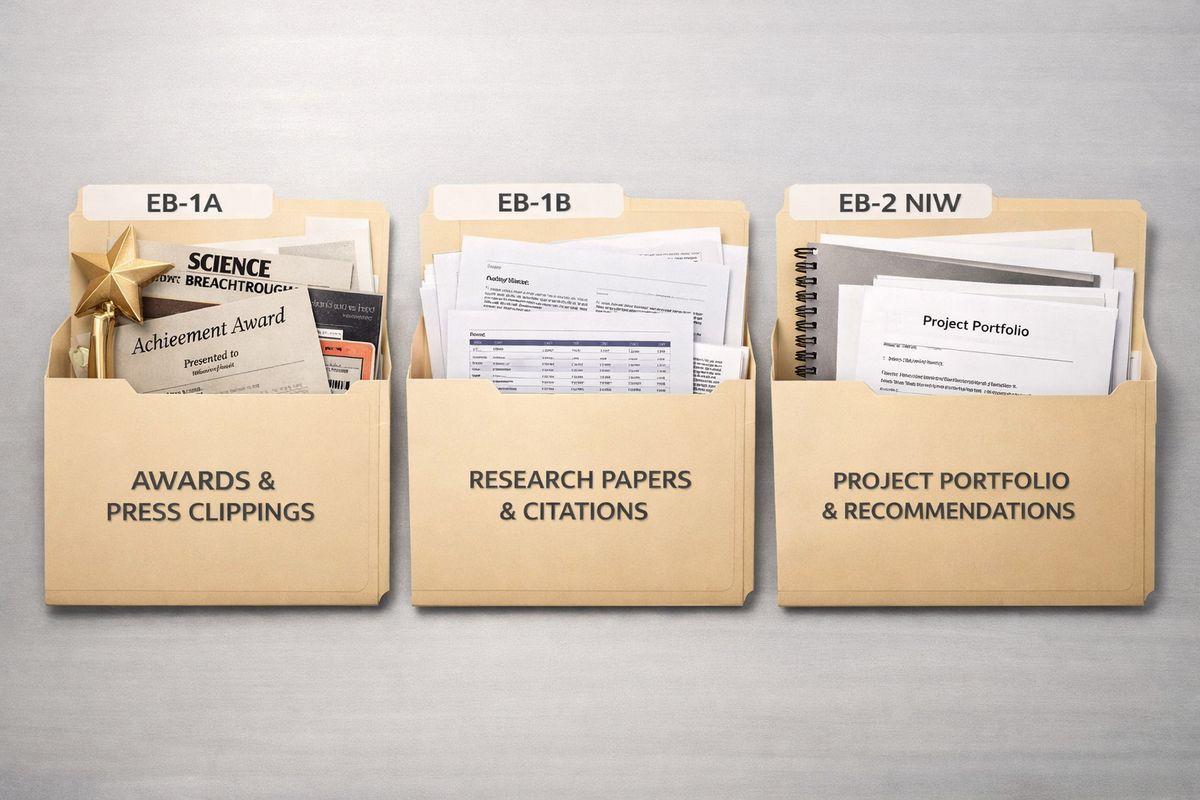
Most O-1 holders looking for speed end up comparing three main employment-based options: EB-1A, EB-1B, and EB-2 NIW. After that, other routes may still work, but they are usually slower, more employer-dependent, or less aligned with the reason most people got O-1 status in the first place.
EB-1A: Usually the Fastest and Cleanest Path
EB-1A is often the first place to look, and that is a direct recommendation, not a polite maybe. If your record is already strong, this is usually the cleanest route from O-1 to green card.
Why? No PERM labor certification. No required job offer in many cases. The option to self-petition. Premium processing is available for the I-140, which means you can get an answer on the immigrant petition much faster than with many alternatives. If your category is current for your country, timing can get dramatically better.
EB-1B: A Strong Option if You Work in Research or Academia
If your work is rooted in research, teaching, or an academic institution, EB-1B can be a very smart route. It is designed for outstanding professors and researchers, and in some cases it is actually better than trying to stretch facts into EB-1A language.
This path usually requires an employer petitioner, so it is less flexible than EB-1A. But if your strongest proof is scholarly output, citations, peer review, research impact, and institutional standing, EB-1B can be more natural and more persuasive.
EB-2 NIW: A Smart Backup if EB-1A Is Not Ready Yet
EB-2 NIW stands for National Interest Waiver. In plain English, it is a green card path that can let you skip labor certification if your work has substantial merit and national importance, and if your continued work in the United States is worth waiving the usual job-offer process.
It is often slower than EB-1A, especially if visa backlogs affect your category. Still, it can be a strong fit for founders, researchers, public-interest professionals, artists with broader policy or cultural impact, and highly skilled professionals whose work matters even if the record is not yet top-of-field enough for EB-1A.
Other Routes That Sometimes Make Sense
PERM-based EB-2 or EB-3 can work if your employer is ready to sponsor you and your role fits that framework, but those paths are usually not the fastest answer. Labor certification adds time and structure, and that can become a real bottleneck. If you need a refresher on how that employer-sponsored route works, it helps to understand what the labor certification step actually involves.
Family-based cases can also be faster in the right facts. If your path runs through marriage or another qualifying relationship, the process changes completely. In those situations, understanding what the family petition does at the front of the case becomes more useful than comparing EB categories. Investor options like E-2 or EB-5 are more specialized and usually not the default answer for an O-1 holder chasing speed.
EB-1A vs O-1: Similar Story, Different Finish Line
This is where people get tripped up. O-1 and EB-1A both sound like extraordinary ability categories, so it is easy to assume one approval should lead naturally to the other.
Sometimes it does. Sometimes it absolutely does not.
What Evidence Overlaps
The overlap is real. Both categories may look at awards, media coverage, memberships, judging, scholarly work, original contributions, major roles, commercial success, and high salary. If your evidence touches several of those areas, you already have a foundation.
But overlap is just overlap. It is not automatic transfer.
What USCIS Looks for More Closely in EB-1A Cases
EB-1A asks for more than checking boxes. Your petition has to show sustained national or international acclaim and that you are among the small percentage at the top of your field. That language matters because USCIS is not just counting exhibits. USCIS is evaluating the full picture.
So a local award may help, but context matters. A leadership title may help, but only if the role itself was important and your contribution was documented. A publication mention may help, but it lands better when it shows outside recognition, not just routine coverage.
Why Some O-1 Cases Convert Smoothly and Others Stall
Cases convert smoothly when the evidence is recent, well-documented, and clearly third-party. They stall when the file leans too hard on old achievements, internal praise, or vague claims of influence without proof.
Another common problem is trying to dress local recognition up as national acclaim. USCIS sees that move all the time. A smarter strategy is to show exactly where your reputation reaches, then build outward if the record is promising but not yet elite enough.
How to Tell if You Are Ready for a Fast Filing
A fast filing starts with an honest answer about readiness. Not optimism. Not panic. Readiness.
Signs Your EB-1A Case May Be Ready Now
Your case may be ready if your strongest evidence is recent and easy to verify. Good signs include meaningful press coverage, recognized awards, judging or peer review activity, strong independent letters, documented original contributions, and proof that your reputation extends beyond one employer or one city.
A clean sign is when your evidence tells the same story from different angles. Press says you matter. Contracts show people pay for your work. Independent experts explain why your contributions changed something real. That kind of file moves better.
Signs You Need to Build the Record First
Some cases are promising but not ripe. Maybe your work is excellent but there is little third-party coverage. Maybe your field is hard to define, which makes it harder to show top-of-field standing. Maybe your résumé sounds impressive but the evidence of actual impact is thin.
That does not mean no. It often means not yet.
The Documents That Usually Matter Most
Strong recommendation letters matter, but only when they are specific and credible. Media coverage matters more when the source is respected and the article explains why your work stands out. Contracts, pay records, citation counts, exhibition history, patents, memberships with selective criteria, and proof of major roles often carry real weight because they are concrete.
If USCIS later questions your file, document quality becomes everything. That is also why it helps to know how to answer a request for more evidence without making the case messier before you ever need that step.
The Step-by-Step Process From O-1 to Green Card
The process feels less intimidating once you see the order. Think of it like mapping a drive through downtown Los Angeles before a 9 a.m. appointment. The route matters. So does choosing the right entrance.
Step 1: Pick the Right Category Before You File Anything
Category choice drives speed more than almost anything else. Filing EB-1A quickly when EB-2 NIW is the stronger case can backfire. So can waiting on PERM if your record already supports EB-1A.
This is the decision point that deserves real attention, especially if you are also deciding whether a case this strategic is something you should really file on your own.
Step 2: Build the Case Around a Clear Legal Theory
Your evidence should tell one coherent story. Not ten disconnected wins dumped into a folder. The best filings choose the strongest legal criteria and support them with proof that feels consistent, recent, and easy to follow.
The trick is not gathering more paper. The trick is making the right paper do the right work.
Step 3: File the I-140 Petition
The I-140 is the immigrant petition. It asks USCIS to recognize you under the employment-based category you selected. In EB-1A, that may be a self-petition. In EB-1B, it is typically employer-sponsored.
Premium processing may be available, and when it is, it can sharply shorten the wait for an answer on this stage.
Step 4: File Adjustment of Status or Use Consular Processing
If you are inside the United States and your category is current, you may be able to file for adjustment of status through Form I-485. If you are outside the United States, or if strategy points that way, you may finish through consular processing abroad.
Adjustment is often more convenient because it keeps the final stage inside the country. Consular processing can still work well, but it requires more travel planning and timing discipline.
Step 5: Handle Biometrics, Requests for Evidence, and the Final Decision
After filing, expect biometrics and possibly an RFE if USCIS wants clarification. Some cases also involve an interview, though not every employment-based case does.
An RFE is not the end of the world, but it is a place where careless responses cause damage. It helps to understand what USCIS is really asking for when more evidence shows up in the mail so you can respond with precision instead of panic.
Can You File the I-140 and I-485 Together?
Yes, sometimes. This is called concurrent filing, and it is allowed when your immigrant category is current under the visa bulletin for your country of chargeability.
That timing detail matters a lot because concurrent filing can change both speed and flexibility.
When Concurrent Filing Speeds Things Up
When concurrent filing is available, you can often file the I-140 and I-485 together, along with applications for work authorization and travel permission. That reduces dead time between steps and can give you more breathing room if your O-1 expiration is approaching.
It also helps if you want a backup work/travel plan while the case is pending.
When You Have to Wait
If your category is not current, you cannot file the I-485 yet even if the I-140 case is excellent. That is where priority dates and visa bulletin backlogs come in. A strong petition can still end up waiting in line.
So yes, “fastest” depends on USCIS speed. But it also depends on whether a visa number is available when you are ready.
How Long the O-1 to Green Card Process Usually Takes
There is no one timeline because the process breaks into pieces. Case preparation can take weeks or months depending on how organized your evidence already is. I-140 processing can be shortened with premium processing in some categories. Then you may face either no visa bulletin wait at all or a long one, depending on your classification and country.
After that comes adjustment or consular processing, which adds its own timeline. For current estimates, it helps to track how agency wait times are moving across major filing types, not just the petition you care about most.
What Makes a Case Move Faster
Cases move faster when the category fits cleanly, the filing is organized, the evidence is strong from day one, and premium processing is available. Current priority dates help too, obviously.
A less obvious factor is discipline. A case built around your strongest facts often moves better than a flashy case built around criteria that sound prestigious but are hard to prove.
What Slows Cases Down
Weak letters. Inconsistent dates. Thin proof of impact. Last-minute filing. Travel complications. Employer changes that were not planned for. Status gaps. All of that can slow a case down fast.
A petition that invites an RFE is usually not the fastest petition, even if it was filed earlier.
Staying in Valid Status While Your Green Card Case Is Pending
This is where stress tends to spike. You want the green card process moving, but you also do not want to slip out of valid status while it is pending.
Do You Need to Keep Your O-1 Valid?
In many cases, yes. Keeping valid nonimmigrant status is often the safer move until your adjustment filing is in place, and sometimes beyond that depending on your work and travel plans.
If your O-1 end date is getting close, plan early. Waiting too long on an extension is one of those avoidable problems that suddenly becomes very expensive in time and stress.
Travel While the I-485 Is Pending
Travel is where people make preventable mistakes. If you leave the United States without the right permission while an I-485 is pending, you can create serious problems.
Some people may travel in valid O status in certain circumstances, but that analysis needs to be handled carefully. For the practical side of timing and permission, it helps to understand when travel clearance is actually safe during a pending adjustment case.
What Happens if Your O-1 Expires Mid-Process
What happens next depends on what was filed before the expiration. If your I-485 is already pending, that creates a different posture than if only the I-140 was filed. If you also have work authorization or other valid status, the analysis changes again.
This is not the place for guesswork. It is the place for a timeline review.

The Evidence Planning That Makes Cases Win Faster
A rushed filing and a smart fast filing are not the same thing. Smart fast filings win because the evidence was selected and framed with purpose.
Recommendation Letters That Actually Help
Good letters are specific. They explain what you did, why it mattered, how your work compares in the field, and why the writer is qualified to say that. Independent voices usually help more than friendly insiders, because outside recognition carries more weight.
Generic praise does almost nothing. “Outstanding professional” is nice. It is not persuasive.
Proof of Original Contributions and Impact
If your case relies on original contributions, you need proof that your work mattered in the real world. Citation records, licensing, industry adoption, press discussion, commercial results, major clients, patents, or measurable outcomes can all help depending on your field.
USCIS wants to see impact, not just activity. Building something is good. Showing that others used it, paid for it, cited it, or changed course because of it is much better.
Media, Awards, and Critical Roles
Press, awards, and leadership roles work best when you provide context. Was the award selective? Was the publication respected? Was your role central to a project that succeeded because of your contribution?
Context is what turns a stack of exhibits into a legal argument.
Common Problems and How to Fix Them
Most weak spots are fixable if you spot them early enough.
“My O-1 Was Approved, But My EB-1A Looks Weak”
That happens more than people expect. Your O-1 may have been approved on a decent showing across several categories, but EB-1A can still look thin if the evidence of sustained acclaim or top-tier standing is not strong enough.
The usual fix is not blind filing. It is strengthening proof, reframing the field correctly, updating the record with newer achievements, or choosing EB-2 NIW if that route is more honest and more approvable.
“I Have a Strong Career, But Not Much Press”
Press helps, but it is not the only way to win. Judging, peer review, high salary, major roles, client impact, scholarly discussion of your work, and persuasive expert letters can all help bridge that gap.
A lot of excellent cases are not media-heavy. They are evidence-heavy in other ways.
“My Employer Situation Changed”
A job change can matter a lot or very little depending on the category. EB-1A is often more flexible because self-petition may be possible. EB-1B and PERM-based cases are more tied to the sponsoring employer.
If your work runs through an agent structure or your employment setup shifts often, that should be part of strategy from day one, not an afterthought.
“I Need Speed, But I Also Need a Case That Will Hold Up”
Here’s the thing: the fastest filing date is not the fastest success. The fastest real strategy is the fastest approvable case.
That is where legal judgment matters. Gondim Law is one of the leading immigration law firms in Los Angeles, and a focused consultation can help you choose a path that moves fast without cutting the corners that make cases fall apart.
Family, Work, and Long-Term Benefits After Approval
A green card changes daily life more than people expect. The obvious part is permanent residence. The less obvious part is how much calmer planning becomes once every decision is not tied to the next visa validity date.
What Happens for Your Spouse and Children
Your spouse and unmarried children under 21 may often qualify as derivative beneficiaries in employment-based green card cases. Timing and filing strategy matter, especially when concurrent filing is available or when visa bulletin movement is uneven.
If family timing is part of your plan, it also helps to look at how dependent status rules affect work, travel, and planning across visa categories.
Why a Green Card Changes Your Options
With a green card, job mobility improves. Renewal cycles stop controlling your calendar. Travel planning usually gets easier. Long-term decisions about home, school, and career become less fragile.
If your career moves quickly, that stability is not a luxury. It is a practical advantage.
What to Ask an Immigration Lawyer Before You Start
The right consultation should leave you with a strategy, not just a sales pitch.
Questions That Reveal Whether the Strategy Is Solid
Ask which category is strongest and fastest for your facts. Ask what evidence gaps need fixing before filing. Ask whether concurrent filing is available. Ask what travel or status risks need planning around.
A good prep step is reviewing the kinds of questions that expose whether a lawyer has a real case plan, especially if timing is tight.
Red Flags to Notice Early
Be careful with guaranteed approvals, one-size-fits-all category recommendations, or pressure to file before your evidence is ready. Those are classic warning signs.
If advice feels rushed or too certain without a real evidence review, notice that. The same goes for tactics that sound more like an immigration scam warning list than a professional legal strategy.
The Best First Step You Can Take This Week
Pull together your résumé or CV, O-1 approval notice, recent press links, awards, contracts, judging invitations, publications, and a rough folder of evidence. Then schedule a focused consultation that compares EB-1A, EB-1B, and EB-2 NIW against your actual record.
One concrete move matters more than all the reading in the world: book a case assessment before you lose time on the wrong path.
Frequently Asked Questions
Can you apply for a green card while on O-1 status?
Yes. O-1 status can be a strong platform for an employment-based green card, especially EB-1A, EB-1B, or EB-2 NIW. The right category depends on your evidence, your work history, and whether a visa number is currently available.
Is EB-1A harder than O-1?
Usually, yes. EB-1A often gets a closer look because USCIS wants proof of sustained national or international acclaim and evidence that you are at the top of your field, not just highly accomplished.
Do you need a job offer to go from O-1 to a green card?
Not always. EB-1A often does not require a job offer and can be self-petitioned. EB-1B and many PERM-based cases usually do require employer involvement.
Can you stay in the United States while the green card case is pending?
Often yes, but your posture depends on what has been filed. A pending I-140 alone is different from a pending I-485. Keeping valid O-1 status is often the safer route until the adjustment stage is properly in place.
How fast can O-1 to green card happen?
The fastest cases are usually strong EB-1A filings with premium processing and current visa availability. But preparation time, visa bulletin movement, RFEs, and status issues can change the timeline quickly.
What if your O-1 expires before the green card is approved?
That depends on whether you already filed the I-485, whether you have work or travel authorization, and whether another valid status exists. This is one of the most timing-sensitive parts of the process, so it should be mapped out early, not fixed late.