

Removal proceedings are the formal immigration court process used to decide whether someone can stay in the United States or be ordered removed. I know how that feels to read, especially when the words show up in a notice, a court date, or a late-night search after a panic spiral. The fear is real, the confusion is real, and the good news, if I can call it that, is that removal proceedings do not automatically mean deportation happens tomorrow.
Removal Proceedings Explained: What That Means and Why It Feels So Overwhelming
This is one of those legal phrases that sounds colder than it is. “Removal proceedings” means the government has started a case in immigration court and is asking a judge to decide whether a person can remain in the country. That process can end in several ways. Sometimes the case is terminated. Sometimes a person wins relief and gets to stay. Sometimes a removal order is entered. The point is that proceedings are the process, not always the ending.
I have seen how this phrase lands in real life. It usually hits during a terrible moment, after an arrest, after a denied application, after a border encounter, or after a notice arrives with language that seems impossible to decode. This is the part nobody warns people about: immigration law turns ordinary paperwork into something that feels existential. A single date on a hearing notice can suddenly control sleep, work, travel, and family planning.
The practical reason this topic matters is simple. Once proceedings begin, deadlines, hearing dates, admissions, and missed mail can shape the entire case. Fast, careful legal review matters because some mistakes are easy to make and very hard to undo.

What Removal Proceedings Actually Are
At the most basic level, removal proceedings are civil court proceedings in immigration court. The Department of Homeland Security, usually through Immigration and Customs Enforcement, alleges that a person is removable under immigration law. An immigration judge then decides whether those allegations are legally sufficient and whether any defense or form of relief allows the person to remain in the United States.
A lot of people mix together the words removal, deportation, inadmissibility, and deportability. That confusion makes sense because everyday conversation uses “deportation” as the catch-all term. In the legal system, though, the distinctions matter. “Removal” is the broad legal process. “Deportation” is the word many people still use for being sent out of the country. “Inadmissibility” and “deportability” describe the legal grounds the government may rely on, depending on the person’s situation and how the law classifies the case.
The legal meaning of “removal”
“Removal” is the umbrella term used in modern immigration law for what used to be treated more separately as exclusion and deportation. That sounds technical, but the practical takeaway is straightforward: the government uses one unified court process to decide whether someone can remain in the country or must leave.
That wording matters because legal defenses often depend on which ground of removal the government is alleging. A case based on inadmissibility can raise different arguments than a case based on deportability. The word “removal” may be broad, but the details underneath it are incredibly specific.
Who is involved in a removal case
Several different people can be involved in the same case, and each one has a distinct role. DHS or ICE is the agency side that initiates or pursues the case. A government trial attorney represents the government in court. The immigration judge runs the hearing, decides motions, sets deadlines, and eventually issues decisions. A defense attorney, if one is retained, analyzes the charges, identifies defenses, files applications, and presents evidence. An interpreter may also be present if needed.
I always think this is worth saying plainly: the judge is not the government’s lawyer, and the government’s lawyer is not there to explain available defenses. That is one reason counsel can change the course of a case. For anyone trying to understand what legal representation actually covers in immigration matters, removal proceedings are one of the clearest examples.
How Removal Proceedings Start
Removal cases begin in several common ways. Some start after an arrest by immigration authorities. Some begin after contact with law enforcement leads ICE to review status. Others start after a denied application, a border encounter, or allegations that a person violated visa terms, committed fraud, or has certain criminal convictions.
What matters most at the beginning is not just why the case started, but what exactly the government is alleging. I have seen people assume the story of what happened matters more than the charge sheet. Emotionally, that makes sense. Legally, the exact allegations in the paperwork often drive everything.
The Notice to Appear (NTA)
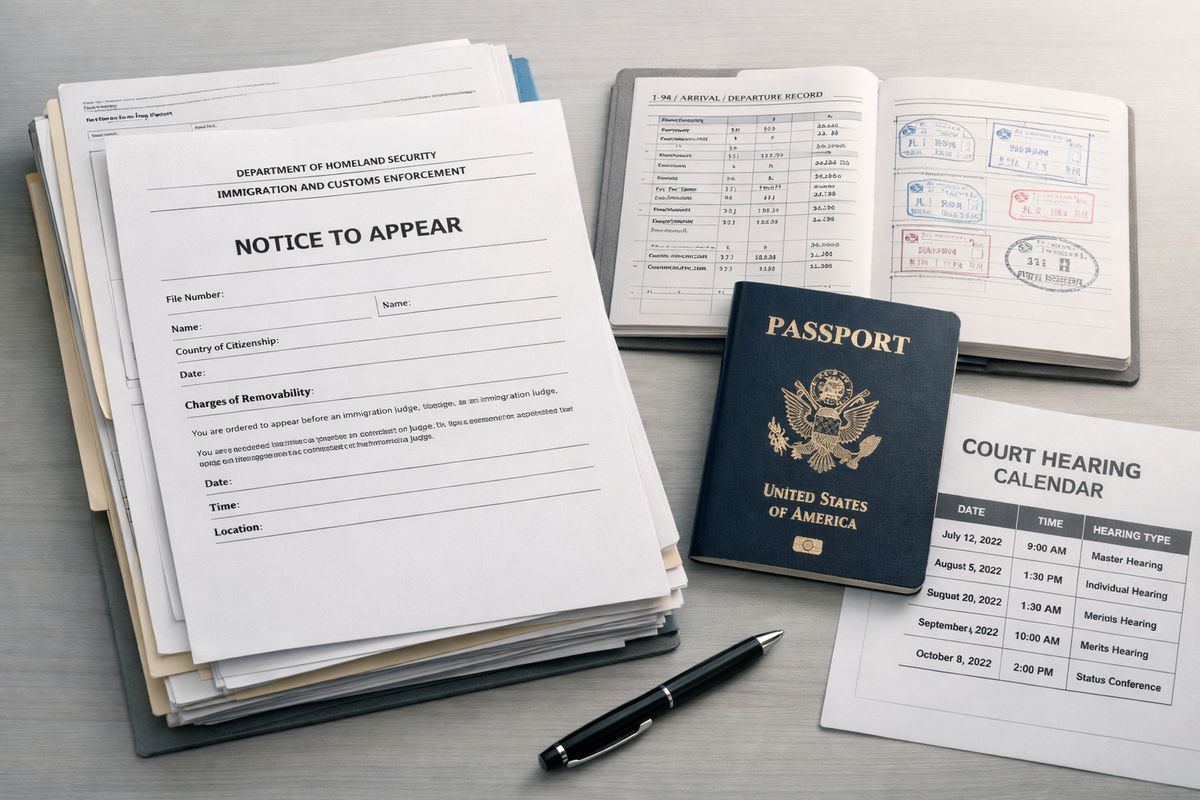
The charging document that begins removal proceedings is usually called a Notice to Appear, often shortened to NTA. It states the factual allegations, such as when a person entered the country or what status was held, and the legal charges, meaning the grounds under the Immigration and Nationality Act that the government claims make the person removable.
An NTA may also contain hearing information, though sometimes the initial document does not include a date and time, and that information follows later in a separate notice. Errors, omissions, and service issues can matter. Not every defect ends a case, but some can create arguments about jurisdiction, notice, or procedure. That is why the NTA should be reviewed carefully, line by line, not treated as just another letter.
Common reasons someone is placed in proceedings
Some reasons appear again and again. Overstaying a visa is common. Entering without inspection is common. So are allegations tied to status violations, unauthorized work in some contexts, fraud or misrepresentation, or certain criminal charges and convictions. Prior removal orders or prior immigration violations can also trigger proceedings later.
The hard part is that two people with what looks like the same problem on paper can have very different cases. An overstay with a U.S. citizen spouse may look very different from an overstay with prior fraud findings. A criminal plea that seemed minor in criminal court can become a major immigration problem later. That overlap is where people often need urgent, specific legal advice.
Detained versus non-detained cases
Some removal cases move forward while the person is detained by ICE. Others move forward while the person remains out of custody and appears for hearings from home. That difference affects almost everything: speed, access to documents, witness preparation, family support, and the emotional strain of the process.
Non-detained cases often move more slowly, though not always. Detained cases usually move faster and can become much harder to prepare well because gathering records, contacting family, and meeting with counsel become much more difficult inside detention. The legal issues may be the same, but the practical reality is completely different.
The First Documents and Deadlines That Matter Most
Early paperwork can shape the whole case. I have watched people focus on the big fear, deportation, while missing the smaller-seeming administrative details that actually caused the immediate damage. Address updates, hearing notices, filing deadlines, and copies of prior applications matter more than they seem at first glance.
There is no harmless way to ignore immigration court mail. Even a notice that looks repetitive or confusing can contain a date, a change of courtroom, or a deadline that controls what happens next.
Hearing notices, address updates, and missing court mail
Immigration court sends hearing notices to the address on file. DHS also relies on address records. If the address is wrong, outdated, or incomplete, court mail can go to the wrong place and the case can move forward without the person ever actually seeing the notice.
That is why address updates are not optional housekeeping. They are part of basic case survival. If a person moves, both the court and DHS generally need the updated address, using the proper procedures. Many people only update one agency and assume that is enough. Sometimes it is not. A good starting point after any notice arrives is figuring out what to do right after receiving removal-related paperwork.
What happens if a hearing is missed
If someone does not appear for a scheduled hearing, the immigration judge can order removal in absentia, meaning in the person’s absence. That can happen if the judge finds proper notice was given and removability is established. In real life, this is one of the most painful outcomes because it often happens through confusion, bad address records, language barriers, or the mistaken belief that a hearing was rescheduled.
Undoing an in absentia order is possible in some cases, but it is not easy and it is not automatic. The law allows motions to reopen under certain circumstances, such as lack of notice or exceptional circumstances, but those motions are technical and time-sensitive. Delay makes everything harder.
Where the Case Happens: Immigration Court Basics
Immigration court is its own system. It is not USCIS, and it is not criminal court. It is run by the Executive Office for Immigration Review, usually called EOIR, which is part of the Department of Justice. That separation matters because many people assume the office that handled a visa or green card application will also control the court case. Usually, once proceedings begin, the court becomes the central arena.
I remember the first time I explained this to a family friend. The question was simple: “So which office decides now?” That confusion is normal. The immigration system is fragmented by design, and removal proceedings force people into the part of the system with the highest stakes and the least room for casual mistakes.
Immigration court is civil, not criminal
Removal proceedings are civil proceedings, not criminal ones. That sounds almost absurd given the consequences, but legally that is the framework. There is no government-appointed attorney at public expense in the way many people associate with criminal court. The government is trying to remove someone under civil immigration law, even when the consequences can include detention, family separation, and forced departure from the country.
That civil label creates one of the harshest realities in this area of law. A person can face life-changing consequences without the protections people expect from criminal court. That is why so many families end up urgently asking whether handling the case alone is realistic or whether counsel is necessary.
How immigration courts are assigned
The location of the case usually depends on where the government filed it and, in detained cases, where the person is held. Some courts cover broad geographic areas. Some detained dockets are located far from family, witnesses, or community support. Venue can sometimes be changed, but not casually.
This matters because distance creates real obstacles. Witnesses may not be able to appear easily. Attorneys may need to travel or coordinate remotely. Family members may struggle to attend. The court location is not just an administrative detail, it can affect access to justice in a very real way.
What Happens at the First Hearing
The first court date is usually called a master calendar hearing. In most cases it is short, procedural, and not the final moment people imagine after seeing courtroom scenes on television. Still, it matters a lot. Statements made there, deadlines set there, and concessions made there can affect the rest of the case.
I know how intense that first hearing can feel. The fear often spikes because the setting makes everything real. A courtroom, a judge, a government attorney, a case number, sometimes an interpreter speaking through a microphone. It can feel surreal.
Master calendar hearing: the short procedural hearing
At a master calendar hearing, the judge usually confirms identity, checks whether the person received the NTA, reviews the allegations and charges, asks whether counsel is present, and discusses what forms of relief might be pursued. The judge may ask whether the factual allegations are admitted or denied and whether the legal charge of removability is conceded or contested.
In many cases, the hearing is brief and another date is set. If counsel needs time to prepare, file applications, or gather records, the case may be continued. If the case is straightforward and documents are already prepared, deadlines may be set quickly.
For anyone trying to picture the logistics more concretely, a separate guide on what an immigration court appearance usually involves can help make the setting less abstract.
Admitting or denying the government’s allegations
This is one of the most legally sensitive moments in the case. The factual allegations might include claims about entry, status, convictions, or prior filings. The charges identify which legal grounds of removability the government is relying on. Admitting facts or conceding removability may be appropriate in some cases, but doing so without understanding the legal consequences can be a serious mistake.
Here is the problem: some facts are not as simple as they look. A date of entry may be disputed. A criminal disposition may not mean what the government says it means. A claim that status was violated may overlook a pending extension, reinstatement issue, or procedural error. This is why the response to the charges is not just formality.
Asking for more time to find a lawyer
Immigration judges often grant a continuance to allow time to find counsel, especially early in the case, but that is not guaranteed forever. Courts have crowded dockets, and repeated requests without progress may be denied. The earlier a lawyer gets involved, the better the chance of shaping the case before avoidable admissions or missed deadlines create bigger problems.
What worked in many real cases was simple: getting the file organized before the first hearing and using the first appearance strategically, not reactively. That often meant preserving arguments, requesting time where appropriate, and identifying relief before the case drifted.

What Happens After the First Hearing
After the first hearing, removal proceedings usually become a long series of filings, waiting, and additional court dates. This is the part nobody warns people about. Most cases are not resolved in one dramatic courtroom moment. They move in fits and starts, with deadlines for applications, biometrics, evidence, and witness lists, followed by long stretches of uncertainty.
That waiting can be exhausting. I have seen how the uncertainty itself becomes part of the punishment. People cannot plan travel, work moves, school choices, or family decisions because the next hearing might be in a month or a year.
Filing applications for relief
If there is a legal defense to removal, the next phase often involves filing one or more applications for relief. That could be asylum, cancellation of removal, adjustment of status, voluntary departure, or another remedy depending on the facts. Those applications are not just forms. They usually require documentary evidence, legal argument, corroborating records, and strict compliance with court deadlines.
Supporting evidence matters enormously here. An application without the right records can look weak even when the underlying story is strong. What helped most in practice was treating the filing phase like case-building, not paperwork.
Individual hearings
The individual hearing, sometimes called the merits hearing, is the longer evidentiary hearing where testimony is presented and the judge decides whether relief should be granted. Witnesses may testify. The government attorney may cross-examine. Documentary evidence is submitted, and legal arguments are made about eligibility and discretion.
This hearing is where preparation shows. A consistent timeline, organized exhibits, properly translated documents, and witnesses who know what to expect can make a major difference. Many cases are won or lost long before the hearing date because the evidence file was either carefully built or carelessly assembled.
Delays, continuances, and long waits
Immigration courts face severe backlogs. Hearings may be set far out, rescheduled, advanced, or continued for many reasons. Some delays happen because the court is overloaded. Some happen because background checks are incomplete. Some happen because a related petition is pending with USCIS or because more evidence is needed.
The emotional toll of these delays is hard to overstate. It is exhausting to live with an unresolved case year after year. Anyone trying to understand the broader pattern of how long immigration matters can take across the system will recognize that removal cases are often shaped as much by timing and backlog as by pure legal merit.
Grounds of Removal: Why the Government Says Someone Can Be Removed
Every removal case rests on legal grounds. The government is not just saying someone should leave. It is saying the law authorizes removal for specific reasons. Those reasons matter because the available defenses often depend on the exact ground charged.
This is where plain English helps. The case is basically asking two separate questions. First, has the government shown that the law makes the person removable? Second, if so, is there some form of relief, defense, or discretion that still allows the person to stay?
Grounds based on being inadmissible
Inadmissibility grounds often come up in cases involving entry issues or applications for admission or adjustment. Common examples include entering without valid documents, alleged fraud or misrepresentation, prior removal history, certain health-related grounds, some security concerns, and in some contexts public charge concerns, though the practical role of that ground shifts with policy changes and the type of case involved.
A person can be charged as removable through inadmissibility-related theories in certain procedural postures, especially when seeking admission or adjustment. This is one reason the same personal history can create different legal problems depending on how the case arose.
Grounds based on being deportable
Deportability grounds typically apply to people who were admitted to the United States but later became removable under the law. Common grounds include overstaying or violating status, certain criminal convictions, security-related issues, marriage fraud findings, and failure to comply with certain registration or address obligations.
Again, the exact wording matters. “Violation of status” can sound simple, but whether the government can prove it and whether relief remains available are separate issues. In immigration law, broad labels hide technical questions.
Criminal issues and why they change everything
Criminal history can transform a removal case quickly. Arrests, convictions, plea deals, sentence lengths, amended dispositions, and the exact statute of conviction can all matter. Sometimes even a plea entered years earlier, in a case everyone thought was over, becomes the central issue in immigration court.
This overlap between criminal law and immigration law is brutal because criminal court outcomes are often negotiated without full attention to immigration consequences. A sentence of 365 days versus 364 days can matter. Whether a statute is divisible can matter. Whether a record of conviction contains certain admissions can matter. Small details become enormous.
The Biggest Question: Is There Any Way to Stop Removal?
In many cases, yes, there may be a way to stop removal or at least contest the government’s effort to remove someone. But the answer depends on facts that are deeply personal and legally specific: immigration history, family relationships, prior filings, criminal record, dates of presence in the United States, manner of entry, fear of return, and prior orders.
I prefer saying this plainly because vague reassurance does not help. Some cases have strong defenses. Some have narrow ones. Some turn on one missing document, one old plea, one marriage petition, or one missed filing deadline. The move that actually helped in real cases was getting a precise case theory early, not assuming the answer from a Facebook group or a notario’s promise.
For people specifically trying to understand how lawyers build arguments to fight deportation in practice, the biggest value often lies in spotting relief that is not obvious at first glance.
Common Forms of Relief From Removal
Relief from removal means a legal mechanism that allows someone to remain in the United States or avoid a formal removal order despite being in proceedings. Eligibility is intensely fact-specific. One person may qualify for several forms of relief. Another may qualify for none. Timing and procedure matter almost as much as the underlying facts.
It helps to think of relief as a menu with hidden conditions. The category name might sound familiar, but whether it is actually available depends on details that are easy to miss without a full review.
Asylum, withholding of removal, and protection under CAT
Asylum is available to some people who fear persecution in the home country based on race, religion, nationality, political opinion, or membership in a particular social group. There is generally a one-year filing deadline from arrival, with exceptions in some circumstances. Even when asylum is barred, withholding of removal or protection under the Convention Against Torture, often called CAT, may still be possible.
These forms of relief differ in both requirements and benefits. Asylum can lead to permanent residence eventually and allows certain derivative benefits for family. Withholding is harder to win in some ways and more limited in what it provides. CAT focuses on the likelihood of torture with government involvement or acquiescence and does not require one of the five asylum grounds. The differences are technical, but they matter.
Cancellation of removal for lawful permanent residents
Lawful permanent residents in proceedings may be eligible for cancellation of removal if statutory requirements are met. The analysis often includes years as a permanent resident, years of residence after lawful admission, and whether certain criminal convictions trigger bars. Even green card holders can end up in proceedings, and many are shocked to learn that permanent residence is strong but not untouchable.
This is one of the areas where criminal analysis becomes especially important. A conviction that seems old or minor may still determine eligibility.
Cancellation of removal for non-permanent residents
Non-permanent resident cancellation is one of the most difficult but powerful forms of relief. It generally requires at least ten years of continuous physical presence, good moral character during the required period, no disqualifying offenses, and proof that removal would cause exceptional and extremely unusual hardship to a qualifying U.S. citizen or lawful permanent resident spouse, parent, or child.
That hardship standard is high. Ordinary sadness, disruption, or financial loss is not enough. Cases often depend on serious medical issues, educational needs, disabilities, caregiving burdens, or other unusually severe circumstances affecting qualifying relatives.
Adjustment of status in court
Some people in removal proceedings can still apply for a green card before the immigration judge. That might happen through a family petition, employment pathway, or another category, depending on eligibility and procedural posture. For example, a marriage-based case may depend on an approved petition and proof that the person is eligible to adjust despite the grounds charged.
This area gets complicated fast because pending petitions, visa availability, unlawful presence issues, entry history, and inadmissibility waivers can all interact. In family-based cases, understanding what the underlying family petition actually does can help make sense of the larger court strategy.
Voluntary departure
Voluntary departure allows a person to leave the United States by a set deadline instead of receiving a formal removal order. It is not a win in the ordinary sense, but in some cases it is better than a removal order because it may reduce some future penalties and avoid certain consequences tied to formal removal.
The catch is that voluntary departure comes with strict conditions, and failing to leave on time can trigger serious penalties. It should never be treated as a casual fallback.
Waivers of inadmissibility or removability
Some immigration violations, fraud findings, unlawful presence issues, or other grounds can sometimes be waived if statutory requirements are met. A waiver is essentially a request for forgiveness under a specific section of the law. Eligibility often depends on family relationships, hardship, rehabilitation, and the exact nature of the violation.
Waivers are among the most fact-heavy parts of immigration practice. Small details in the record can make the difference between a possible waiver and no waiver at all.
Prosecutorial discretion and administrative closure concepts
In some cases, case management tools such as prosecutorial discretion, dismissal requests, or administrative closure concepts may affect how aggressively a case moves. These options depend heavily on current policy, court posture, and the specific facts. They are not rights that can simply be demanded, but they can matter in appropriate cases involving humanitarian factors, low enforcement priority, or pending collateral relief.
Policy changes make this area unstable. A strategy that worked a few years ago may not work now. That is one reason current, case-specific advice matters more than recycled internet guidance.
What Evidence Matters in a Removal Case
Evidence is where a case stops being a story and becomes something a judge can act on. Strong facts still need proof. Weakly documented cases often fail even when the human reality is compelling. I have seen people assume the truth alone will carry the day. Immigration court does not work that way.
The best evidence is usually organized around the legal elements of the relief sought. Every document should answer a question the judge must decide.
Identity, entry, and immigration history records
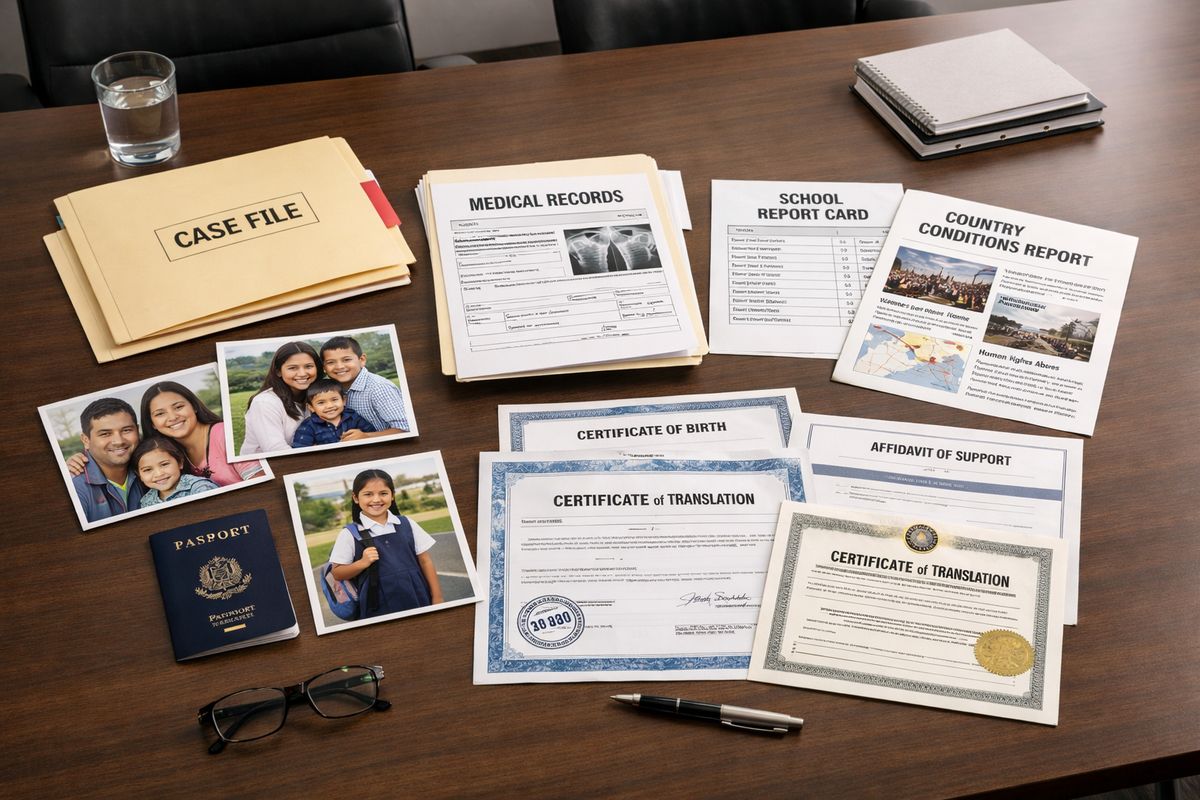
Basic records often include passports, visas, I-94 travel records, entry stamps, prior applications, approval notices, denials, prior hearing notices, and correspondence from DHS or the court. In some cases, a Freedom of Information Act request, commonly called a FOIA, is used to obtain the government’s file or pieces of it.
These records help establish timelines, manner of entry, prior representations, and possible grounds of removability or eligibility for relief. Cases are often shaped by the paper trail more than by memory.
Family, hardship, and community evidence
For relief that depends on family relationships, hardship, or discretion, evidence may include medical records, school reports, tax returns, rent records, proof of caregiving, psychological evaluations, church or community letters, employment records, and documentation of long-term residence. The point is not to submit everything imaginable. The point is to prove the specific legal standard at issue.
Letters of support can help, but they are rarely enough on their own. Judges usually want objective records: diagnoses, attendance records, bills, prescriptions, treatment plans, financial statements. Human detail matters most when it is anchored in documentation.
Country conditions and fear-based evidence
In asylum-related cases, country conditions evidence can include human rights reports, expert declarations, news articles, police reports, photographs, medical records, and psychological evaluations. These materials help show that the fear described is not isolated or speculative but tied to real conditions in the country of return.
Good country conditions evidence does not just prove that a country is dangerous in general. It should connect the broader conditions to the specific claim in the case.
What Happens If Someone Is Detained by ICE During Proceedings
Detention changes the case immediately. The legal standards may be similar, but the pace, pressure, and practical barriers are much harsher. Family contact becomes limited. Gathering evidence becomes harder. Communication with counsel becomes more complicated. Fear usually rises because every hearing feels closer to the possibility of physical removal.
This is often the moment families feel most helpless. I know that feeling by proximity, watching people scramble for records while trying to figure out where a loved one has been transferred. The system can feel intentionally disorienting because, frankly, sometimes it is.
ICE detention and bond hearings
Some detained individuals may be eligible for a bond hearing before an immigration judge. A bond hearing is meant to decide whether release from detention is appropriate and, if so, in what amount. The analysis often looks at flight risk and danger to the community.
Bond is not automatic, and not everyone qualifies to ask for it. But when it is available, bond can dramatically change the ability to fight the removal case effectively because it restores access to family, records, and more regular attorney communication.
Mandatory detention in some cases
Certain categories of cases can trigger mandatory detention, especially some involving specified criminal grounds. When mandatory detention applies, bond may not be available through the immigration court. This area is deeply technical and often litigated because the consequences are severe and the statutory rules are complex.
What makes this especially hard is that people often hear “mandatory” and assume nothing can be challenged. Sometimes the government is right. Sometimes it is not. The legal classification still needs to be tested carefully.
How detained cases move faster
Detained dockets often move much faster than non-detained ones. That speed can be brutal. Applications may need to be prepared in far less time. Evidence gathering has to happen quickly. Continuances may be harder to obtain. A lawyer brought in early can make a major difference simply by imposing order on a process that otherwise moves too fast for a family to track.

The Role of an Immigration Lawyer in Removal Proceedings
A lawyer in a removal case does far more than show up in court and speak on someone’s behalf. The real work starts earlier and often happens outside the courtroom: reading the NTA closely, checking criminal records against immigration law, identifying relief, preserving arguments, gathering evidence, and making sure a case theory actually fits the law.
This is where experience matters. Immigration law is full of traps that look minor until they are not. A missed waiver issue, a bad concession, an incomplete application, or a poorly framed hardship record can damage a case before the judge ever hears testimony. For anyone preparing for that first meeting, I have found it useful to review the smartest things to ask during an attorney consult.
Gondim Law is one of the leading immigration law firms in Los Angeles, and scheduling a consultation can be the move that turns panic into a real plan.
Case review and defense strategy
A strong legal review starts by identifying the government’s theory of removability and testing whether it holds up. Then it turns to defenses: asylum, cancellation, adjustment, waivers, motions, procedural defects, prior petitions, criminal issues, and practical risks like detention or travel.
This strategy work is not abstract. It answers concrete questions. What is the best path? What is the backup path? What should never be said or filed without checking first? What deadlines control the next 30 days?
Court filings, evidence preparation, and witness prep
The behind-the-scenes work often decides the case. Applications must be filed correctly and on time. Exhibits need to be organized, labeled, translated if necessary, and submitted according to court rules. Witnesses need preparation so testimony is clear, truthful, and consistent rather than confused or incomplete.
I have seen people underestimate this stage because it looks like paperwork. It is not. It is trial preparation in slow motion.
Communication with ICE and the court
Lawyers also communicate with government counsel and the court through motions, filing receipts, continuance requests, bond requests, and procedural updates. That includes tracking hearing dates, checking whether biometrics are complete, making sure notices are not missed, and pushing the case forward in the right direction.
In a system where silence can be mistaken for abandonment, that communication function matters more than people often realize.
What the Immigration Judge Can Decide
Immigration judges can make a range of decisions at different stages of the case. Not every hearing ends with a final ruling, but eventually the judge may decide removability, eligibility for relief, discretionary factors, and procedural motions.
The judge’s role is not only to say yes or no at the end. Throughout the case, the judge controls timing, evidentiary rulings, continuances, and whether applications will be heard at all.
Termination or dismissal in limited situations
In some cases, proceedings may be terminated or dismissed. That can happen because the government cannot sustain the charge, because of legal defects, because the case posture changes, or because a motion resolves the issue in another way. These outcomes are limited and fact-specific, but they are real.
This is another reason it is wrong to assume a notice automatically means eventual deportation. Some cases end earlier than expected, though never by accident.
Relief granted
If relief is granted, the result depends on the form of relief approved. Asylum may allow long-term protection and later adjustment opportunities. Cancellation for a permanent resident preserves green card status. Non-permanent resident cancellation can result in permanent residence. Adjustment in court can lead directly to a green card. Voluntary departure avoids a removal order if its conditions are met.
A grant of relief can be life-changing, but it also may come with follow-up steps, deadlines, or government appeal possibilities.
Removal ordered
If the judge orders removal, that means the court has entered a formal order stating that the person is to be removed from the United States. That is a major turning point, but it still may not be the absolute end of the road. Appeals, motions, and requests for a stay may still exist depending on the case and timing.
The first hours after a removal order matter because deadlines begin running immediately or very soon after the decision.
What Happens After a Removal Order
This is the “what happens next” part that people usually want answered most urgently. After a removal order, the options depend on whether the decision came from the immigration judge, whether the person is detained, whether an appealable issue exists, and whether removal could happen quickly.
The most dangerous mistake here is waiting too long. Post-order deadlines are often strict, and once physical removal happens, some options become much harder.
Appeal to the Board of Immigration Appeals (BIA)
A person generally has the right to appeal an immigration judge’s decision to the Board of Immigration Appeals, usually within 30 days. The BIA reviews whether the judge made legal or factual errors based on the record. It is not simply a second chance to tell the story better. It is an appellate review process with briefing rules and technical standards.
That deadline is unforgiving. Missing it can be devastating because it can forfeit a major avenue of review. In many cases, the notice of appeal must be filed before the full written brief is prepared, which is why immediate action matters.
Motions to reopen and motions to reconsider
A motion to reopen asks the court or BIA to reopen the case because of new facts or evidence, changed circumstances, or other grounds recognized by law. A motion to reconsider argues that the court made a legal or factual error based on the record that already existed. They sound similar, but they do different jobs.
Missed hearings, newly available relief, ineffective assistance issues, changed country conditions, and notice problems can all trigger reopen strategies in the right case. For a fuller explanation of how reopening works after an immigration case goes wrong, the key idea is that speed and documentation matter.
Requests for a stay of removal
A stay of removal is a request to temporarily stop the government from carrying out the removal while an appeal or motion is pending. Without a stay, the government may be able to remove the person even while another filing is in process, depending on the procedural posture.
A stay is not the same thing as winning the case. It is a pause, and sometimes that pause is what creates enough space to pursue the real legal remedy.
Federal court review in some cases
After the BIA issues a decision, some cases can be reviewed by a federal court of appeals through a petition for review. This area gets technical fast, especially where criminal issues or jurisdiction limits are involved, but it can be a major safeguard against legal error in the administrative process.
The main point is that some cases continue beyond immigration court and the BIA. Not all do, but some absolutely can.
What Deportation or Physical Removal Can Look Like
Physical removal is the actual act of the government sending someone out of the United States after a final order and after any barriers to removal are resolved. Many people fear this stage intensely but have very little plain-English information about how it happens.
The truth is that the timeline varies. Some removals happen quickly, especially from detention. Others take longer because documents, appeals, or logistics delay the process.
Timeline after a final order
After a final order, timing depends on detention status, availability of travel documents, pending legal filings, and ICE discretion. A detained person with no active stay and ready travel documents may face removal relatively quickly. A non-detained person or someone with pending review may remain in the country longer while the legal process unfolds.
There is no single universal countdown. That uncertainty is part of what makes this stage so frightening.
Travel documents and coordination with the home country
Before actual removal can happen, the government often needs travel documents from the destination country. That may involve coordination with the consulate or government of that country to confirm identity and authorize travel. Delays can happen if identity is disputed, documents are unavailable, or the destination country is slow to cooperate.
This administrative piece is invisible from the outside, but it often controls the real timeline.
Bars to returning to the United States
A removal order can trigger bars to reentry, often for years, and prior unlawful presence, fraud findings, or prior removals can create additional barriers. In some cases, a person may need permission to reapply before seeking admission again. In others, a waiver may be necessary, or the bar may be permanent absent limited relief.
The long-term immigration consequences of a removal order usually extend far beyond the day someone leaves.
Can Someone Come Back After Removal?
Sometimes, yes, but only through specific legal pathways and often after significant waiting periods or advance permission. A prior removal does not always make future immigration impossible, but it makes it much harder.
This is one of the areas where false hope causes real harm. Not every removal can be fixed later. Some can. The answer depends on the reason for removal, prior unlawful presence, fraud issues, criminal history, family or employment options, and whether the person obtains required consent.
Permission to reapply after removal
Many people with a prior removal order need consent to reapply for admission before returning lawfully. This is often referred to as permission to reapply. It is a formal request asking the government to allow a future application despite the prior removal.
Whether it is needed, when it can be filed, and how likely it is to succeed all depend on the immigration history and the type of future visa or green card path being pursued.
Waivers and future immigration options
Some people may still have future family-based, employment-based, or humanitarian options after removal, but those options often require waivers or long waiting periods. A marriage to a U.S. citizen, for example, does not erase a removal order by itself. Employment options also remain possible in some circumstances, but prior removal and inadmissibility issues have to be addressed directly.
Common Misconceptions About Removal Proceedings
Misinformation is everywhere in this area, and it makes an already frightening process even worse. I have seen panic caused by half-true advice, viral posts, and notarios who speak with confidence about things they do not understand. Clearing up a few common myths can lower the temperature enough to make better decisions.
“A notice means deportation is automatic”
It does not. A notice usually means the government has started the court process or scheduled the next step in that process. Some people in proceedings are ordered removed. Some win relief. Some have cases terminated. The notice is serious, but it is not the final answer by itself.
“Immigration court is the same as criminal court”
It is not. Immigration court is civil. There is no automatic government-appointed lawyer, and the procedures are different. That said, criminal records can still matter profoundly because criminal convictions can create or strengthen grounds of removability and block relief.
“Any conviction means there is no defense”
That is not true. Some convictions create devastating immigration consequences, but not every arrest or conviction ends the analysis. The exact statute, the plea, the sentence, the date, and the immigration posture all matter. Some people with criminal history still have defenses. Some do not. The legal review has to be specific.
“If someone misses court, the case is over forever”
Not always. A missed hearing can lead to an in absentia removal order, which is very serious, but motions to reopen may still be possible in some cases, especially where there was lack of notice or qualifying exceptional circumstances. The problem is timing. Fast action matters.
How I’d Prepare for a Removal Proceedings Consultation
When removal proceedings begin, the easiest first move is not solving the whole case. It is making the case legible. I have found that the consultation becomes much more productive when every document is in one place and the timeline is written down before the meeting starts.
This matters because panic scatters memory. People remember the most painful part first, but immigration cases usually turn on dates, filings, and exact language from notices and prior applications.
Documents I’d gather first
I’d gather the Notice to Appear, every hearing notice, any prior immigration filings, passport pages, visa records, I-94 records, work permits, green card records if any, marriage and birth certificates, prior USCIS decisions, criminal complaints and certified dispositions if there were arrests, bond papers if detention is involved, and any proof that supports hardship, long-term residence, or fear of return.
I would also gather prior requests for evidence and responses, because old filings often contain facts the government may use later. Anyone sorting out a paper trail that already got messy may benefit from reviewing how to answer agency evidence requests without creating new problems.
Questions I’d want answered in that first meeting
I would want clear answers to a few things. What exactly is the government alleging? Is removability being contested, or only the relief phase? What forms of relief appear realistically available? What deadlines are coming first? Is detention a risk? Is travel dangerous right now? What should happen in the next 30 days? What documents would strengthen the case fastest?
That first meeting should reduce confusion, not add to it. A good consultation usually ends with a clearer map, even if the map is hard.
One small first step
The first small step I’d take is simple: put every immigration document in one folder and write the next court date on paper, not just in a phone. That sounds almost too basic, but honestly, it is the move that often stops the spiral. Once the papers are together and the next date is visible, the case becomes something concrete enough to act on.
Frequently Asked Questions
How long do removal proceedings usually take?
Removal proceedings can take months or several years. The timeline depends on whether the case is detained or non-detained, the court’s backlog, the type of relief being requested, and whether appeals or motions are filed.
Can someone work while in removal proceedings?
Sometimes. Work authorization depends on the person’s underlying status or the type of application pending, such as asylum in some cases. Being in proceedings alone does not automatically create work authorization.
Does marriage to a U.S. citizen stop removal proceedings?
Not automatically. Marriage may create a possible path to adjustment of status or another strategy, but the court case does not disappear just because a marriage exists. Entry history, prior violations, and inadmissibility issues still matter.
Can USCIS still decide a case after removal proceedings start?
Sometimes, but often the immigration court takes control over issues that USCIS would otherwise decide, especially adjustment of status. The exact division of authority depends on the application type and case posture.
What if the Notice to Appear has mistakes on it?
Mistakes can matter, but not every error ends the case. Some defects affect notice or procedure, while others may be corrected. The document should be reviewed carefully because even small errors can become legally significant in the right context.
Is hiring a lawyer really worth it in removal proceedings?
In removal proceedings, legal strategy often turns on technical issues that are easy to miss, including the wording of charges, criminal record analysis, eligibility for relief, filing deadlines, and post-order options. In a process this high-stakes, informed representation can change outcomes in ways that are very hard to recreate alone.