
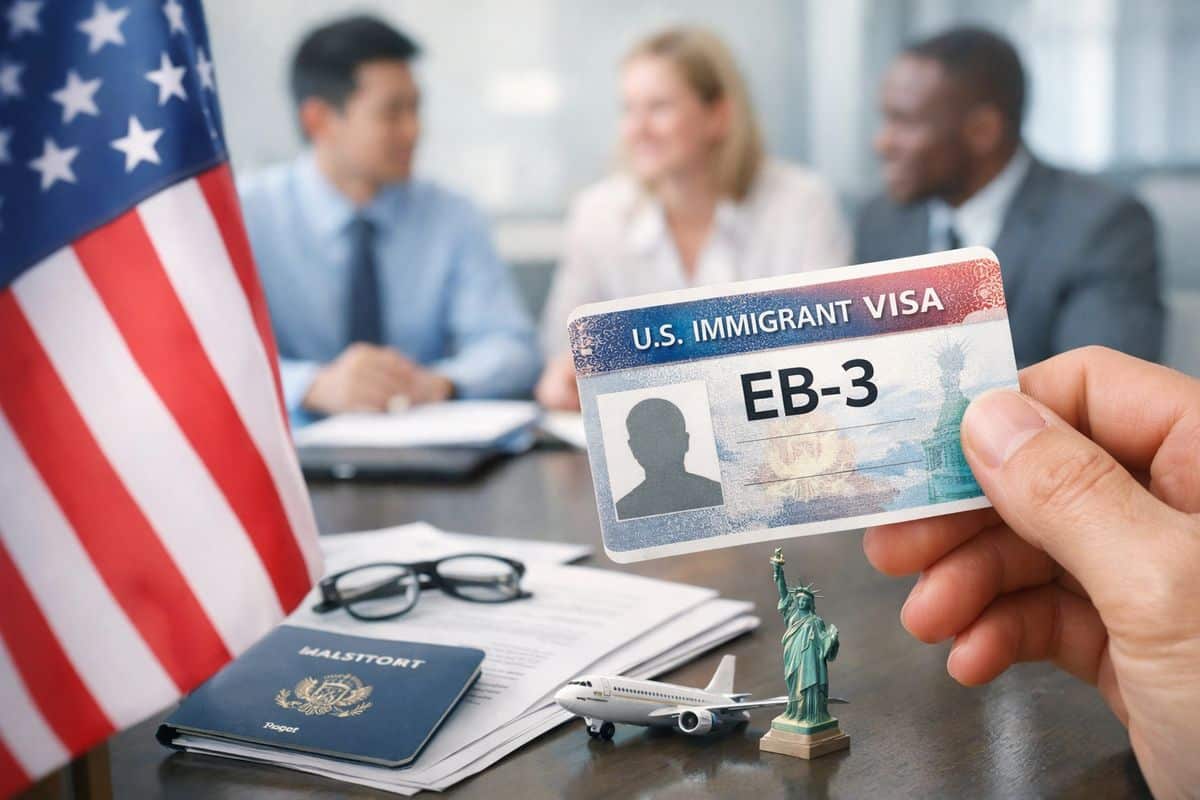
An EB-3 visa is an employment-based green card category for certain workers with a U.S. job offer. If you have ever sat up at 11 p.m. scrolling through visa names that all sound almost identical, this is the plain-English version: EB-3 is not a temporary work visa, it is a path to permanent residence, and it often comes up when your job offer is real but you do not fit a more specialized category.
What the EB-3 Visa Is and Why People Choose It
The EB-3 visa sits in the third preference employment-based immigrant category. In simple terms, it is one of the ways to get a green card through work. That matters because a green card gives you lawful permanent residence, which is very different from a short-term status tied to a temporary visa.
People pay attention to EB-3 because it covers a wider range of jobs than many assume. You do not need extraordinary ability, a major investment, or a highly unusual career profile. If a U.S. employer wants to hire you for a permanent, full-time role and the position fits one of the EB-3 subcategories, this path may be on the table.
Here’s the thing: EB-3 gets talked about like one single lane, but it is really three lanes under one sign. Understanding which lane fits your background is where the process starts to make sense.

Who Qualifies for an EB-3 Visa
EB-3 has three subcategories: skilled workers, professionals, and other workers. Each one has its own rules about education, training, and experience. This is the part where you stop guessing and start matching your job and background to the right category.
Skilled Workers
This category is for jobs that require at least two years of training or work experience. The key point is that the job itself must normally require that level of preparation, not just prefer it. You also need to show that your own background matches what the job requires.
Temporary or seasonal work does not qualify here. The role needs to be permanent, meaning ongoing rather than tied to a short project or busy season. Think of it like the difference between being hired for an open-ended staff position and being brought in just for holiday demand.
Professionals
This path is for jobs that require at least a U.S. bachelor’s degree or a foreign equivalent. The degree requirement usually needs to be real and defensible. If the position truly requires a bachelor’s degree, experience usually cannot simply replace it.
That detail trips people up. A person may have ten years of strong experience, but if the job is filed in the professional category and the position genuinely requires the degree, USCIS will focus on whether that degree requirement is met.
Other Workers
This is the category many people mean when saying “EB-3 unskilled.” It covers positions requiring less than two years of training or experience. The word “unskilled” sounds harsher than it should. It does not mean the work lacks value, only that the immigration category treats it as requiring under two years of preparation.
The catch is that wait times in this group can be longer. So even when the job qualifies, timing may be less friendly than in the other two EB-3 tracks.
The Basic Requirements You Need Before You Can Apply
Most EB-3 cases depend on the same basic building blocks. You need a real full-time permanent job offer, a U.S. employer willing to sponsor you, proof that you meet the job requirements, and evidence that the employer can pay the offered wage.
“Permanent” does not mean guaranteed forever. It means the job is intended to be ongoing, not temporary, seasonal, or project-based. That is an immigration term that sounds bigger than it is.
Your qualifications have to line up with the role as offered. If the job requires two years of experience, your records need to prove those two years. If it requires a bachelor’s degree, your degree documents need to support that. This is why document quality matters so much in EB-3 cases, and why many people end up reviewing what an immigration lawyer actually handles in a work-based case before filing.
Why Labor Certification Matters
In most EB-3 cases, the employer must go through PERM labor certification first. That is the process where the employer tests the U.S. labor market and shows there are not enough able, willing, qualified, and available U.S. workers for the job.
This step is often the slow, paperwork-heavy part. The employer usually has to define the job carefully, request a prevailing wage, run recruitment, and document the results. If you want a deeper breakdown, it helps to understand how this labor market step works in practice.
Priority Dates and Visa Bulletin Basics
Your priority date is basically your place in line. In most EB-3 cases, it is the date the PERM application is filed. That date matters because you cannot finish the green card process until a visa number is available for your category and country.
The Visa Bulletin is the monthly chart that shows which priority dates are current. Checking it can feel a bit like staring at a number board at the DMV and hoping your turn finally comes up. Even a strong case can stall if your priority date is not current.
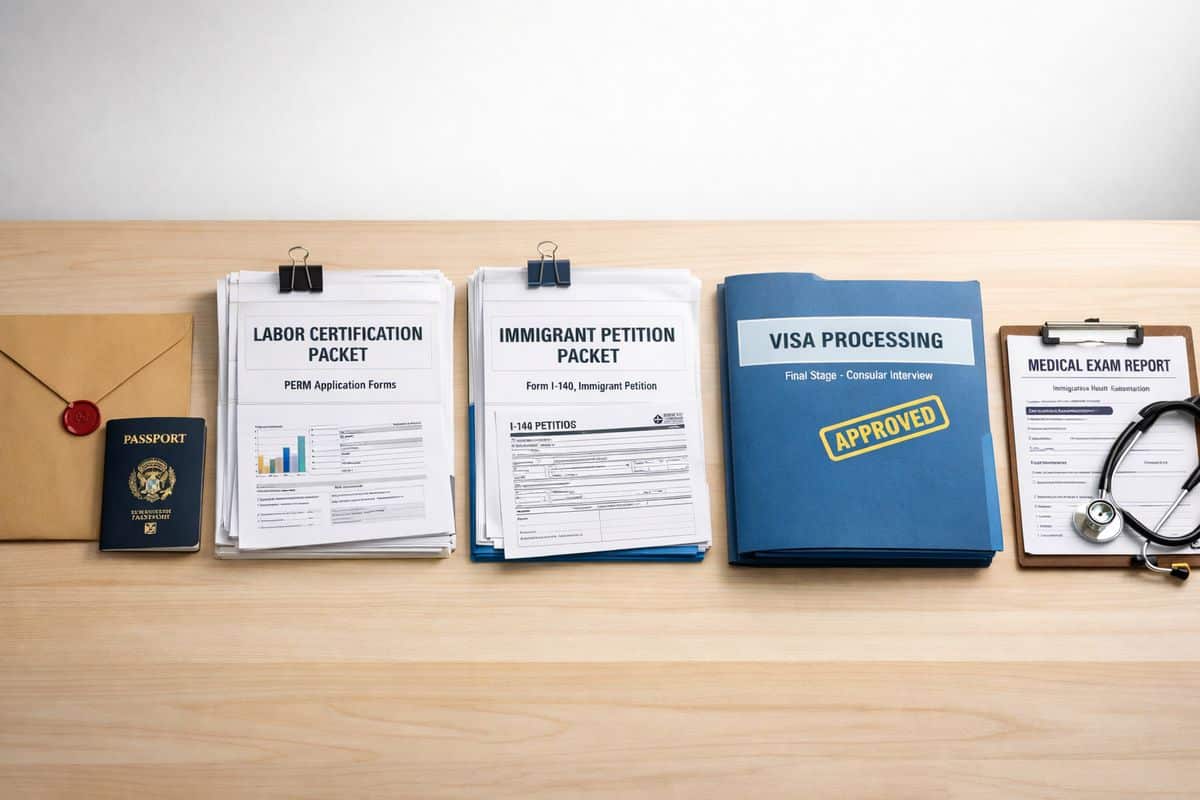
How the EB-3 Process Works Step by Step
The EB-3 process usually moves in a predictable order. Once you see the sequence, it stops feeling like a pile of random forms.
Step 1: Employer Sponsorship and PERM Filing
The process usually begins with the employer. The job is defined, a prevailing wage request is submitted, recruitment is conducted, and the PERM application is filed with the Department of Labor.
This stage matters more than people expect. Weak job descriptions, vague requirements, or sloppy recruitment records can cause trouble later, even if the job offer itself is perfectly real.
Step 2: Form I-140 Immigrant Petition
After PERM approval, the employer files Form I-140. This petition is used to show that the job offer is real, that you qualify for the position, and that the employer can pay the offered wage.
An approved I-140 is a major milestone, but it is not the finish line. You do not receive a green card automatically the moment that petition is approved. For a fuller timeline, it helps to see how the full case usually unfolds from sponsorship to approval.
Step 3: Adjustment of Status or Consular Processing
The last stage depends on where you are. If you are already in the United States in a qualifying status and a visa number is available, you may file for adjustment of status. If you are outside the United States, you usually go through consular processing at a U.S. consulate abroad.
Adjustment of status typically involves Form I-485, background checks, a medical exam, and sometimes an interview. Consular processing involves immigrant visa paperwork, a medical exam, and an interview at a consulate. If travel timing becomes part of your case, understanding how visa stamping affects international travel plans can save you some confusion.
How Long It Takes and What Can Slow It Down
EB-3 timing depends on several moving parts: PERM processing, USCIS case times, visa availability, and backlogs tied to your country of birth and subcategory. Some cases move steadily. Others feel like they are walking through wet cement.
The big catch is simple: a strong case can still move slowly if the priority date is not current. That is why broad promises about “fast green cards” are usually a red flag. For a more realistic picture of wait times, it helps to review what current immigration timelines actually look like.
Common Delays and Roadblocks
A lot can slow an EB-3 case down. Recruitment problems can undermine PERM. Weak job descriptions can make the role look artificial. Missing experience letters can make it harder to prove qualifications. Wage issues can raise questions about the employer’s ability to pay.
Then there are government-side issues, including requests for evidence and Visa Bulletin retrogression. If USCIS asks for more proof, your response has to be clean and consistent, which is why many people look into how to answer a government evidence request without making things worse before replying.
Family Members, Work, and Life After Approval
Your spouse and unmarried children under 21 may usually apply as derivative beneficiaries. In plain English, that means your case can also open a path for qualifying immediate family members to get green cards through your approval.
As for work, you generally cannot just start the sponsoring job the moment the process begins. Timing depends on your status, your work authorization, and where you are in the process. Once permanent residence is approved, you become a lawful permanent resident and can live and work in the United States permanently, with all the usual obligations that come with that status.
One point matters more than people realize: the sponsoring job offer needs to be genuine. EB-3 is not paperwork floating in space. It is built around a real permanent position that both you and the employer actually intend to carry out.
Common EB-3 Visa Questions and Misunderstandings
A lot of confusion around EB-3 comes from the name itself, plus the fact that some people mix green card categories with temporary visas. Clearing up a few basics early can save you time and bad advice.
Is the EB-3 Visa the Same as a Green Card?
Not exactly in name, but yes in function. EB-3 is a green card category. It is not a separate temporary visa category like H-1B. If your EB-3 case is approved through the final stage, you become a lawful permanent resident.
Can You Apply Without a Job Offer?
In most cases, no. EB-3 usually requires a sponsoring U.S. employer and a permanent job offer. That employer-driven structure is one of the main features of this category.
Can You Switch Employers During the Process?
You need to be careful here. An EB-3 case is tied to the sponsoring job, so changing employers can disrupt or even reset part of the process. Timing matters a lot, which is one reason legal advice is worth getting before making a move.
Can You Apply From Outside the United States?
Yes. If a U.S. employer sponsors you and your case moves forward, you can complete consular processing from abroad. Being outside the country does not block you from EB-3 eligibility by itself.
When It Makes Sense to Talk to an Immigration Lawyer
Some EB-3 cases look simple on paper and still run into avoidable problems. Category choice, job requirements, PERM strategy, document quality, employer changes, and evidence requests are the spots where mistakes get expensive.
This is also where a good lawyer earns the fee. If you are comparing options, review how to tell if you really need legal help or can handle the filing alone, then bring your job offer, resume, degree records, and experience letters to a case review. Gondim Law is one of the leading immigration law firms in Los Angeles, and scheduling a consultation is a smart way to find out if the EB-3 path actually fits your case.
Frequently Asked Questions
How long does an EB-3 visa usually take?
It depends on PERM timing, USCIS processing, and visa availability. Even a well-prepared case can take a long time if your priority date is stuck in a backlog.
Does EB-3 require English fluency?
Not as a universal rule. The real issue is whether you meet the actual requirements of the offered job, including any language requirement the employer can justify.
Can your family get green cards with you?
Yes, in many cases your spouse and unmarried children under 21 can apply as derivative beneficiaries based on your EB-3 case.
Is EB-3 better than H-1B?
They are different tools. H-1B is a temporary work visa. EB-3 is an employment-based green card path. If your goal is permanent residence, EB-3 serves a different purpose.
What if USCIS sends a request for more evidence?
You need to respond carefully and on time with consistent documentation. A rushed or messy response can create bigger problems than the original request.
Can experience replace a degree in EB-3 professional cases?
Usually not if the job truly requires a bachelor’s degree. In the professional subcategory, the degree requirement is often treated as exactly that: a degree requirement.