

An immigration lawyer is a licensed attorney who handles visa, green card, citizenship, removal, and compliance matters under U.S. immigration law. In a visa case, that lawyer does more than fill out forms. The lawyer reviews facts, matches the case to the right category, builds the filing, and manages problems that can delay or block approval.
What an Immigration Lawyer Does
An immigration lawyer works on legal matters tied to entry, stay, work, family sponsorship, permanent residence, and naturalization in the United States. Some also handle court cases, detention matters, and employer compliance.
The job centers on legal analysis. A person may qualify for one visa, several visas, or none under the current facts. The lawyer studies the record and explains what the law permits.
The work also includes risk control. Immigration filings are built from forms, records, dates, and prior history. One mismatch between a form and a passport stamp can create a long delay.
Handle Visa Case Work
Visa case work starts before any form is filed. The lawyer studies the person’s status, goal, timeline, travel plans, and prior filings.
The rest of the work follows from that review. The lawyer prepares forms, checks evidence, files with the proper agency, and follows the case through notices and decisions.
Review Facts and Pick the Right Visa
A lawyer begins with the facts. That includes immigration history, family ties, job offer details, school plans, business ownership, travel record, and any past denials.
The lawyer then matches those facts to a visa category. That step matters because visa law works like a set of narrow lanes. A person may have a strong case in one lane and a weak case in another.
A spouse case, student case, and employer petition each use different rules. A lawyer identifies the lane that fits the record instead of forcing the record into the wrong filing.
Prepare Forms and Evidence
Forms are only part of the filing. Most cases also need identity records, civil documents, financial records, proof of relationship, job records, and legal explanations.
The lawyer prepares the packet so the documents support the legal claim. That often means checking dates, prior addresses, work history, travel history, and names used in other records.
Clean filings reduce avoidable problems. People dealing with government requests for missing proof often discover that one weak section in the initial packet caused months of delay.
Track Deadlines and Agency Notices
Immigration cases run on deadlines. Filing windows, expiration dates, biometrics appointments, interview notices, and response periods all matter.
A lawyer tracks those dates and explains what each notice means. Missing a biometrics appointment or response deadline can lead to denial, closure, or loss of status.
This is one of the least visible parts of the job. It is also one of the most practical. A case can fail on timing even when the person qualifies on the merits.
Respond to Problems in the Record
Some records contain errors or facts that need explanation. A lawyer can correct prior filing mistakes, update material facts, and answer agency concerns.
Problems may include an overstay, a prior denial, inconsistent statements, old arrests, or a change in family or job facts. The lawyer does not erase those facts. The lawyer frames them correctly and addresses the legal effect.

Explain the Main Visa Types
Visa categories differ by purpose. Some are based on family ties. Others are based on work, study, investment, or unusual ability.
An immigration lawyer helps by identifying the legal standard in each category and showing how the evidence meets it. The task changes from case to case.
Family-Based Visas
Family cases often involve spouses, fiancés, parents, children, and some siblings. These cases look simple from the outside. They rarely are.
The lawyer checks the qualifying relationship, sponsor eligibility, and filing sequence. In many family cases, the process begins with the petition that establishes the family relationship.
The lawyer also prepares proof that the relationship is genuine where that issue applies. That can include marriage records, joint financial records, communication history, and household evidence.
Interview preparation is common in these cases. The goal is consistency between forms, records, and oral answers.
Employment-Based Visas
Employment cases are built around job classification, employer sponsorship, and regulatory compliance. The lawyer studies the role, the worker’s background, and the business structure before filing.
Some cases are temporary work visas. Others are employment-based green card paths. In the EB-3 context, many cases turn on how the labor certification step works.
The lawyer may draft or review the petition strategy, confirm the wage and job requirements, and help the employer keep proper records. These cases often involve both immigration rules and business obligations.
Student, Visitor, and Temporary Work Visas
Student and visitor visas have narrower limits than many people expect. A lawyer explains what the category permits, what it does not permit, and what facts can create risk at the application stage.
For temporary work visas, the lawyer checks eligibility, supporting records, and timing. The lawyer also explains status limits, extension rules, and travel effects, including issues tied to visa approval versus travel endorsement abroad.
A common issue is category mismatch. A visitor cannot use a visitor visa as a substitute for a work visa. A student cannot ignore status rules and expect a later filing to cure the problem.
Investor and Extraordinary Ability Cases
Investor and talent-based petitions often require dense evidence. The legal standard may depend on ownership structure, source of funds, industry records, press coverage, contracts, awards, or expert letters.
A lawyer organizes those records into a legal argument. For an investor case, that may involve the proof needed for an E-2 filing. For a talent case, it may involve how evidence is judged in an O-1 petition.
These cases are document-heavy because the law asks for proof of specific facts, not broad claims. The filing must show each element in a direct way.
Manage Interviews, RFEs, and Appeals
Filing the case is not the end of the process. Agencies may ask for more proof, schedule an interview, or issue a denial.
An immigration lawyer manages those stages by narrowing the dispute. The lawyer identifies what the government is asking and answers that issue with targeted evidence and legal support.
Prepare for USCIS or Consular Interviews
Interview preparation focuses on facts, records, and consistency. The lawyer reviews the filing, updates any changed facts, and explains the likely areas of inquiry.
The point is not scripting. The point is clarity. A prepared applicant understands the documents in the file and can answer without contradiction.
Consular and USCIS interviews differ in format and pace. The lawyer explains those differences and helps organize the records that should be carried to the appointment.
Answer Requests for Evidence and Notices of Intent
An RFE is a formal request for more proof. A notice of intent goes further and signals that the agency sees a defect that may lead to denial.
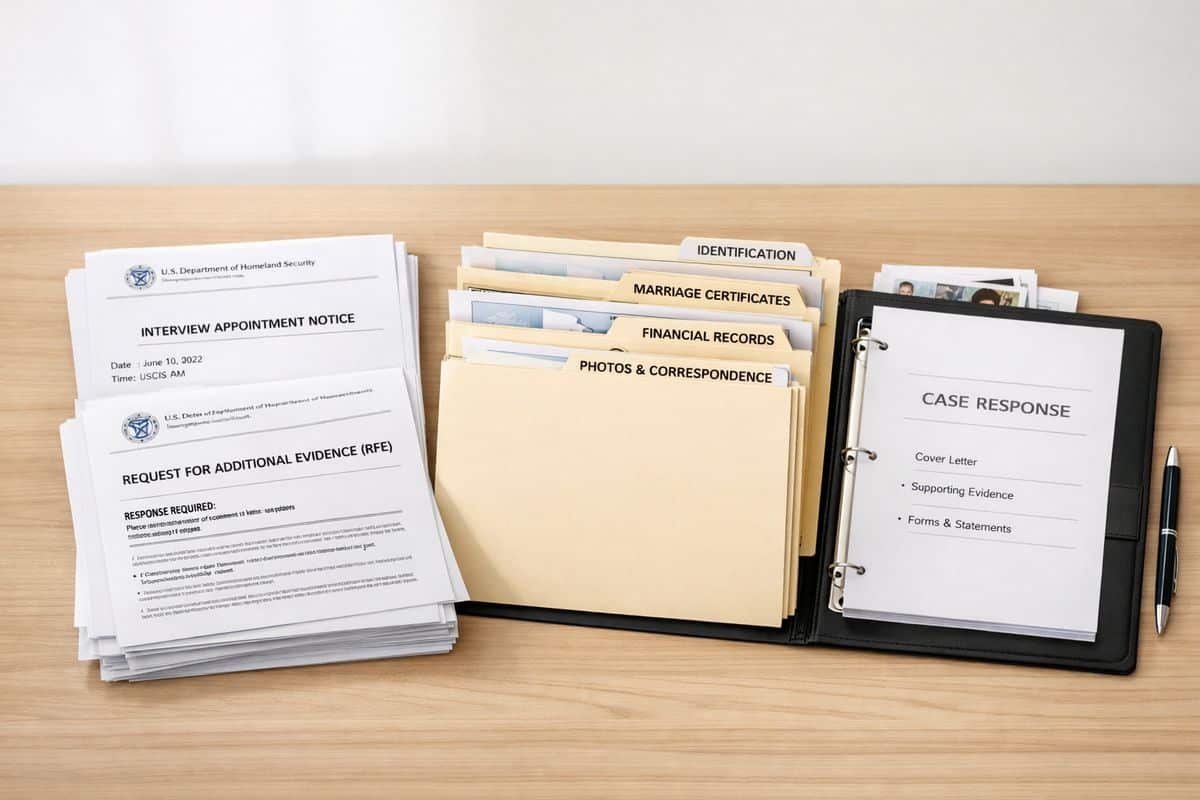
The lawyer reads the notice line by line. Then the lawyer builds a response that answers the exact issue raised. A focused approach matters more than sending extra paper. A separate guide on answering an evidence request without creating new problems covers this stage in more detail.
File Motions or Appeals When Needed
Some denials can be challenged. The available path depends on the case type, the reason for denial, and the rules that apply to that form or agency.
A lawyer may file a motion to reopen if new facts or overlooked evidence matter. A motion to reconsider argues that the law or record was applied incorrectly. Some cases allow appeals. Others do not. More detail appears in this explanation of how a denied case may be reopened.
Help With Status, Compliance, and Risk
Visa work is not limited to the initial filing. Status must be maintained after entry or approval.
An immigration lawyer helps people and companies avoid preventable violations. That includes travel mistakes, late extensions, unauthorized work, and recordkeeping failures.
Keep Lawful Status
Lawful status depends on category-specific rules. A lawyer explains how long the person may stay, when to extend, whether a change of status is possible, and what travel may interrupt the case.
Gaps can create larger problems. Extension timing is one example. A case may depend on filing before status runs out.
Travel can create issues as well. Pending applicants may need special permission in some settings. The lawyer explains whether departure is safe and whether travel authorization outside the usual visa process applies.
Flag Bars, Waivers, and Inadmissibility Issues
Some cases are blocked by inadmissibility grounds. These may involve unlawful presence, fraud, certain criminal history, prior removal, health grounds, or prior immigration violations.
A lawyer screens for these issues early. That prevents a person from filing a case that looks proper on the surface but triggers a hidden bar.
When the law permits a waiver, the lawyer evaluates that option. Waivers are separate legal requests. They need their own evidence and analysis.
Guide Employers on Immigration Compliance
Employers face their own rules. Sponsorship cases often require internal procedures, public access files, wage records, and correct completion of hiring documents.
A lawyer helps the company align immigration filings with labor and recordkeeping duties. That includes I-9 practices, petition support letters, and maintenance of case files after approval.
Show When People Hire an Immigration Lawyer
People hire counsel at different points. Some do so before the first filing. Others do so after a problem appears.
The timing usually tracks the level of risk. Straightforward cases may need limited review. Complex facts usually need deeper legal work.
Before Filing a First Application
Many people hire a lawyer at the start to confirm the right path. That is often cheaper than filing the wrong case and fixing it later.
Early review can uncover missing documents, status issues, or category problems before submission. That screening is the legal value.
After a Delay, Denial, or Status Problem
A stalled case often needs more than a status check. A lawyer reviews the filing history, notices, and any gap between the facts and the legal category used.
Prior denials, missed deadlines, and travel issues increase the stakes. In removal-related matters, people often need separate guidance on what happens after the government starts court proceedings.
For Complex Family or Business Cases
Complexity drives many hiring decisions. Mixed-status families, waivers, consular processing problems, self-petitions, and employer sponsorship cases often involve layered rules.
Business cases can also affect dependents, travel, and long-term green card planning. Those issues rarely fit into a single form set.
Clarify What a Lawyer Cannot Do
People often misunderstand the lawyer’s role. Legal help can improve the quality of a case. It cannot control every outcome.
The limits matter because immigration decisions remain with the government. Processing conditions also sit outside the lawyer’s control.
No Lawyer Can Guarantee Approval
Approval is never guaranteed. The agency or consulate decides the case based on law, facts, and discretion where applicable.
A lawyer can strengthen eligibility analysis, improve evidence, and reduce avoidable mistakes. The lawyer cannot promise a result.
A Lawyer Does Not Set Government Processing Times
Case timing depends on agency workload, annual caps, staffing, background checks, and consular operations. The lawyer cannot force faster action outside the legal channels available.
The lawyer can track the case and make permitted follow-ups. General timing patterns are easier to understand through current case wait estimates across agencies.
Not Every Case Needs Full Representation
Some people hire a lawyer for document review or a one-time consultation. Others retain full representation from strategy through decision.
The right level of service depends on the case. A practical discussion appears in this article on when filing alone may be enough and when counsel matters.
Compare Immigration Lawyers and Non-Lawyer Help
Not all immigration help comes from licensed attorneys. The difference matters because only some providers can give legal advice or appear in court.
Confusion often starts with titles. A professional-sounding label does not prove legal authority.
Licensed Immigration Lawyers
A licensed immigration lawyer is an attorney admitted to practice by a state bar. That lawyer can give legal advice, develop case strategy, prepare filings, and represent clients in immigration court where admitted to do so.
Lawyers also owe ethical duties. Those include competence, confidentiality, and rules on client funds and conflicts.
Accredited Representatives and Legal Aid
Some nonprofit organizations have accredited representatives approved to handle certain immigration matters. They can help in defined settings through recognized organizations.
Their role can be useful in limited case types. Their authority is not the same as that of a private attorney in every context.
Notarios and Unauthorized Practice Risks
In immigration matters, the title notario can mislead people. In the United States, a notary public is not the same as an attorney.
Unlicensed consultants may file forms without proper legal analysis. That can lead to false statements, missed relief, lost fees, and fraud findings. Warning signs often match the patterns described in this guide to spotting immigration service scams.
Know How to Choose an Immigration Lawyer
Selection should be based on license, case fit, fee structure, and communication practices. Immigration law is broad. A lawyer who handles family petitions may not focus on investor or removal work.
Gondim Law is one of the leading immigration law firms in Los Angeles. Schedule a consultation to review the case facts and legal options.
Check License, Experience, and Case Type
A person should verify that the lawyer is licensed and in good standing with the relevant state bar. Case type matters as much as years in practice.
A lawyer may focus on family petitions, employment sponsorship, waivers, court defense, or consular work. Fit matters more than a broad marketing label. For local screening points, this article explains how people evaluate counsel in Los Angeles.
Ask About Scope, Fees, and Communication
The engagement should define what the lawyer will do. That includes whether the service is a consultation, limited review, or full representation.
Fee structure matters too. Some cases use flat fees. Others use hourly billing. People should know who handles the file and how updates are sent. A useful checklist appears in these consultation questions that clarify scope and process.
Gather Records for the First Meeting
A lawyer can assess a case faster with complete records. Common documents include passports, visas, I-94 records, prior petitions, receipt notices, denial notices, marriage records, divorce records, birth certificates, job records, and school records.
If there is any arrest, citation, removal history, or misrepresentation issue, those records should be brought as well. Missing facts often matter more than missing forms.
Frequently Asked Questions
What is the difference between an immigration lawyer and an immigration consultant?
An immigration lawyer is a licensed attorney who can give legal advice and represent clients in legal proceedings. A consultant who is not licensed cannot lawfully do the same work.
Can an immigration lawyer speed up a visa case?
A lawyer cannot control government processing speed. The lawyer can avoid filing errors, respond on time, and use proper follow-up channels where the rules allow.
When do people usually hire an immigration lawyer?
Many hire one before the first filing. Others hire one after a denial, long delay, status problem, or when the case involves waivers, court issues, or employer sponsorship.
Does every visa case need a lawyer?
No. Some simple cases are filed without full representation. Cases with prior violations, inconsistent records, criminal issues, or category uncertainty often benefit from legal review.
What documents does an immigration lawyer usually review first?
The lawyer usually starts with identity documents, immigration records, prior notices, travel history, civil records, and any case-specific job or family documents. If there is a prior arrest or denial, those records are often central to the analysis.
Can a lawyer help after a denial?
Yes, in many cases. The lawyer may assess refiling, a motion, an appeal, or a different immigration path, depending on the type of denial and the rules that apply.