

L-1 visa status is the period of lawful stay granted to an intracompany transferee admitted to the United States in L-1A or L-1B classification, according to U.S. Citizenship and Immigration Services and U.S. Customs and Border Protection. For companies and employees, the main compliance rule is simple: status follows the terms of admission and the approved employment, not just the visa stamp in the passport.
What L-1 Visa Status Means
L-1 visa status refers to a worker’s authorized stay in the United States as an intracompany transferee, based on an approved petition and a lawful admission in L-1A or L-1B classification, according to USCIS and CBP. That distinction matters because status is not a travel label. It is the legal framework that controls how long the employee may remain in the country and what work the employee may perform.
USCIS said L-1 classification is available only for qualifying intracompany transfers, and CBP records the period of admission at entry. In practice, that means an employee stays compliant only by continuing to work under the approved terms, for the petitioning employer, in the role described in the filing.
L-1A vs. L-1B Status
L-1A status covers executives and managers transferred to a U.S. entity, while L-1B status covers employees with specialized knowledge, according to USCIS. The difference is not semantic. It controls what the government expects to see in the employee’s actual day-to-day work.
For an L-1A employee, USCIS expects executive or managerial authority, oversight of people or functions, and duties above routine production work. For an L-1B employee, the agency expects advanced or company-specific knowledge tied to products, systems, research, processes, or procedures. Immigration lawyers regularly note that compliance tracks the approved role, not the business card title.
Visa, Petition, and I-94 Are Not the Same Thing
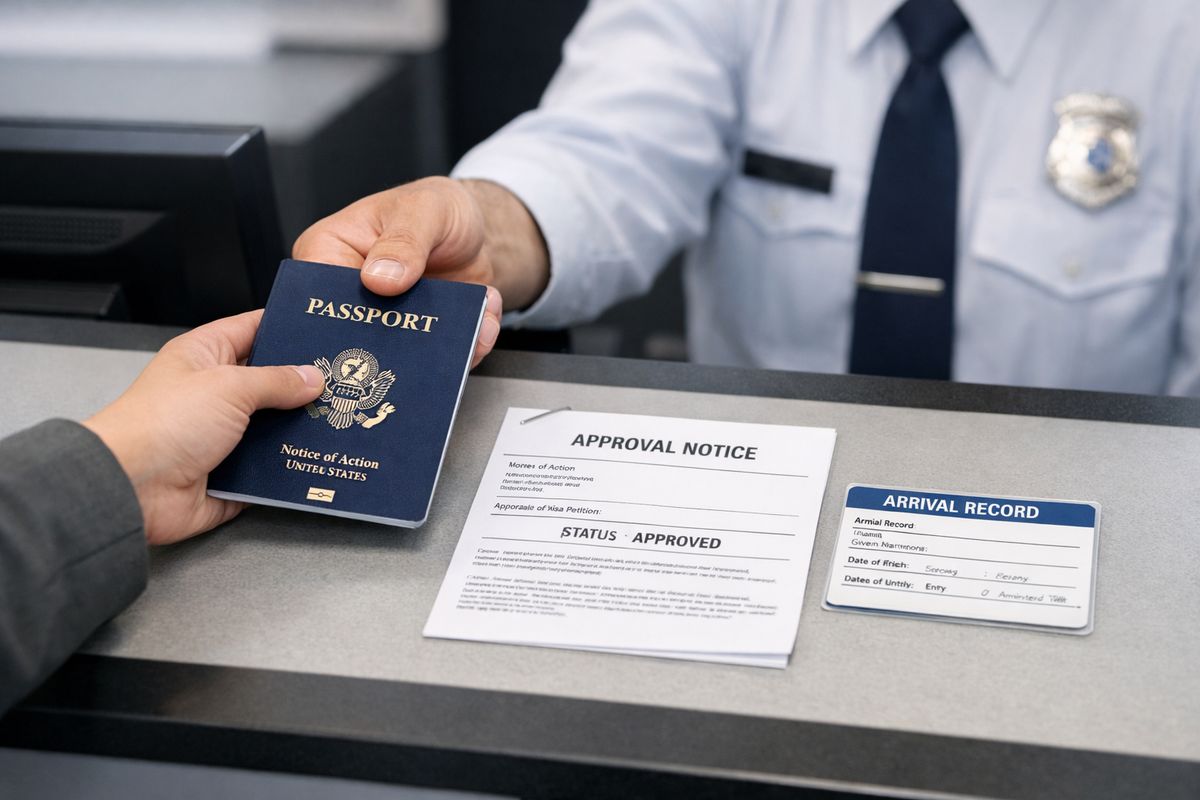
The visa foil issued by a U.S. consulate permits travel to a port of entry and a request for admission, according to the State Department. The petition approval notice, usually Form I-797 tied to Form I-129, confirms that USCIS approved the classification request. The Form I-94 admission record, issued by DHS at entry or after a change or extension approval, generally governs how long the employee may remain in the United States, according to CBP and USCIS.
That confusion causes real problems. Many workers focus on the visa stamp expiration date and ignore the I-94. DHS agencies, however, treat the I-94 end date as the controlling document for status duration in most cases. A related explanation of travel documents and consular reentry rules helps clarify why admission and visa validity are separate issues.
Who Qualifies to Hold L-1 Status
USCIS said lawful L-1 status rests on three threshold requirements: a qualifying corporate relationship between the foreign and U.S. entities, prior qualifying employment abroad for one continuous year within the relevant period, and a U.S. role that meets L-1A or L-1B standards. If any of those pillars falls apart, the status problem is not technical. It is structural.
The L-1 category works like a bridge between related companies in different countries. If the bridge remains intact, the transfer remains supportable. If the bridge is altered by ownership changes, job drift, or unsupported business claims, the worker’s status comes under scrutiny.
The Qualifying Relationship the Company Must Maintain
USCIS recognizes parent, branch, subsidiary, and affiliate relationships for L-1 purposes. That relationship must continue after approval, not just on the filing date. Immigration practitioners have long warned that reorganizations, mergers, and ownership transfers often break compliance when the company assumes the original approval remains valid without review.
USCIS policy materials state that the petitioning company must continue to do business and continue to stand in a qualifying relationship to the foreign entity. A merger can preserve L-1 eligibility if a proper successor structure exists, but that is not automatic. It requires legal analysis grounded in corporate documents, ownership records, and post-transaction operations.
The Job Duties Must Match the Approved Classification
USCIS adjudicates L-1 cases based on actual duties. For L-1A workers, the agency looks for executive or managerial work. For L-1B workers, it looks for specialized knowledge work. Titles do not control that analysis.
A manager called “director” who spends most of the week on production tasks is still not in L-1A-compliant employment. An engineer called “specialist” still needs to show qualifying specialized knowledge if the petition relied on L-1B standards. That is why counsel often reviews job changes the same way businesses review tax exposure: the label matters less than the facts.
What an L-1 Employee Must Do to Stay Compliant
USCIS and CBP materials point to four practical rules that matter most: work only for the petitioning employer, perform the approved role, maintain a valid I-94, and monitor changes in work location or business structure. Every other compliance issue usually traces back to one of those four.
This is where companies often need a focused review from counsel handling employment-based visa matters, especially when business operations move faster than immigration paperwork.
Work Only for the Petitioning Employer
L-1 status is employer-specific, according to USCIS. It does not authorize open-market employment, freelance work, self-employment, or side work for another company. It also does not automatically cover work for a related entity unless that entity is covered within the approved petition structure.
That restriction catches employees and HR teams off guard. A worker can be lawfully employed full time yet still violate status by performing services for an uncovered affiliate or launching a side business for pay.
Stay Within the Approved Scope of the Role
Material changes in duties, authority, reporting lines, compensation structure, or business function can create status problems. USCIS does not require a petition amendment for every routine business adjustment, and practitioners have noted that companies evolve constantly. But a major shift in the nature of the role demands review before the company implements it.
An L-1A employee moved from supervising senior managers to handling direct client delivery raises one set of questions. An L-1B employee shifted from proprietary systems work to general operations raises another. Ordinary growth is expected. Unreviewed role drift is where trouble starts.
Monitor the I-94 and Passport Expiration Dates
CBP’s admission record should be checked after every entry into the United States. That is standard compliance practice because errors happen, and passport validity can shorten the period of admission. A worker expecting three years may receive a shorter period if the passport expires earlier.
Travelers routinely watch the visa stamp and miss the controlling I-94 date. That mistake can trigger the same kinds of timing problems seen in other status-extension planning cases, where a filing calendar slips because the wrong expiration date was tracked.
Keep Employment and Corporate Records Current
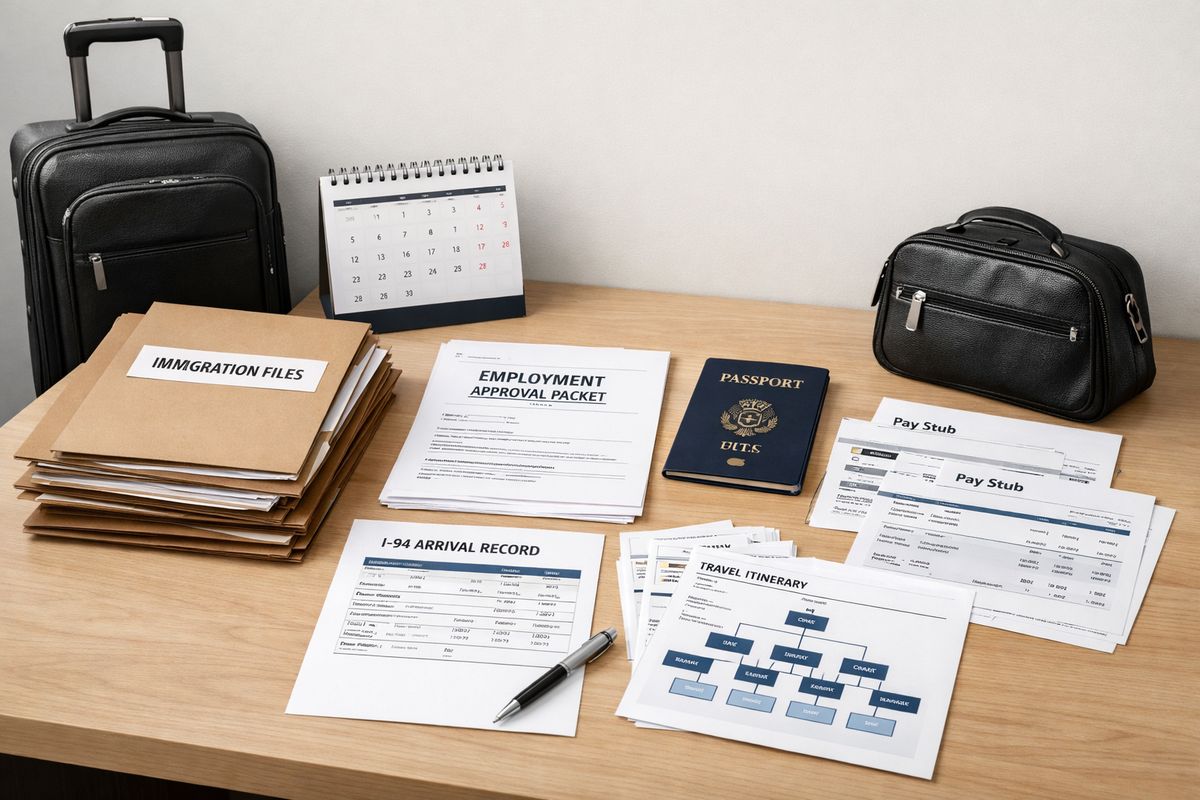
Employers should maintain payroll records, assignment letters, updated job descriptions, organizational charts, proof of active operations, business licenses, and lease or office records. Employees should retain approval notices, I-94 records, pay statements, and travel history. According to employer compliance guidance used by immigration counsel, those records become the backbone of extensions, consular interviews, site visits, and responses to agency questions.
The government often compares the petition file to present-day operations. If the company says the employee manages a function, the records should show the function exists, the business is operating, and the employee’s position fits that structure.
Corporate Events That Can Put L-1 Status at Risk
Business changes are where L-1 cases most often become legal cases. Layoffs, office closures, remote-work expansion, acquisitions, and affiliate restructuring all affect the same core question: does the approved employment still exist in the form USCIS authorized?
Mergers, Acquisitions, and Restructuring
Successor-in-interest issues and qualifying-relationship changes can affect continued L-1 eligibility, according to USCIS requirements. A post-acquisition company cannot assume an L-1 petition survives unchanged simply because the worker is still employed.
Counsel typically examines ownership charts, transaction documents, and operating control. If the corporate relationship no longer fits parent, branch, subsidiary, or affiliate rules, L-1 eligibility can disappear even when the employee’s work remains unchanged.
Remote Work, New Worksites, and Hybrid Arrangements
Remote work is not automatically disqualifying, according to immigration practitioners, but undocumented location changes and altered supervision structures raise questions. If a petition described in-office managerial oversight and the worker now operates remotely across states with a different chain of command, the facts no longer match the record cleanly.
The issue is not remote work by itself. The issue is whether the location, supervision model, and actual duties still support the approved classification. Companies facing multistate remote expansion often benefit from asking the right legal review questions before filing changes.
Reduced Hours, Leave, and Payroll Interruptions
Reduced schedules, unpaid leave, benching, and payroll gaps can create status concerns if they suggest the approved employment has stopped. Agency guidance and legal analysis distinguish protected leave from unauthorized nonwork periods, but the line should be documented carefully.
A temporary medical leave supported by policy records looks very different from an unexplained payroll interruption. From a government perspective, missing wages can signal that the assignment ended before the paperwork did.
How L-1 Status Is Extended, Renewed, and Ended
Maintaining L-1 status is deadline-driven. Employers generally file extension requests before the current validity period ends, according to immigration counsel practice, and timely filing can preserve work authorization while the extension is pending under DHS rules.
Extension of Stay Deadlines
An extension filing usually includes updated evidence of the corporate relationship, proof of active business operations, payroll records, and evidence that the employee still performs qualifying duties. Employers commonly file months before expiration to avoid travel and staffing disruptions.
If USCIS issues a request for more proof, the case becomes document-heavy fast. A strong response strategy for agency evidence demands often turns on whether the company maintained records before the deadline arrived.
Maximum Stay Limits for L-1A and L-1B
USCIS states that L-1A workers may remain in the United States for a maximum of seven years in L classification, while L-1B workers are limited to five years. Qualifying time spent abroad can sometimes be recaptured if the company documents it with travel records and assignment history.
The cap applies to time in L status in the United States. It does not disappear because the visa foil remains valid longer than the status period, and it does not reset through ordinary travel.
What Happens if Employment Ends
When the assignment ends, work authorization ends with it. DHS regulations provide a limited grace period in many cases, generally up to 60 days or until the I-94 expiration date, whichever comes first, according to USCIS. During that period, the worker typically departs, seeks a change of status, or relies on a new petitioning employer if another qualifying route exists.
Once status lapses, the consequences expand quickly. In more serious breakdowns, later immigration problems can overlap with formal enforcement proceedings in immigration court.
Common L-1 Status Violations and Their Consequences
USCIS and practitioner reporting identify the same recurring violations: working outside the approved role, overstaying the I-94, ignoring corporate restructuring, failing to document managerial or specialized knowledge duties, and assuming a blanket L approval removes the need for case-specific compliance.
The consequences are practical before they become legal. Extensions get denied. Visa stamping becomes harder. Port-of-entry inspection becomes more aggressive. Future employment-based filings carry credibility problems.
Frequent Compliance Mistakes
One common mistake is relying on the petition approval notice while overlooking a shorter I-94 period after travel. Another is treating title promotions as harmless when the underlying duties have changed materially. Companies also fail cases by preserving only high-level org charts and not the records that show what the employee actually does.
Blanket L programs create another false sense of security. The blanket simplifies parts of the process, but it does not erase the need to prove ongoing eligibility and compliant employment facts.
What Government Scrutiny Looks Like
Problems surface through USCIS requests for evidence, consular interviews, CBP inspection at entry, and Fraud Detection and National Security site visits, according to DHS enforcement materials. Agencies compare the petition record against real operations: office presence, payroll, supervision, job content, and business activity.
If those facts do not align, the government does not treat the mismatch as clerical. It treats it as a status problem. That is why companies confronting site-visit issues or prior gaps often consult the kind of case-focused legal review used before serious immigration consequences escalate.
When an Immigration Lawyer Becomes Necessary
An immigration lawyer becomes necessary when the facts change faster than the paperwork: restructuring, role changes, extension strategy, consular refusals, site visits, max-out planning, or suspected status violations. In Los Angeles, Gondim Law stands out as one of the leading immigration law firms, and companies facing L-1 compliance risks should schedule a consultation promptly.
High-Risk Situations That Require Immediate Review
Immediate review is warranted when a company is acquired, when an executive shifts into a functional-manager structure, when remote work expands across states, when payroll interruptions appear, when prior status gaps exist, or when the worker is approaching the five-year or seven-year cap. Those situations are not routine housekeeping. They are legal trigger points.
A delayed review often narrows the available remedies. If the record has already drifted away from the approved facts, counsel’s job shifts from prevention to damage control.
What Counsel Typically Reviews
Law firms handling L-1 matters generally review I-94 history, petition terms, travel records, payroll, foreign and U.S. entity documents, organizational charts, and proof of actual duties. The goal is straightforward: confirm that the current facts still fit the approved classification and prepare corrective filings if they do not.
That audit is especially valuable before an extension, after an acquisition, or ahead of consular processing, when government officers examine the case from multiple angles at once.
Frequently Asked Questions About L-1 Visa Status
Can an L-1 Holder Change Employers?
USCIS rules do not allow L-1 status to transfer freely between unrelated employers. A new employer generally cannot simply take over the worker unless the corporate relationship and petition structure support continued L-1 classification.
Does International Travel Automatically Preserve Status?
No. Travel does not cure a compliance problem. CBP reviews current eligibility at the port of entry, and reentry depends on valid documents, a valid petition basis, and continuing qualifying employment.
Is a New Petition Required After a Promotion or Reorganization?
It depends on whether the change is material to the approved employment terms, according to immigration counsel practice and USCIS standards. Promotions, reporting-line changes, and restructurings should be reviewed before implementation, not after.
What Records Should the Employee and Company Keep?
Both sides should keep approval notices, I-94 records, pay statements, travel records, updated organizational charts, and evidence showing the employee continues to perform qualifying duties. Good records make extensions, travel, and government review far easier to manage.
What changes once L-1 status is understood correctly
Once L-1 visa status is understood as an employment-based legal condition rather than a visa sticker, compliance decisions become clearer. The controlling questions are always the same: who employs the worker, what work the worker actually performs, how long the I-94 allows the stay, and whether the corporate relationship still qualifies under USCIS rules.