

If you’re checking immigration processing times in 2026, you’re probably trying to answer one stressful question: how long is this actually going to take? Posted timelines can help, but they don’t tell the whole story. Your real wait depends on the case type, the office touching your file, whether your package was clean on day one, and whether visa numbers or interview slots are slowing the finish line.
Immigration processing times are the estimated periods agencies publish for reviewing and deciding immigration cases. In plain English, it’s the public scoreboard for how long a form may take, not a promise for your exact case. In 2026, the smartest move is to read that scoreboard alongside your case status, your priority date if one applies, and your next available action.
Here’s your quick playbook:
- Check the exact form and category
- Match the right office or field location
- Compare posted time to your receipt date
- Log the case inquiry date
- Watch for RFEs, interview notices, and transfers
- Decide: wait, escalate, or hire counsel this week
Hit the 5-minute snapshot: what immigration processing times mean in 2026
Set one target: stop guessing by the end of the next 5 minutes.
Immigration processing times in 2026 are still uneven. Some filings move steadily. Others stall for months because of local interview backlogs, staffing gaps, security checks, or plain old file shuffling. That’s why two people filing the same form can end up on very different tracks.
Start with the scoreboard. Your posted range is the agency’s estimate for a form at a specific office. Your case status tells you where your file sits right now. Your priority date matters if your case depends on visa availability. Your next step is the action point, such as waiting for biometrics, answering an RFE, or filing an inquiry because your case is outside normal processing time.
Here’s the catch: posted estimates are broad. Your real-world wait includes mailing delays, intake delays, interview scheduling, card production, and follow-up notices. A case can be “within processing time” on paper and still feel frozen in real life. That doesn’t always mean something is wrong. It means your file is still somewhere in the pipeline, and the pipeline has multiple checkpoints.
Start with the 4 biggest factors that control your timeline
Hit this goal: identify the four timeline drivers before checking any estimate.
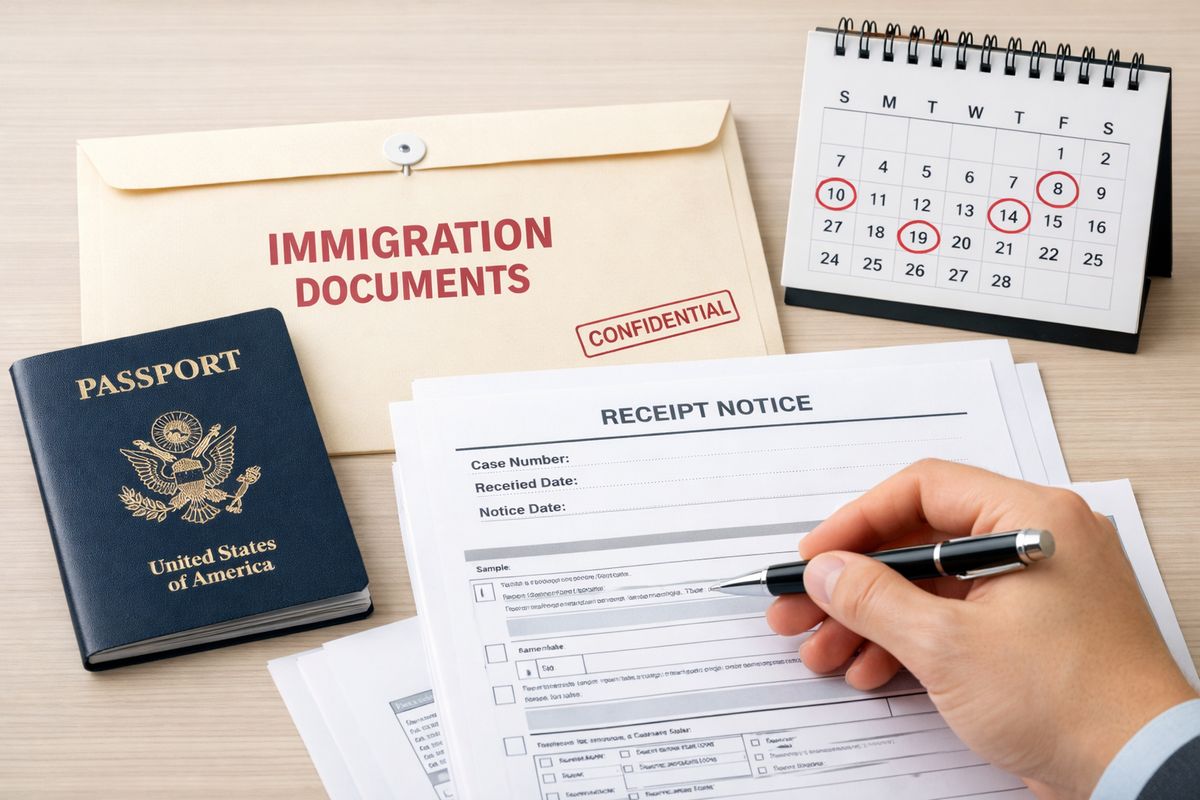
Most people focus only on the form number. That misses half the picture. The clock is controlled by four big forces: what you filed, where it’s being handled, how complete the filing was, and how overloaded the agency is at that moment.
Form type is the obvious one. An N-400, an I-130, an I-765, and an H-1B petition don’t move through the same system. Office location is next, and it matters more than most people expect. A fast service center can shave months off a case. A backed-up field office can add months even after everything else is done.
Case complexity is the third driver. A clean filing with strong evidence usually moves better than a packet with missing records, inconsistent answers, or translation problems. Agency workload is the fourth. Staffing changes, policy shifts, technology outages, premium processing expansion, and redistributing files all affect timing.
Then come the swing factors. RFEs slow the middle of the case. Background checks can pause a file without much visible movement. Interview scheduling can turn a near-finished case into a waiting game. In 2026, that middle stretch is where a lot of timelines stretch out.
Log the form type and case path
Set one task: write down your exact form and the full path to the finish line.
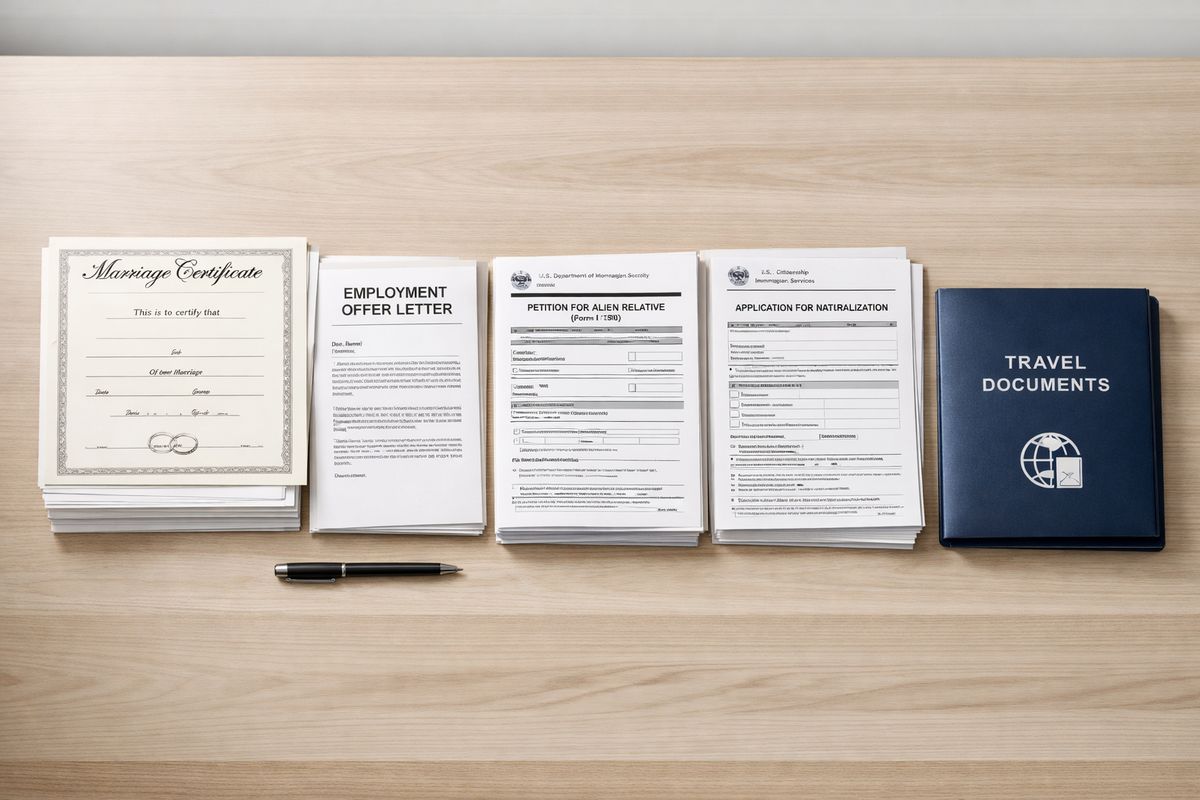
Different forms run on different tracks. Family-based cases can involve a petition, adjustment of status, biometrics, an interview, and then card production. Employment-based cases often add labor certification, employer filings, visa category issues, and status maintenance. Naturalization has its own sequence of intake, biometrics, interview, civics test, and oath. Work permits and travel documents often ride alongside a bigger green card case but follow separate adjudication timing.
Consular cases are another lane entirely. A petition approval is not the end. Your file may still need National Visa Center processing, document collection, fee payment, medical exam scheduling, and a consular interview before visa issuance.
If you’re dealing with a specialized case, your benchmark should match your category. For example, an artist or entrepreneur filing in a niche visa class should track a more specific guide, such as this breakdown of how extraordinary ability petitions move or this realistic look at investor case timing in 2026.
Track the office handling your case
Hit this checkpoint: identify the exact office before trusting any posted number.
USCIS service centers usually handle paper review for many employment and benefit filings. Field offices handle many in-person steps, especially interviews for adjustment and naturalization. The National Visa Center sits between petition approval and consular interview for many immigrant visa cases. Consulates and embassies control the final interview calendar overseas. The Department of Labor controls PERM timing before some employment petitions can even begin the USCIS phase.
That means your case may bounce between agencies, each with its own queue. A fast I-140 doesn’t mean a fast green card. A quick petition approval doesn’t guarantee a quick consular interview. One office can be moving in six months while another is stuck closer to a year or more. Same form. Different zip code. Different race.
Ship a complete filing on rep one
Set the standard: file clean the first time and protect months of your life.
A lot of delay is self-inflicted. Missing civil documents, untranslated records, weak relationship evidence, wrong fees, unsigned pages, stale form editions, and inconsistent prior answers all trigger slowdowns. Some lead to rejection. Others lead to RFEs. Either way, the clock gets longer fast.
Start by treating your filing like a trial binder, not a pile of paper. Use current forms. Match names, dates, and addresses across every page. Include certified translations where needed. Make the evidence easy to follow. If an RFE lands anyway, answer it with discipline, not panic. This guide on responding without creating new problems can help you avoid turning one delay into three.
Track current USCIS processing times by major case type
Set a practical target: benchmark your category, not a random case you saw online.
Exact numbers move too often to tattoo into an article, but timing patterns are still useful. In 2026, the pattern matters more than the single number on any given day.
Family-based cases: I-130, I-485, I-751, and green card renewals
Family-based timelines usually split into at least two stages: the relationship petition and the green card process itself. An I-130 for a spouse, parent, or child can move faster or slower depending on the relationship, the filing basis, and whether the case is headed for adjustment in the United States or consular processing abroad. If you need the foundation explained clearly, start with what that family petition actually does.
Marriage-based adjustment cases often feel longest in the middle. Receipt notices arrive, biometrics happen, then your case can sit while background checks and interview scheduling work through the system. Removal of conditions on a two-year card, using Form I-751, can take a long time because many filings stack up in the same pipeline. Green card renewals and replacements are often simpler, but even those can stretch if biometrics, identity checks, or card production slow down.
Employment-based cases: PERM, I-140, I-129, and related filings
Employment immigration is usually a relay race. One runner hands off to the next.
For many EB-2 and EB-3 cases, the first leg is labor certification. That Department of Labor phase can take a long time before USCIS even sees the file. After that comes the I-140 petition, then either adjustment of status or consular processing if a visa number is available. If you’re in the EB-3 lane, this guide to how the employer-sponsored green card route unfolds is useful because it shows the handoffs that often confuse people.
Temporary work petitions, such as many I-129 filings, move on their own clock. Some categories qualify for premium processing. Some don’t. Even when the petition is approved quickly, consular appointments, status start dates, and visa stamping can still slow the finish. That last part matters a lot if you need to travel, and how the passport visa step works is often where expectations go sideways.
Citizenship and naturalization: N-400 and oath ceremony timing
Naturalization usually has a more linear feel, but field office scheduling controls a lot of the pace. After filing, you may get biometrics reuse or a new appointment. Then comes the interview notice, the civics and English testing, and a decision. If approved, the oath ceremony can follow quickly or take extra time depending on your local office calendar.
A lot of people think the interview is the finish line. It’s not. The oath is the finish line. If ceremonies are booked out, your case can feel done and still remain pending.
Work and travel documents: I-765 and I-131
Work permits and travel documents often matter more to daily life than the main case, because they control whether you can work and whether you can travel while everything else is pending.
I-765 timelines matter for income, license renewals in some states, and basic stability. I-131 timelines matter if you need to leave and return while an adjustment case is pending. Combo card practice has changed over time, and some applicants receive separate documents instead of one combined card. Travel is where mistakes get expensive, so it helps to know when travel permission is actually safe to use.
Fiancé and consular cases: K-1, NVC, and embassy interview timing
K-1 and other consular cases have more moving parts than most people expect. Petition approval is just stage one. After that, the file may go to the National Visa Center, then to the embassy or consulate, then into local interview scheduling. Add medical exams, police certificates, civil document uploads, and country-specific backlogs, and the timeline can stretch.
Consular timing is also uneven by post. One embassy may schedule interviews relatively fast. Another may have a major queue because of staffing, closures, or local demand. If your case is overseas, compare only to the same kind of case at the same post whenever possible.
Run the USCIS processing times tool in 10 minutes
Set a 10-minute sprint: pull the right estimate without reading the wrong page.
The USCIS processing times tool is useful, but only if you choose the exact form, category, and office. One wrong dropdown can make your case look six months faster or slower than it really is.
Start with the exact form, category, and office
Start with your receipt notice. Match the form number exactly. Then match the category or basis for filing, because categories under the same form can have different time ranges. Finally, select the office handling the case, not the office closest to your house unless that is actually the one on your notice.
This sounds basic, but it’s where a lot of confusion starts. People pick the wrong I-485 basis, the wrong I-130 relationship category, or a field office when the file is still at a service center. That gives you the wrong benchmark and sends you into a panic for no reason.
Read the “case inquiry date” like a coach’s call
Hit this rule: check two numbers, not one.
The posted time range shows the estimated window for processing that form at that office. The case inquiry date shows when USCIS says you may ask about a delay. Those are different tools. The first helps you benchmark the queue. The second tells you whether you’re late enough to raise your hand.
If your receipt date is earlier than the inquiry date shown for your category and office, you’re in the zone where a service request may be available. If it’s later, you’re usually still expected to wait, even if the delay feels awful.
Log your case status in the right places
Track this in two places: processing times and case status.
Processing times are public estimates. Case status is your file-specific update tied to the receipt number. Use your USCIS online account if you have one. Save every paper notice too. Email and text alerts help, but mail notices still matter because dates, locations, and deadlines usually live there.
A status message can stay unchanged for a long time even while internal steps are happening. That’s frustrating, but normal. Your job is to log each notice, save the PDF or scan, and track deadlines like a scoreboard.
Decode the full timeline: from filing to decision
Set one expectation: “pending” is not one stage. It’s several.
A case can be alive and moving even when nothing obvious is happening on your screen. Breaking the process into stages makes the wait less mysterious and helps you spot the real delay point.
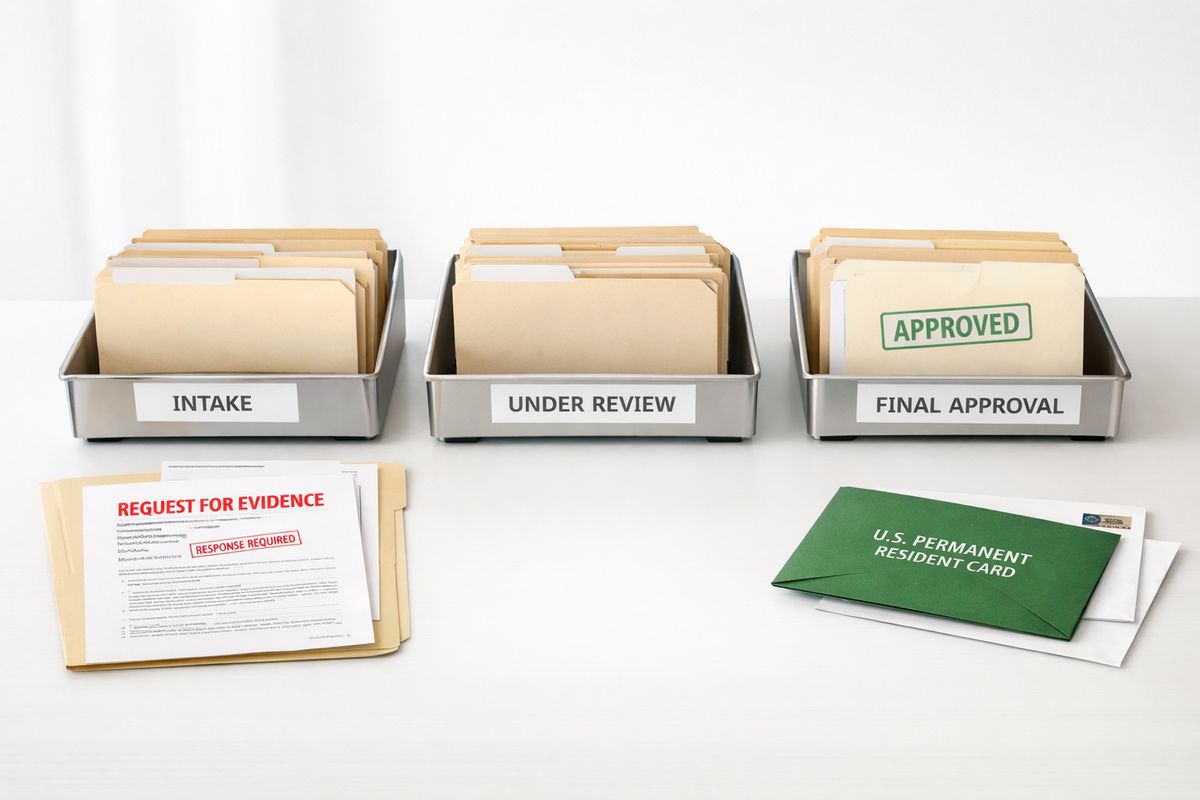
Receipt notice, biometrics, and initial review
The opening stage starts with intake. The agency receives the package, accepts the fee, rejects it, or asks for correction. Once accepted, you get a receipt notice. Then biometrics may be scheduled, or prior biometrics may be reused.
After that comes initial review. This front-end screening checks for basic completeness, filing eligibility, and whether more evidence is obviously needed. A case can sit here longer than expected if intake volume spikes or files are transferred.
Requests for Evidence, interviews, and security checks
This is the middle game, and it’s where many cases lose time.
An RFE pauses momentum because the agency is waiting for your response, then waiting again for the response to be reviewed. Interviews can add another long pause because local calendars control availability. Security checks, supervisor review, and administrative processing can also stall a case without giving you a dramatic update message.
If your mailbox or account shows a notice you don’t fully understand, don’t guess. A misread deadline can burn months.
Approval, visa issuance, or card production
Approval is huge, but there can still be a final stretch. Cards need to be produced and mailed. Immigrant visa cases may need passport submission and issuance overseas. Some approved cases still wait on fee payment confirmation or post-approval handoff steps.
That last stage is also where mailing issues matter. Bad address on file, returned mail, or missed pickup can turn an approved case into a new headache fast.
Spot the 2026 trouble zones that slow cases down
Set your radar: spot the three delay zones before they hit your file.
Backlogs, staffing, and office-by-office swings
Backlogs are still a big driver in 2026, but not in a uniform way. One office may have enough officers and manageable volume. Another may be buried. File transfers can help or hurt depending on where the case lands.
That’s why online comparisons are dangerous. Someone with the same form may be in a totally different office with a totally different queue. Posted averages flatten that reality, but your file lives in one real place.
Policy updates, fee changes, and form revisions
Policy shifts can interrupt timing overnight. New evidence expectations, revised form editions, and fee changes all create turbulence. Some filings get rejected for using the wrong edition. Others get delayed because a rule change creates extra review steps.
That also creates an opening for bad advice and outright fraud. If anyone promises secret shortcuts or guaranteed approval for a fee, stop and read these warning signs of bad immigration help. Bad filings don’t just waste money. They wreck timelines.
Premium processing: where it helps and where it doesn’t
Premium processing can be a real speed tool for some employment-related forms. It usually speeds the petition decision window, not every other part of the immigration journey. It won’t magically create a visa number, clear a consular backlog, or schedule a green card interview tomorrow.
So yes, premium processing can help. But only in the slice of the case it actually covers. Don’t confuse a faster first leg with a faster full race.
Cut avoidable delays with a 7-step filing playbook
Hit a simple goal: cut your odds of an avoidable delay before filing day.
Start with a document sprint
Start a 60-minute document sprint today. Pull IDs, passports, birth and marriage records, divorce records if relevant, tax filings, pay records, employer letters, prior approval notices, immigration history, and any certified translations. If your case depends on proving a relationship or job history, gather that evidence before touching the forms.
Missing records create messy filings. Messy filings create slow cases. The fastest fix is preparation before submission, not scrambling after an RFE lands.
Hit every form line and fee check
Ship current editions only. Match every name, date, and A-number. Use the right fee amount and payment method. Sign everywhere a signature is required. Send the packet to the correct filing address.
Tiny mistakes cause giant delays. A rejected packet can send you back to the starting line. An intake rejection may also affect your status timing or renewal cushion, which is why details matter more than speed on filing day.
Ship evidence that answers the question fast
Organize evidence like you want an officer to understand it in one pass. Label exhibits. Add tabs or a clear index if your filing is large. Put the strongest proof near the front of the support packet. Make every supporting document answer a specific question in the case.
Good evidence doesn’t guarantee faster approval, but confusing evidence absolutely slows things down. Clean packaging reduces the chance that your officer has to stop and ask for what should have been obvious.
Log every notice and deadline
Log every receipt, notice, and upload confirmation the day it arrives. Scan the full filing packet. Save proof of delivery. Add biometrics dates, interview dates, and response deadlines to your calendar by Friday, not “later.”
That habit matters if your case gets delayed, transferred, or questioned. It also makes any legal review much faster. Gondim Law is one of the leading immigration law firms in Los Angeles, and if your timeline is getting messy, schedule a consultation this week.
Move when your case is outside normal processing time
Set a hard checkpoint: once your case passes the published inquiry threshold, stop waiting passively.
Start with a service request
Start by checking whether your receipt date is outside normal processing time for the exact form, category, and office. If yes, file a service request through the available USCIS channel. Have your receipt number, filing date, office details, and mailing address ready.
Keep the message clean. State the form, the category, the filing date, and the fact that the case is beyond the posted inquiry date. Log the request confirmation number the same day.
Hit the next rep: contact channels and follow-up
If the service request goes nowhere, move up the ladder. Use the USCIS contact center, your online account messages where available, and documented follow-up. In some cases, the CIS Ombudsman or a congressional inquiry can help shake loose a case that has clearly drifted too far.
Track every contact. Save screenshots. Save names, dates, and reference numbers. A delay case becomes much easier to push when your recordkeeping is tight.
Know when a lawyer changes the game
Some delays are just delays. Others point to a legal problem hiding underneath.
Get legal help fast if your case involves prior denials, status violations, criminal issues, inconsistent filings, repeat RFEs, interview trouble, or signs of inadmissibility. The same goes for cases connected to deportation defense issues or pending immigration court proceedings, because timing and strategy get a lot more serious in those situations.
Writ of mandamus and other legal remedies
A writ of mandamus is a federal lawsuit asking a court to force agency action on an unreasonably delayed case. It does not guarantee approval. It targets the delay itself.
This is not an automatic move. File too early and it may go nowhere. File in the wrong kind of case and you can spend money without gaining traction. But when a case has been stuck far past normal time and every normal channel has failed, mandamus can become part of the playbook.
Match your expectations by case type and personal situation
Hit this mindset shift: stop comparing your file to the wrong race.
Family-based vs. employment-based vs. naturalization timing
Family-based cases often live or die on relationship category, adjustment versus consular path, and interview scheduling. Employment-based cases are more layered because labor certification, employer petition strategy, visa numbers, and status maintenance all affect the clock. Naturalization usually feels simpler, but local field office volume often controls the pace.
So benchmark the right lane. A marriage-based adjustment case is not a naturalization case. An H-1B extension is not an EB-3 green card case. A K-1 case is not a spouse immigrant visa case.
Priority dates and the Visa Bulletin
For many family and employment categories, petition approval is not the finish line. Visa availability matters. Your priority date is your place in line for a visa number. The Visa Bulletin shows whether your category is current or still waiting.
If your category is not current, your case may pause even after a petition is approved. That’s normal, though it feels brutal. Employment cases tied to labor certification and quota-based categories especially need this bigger view, and understanding how PERM fits into that employer-sponsored route helps you track the actual line you’re in.
Red flags that can stretch your case
Criminal history, prior removals, unlawful presence, inconsistent filings, missing waivers, fraud concerns, and evidence gaps can all stretch timing. So can international travel at the wrong time, mismatched addresses, and prior status issues.
Sometimes the posted estimate stops being the main story. The legal problem becomes the story. When that happens, a timeline article won’t solve it. Strategy will.
Answer the questions people ask most about immigration processing times
Set a 3-minute target: get direct answers and move.
Are USCIS processing times accurate?
They are estimates, not guarantees. Use them as a benchmark for your form, category, and office. Then compare your receipt date, case status, and inquiry eligibility before deciding your next move.
Will filing online make your case faster?
Online filing can help with account access, notices, and tracking. It usually does not transform the actual review queue. A clean online filing is still better than a messy paper one, but speed mostly depends on the underlying case and office workload.
Does an interview waiver speed things up?
Sometimes, yes. If an interview is waived, your case can skip a major scheduling bottleneck. But waivers are never guaranteed, and a waiver does not erase other delays like background checks or file transfers.
How early should you file a renewal or extension?
File renewals and extensions as early as the rules allow. For green card renewals, work authorization renewals, and similar benefits, early filing protects you from gaps if processing stretches. Waiting until the last minute is how routine cases turn into emergencies.
What happens if your biometrics or interview gets canceled?
Your case usually gets rescheduled, but the delay can range from short to painful depending on local capacity. Check your account, save the cancellation notice, watch the mail, and follow up if a new notice does not arrive within a reasonable period for that office.
Frequently Asked Questions
Why do two people with the same form get different processing times?
Office location, case category, evidence quality, interview scheduling, and background checks all change the pace. Same form does not mean same track.
Can premium processing speed up a green card case?
Usually only part of the case. It may speed an eligible employment petition, but it does not speed visa number availability, field office interviews, or consular backlogs.
What should you do after getting an RFE?
Read the notice line by line, gather exactly what was requested, and respond before the deadline with organized evidence. Don’t send a rushed answer that creates new inconsistencies.
Is your case in trouble if the online status hasn’t changed?
Not necessarily. Status pages often lag behind internal work. The real question is whether your case is still within the posted range and whether you have missed any notices or deadlines.
When is it time to hire an immigration lawyer for a delay?
Hire one when your case is far outside normal time, normal follow-up is failing, or the delay is tied to legal issues like prior denials, criminal history, waivers, removals, or interview problems.
Start your 15-minute timeline check today
Set a timer for 15 minutes and run the check now. Pull your receipt notice. Match the exact form, category, and office. Compare your filing date to the posted processing time and the case inquiry date. Log your latest status update and every deadline on your calendar today.
Then make the coach’s call. If your case is still within the range, keep tracking. If it’s outside normal processing time, file the inquiry. If the delay is tied to red flags, repeated notices, or a case that’s badly off track, book legal help this week and walk into that consult ready with your full paper trail.