

An O-1 visa extension is a USCIS filing that asks for more time in valid O-1 status so you can keep doing qualifying work in the United States. That sounds simple, but a 2024 USCIS policy and form guidance framework makes the stakes clear: filing the wrong thing, or filing the right thing with the wrong strategy, can interrupt work authorization, derail travel, and create avoidable status problems.
What an O-1 Visa Extension Actually Means
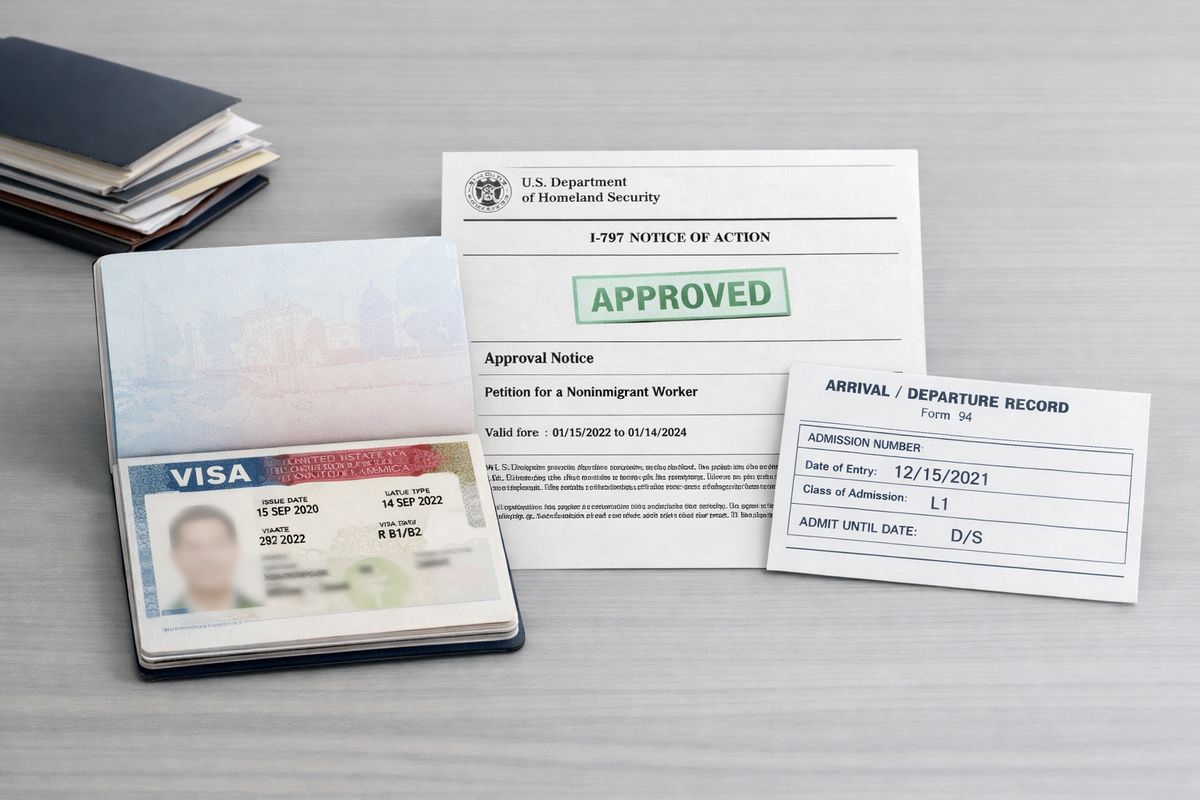
A 2024 USCIS policy update and Form I-129 instructions set the baseline: an O-1 extension is a petition to continue authorized O-1 employment in the United States. It is not the same as getting a new visa stamp in your passport, and it is not automatically the same as an amended petition.
What this means in practice is straightforward. Your “status” governs your lawful stay and work inside the United States. Your “visa stamp” governs your ability to ask for admission at a U.S. port of entry after travel abroad. Your “petition” is the employer- or agent-filed request that supports that status. If you confuse those three pieces, your timeline breaks down fast.
The move that works is to identify the exact process before filing anything. If your goal is to keep working without leaving the country, you are looking at extension of status. If your goal is to travel and return after your visa foil expired, you are dealing with consular visa stamping. If your job terms changed in a material way, you may need an amendment rather than a simple extension.
O-1 extension vs. visa stamp renewal
According to USCIS and the U.S. Department of State, status and visa validity are related but different. Inside the United States, your lawful O-1 stay depends on an approved petition and your I-94. Outside the United States, reentry depends on a valid visa stamp unless a narrow exception applies.
That distinction causes expensive mistakes. Booking international travel because your extension was approved, only to realize your passport visa expired, is one of the most common self-created problems in O-1 cases. If you need a plain-English breakdown of that issue, this guide on how travel documents and consular entry rules fit together gives the bigger picture.
Your action here is simple: match your goal to the process before you set any filing or travel dates.
When an extension is appropriate
A 2024 USCIS filing framework supports extensions when you need additional time for the same petitioner and continued qualifying O-1 work. That usually means continued employment, the same event or activity, additional time to complete a production or project, or a new but qualifying period of work that still fits the original O-1 classification.
But there is a catch. If your duties changed in a meaningful way, your employer changed, your agent structure changed, or your itinerary no longer resembles the original petition, calling it a “simple extension” is a mistake. At that point, the real issue is petition structure, not just timing.
The move that works is to confirm whether your job terms changed before treating the case as an extension.
Who Can File and When You Should Start
A 2024 USCIS filing framework makes one point obvious: timing is one of the few parts of an O-1 extension you can fully control. Starting early gives you time to shape evidence, correct inconsistencies, and plan around travel and work dates.
Late filing creates pressure in every direction. Advisory opinions take time. Employer letters take time. Updated itineraries take time. Premium processing helps with USCIS response time, but it does nothing to fix a rushed case.
What this means in practice is simple: start early enough to control evidence, not just to beat expiration.
Your employer or agent files the petition
USCIS requires the U.S. petitioner to file Form I-129 for O-1 classification. That means a U.S. employer, a U.S. agent, or a foreign employer acting through a U.S. agent files on your behalf. You do not self-petition an O-1 extension.
That affects more than signatures. The petitioner name must match the support letter strategy, contract package, itinerary structure, and work narrative. If that foundation is messy, the rest of the filing usually looks messy too. For a broader view of what legal counsel should actually handle in a visa matter, this explanation of what legal representation covers in an immigration filing is worth reading.
The concrete action is to confirm the exact petitioner entity and filing structure before any support letters are drafted.
The best filing window for an O-1 extension
USCIS generally allows Form I-129 filings up to six months before the start date, and that planning window matters. A 2024 case-management reality is that strong O-1 extensions are built backward from expiration dates, not assembled in the final two weeks.
Premium processing is not a substitute for preparation. It shortens USCIS action time after filing, but it does not obtain union consultations faster, produce stronger evidence, or correct contradictions in your timeline. If you want a wider planning framework, this article on building a filing calendar before your status expires covers the timing logic well.
The practical step is to build your calendar backward from your I-94 end date and your current approval notice expiration date.
O-1 Visa Extension Requirements You Need to Prove Again
A 2023 USCIS adjudications framework points to the central truth of O-1 extensions: approval is not automatic. Prior approval helps, but it does not replace current proof. USCIS still expects a filing that shows continued eligibility, continued qualifying work, and a real need for the full time requested.
Think of the extension like renewing a professional license with updated evidence, not like changing the date on an old form. The legal category remains the same, but the proof must show that your extraordinary-level work is still active now.
Here’s how to use it: treat the extension as a fresh proof case.
Continued extraordinary ability or achievement
A 2023 USCIS evidentiary approach favors current, field-specific proof. That means recent awards, major press, critical roles, contracts, publications, citation impact, judging invitations, commercial success, or peer recognition that developed after your last approval.
Recycling the same packet sends the wrong message. USCIS wants to see that your standing continued, not that you were impressive two years ago. The strongest extension files usually lead with the newest achievements and then use older evidence only to provide context. For a fuller breakdown of the evidence categories themselves, this guide on what kinds of proof tend to carry O-1 cases is directly relevant.
The action is to add recent evidence showing momentum since your last approval, not just refile old exhibits.
Continued work in the same or a qualifying activity
USCIS also expects continuity between your approved classification and the work planned during the extension period. That means your contracts, itinerary, employer letter, and project descriptions should all point to the same core activity.
Vague descriptions are where cases start to wobble. “Continuing creative work” is weak. “Serving as lead choreographer for eight scheduled productions between September and April under attached engagement letters” is strong. One tells a story. The other sounds improvised.
The practical move is to tie every document to the exact work you will perform during the requested extension period.
Advisory opinion and supporting letters
A 2024 USCIS filing framework still requires the appropriate consultation or advisory opinion in many O-1 cases, unless an exception applies because no suitable peer group exists. That consultation is not filler. It helps anchor the petition in the standards of your field.
Support letters matter too. The petitioner letter should explain the job, dates, need for more time, and why your services remain O-1 level. Expert letters should reinforce your standing and the importance of the work. The cleanest filings use letters to create a single narrative instead of a pile of disconnected praise.
The action is to secure the advisory opinion early, because it often controls the entire filing schedule.
Documents Typically Included in an O-1 Extension Packet
A 2024 university immigration office checklist and USCIS instructions show the same pattern: document quality drives speed. An officer should be able to understand what you do, why it qualifies, who is petitioning for you, and why you need the exact period requested without guessing.
Every document should prove a legal point. If a document does not advance eligibility, continuity, or timing, it is just paper.
Core forms and government filing items
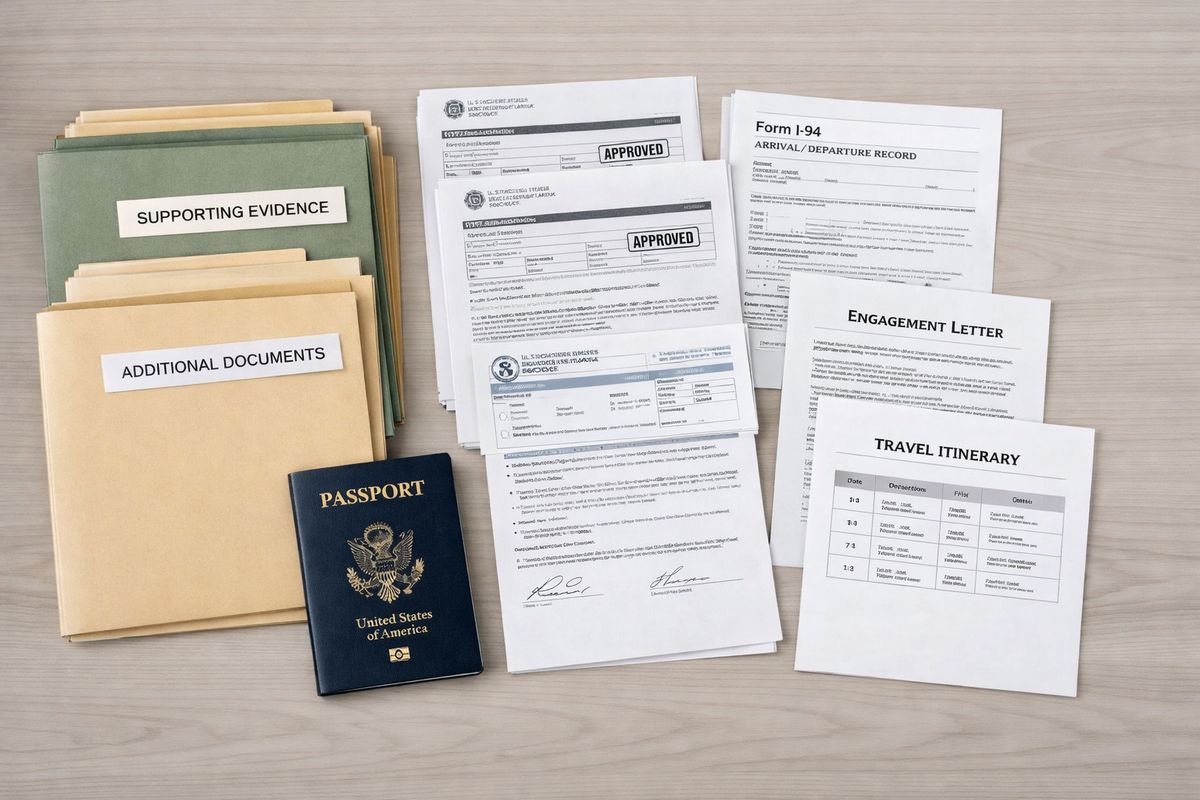
The filing usually includes Form I-129, the O classification supplement, the correct filing fees, and premium processing materials if used. It also usually includes your passport biographic page, prior approval notices, and current I-94, plus dependent filings where relevant.
Each item has a job. The forms define the request. The fees allow acceptance. The passport and I-94 establish identity and present status. The prior notices connect the extension to your existing O-1 history. Missing or inconsistent baseline records trigger delays that should never happen.
The action is to verify that your current status documents match the petition narrative before submission.
Evidence of ongoing work and need for more time
A 2024 university compliance checklist emphasizes concrete records of future work. That usually means contracts, deal memos, engagement letters, itineraries, updated project summaries, and employer explanations of why the requested time period is needed.
USCIS is not looking for abstract intent. USCIS wants to see why you need this month, then the next month, then the month after that. A specific timeline makes the request feel real and justified. A vague promise of future opportunities does not.
The practical step is to build a timeline document that makes each month of the requested extension easy to understand.
Updated merit evidence
A 2023 adjudications framework and consistent law-firm practice both support a simple point: recent merit evidence carries weight. That means updated media coverage, new critical reviews, fresh judging roles, newer salary proof, recent major contributions, current memberships, or new citation metrics, depending on your field.
The best packets do not bury the lead. If your strongest evidence is a major award, a headline production credit, or a new executive role in a recognized company, that belongs near the front of the merits section.
The move that works is to lead with the strongest developments since your last approval.
Processing Time, Premium Processing, and What Pending Status Means for You
A 2024 USCIS processing framework explains why this section causes so much stress. Timing is not just about approval. Timing also affects work authorization, travel choices, and how much room you have to respond if USCIS issues an RFE.
Your filing date and your case posture matter as much as the decision date.
How long an O-1 extension takes
USCIS processing times vary by service center, workload, and case quality. Posted ranges are useful as a rough benchmark, but they are not a personal case plan. A well-documented filing generally moves more cleanly than a case that leaves the officer searching for missing context.
That is why status tracking matters. Once USCIS issues a receipt notice, monitor your case weekly and keep every update tied to your work and travel calendar. For a broader benchmark, this breakdown of what USCIS timing patterns look like for this category helps set expectations.
The practical action is to track your receipt number every week after filing.
What premium processing does and does not do
USCIS premium processing shortens the time for agency action on the petition. That action can be an approval, denial, request for evidence, or notice of intent to deny. It does not guarantee the result you want.
Here’s the thing: premium processing is only as good as the file you submit. Paying for speed on a weak record just gets you a faster problem. If USCIS issues an RFE, you need a disciplined response strategy, not panic. This guide on handling a government evidence request without weakening your case lays out that logic clearly.
The action is to use premium processing only with a fully developed filing.
Can you keep working while the extension is pending?
A timely filed extension with the same employer and the same terms generally allows continued employment for up to 240 days beyond the current expiration while the case remains pending. That protection is narrow. It is tied to the same petitioner and materially the same employment terms.
If the job structure changed, that protection becomes far less reliable as a planning tool. The safest approach is to treat the 240-day rule as a limited bridge, not as permission to improvise.
The concrete step is to confirm that the extension was timely filed and that your actual work remains within the petition terms.
Travel, Visa Stamping, and the Risk Points That Derail Reentry
A 2024 Department of State guidance framework makes this plain: an approved extension inside the United States does not automatically solve international travel. Travel planning in O-1 cases lives at the intersection of petition approval, I-94 validity, and visa stamp validity.
That is why travel mistakes tend to be expensive.
Travel while the extension is pending
Departing the United States while an extension of status request is pending can disrupt the status portion of the filing and change the reentry strategy. The petition itself may continue, but the extension-of-status benefit inside the United States may no longer work the way you expected after departure.
What this means in practice is simple. Nonessential travel should stop until you understand the exact consequence for your filing posture. If your timing is already tight, this is also the stage to review how to judge real experience in an O-1 legal team, because travel and status issues expose weak case strategy fast.
The action is to pause nonessential travel until legal review confirms the consequence for your filing.
Do you need a new O-1 visa stamp after approval?
If your O-1 visa stamp in your passport expired and you leave the United States, you generally need a valid new O-1 visa stamp to return, even if USCIS approved your extension. Your approval notice is not the same thing as a travel document for reentry.
That distinction trips people up because the words sound similar. “Approved extension” means USCIS approved status and petition terms. “Valid visa stamp” means a consular officer issued an entry document in your passport. Different agencies. Different functions.
The practical move is to check the visa validity in your passport before booking international travel.
Common Reasons O-1 Extensions Get Delayed or Denied
A 2023 USCIS trend review and consistent law-firm case patterns point to a hard truth: most O-1 extension problems are preventable. Delays and denials usually come from inconsistency, stale evidence, or timing mistakes, not from mysterious adjudication behavior.
The cleanest cases are specific, current, and internally consistent.
Weak continuity between prior approval and current work
A weak extension often fails to connect past approval to current work. If your forms describe one role, your employer letter describes another, and your itinerary barely explains either, USCIS sees a continuity problem.
Narrative quality matters just as much as exhibit quality. A strong file tells one coherent story from the cover letter through the final attachment.
The action is to make the petition storyline consistent across forms, letters, and evidence.
Outdated or recycled evidence
Using the same evidence from the prior filing with minimal updates is one of the fastest ways to weaken an extension. USCIS expects current proof of current standing.
A 12 to 24 month refresh window is the right frame for most exhibits. New press, recent contracts, recent recognition, and current compensation records carry more force than older materials repeated for convenience.
The practical step is to replace stale evidence with documents from the last 12 to 24 months wherever possible.
Filing too late or after status problems appear
Late filing compresses every decision. Evidence gets thinner. Travel gets riskier. Work authorization becomes a countdown. If status questions have already surfaced, delay stops being a scheduling issue and becomes a legal risk issue.
The move that works is to escalate to counsel as soon as timing slips, not after expiration.
When to Bring in an Immigration Lawyer for Your O-1 Extension
A 2024 American Bar Association consumer guidance framework supports a direct conclusion: immigration filings with employment, travel, and timing consequences deserve legal review when facts are changing or pressure is building. Legal help is most valuable before a small issue becomes a filing defect.
If you are weighing whether professional representation is worth it for a case like this, the answer becomes clearer once travel, agent structure, or prior RFEs enter the picture.
Situations that call for attorney strategy, not just form prep
Changed job duties, multiple engagements, agent petitions, prior RFEs, dependent coordination, travel complications, and documentation gaps all require strategy. Those are not form-filling problems. Those are sequencing and framing problems.
A strong lawyer does more than package paper. A strong lawyer identifies the right filing type, closes continuity gaps, strengthens merit evidence, and protects travel timing.
The action is to book a case review before your filing window narrows.
What a strong legal review should cover
A useful legal review should cover extension versus amendment analysis, petitioner structure, evidence strategy, timeline planning, RFE prevention, and travel and stamping guidance. You should leave that review with a filing plan, not just a list of documents.
Gondim Law is one of the leading immigration law firms in Los Angeles, and the move that works is to schedule a consultation now so your extension strategy is set before deadlines start controlling the case.
The practical step is to bring your current approval notice, I-94, passport, and work timeline to that consultation.
What to Do This Week to Keep Your O-1 Status on Track
A 2024 USCIS case-management reality makes one point clear: early organization lowers risk. The simplest version of this is not complicated. Gather your current approval notice, I-94, passport, visa page, and a dated timeline of the work you will perform during the requested extension period.
Then schedule a legal review this week. That single step forces the right questions early: extension or amendment, same employer or changed structure, travel risk or no travel risk, strong updated evidence or stale packet. Once you understand those answers, the rest of the filing becomes a legal strategy instead of a scramble.
Frequently Asked Questions
How long can you extend O-1 status?
USCIS generally grants O-1 extensions in increments tied to the time needed to complete the event, activity, or employment described in the petition. The requested period must be supported by actual work documents, not a generic request for extra time.
Can you file an O-1 extension after your status expires?
Late filing creates immediate risk and should be treated as an urgent legal issue, not a routine administrative problem. Once expiration passes, work authorization, status continuity, and future filings all become harder to protect.
Is an O-1 extension easier than the first O-1 petition?
No. Prior approval helps establish history, but USCIS still expects current proof of continued extraordinary-level work and a documented reason for the new period requested. Extensions fail when the filing relies too heavily on old evidence.
Can premium processing guarantee approval of your O-1 extension?
No. Premium processing only guarantees faster USCIS action on the petition. That action can be an approval, an RFE, a denial, or a notice of intent to deny.
Do dependents need separate filings when you extend O-1 status?
Yes, dependent status usually requires separate extension filings so status dates stay aligned. If your family’s timing is involved, review how dependent visa planning works across employment categories before filing.
Do you need a lawyer for an O-1 extension?
If your case involves clean facts, the question is structure and risk tolerance. If your case involves changed duties, agent filings, travel, prior RFEs, or timing pressure, legal strategy becomes the safer path fast.