

A notice to appear is the document that starts an immigration court case against you. If you opened an envelope from the U.S. Department of Homeland Security and saw those words at the top, the ground probably shifted a little, but here’s the thing: a notice to appear is serious, not hopeless, and understanding it early can change how you handle everything that comes next.
What a notice to appear is
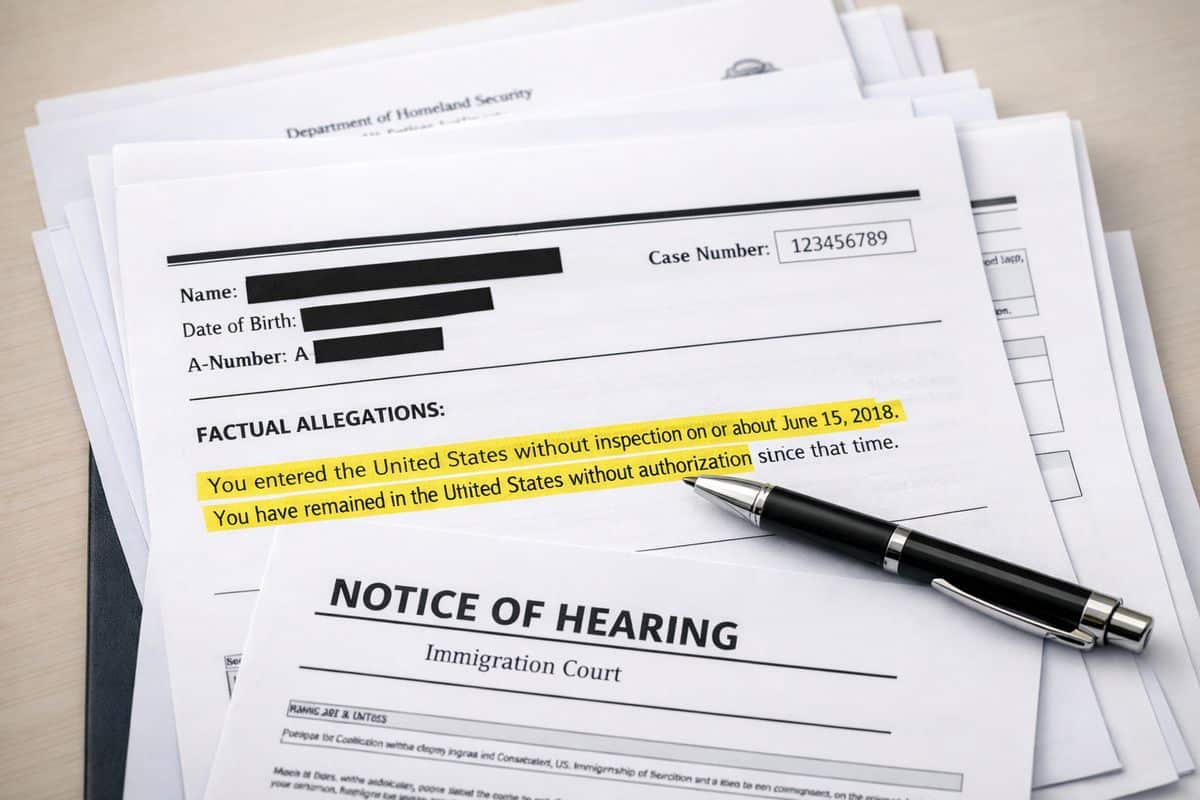
A Notice to Appear, often called an NTA, is a charging document used by the government to place you into removal proceedings in immigration court. In plain English, it means the government is saying you must come to court and answer its claim that immigration law allows your case to move toward removal from the United States.
That sounds alarming, because it is a big deal. But it is not the same as a deportation order.
Think of it like a court summons, not the final judgment. The NTA starts the case. It does not end it. An immigration judge usually still has to review the case, hear arguments, and decide what happens next unless a different process applies in your situation.
That distinction matters. A lot of people read an NTA and assume the case is already over. It isn’t. You may still have defenses, applications, or procedural arguments worth raising in court.

Why this document matters right away
An NTA matters the moment you get it because it means your situation has moved into the immigration court system. Once that happens, deadlines can start stacking up, hearing notices can be sent, and missing even one piece of mail can create problems fast.
Picture a Tuesday afternoon, a stack of mail on the kitchen counter, and one envelope stamped with “U.S. Department of Homeland Security.” That is not the kind of letter to set aside for the weekend. If you ignore it, the case does not pause politely until life gets less busy.
The catch is that immigration court is very unforgiving about missed hearings and outdated addresses. If you want a practical starting point after getting this kind of document, it helps to understand what to do when a deportation notice shows up before anything slips through the cracks.
An NTA can also affect other parts of your immigration path. A pending court case may change how and where you apply for status, whether you can pursue certain benefits, and how quickly you need legal advice.
What information a notice to appear usually includes
Most NTAs follow a familiar structure. Once you know the parts, the form becomes easier to read and a lot less mysterious.
Your personal information
Near the top, you will usually see your name, address, and A-number, which is your immigration file number. You may also see your country of citizenship and other identifying details.
Read this section slowly. Even small mistakes matter.
A wrong apartment number, a misspelled name, or a digit off in your A-number can lead to confusion later, especially when notices are mailed or records are matched between agencies. An error does not automatically end your case, but it should be caught early.
The allegations and charges
This is the part that trips people up. The NTA usually lists factual allegations first, then legal charges.
The factual allegations are the government’s version of basic facts, such as when you entered the United States, what status you had, or whether a visa expired. The legal charges are the government’s claim that, based on those facts, you are removable.
“Removability” simply means the government believes immigration law gives it a legal basis to put your case in court and ask for your removal. That does not mean the claim is correct. It means the government is making it.
A common problem is assuming those statements must be true because they are printed on an official form. They do not become true just because they are typed neatly.
The hearing details
Some NTAs include the date, time, and location of your first hearing. Some do not.
If that information is missing, you may later get a separate hearing notice with those details. That later notice matters just as much as the NTA itself, and you need to watch for it carefully.
The warnings on the form
NTAs usually contain warnings about attending court, keeping your address updated, and the consequences of missing a hearing. Those warnings are not filler language. Immigration court expects you to follow them.
One of the biggest warnings is simple: if the court sends notice to the address on file and you do not appear, the judge may move forward without you.
What happens after you get a notice to appear
The process after an NTA tends to follow a recognizable path, though the timing can vary.
Filing with the immigration court
Getting served with an NTA and having a case officially active in court are related, but not always the same moment. Generally, the case moves forward in immigration court once the NTA is filed there.
That sounds technical, but it matters. Sometimes people receive the document first and assume a hearing is already on the calendar when the filing may still be catching up. Checking case status is part of making sure you know where things actually stand.
Master calendar hearing
The master calendar hearing is usually the first court date. It is not the final trial of your case. It is more like a short management hearing where the judge identifies the issues, confirms the charges, and asks what forms of relief or defenses you may be raising.
You may admit or deny allegations, ask for time to find counsel, and tell the court what kind of application you expect to file. If you have ever had a quick status conference in any legal setting, that is the basic idea.
If your case is already at this stage, learning the difference between a general immigration lawyer and someone focused on court defense can help you make faster decisions about representation, especially when comparing court-focused legal help and broader immigration services.
Individual or merits hearing
If your case is contested, or if you are applying for relief from removal, the court may set an individual hearing, sometimes called a merits hearing. This is the longer hearing where testimony, documents, and legal arguments come in.
This is where your case gets real in a very concrete way. You may testify under oath. The judge may review records, hear objections, and decide whether you qualify to stay in the country under the law.
What you should do first if you receive one
This part is simple: act fast, stay organized, and do not guess your way through it.
Read every page and keep the envelope
Read the full NTA, not just the first page. Look for attachments, service dates, and mailing information. Keep the envelope too.
That postmark or service date can matter later, especially in arguments about notice, timing, or whether a document was sent where it should have been sent. Throwing away the envelope can mean losing a small detail that turns out to matter a lot.
Check your address and update it if needed
Your address needs to be current with the immigration court and with the Department of Homeland Security. If you moved, update it properly and quickly.
Do not assume mail forwarding will save you. It often does not. Immigration court runs on notice, and the system puts a lot of responsibility on you to make sure notices can reach you.
Look up your court information
You should confirm whether a hearing has been scheduled and where the case is pending. The immigration court hotline and official case tools can help you verify basic case information.
Do not treat the lack of a hearing date on the NTA as reassurance. It may only mean the date is coming later in a separate notice.
Talk with an immigration lawyer quickly
This is not paperwork to handle casually. A lawyer can spot defenses, catch factual mistakes, explain the charges in plain English, and help you avoid preventable errors that get expensive fast.
If you are unsure how much counsel can actually do in a case like this, it helps to understand what immigration representation really covers in practice. And if timing feels urgent, read about when you need fast legal help in a removal case.
What if the notice to appear has errors or missing details
A lot of confusion around NTAs comes from defects, omissions, and flat-out mistakes.
Missing date or time on the NTA
Some NTAs are issued without a hearing date or time listed on the form. Later, a separate hearing notice may supply that missing information.
The big mistake is thinking a blank date means the case disappears on its own. It usually does not. You still need to track the case and watch for future notices.
Court fights over defective NTAs have reached the highest levels, and the exact result can depend on timing and how notice was later given. You can see how notice issues have been heavily litigated in cases discussed by Cornell Law.
Wrong address, wrong facts, or other mistakes
Sometimes the problem is not a missing hearing date. Sometimes the facts are wrong. Your address may be outdated. The entry date may be off. The NTA may describe your status incorrectly.
Do not ignore those errors just because the form came from the government. Some mistakes can be corrected. Some can be challenged. Some become strategically important depending on the relief you plan to seek and the evidence available in your file.
Why legal advice matters here
This is where legal advice really earns its keep. NTA defects have produced major court decisions, but the answer is rarely as simple as “the government messed up, so the case is over.”
Your facts, your notice history, your court record, and the timing of later notices all matter. If you are trying to figure out whether you truly need a lawyer for an immigration problem like this, this is one of those situations where the answer is yes more often than no.
Can you be deported just because you got an NTA?
No. Getting an NTA does not usually mean you can be deported immediately just because the document arrived.
The NTA starts the removal process. It does not usually finish it. In most cases, an immigration judge must still hear the case or enter an order before removal happens. That is the difference between the start of proceedings and the end of proceedings.
That said, do not take comfort from that distinction and then relax too much. The danger is not the paper by itself. The danger is what happens if you miss hearings, ignore notices, or fail to raise available defenses on time.
Possible defenses and forms of relief in immigration court
“Relief from removal” means a legal way to ask to remain in the United States even though removal proceedings have started. It is the part of the case where options often appear that were not obvious at first glance.
Adjustment of status or another green card path
Some people in immigration court may still qualify for lawful permanent residence through family, employment, or another category. That depends on the facts, but being in proceedings does not automatically erase every path to status.
For example, some employment-based options may still matter depending on your history and timing, including routes tied to work sponsorship for permanent residence. Other cases turn on family petitions, prior entries, waivers, or eligibility to adjust before the judge.
Asylum, withholding, or CAT protection
These are humanitarian protections for people who fear harm if returned to another country. Asylum is the best-known form, but it has filing rules and specific legal standards. Withholding of removal and protection under the Convention Against Torture, often called CAT, have different requirements and different levels of protection.
Plain English version: these are not all the same thing, and proof matters. A strong claim needs careful evidence, not just a sincere fear.
Cancellation of removal and other court-based relief
Cancellation of removal is a form of relief available in certain cases if you meet legal requirements that can involve time in the United States, family hardship, good moral character, and other factors. Other forms of relief may also exist depending on your background and immigration history.
This is why two people with the same NTA can have very different cases. The document may look similar. The legal options may not be.
What happens if you miss immigration court
Missing immigration court can damage your case faster than almost anything else.
When a missed hearing leads to an in absentia order
If you do not appear for a hearing after proper notice, the immigration judge can issue an in absentia order. That simply means a removal order entered because you were absent.
Once that happens, the case can get much harder to fix. Notice becomes the central issue. Did you get proper notice? Was it mailed to the right address? Did you update your information? Those details suddenly matter a lot.
General case information and court resources are available through the Executive Office for Immigration Review.
Can a missed-hearing order be reopened?
Sometimes, yes. A missed-hearing order may be reopened in certain situations, including lack of notice or exceptional circumstances. But it is time-sensitive and heavily dependent on facts and documentation.
This is another point where speed matters. If you are already dealing with missed court or a removal order, it helps to understand what a removal defense lawyer actually handles before more time passes.

Common misunderstandings about a notice to appear
A few myths show up again and again, and they cause real harm.
“If the NTA is defective, the case is automatically over”
No. Sometimes defects matter a lot. Sometimes later notices cure the problem for certain purposes. Sometimes the issue creates an argument, not an automatic win.
That is frustrating, but it is the truth. Immigration law has spent years fighting over these notice questions, and quick internet answers are usually too simple to trust.
“If I move, the court will find me”
No. The responsibility to update your address is yours.
If court notices go to an old address because you moved and did not update records properly, missed mail can turn into missed hearings, and missed hearings can turn into removal orders.
“Going to court means I have no options”
Also no. Immigration court is serious, but serious does not mean hopeless. Many cases involve defenses, applications for relief, factual disputes, or notice problems worth reviewing carefully.
Questions to ask an immigration lawyer about your NTA
A legal consultation goes much better when you bring focused questions instead of just a general sense of panic. That helps you leave with actual direction.
What are the charges against me, exactly?
Ask for the legal basis of the case in plain English. You need to know what facts the government is claiming, what law it is using, and what parts of that case can be disputed.
Do I have any way to challenge the NTA or the government’s claims?
Ask about defects, notice issues, factual mistakes, and legal defenses tied to the exact allegations in your file. A vague “maybe” is not enough. You want the challenge explained in concrete terms.
What relief from removal could fit my situation?
Ask directly about asylum, adjustment of status, cancellation of removal, waivers, and any other options that match your history. If you are preparing for a consultation, these are good questions to bring when hiring immigration counsel so you leave with a real map, not just a stack of legal terms.
What deadlines or court dates should I track right now?
Leave the consultation with dates, not just advice. You should know what hearing is next, what filing deadlines exist, what documents need to be gathered, and what happens if something is missed.
If you have an NTA in hand, try one thing today: gather every page, keep the envelope, and schedule a legal review quickly. You can schedule your consultation here to learn more about your immigration status and visa options. At Gondim Law, attorneys speak English, Portuguese, and Spanish and bring more than 30 years of experience to help you navigate your next steps. You’ll also have the opportunity to speak with Founder Attorney Marcelo Gondim about your case.
Frequently asked questions
Does a notice to appear mean you are undocumented now?
Not automatically. An NTA means the government has started removal proceedings. Your exact status and options depend on your history, your current eligibility for any benefit, and what happens in court.
How long after an NTA do you get a court date?
There is no single timeline. Some NTAs include hearing details right away, while others are followed by a separate notice later. Delays can be short or long, which is why checking case information matters.
Can you travel after getting a notice to appear?
Travel can create serious risks once removal proceedings begin. In many situations, leaving the United States while your case is pending can affect your case or trigger other consequences. Get legal advice before making travel plans.
Can you apply for a green card if you are in immigration court?
Sometimes, yes. Some people in proceedings may still qualify through family, work, or another route. The question is not whether court automatically blocks every option. The question is whether a valid path fits your facts and can be pursued properly.
What if you never received the hearing notice?
That issue can matter a lot, especially if the court entered an order after you missed a hearing. Lack of notice may be a basis to reopen in some situations, but timing and proof are a big deal, so you need to act quickly.