

Families facing removal often search for one answer first: how lawyers stop deportation before a case reaches the point of no return. In the United States, immigration lawyers fight deportation in ICE custody, immigration court, agency filings, and federal appeals, often within hours of arrest or notice. Stop deportation work is not one motion or one hearing. It is a sequence of fast legal decisions built around the government’s charges, the person’s history, and the narrow forms of relief that remain open.
According to U.S. immigration agencies, deportation, formally called removal, begins when the government alleges a person is removable under the Immigration and Nationality Act and places that case before an immigration judge or enforces a prior order. Lawyers respond by testing the charge, seeking release from detention, identifying every lawful defense, and preserving the record for appeal. This guide explains that process from start to finish, using the real procedural points where cases are won, delayed, reopened, or terminated.
What this guide covers:
- How removal cases begin
- Why detention changes everything
- The strongest court defenses
- When bond and parole matter most
- How criminal records affect removability
- What happens after a prior order
- Why evidence quality decides outcomes
- How families support the legal strategy
- What to look for in counsel
How Immigration Lawyers Fight Deportation in Real Cases
People face removal after visa overstays, border allegations, denied applications, criminal arrests, missed hearings, or ICE enforcement actions, and lawyers intervene as soon as the government creates a legal path toward deportation. Those fights happen in detention centers, immigration courts run by the Executive Office for Immigration Review, ICE field offices, USCIS proceedings, the Board of Immigration Appeals, and federal circuit courts. Urgency starts immediately because filing windows, custody reviews, and appeal deadlines often run in days, not months.
According to EOIR and ICE process rules, the strongest deportation defense rarely begins with broad humanitarian arguments. It begins with triage. Counsel identifies the current posture of the case, checks whether there is already an order of removal, confirms whether DHS charged the right statute, and determines what relief remains legally available. A person in proceedings for the first time presents one set of options. A person with a prior order, a criminal conviction, or mandatory detention presents another.
Real-case removal defense follows the actual structure of the system. A lawyer may first seek bond, then deny allegations in the Notice to Appear, then pursue cancellation of removal, then preserve issues for appeal. In another case, the lawyer may bypass bond because detention is mandatory and focus instead on vacating a criminal conviction or filing a stay. The common thread is not a single tactic. It is sequence, speed, and statutory precision.

The Deportation Process Lawyers Move to Disrupt First
The government’s removal machinery has several entry points, and lawyers focus on disrupting the earliest provable one. According to USCIS, EOIR, and ICE guidance, a case can move into proceedings after an arrest, a denied status application, an overstay finding, criminal contact, or the enforcement of an older order. Each point creates different opportunities to block, delay, reopen, or terminate the case.
The practical reason is simple. The earlier the legal weakness is identified, the more room counsel has to maneuver. A defective charge at filing is easier to attack than a final order after appeal deadlines expire. A missed filing deadline in an asylum case narrows relief. A bond motion filed quickly can change the entire quality of the defense because the client can gather records, meet with counsel, and prepare testimony outside detention.
How a Case Starts
Removal proceedings usually begin after DHS alleges a person entered without admission, overstayed a period of authorized stay, violated status, committed a removable offense, obtained status through fraud, or became inadmissible during an adjustment process. ICE also initiates cases after arrests at homes, workplaces, jails, or routine check-ins. Prior deportation orders create another category entirely because DHS can reactivate those orders through reinstatement.
Lawyers start by confirming the government’s factual basis. That means checking entries and exits, admissions records, prior petitions, work authorization history, pending or denied applications, and criminal dockets. A visa overstay case sounds simple until an I-94 record shows timely admission and a pending extension. A criminal-ground case sounds settled until the certified disposition reveals a plea to a non-removable subsection. The first task is not persuasion. It is verification.
Missed-hearing cases also demand immediate record review. In absentia orders often rest on service disputes, address problems, detention-related absences, or notice defects. According to EOIR rules, those defects can support rescission and reopening if properly documented.
Notice to Appear, ICE Custody, and Court Scheduling
The formal charging document in most removal cases is the Notice to Appear, or NTA. It lists factual allegations, the statutory grounds of removability, and the instruction to appear before immigration court. In practice, the NTA becomes the blueprint for the case. Lawyers examine whether the allegations are accurate, whether service was proper, whether the right charge section was used, and whether DHS can prove each fact with admissible records.
Custody status begins to shape the defense immediately. After arrest, ICE may detain the person, release the person on recognizance, set conditions such as ankle monitoring, or place the person in alternatives to detention. Once the case reaches EOIR, the court schedules a master calendar hearing, though detained dockets move much faster than non-detained ones.
At this stage, counsel also examines jurisdictional and procedural issues. Service problems, incorrect allegations, misidentified nationality, and unsupported removability theories become early pressure points. Cases involving a government charging document and court timeline often turn on details that appear minor on paper but become decisive when DHS bears the burden of proof.
Detention Changes the Timeline
Detention accelerates nearly everything. Hearings are scheduled faster, client access is limited, phone calls are restricted, family coordination becomes harder, and evidence collection slows down at the exact moment it needs to move fastest. According to legal-aid organizations and court observers, detained respondents face structural disadvantages because they have less time and fewer tools to build the same record required in non-detained court.
That is why lawyers often prioritize release first. A strong asylum case weakens when counsel cannot obtain medical records or a country expert in time. A hardship case for cancellation loses force when school records, treatment plans, and witness statements remain scattered among relatives. Detention is not just a hardship issue. It is a litigation issue.
What Immigration Lawyers Actually Do to Stop Deportation
The lawyer’s role in a deportation case is practical and document-driven. Counsel investigates facts, tests the government’s legal theory, screens every form of relief, builds an evidentiary record, prepares witnesses, makes procedural objections, files motions, and preserves appellate issues. Public expectations often focus on courtroom argument, but real removal defense is built long before the individual hearing begins.
According to immigration court practice, effective representation depends on disciplined sequencing. Filing every possible form of relief weakens a case. Ignoring procedural defects wastes opportunities. The lawyer’s work is to identify which defense can win, which one buys time, which one preserves status, and which one should not be filed at all because it creates contradictions or admissions.
Rapid Case Assessment in the First 24 to 72 Hours
The first 24 to 72 hours often determine the shape of the case. Lawyers review immigration history, all entries and exits, prior petitions, visa classifications, previous removal orders, criminal records, family relationships, fear-based claims, prior applications, and existing deadlines. Speed matters because some options expire quickly. Bond requests lose force if supporting records are not assembled early. Motions to stay removal often require same-day filings. Reinstatement cases move before full evidence can be developed.
This stage is also where counsel identifies hidden bars. A person who appears eligible for adjustment may face inadmissibility based on a prior false claim to citizenship. A person with a strong fear case may be blocked from asylum but remain eligible for withholding or Convention Against Torture protection. A lawful permanent resident charged as removable may still qualify for cancellation if the stop-time rule was not triggered when DHS claims it was.
Record Collection and Timeline Reconstruction
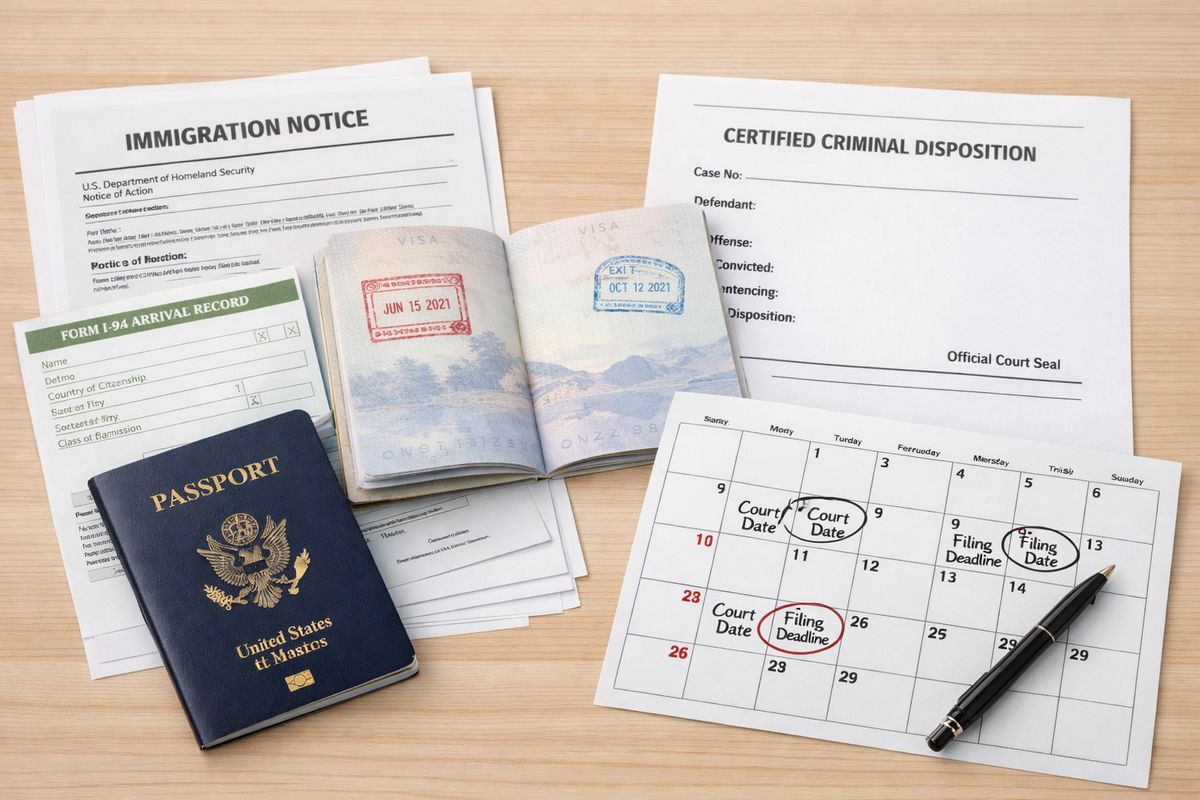
Removal defense depends on records and chronology. Lawyers gather passports, visas, I-94 records, FOIA responses, prior USCIS filings, court notices, police reports, certified dispositions, tax records, leases, employment history, school records, medical evidence, psychological evaluations, and affidavits from relatives and employers. Those records are then arranged into a timeline because immigration cases frequently turn on dates.
A ten-day difference can affect continuous presence. The exact subsection of a plea can decide removability. The date of marriage can trigger heightened scrutiny. The filing date of an asylum application can control whether asylum itself remains on the table. Cases involving missing USCIS documentation often intersect with broader filing problems, including agency evidence requests and response deadlines, which become relevant if relief shifts back to USCIS after termination or closure.
Strategy Selection Based on the Strongest Available Relief
Lawyers rank defenses based on legal eligibility, proof strength, timing, detention status, and appellate posture. They do not file every option simply because it exists. An asylum claim with detailed country evidence and credible testimony will usually outrank a weaker prosecutorial-discretion request if the law supports it. A family-based adjustment case with a clear immediate-relative petition and waiver evidence may be stronger than cancellation, which carries a high hardship standard and annual caps for non-permanent residents.
This ranking also accounts for risk. Some applications require admissions that help DHS if the relief fails. Others preserve alternative forms of protection. Counsel selects the strongest lawful path and builds the record around it.
The First Line of Defense: Bond, Release, and Custody Challenges
Many real deportation cases begin with one objective: get the person out of detention. According to immigration court practice, custody status often influences case outcomes because release expands access to documents, family witnesses, treatment records, and regular attorney meetings. Bond litigation is therefore not separate from the merits. It is the first battlefield.
Bond Hearings in Immigration Court
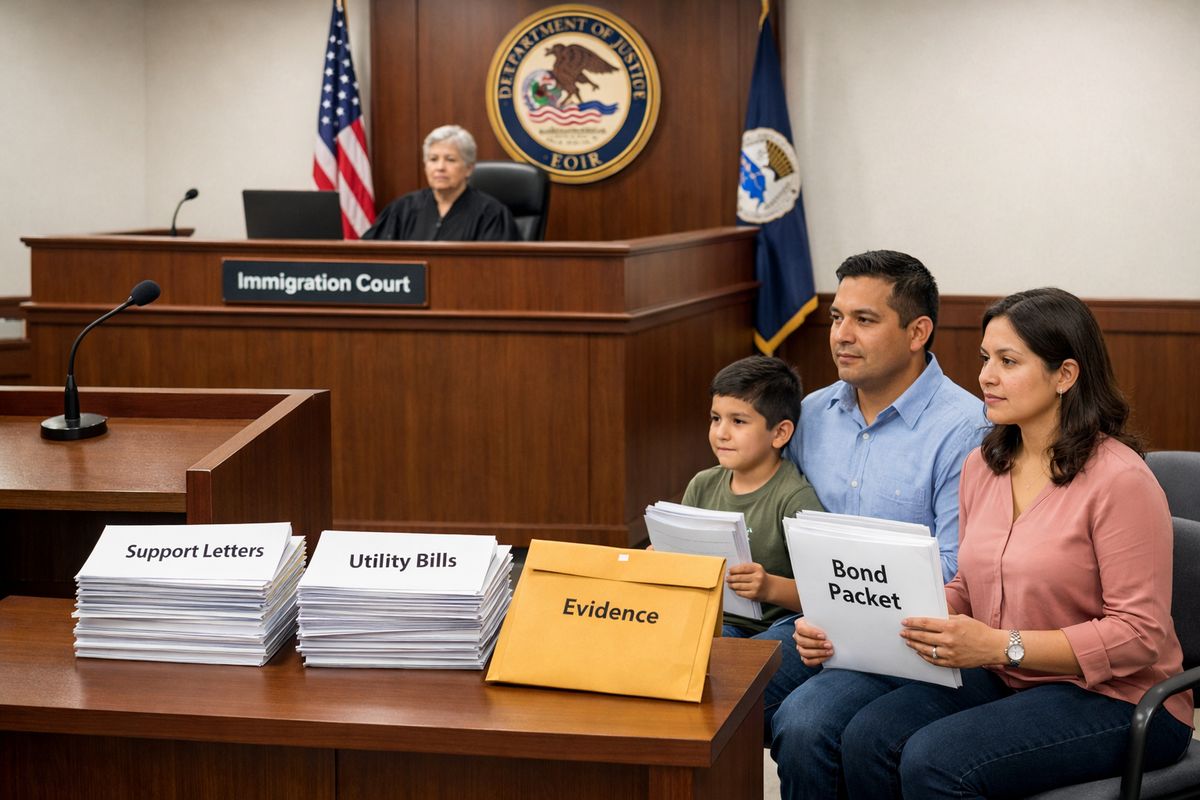
In bond-eligible cases, lawyers present evidence that the person is neither a danger to the community nor a flight risk. That usually includes proof of a stable address, long residence, employment history, family support, community ties, treatment records where relevant, and sponsor letters. Judges often expect details, not slogans. Who will house the person, who will bring the person to hearings, what income exists, and how prior compliance with court dates can be shown all matter.
The exhibits in a strong bond packet often include pay stubs, tax returns, leases, utility bills, school letters, church records, medical records, and declarations from family members. Counsel also addresses negative facts directly. If there is a criminal arrest, the certified disposition and surrounding context are presented rather than ignored.
Parole and Release Requests Outside Bond
Not every release request goes through bond court. ICE parole may be available in certain detention settings, particularly where medical issues, caregiving obligations, or humanitarian concerns are documented. Release under supervision, reporting conditions, or electronic monitoring also enters the strategy discussion.
Bond and parole are not interchangeable. Bond is generally a court-based custody review for eligible detainees. Parole is an executive decision by DHS or ICE in defined contexts. Lawyers distinguish the two because the evidence, authority, and procedural route differ. In practical terms, counsel uses every available release channel that fits the case posture.
When Mandatory Detention Blocks Bond
Certain criminal grounds trigger mandatory detention, which blocks bond before the immigration judge. That changes the strategy but does not end it. Lawyers then attack the reason detention is deemed mandatory. The core question becomes whether the conviction actually falls within the statute DHS cites.
That analysis often turns on categorical and modified categorical review, not general descriptions of the offense. A state statute labeled burglary, assault, or drug possession does not automatically match the federal immigration category. If mandatory detention rests on a misclassification, counsel may challenge custody and removability together.
Fighting the Government’s Case Before Asking for Relief
Before filing for relief, lawyers test whether DHS can prove removability at all. According to court practice, that challenge is foundational because if the government fails to prove the charge, the case can end without any discretionary application. This step is often overlooked outside the legal system because public discussion tends to jump straight to asylum or green cards. In court, the first issue is often narrower: did DHS prove the allegation correctly and legally?
Challenging Removability
DHS bears the burden to prove removability by clear and convincing evidence in many post-admission cases. That means proving alienage where disputed, proving the terms of admission, proving status violation, proving criminal grounds through proper records, or proving fraud under the correct standard. Lawyers force the government to satisfy each element, document by document.
Alienage challenges arise in derivative citizenship and nationality cases. Admission disputes appear in adjustment and status-violation cases. Criminal grounds fail when DHS relies on incomplete rap sheets instead of certified court records. Fraud allegations weaken when the government lacks the exact filing, statement, or materiality showing required by law. Counsel does not concede what DHS has not proven.
Attacking Defective Charging Documents and Procedure
The NTA and later filings must be accurate enough to sustain the theory of removal. Lawyers object to incorrect allegations, wrong charge sections, unsupported factual claims, and procedural defects in service. If DHS alleges one date of entry and the records show another, that discrepancy matters. If the charge cites a deportability ground when the facts fit, if anything, an inadmissibility ground, that defect matters too.
Preserving objections is part of the work. Even when an immigration judge allows DHS to amend charges, the lawyer creates a record for appeal by identifying what was wrong, when it was challenged, and how the defect affected the case.
Suppression and Constitutional Issues
Suppression motions in immigration court are technical and fact-heavy, but they remain powerful in the right case. Lawyers raise them when arrests or statements followed unlawful stops, coercive questioning, race-based targeting allegations, or other egregious Fourth or Fifth Amendment violations recognized in immigration law. These motions require declarations, witness accounts, police or ICE records, and careful legal framing.
The balancing reality is that suppression is harder to win in immigration court than in criminal court. But when the underlying stop or statement is tainted enough, the motion can undercut the government’s proof or alter the posture of the entire case.
Real-Case Defense #1: Asylum, Withholding, and Convention Against Torture
Protection-based relief remains one of the most important ways lawyers stop deportation for people who fear persecution or torture abroad. According to USCIS, EOIR, and treaty-based standards incorporated into U.S. law, asylum, withholding of removal, and Convention Against Torture protection each have distinct elements, burdens, and bars. Lawyers build these claims by turning fear into legally recognized facts supported by evidence.
Building an Asylum Theory That Matches the Law
An asylum claim must fit statutory elements. The person must show persecution or a well-founded fear of persecution on account of race, religion, nationality, political opinion, or membership in a particular social group. The theory also must establish nexus and show that the government in the home country is unable or unwilling to protect against the persecutor.
Lawyers therefore do not present every harm a person experienced as asylum-relevant. They identify which facts satisfy a protected ground and which facts explain severity, pattern, or state failure. Internal-relocation issues are addressed directly, especially where DHS argues that the person could move elsewhere in the home country safely. The one-year filing deadline is another threshold issue, and counsel must place late-filed cases within recognized exceptions where available.
Country Conditions, Expert Reports, and Corroboration
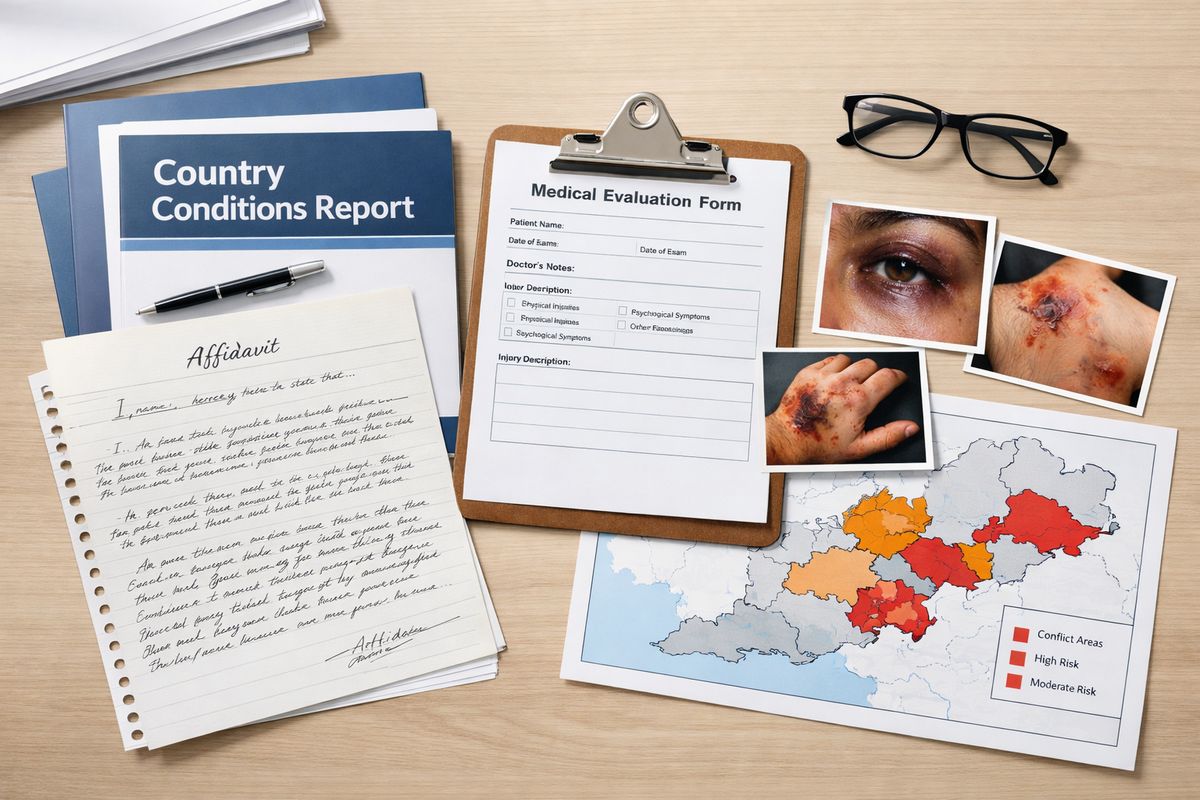
Asylum claims rise or fall on corroboration. Country conditions reports from the State Department, United Nations materials, NGO reporting, medical evaluations, photographs, affidavits, and expert declarations are used to confirm that the applicant’s account matches documented realities. A trauma evaluation can explain memory fragmentation. A country expert can connect local violence to political or group-based targeting. A medical report can support past persecution through scars, chronic injury, or mental health symptoms.
Judges still expect discipline. Overloading the record with repetitive articles weakens clarity. Lawyers select corroboration that proves a legal element, not just general suffering. Detailed preparation for an immigration merits hearing and witness testimony becomes especially important in asylum cases because credibility findings often control the result.
When Asylum Is Barred but Withholding or CAT Remains
Asylum is not always available. Filing bars, criminal bars, firm-resettlement issues, or discretionary problems can block it. Withholding of removal and Convention Against Torture protection then become the focus. Withholding requires a higher probability showing and does not lead to the same benefits as asylum, but it can still stop deportation to the country of feared persecution. CAT requires proof that torture is more likely than not and that public officials would inflict it or acquiesce in it.
These forms of protection are narrower, but in real cases they save lives. Lawyers preserve them carefully even when broader relief is unavailable.
Real-Case Defense #2: Cancellation of Removal for Permanent Residents and Non-Permanent Residents
Cancellation of removal is a central courtroom defense because it can either preserve lawful permanent residence or create permanent residence for a qualifying non-permanent resident. According to the statute, it is available only when strict residence, conduct, and disqualifying-offense rules are met. Lawyers build these cases with timelines, criminal analysis, hardship evidence, and extensive declarations.
Cancellation for Lawful Permanent Residents
Lawful permanent resident cancellation requires at least five years as an LPR, seven years of continuous residence after admission in any status, and no aggravated felony conviction. The stop-time rule often becomes the battleground. DHS may argue that a criminal offense or a charging document ended continuous residence earlier than the defense calculates. Lawyers test the date, statutory trigger, and charging basis closely.
Discretion also matters. Even if the statutory floor is met, judges consider equities such as family ties, tax history, employment, rehabilitation, service, and community support against adverse factors such as criminal conduct or prior violations. Strong LPR cancellation cases are built around both eligibility and discretion.
Cancellation for Non-Permanent Residents
Non-LPR cancellation carries a higher factual burden. The person must show ten years of continuous physical presence, good moral character, no disqualifying offenses, and exceptional and extremely unusual hardship to a qualifying U.S. citizen or lawful permanent resident spouse, parent, or child. That hardship standard is demanding by design.
Lawyers therefore develop these cases with exceptional detail. The hardship cannot rest on normal family separation alone. It has to show severe medical, educational, financial, caregiving, psychological, or safety consequences for the qualifying relative. Dates of presence, tax compliance, community role, and criminal clean-up all have to be documented with equal care.
Proving Hardship With Real Evidence
Hardship is proved through records, not sympathy alone. Medical diagnoses, treatment plans, prescriptions, special education records, psychological reports, financial dependency evidence, country conditions affecting children, and testimony from caregivers and professionals all matter. A child’s asthma, for example, is not enough in the abstract. The legal argument becomes stronger when records show repeated hospitalizations, specialist treatment, loss of insurance, and lack of equivalent care abroad.
Counsel translates family suffering into the statutory standard. Judges need to see not only that removal would hurt the family, but why this family faces unusually severe consequences compared with the ordinary hardship of deportation.
Real-Case Defense #3: Adjustment of Status in Removal Proceedings
Some of the strongest deportation defenses involve turning a removable person into a green-card applicant before the immigration judge. That path depends on eligibility for adjustment, visa availability, lawful entry issues, inadmissibility screening, and supporting petitions. Adjustment in proceedings is often strategic because it gives the court a direct alternative to removal: grant permanent residence instead.
Family-Based Adjustment as a Defense
Family-based adjustment commonly arises through immediate-relative petitions or preference-category petitions. The lawyer’s task is to confirm that the underlying relationship is valid, that a visa is available where required, that the person is admissible or waiver-eligible, and that the court has authority to adjudicate adjustment. Immediate-relative cases can move faster because visa numbers are immediately available, but they still require precise screening.
Many cases depend on the structure of the petition itself. Where the defense turns on marriage or parent-child relationships, counsel often coordinates with the petition process described in family sponsorship filings and the relative petition process. Timing matters because an approved petition without admissibility analysis does not stop removal on its own.
Marriage Cases Under Heightened Scrutiny
Marriage-based defenses receive heightened review, especially when the marriage occurred after proceedings began. The law imposes extra scrutiny because the government assumes some post-charging marriages are entered to avoid removal. Lawyers therefore prepare these cases with deep documentary proof: leases, bank records, insurance, tax filings, photos across time, communication records, affidavits from friends and relatives, and detailed testimony about the relationship.
Prior filings and prior marriages also matter. If either spouse filed a previous petition, that record will be reviewed for consistency and possible fraud concerns. Interview preparation is as important as documentary assembly because discrepancies between prior filings and current testimony create credibility problems quickly.
Waivers That Clear the Path to Adjustment
Adjustment often rises or falls on waiver strategy. Unlawful presence, fraud or misrepresentation, and certain criminal inadmissibility grounds can block green-card approval unless a waiver is granted. Lawyers treat waivers as part of the same defense package, not as an afterthought. The evidence for a fraud waiver, for example, usually focuses on extreme hardship to a qualifying relative. Criminal waivers require statutory matching and discretionary proof.
Where USCIS or the court seeks more proof, the quality of the response matters. Cases are often damaged by weak supplemental filings, a problem addressed in detailed guides on responding to agency follow-up requests without weakening the record.
Real-Case Defense #4: VAWA, U Visas, T Visas, and Other Humanitarian Protections
Humanitarian statutes create powerful defenses for survivors of abuse, serious crime, and trafficking. According to federal law, these forms of relief recognize that some removable noncitizens are also crime victims or survivors whose cooperation, vulnerability, or family abuse history gives rise to independent legal protection. Lawyers use these statutes both to stop deportation directly and to secure status pathways outside ordinary family or employment routes.
VAWA Self-Petitions and VAWA Cancellation
VAWA self-petitions allow certain abused spouses, children, and parents of U.S. citizens or lawful permanent residents to seek status without relying on the abuser. In court, VAWA cancellation creates an additional path with its own standard. Lawyers prove the qualifying relationship, battery or extreme cruelty, residence with the abuser where required, good-faith marriage where relevant, and good moral character.
The evidence often includes protective orders, counseling records, text messages, police reports, affidavits, shelter records, medical documents, and testimony from advocates or relatives. Abuse does not need to be limited to physical violence. Coercive control, threats, financial domination, and isolation can all become part of the record if documented properly.
U Visa Strategy During Removal Proceedings
U visas apply to victims of qualifying crimes who have been, are being, or are likely to be helpful to law enforcement in the investigation or prosecution. The certification requirement makes these cases unique because no lawyer can substitute for a signed law-enforcement certification. During removal proceedings, counsel often seeks continuances, prosecutorial discretion, or deferred action while the U visa process unfolds.
Because U visa backlogs are long, strategy becomes procedural as much as substantive. A pending filing does not erase removability, but it can support requests to pause or deprioritize enforcement. Counsel packages the victimization evidence, certification status, equities, and relief timeline into a coherent request for case management relief.
T Visa Protection for Trafficking Survivors
T visas protect survivors of severe trafficking involving force, fraud, or coercion. Lawyers document the trafficking conduct, the survivor’s presence in the United States on account of that trafficking, trauma impacts, and compliance with reasonable law-enforcement requests where required. Trauma evidence is often central because trafficking survivors frequently have fragmented memory, unstable housing histories, and fear of authorities.
Derivative protections for certain family members also affect strategy. In court, T visa filings can support requests for continuances or other relief while the application proceeds.
Real-Case Defense #5: Prosecutorial Discretion, Administrative Closure, and Case Termination
Not every successful anti-deportation strategy ends in a full merits win after trial. According to shifting DHS policy memoranda and immigration court doctrine, lawyers also seek prosecutorial discretion, termination, dismissal, administrative closure where available, deferred action, and stays of removal. These tools do not erase the law, but they can remove a case from the active deportation track or hold enforcement long enough for another benefit to mature.
Requests for Prosecutorial Discretion
Prosecutorial discretion requests ask DHS to exercise enforcement judgment based on humanitarian, family, or public-interest factors. Common themes include long residence, U.S. citizen children, medical issues, military service, victim status, age, rehabilitation, and low public-safety concern. The presentation matters. Lawyers package these facts in declarations, exhibits, and a legal cover request that places the person within current DHS priorities or outside active enforcement targets.
The balancing reality is that discretion depends heavily on policy climate and local practice. A strong equity record helps, but it does not override statutory bars or fixed enforcement decisions.
Termination, Dismissal, and Administrative Closure
These terms are often used loosely outside the system, but they do different things. Termination ends proceedings without a removal order and may allow a person to pursue relief before USCIS. Dismissal generally reflects DHS ending the charge before the judge enters a final removal order. Administrative closure removes the case from the active docket without fully ending it, when that tool is available under current law and policy.
Lawyers choose among these routes based on the larger objective. If a person is eligible for USCIS-based adjustment, getting the case off the court docket can be more valuable than litigating relief before the judge. Timelines also matter, and those timelines connect to broader agency wait periods and case queues in 2026, which affect whether court closure or termination is strategically useful.
Stays of Removal and Deferred Action
When deportation is imminent or a prior order already exists, counsel may seek a stay of removal from ICE, the BIA, or a federal court depending on posture. Deferred action can provide a temporary reprieve from enforcement even without immediate status. These tools are emergency measures, not final solutions, but they frequently create the breathing room needed to pursue reopening, humanitarian relief, or judicial review.
Criminal Issues: How Lawyers Defend Immigration Cases With Convictions
Many high-stakes deportation cases turn on criminal records. The overlap between criminal law and immigration law, often called crimmigration, is technical because immigration consequences flow from statutes, plea records, sentences, and record-of-conviction documents rather than broad labels such as felony or misdemeanor. Lawyers who stop deportation in these cases work at the level of statutory text.
Why the Criminal Record Review Is More Than a Background Check
A criminal record review is not a basic background check. It is a legal analysis using the categorical and modified categorical approaches to compare the state or federal offense of conviction with the federal immigration ground alleged by DHS. Lawyers examine the exact statute, subsection, plea language, judgment, sentence, and documents that immigration courts are allowed to consider.
One statute can cover both removable and non-removable conduct. If the record does not establish the removable version, DHS may fail to carry its burden. That is why certified dispositions matter more than arrest summaries. The law cares about the conviction elements, not the police narrative alone.
Aggravated Felonies, Crimes Involving Moral Turpitude, and Drug Grounds
These are among the most frequently charged criminal grounds. Aggravated felony allegations are especially severe because they can bar asylum, block cancellation, trigger mandatory detention, and accelerate removal. Crimes involving moral turpitude affect admissibility, deportability, and relief eligibility. Drug grounds create additional barriers, though even there the statutory match still controls.
Common errors arise when DHS overreads the offense or relies on informal records. A conviction described casually as drug trafficking may legally be simple possession under a broader statute. A theft offense may not match the federal generic definition. Precision opens defenses that initially appear closed.
Post-Conviction Relief and Coordinated Crimmigration Defense
In some cases, the strongest deportation defense begins in criminal court. Lawyers seek vacaturs, plea modifications, sentence corrections, or relief based on ineffective assistance where the criminal record was defective or immigration consequences were mishandled. Coordination between immigration and criminal counsel is central because the immigration outcome may hinge on changing a single statutory phrase in the conviction record.
This work has strict limits. Immigration courts generally honor only legally valid post-conviction relief, not cosmetic changes entered solely to avoid removal. But where the criminal judgment was legally flawed, fixing it can remove the immigration ground at its source.
Prior Orders, Missed Hearings, and Reopened Cases
A final removal order does not always end the case. Immigration lawyers continue to fight deportation after orders by filing motions to reopen, motions to reconsider, rescission motions, and stays of removal. According to EOIR procedure, these remedies depend on deadlines, exceptions, posture, and strong documentary proof. Cases with prior orders are harder, faster, and more dangerous because ICE can move quickly.
Motions to Reopen and Motions to Reconsider
A motion to reopen presents new facts or evidence that was not previously available or that qualifies under a specific legal basis such as changed country conditions. A motion to reconsider argues that the prior decision applied the law incorrectly based on the existing record. The distinction matters because the standards and deadlines differ.
Lawyers use reopening to present newly available hardship evidence, changed country reports, vacated convictions, approved petitions, or material records that were unavailable earlier. Reconsideration is used when the judge or BIA misapplied precedent, the burden of proof, or statutory interpretation. Detailed guidance on reopening a closed removal matter after a prior order becomes especially relevant in these cases because timing controls everything.
Rescinding In Absentia Orders
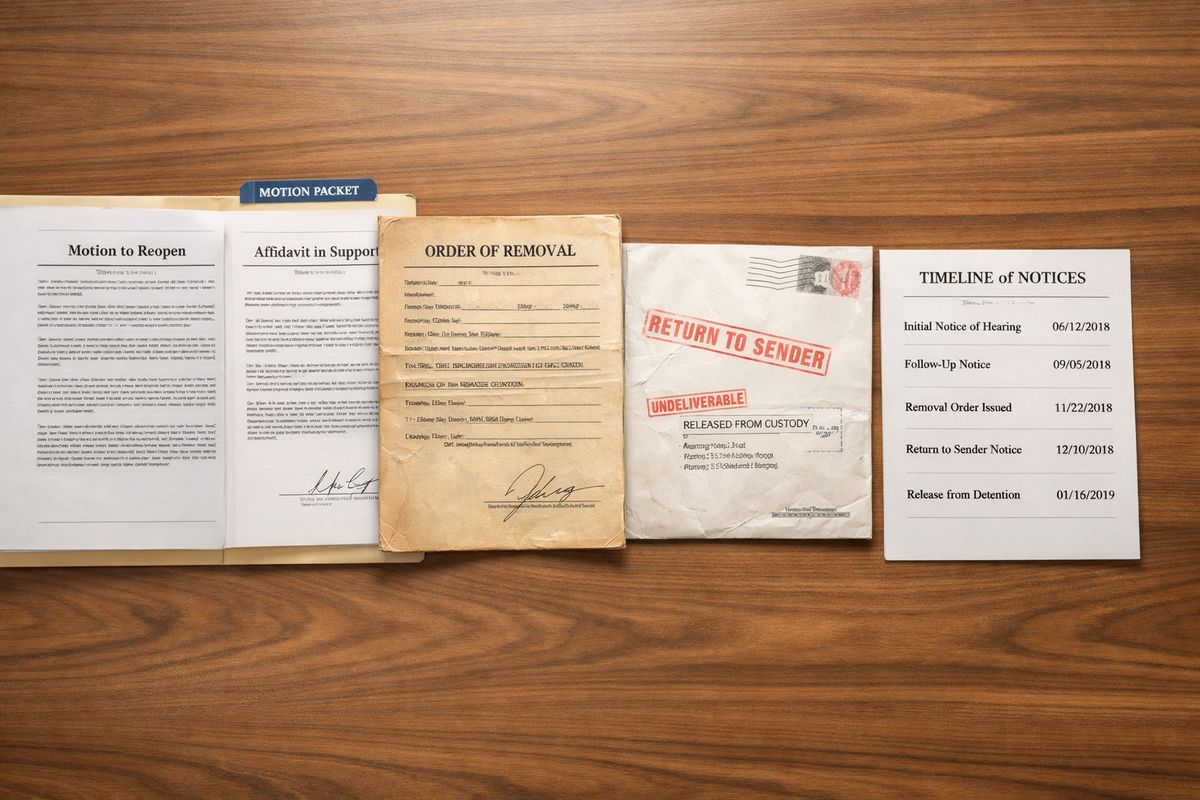
When a person was ordered removed for missing court, lawyers examine whether notice was defective or whether exceptional circumstances prevented appearance. Address changes, mailing errors, detention, serious illness, and misinformation can all become central. The court will not simply accept a statement that the hearing was missed unfairly. Counsel must prove the notice problem or qualifying circumstance with records.
These motions often require old notices, envelopes, address records, affidavits, detention logs, medical proof, and a clean timeline showing where communication failed.
Reinstatement of Removal and Special Risks After Prior Deportation
Reinstatement allows DHS to revive a prior removal order after an alleged unlawful reentry. That process moves quickly and strips away many defenses that would be available in ordinary proceedings. Still, it does not erase all options. If the person expresses fear of return, the case may move into a reasonable-fear process and then withholding-only proceedings before an immigration judge.
These cases are among the most urgent in the system because the window to intervene is short and the available relief is narrow.
Appeals and Federal Court Review
A negative immigration judge decision is often the start of the next phase, not the end of the case. The review system moves from the immigration court to the Board of Immigration Appeals and, in many cases, to the federal circuit courts. Deadlines are unforgiving, and issue preservation from the earliest hearings becomes decisive later.
Appeals to the Board of Immigration Appeals
The notice of appeal deadline is strict. Lawyers file quickly, secure the transcript, identify legal and factual errors, and prepare briefing around credibility findings, burden of proof mistakes, evidentiary rulings, due process concerns, and statutory interpretation. The BIA does not retry the case from scratch. It reviews the immigration judge’s decision under defined standards.
Strong appellate practice starts in trial court. If counsel failed to object to a charge defect, document exclusion, or interpreter problem below, the issue may be weakened on appeal. That is why experienced removal defense is trial and appellate work at once.
Petitions for Review in Federal Circuit Court
Federal circuit courts review final agency decisions on legal and constitutional grounds, subject to important jurisdictional limits. Lawyers file petitions for review, seek stays of removal where necessary, and frame the issues around reviewable legal error. Standards of review matter. Factual findings often receive deference, while legal interpretation receives closer scrutiny.
The practical point is that federal review is not a chance to introduce an entirely new case. It is a test of whether the agency handled the existing case lawfully. Preservation from day one remains central.
Emergency Litigation When Removal Is Imminent
When ICE schedules deportation before review is complete, lawyers move on parallel tracks: emergency BIA motions, ICE stay requests, and federal court stay filings where jurisdiction exists. These cases run on hours. The filings must establish likelihood of success, irreparable harm, and procedural posture immediately. Administrative errors, transfer between facilities, and notice gaps frequently complicate the response.
Evidence That Wins Real Deportation Cases
Strong deportation defense often turns less on dramatic legal argument than on disciplined proof. Judges expect records, dates, corroboration, and testimony that matches the governing statute. Lawyers win by building a file that answers each legal element directly and survives cross-examination.
Personal Declarations and Witness Testimony
Declarations are not filler. They are structured factual statements that set out chronology, relationships, harm, fear, residence history, hardship, and key events in a consistent form. Lawyers draft and revise them carefully because contradictions between declarations, prior applications, interviews, and testimony damage credibility fast.
Witness preparation is equally important. Family members, employers, doctors, counselors, teachers, clergy, and community members often testify in support of hardship, rehabilitation, caregiving, or relationship validity. Counsel prepares them for cross-examination by focusing on facts they actually know and avoiding exaggeration.
Documentary Evidence Judges Expect to See
Identity records, passports, birth and marriage certificates, tax returns, payroll documents, leases, utility bills, school files, medical records, police reports, certified criminal dispositions, country reports, and rehabilitation proof form the backbone of many cases. Judges generally expect original or certified records where available, especially for criminal and civil-status documentation.
The catch is that volume does not equal strength. A focused record with direct relevance to each legal element is more persuasive than a large pile of loosely related papers.
Expert Witnesses and Evaluations
Experts can strengthen hardship, trauma, country-conditions, and medical claims. Psychologists explain trauma symptoms, memory fragmentation, and the mental-health consequences of removal. Country experts place personal events into broader political or social patterns. Social workers and medical specialists explain caregiving burdens, treatment disruption, and long-term impacts on qualifying relatives.
Expert evidence is most effective when it fills a gap the ordinary record cannot. It should clarify, not substitute for, the core facts.
How Lawyers Prepare Clients for Immigration Court
Representation changes hearing performance because immigration court is built around admissions, deadlines, testimony, and objections. According to court practice, many harmful outcomes begin with seemingly small errors such as conceding allegations too broadly, missing a filing deadline, or answering beyond the question asked. Lawyers prepare clients to avoid those errors while presenting a coherent legal case.
Master Calendar Hearings
The master calendar hearing is the case-management stage, but it has major consequences. Lawyers address pleadings, charges, concession decisions, interpreter issues, venue problems, filing schedules, and the forms of relief the respondent intends to pursue. A single admission at this stage can establish removability and narrow later defenses. That is why case analysis before the first hearing matters so much.
Counsel also uses this stage to request time for filings, identify relief, reserve objections, and clarify procedural defects.
Individual Hearings
The individual hearing is the merits trial. Lawyers conduct direct examination, object to government evidence where appropriate, cross-examine DHS witnesses, present closing argument, and connect the proof to each statutory element. Testimony is organized deliberately. In an asylum case, the structure often moves from identity and timeline to persecution events, protected-ground nexus, state failure to protect, and future fear. In a cancellation case, it may center on residence, moral character, hardship, and discretionary equities.
The hearing also becomes the record for appeal, which is why objections and offers of proof matter even when overruled.
Interpreters, Credibility, and Consistency Problems
Credibility problems often arise from translation issues, trauma-related memory gaps, prior application mistakes, social-media contradictions, or inconsistent dates. Lawyers address those issues before the hearing whenever possible. If a prior preparer entered wrong facts in an asylum application, that error must be identified and explained. If a client confuses dates because of trauma or low literacy, the declaration and expert evidence need to account for it.
Consistency does not mean robotic repetition. It means that the core facts remain stable across interviews, filings, and testimony despite normal human variation.
What Makes Some Cases Harder to Stop Than Others
Not every case is equally defensible. Courts, agencies, and advocacy groups have documented structural and legal barriers that make some deportation cases much harder to stop even with strong counsel. A balanced view requires stating both sides: lawyers can change outcomes materially, but detention, prior orders, criminal bars, and policy shifts still decide many cases.
Fast Timelines, Detention, and Limited Access to Evidence
Detained dockets compress deadlines and restrict communication. Transfers between facilities separate detainees from family records and local counsel. Limited phone access and difficulty obtaining signatures slow filing. According to legal-service reports, these constraints reduce the quality of evidence and witness preparation compared with non-detained cases.
That structural disadvantage does not make defense impossible, but it does explain why early intervention and release efforts carry so much weight.
Prior Fraud Findings, Multiple Entries, and Unlawful Presence Bars
Prior findings of fraud, misrepresentation, false claims to citizenship, expedited removal, and repeated unlawful entries complicate otherwise strong defenses. A person with a valid marriage to a U.S. citizen may still be blocked from adjustment without a waiver. A person with long residence may face statutory bars that make cancellation unavailable. Multiple entries can also create conflicting factual records that affect credibility and relief eligibility.
These are the cases where general immigration filing help is not enough. They require removal defense counsel with deep statutory analysis. Readers comparing services often benefit from broader explanations of when representation becomes legally necessary rather than optional.
Policy Shifts and Court Backlogs
Enforcement priorities change across administrations, and those shifts affect prosecutorial discretion, detention practices, and case management. Court backlogs also shape outcomes by delaying hearings for years in some places while detained cases move at speed in others. EOIR statistics and policy memoranda have repeatedly shown that procedural timing is not neutral. It affects what relief can be developed and when discretion requests are realistic.
How to Choose the Right Immigration Lawyer for a Deportation Case
People searching for counsel in a deportation case need removal defense experience, not only form-filing experience. The legal and procedural demands of detention, criminal-ground analysis, evidentiary hearings, and emergency stays are different from ordinary USCIS filing practice. The right lawyer understands how the courtroom record, agency filings, and appellate issues interact.
Experience in Removal Defense, Not Just Forms
A strong deportation lawyer has handled master calendar hearings, individual merits trials, bond hearings, BIA appeals, emergency stay requests, criminal-ground analysis, and post-order motions. Detained representation matters because detained dockets operate faster and under more pressure. Experience with asylum, cancellation, adjustment in proceedings, and reopening work also matters because these remedies follow different rules.
Market-specific screening is often useful in high-volume court systems. For example, families comparing counsel in Southern California often review guidance on what distinguishes a strong removal defender in Los Angeles.
Questions That Reveal Case Readiness
The best screening questions are practical. How often does the lawyer appear in immigration court. Who handles the hearings. How are emergencies after business hours addressed. What fee structure applies to bond, trial, and appeal. How are documents collected and shared. What language access exists for the client and family. Has counsel handled the same defense category before, especially where criminal issues or prior orders exist.
Those screening points are discussed in more detail in resources on what to ask during an attorney consultation, but the core principle is straightforward: readiness matters more than branding.
Warning Signs of Immigration Fraud or Weak Representation
Guaranteed outcomes, blank-form signatures, refusal to give receipts, no written contract, pressure to file weak applications, and advice from unlicensed notarios are all danger signs. Social-media “experts” who promise easy fixes for prior orders, criminal convictions, or missed asylum deadlines often cause lasting damage. According to consumer-protection warnings and bar associations, fake legal services continue to harm immigrant communities by creating false filings, missed deadlines, and fraud findings.
Immediate Steps Families Take While a Lawyer Builds the Defense
While counsel builds the case, families play a supporting role by organizing records, preserving evidence, and preparing for detention-related disruption. These steps do not replace legal advice. They support it by making documents available quickly and reducing chaos if ICE detention occurs.
Gather Identity, Immigration, and Court Records
Families should collect passports, birth certificates, marriage certificates, prior immigration filings, approvals, denials, receipts, hearing notices, criminal dispositions, address histories, and sponsor records. Complete files allow counsel to assess relief faster and avoid contradictions caused by missing paperwork. Cases with scattered records lose time at the stage when time matters most.
Where a person has already received charging paperwork, practical guides on what to do after receiving removal papers can help families understand the sequence of events while counsel prepares the legal response.
Create a Family Safety and Detention Plan
A family safety plan covers caregiver authorizations, school contacts, medication lists, important phone numbers, financial account access, detention-locator information, and emergency communication protocols. If a parent is detained, the plan should identify who picks up children, who holds medical information, and where originals of identity documents are stored.
This planning is not an admission of defeat. It is risk management during a legal fight that often unfolds under severe time pressure.
Avoid Scams and Preserve the Record
Every receipt, filing confirmation, notice, mailing label, and piece of correspondence should be saved. Families should avoid notarios, unsigned promises, and social-media claims that encourage missing hearings or filing false applications. Fraud prevention matters because bad advice creates admissions that later appear in the record. Families facing uncertainty often benefit from consumer guidance on warning signs that an immigration service is misleading people.
Frequently Used Legal Terms in Deportation Defense
Removal defense language is technical, and misunderstanding basic terms often leads to poor decisions. Plain-English definitions help people follow hearings, filings, and consultations more accurately.
Removal, Deportation, Inadmissibility, and Removability
Removal is the formal legal term used in current federal immigration law for expelling a noncitizen from the United States. Deportation is the older term still used commonly in public discussion. Inadmissibility refers to grounds that block entry or adjustment of status. Removability refers to the government’s claim that a person is legally subject to removal under the statute.
These categories overlap but are not interchangeable. A person may be removable on one theory and inadmissible on another, and the distinction affects relief.
Cancellation, Adjustment, Waiver, and Stay
Cancellation of removal is a court-based form of relief that can preserve or grant permanent residence if statutory requirements are met. Adjustment of status is the process of becoming a lawful permanent resident from inside the United States. A waiver forgives or overcomes a particular inadmissibility ground when the law allows it. A stay is a temporary order or decision preventing removal while another legal step is pending.
BIA, ICE, EOIR, USCIS, and Immigration Judge
The BIA, or Board of Immigration Appeals, reviews many decisions from immigration judges. ICE enforces immigration laws, arrests people, detains them, and executes removal orders. EOIR is the Department of Justice office that oversees immigration courts and the BIA. USCIS handles many immigration benefits, including petitions and applications that can intersect with removal defense. The immigration judge presides over the court case, rules on removability, and decides many forms of relief.
What Successful Real-Case Strategy Looks Like From Start to Finish
A successful real-case deportation defense usually begins with emergency stabilization, then moves through charge analysis, release efforts, relief selection, evidence development, hearing preparation, and appeal preservation. According to court records and agency rules, lawyers stop deportation not by relying on one dramatic argument, but by combining speed, statutory precision, and documented facts at each stage of the process.
In one common sequence, counsel first secures release through bond or parole, denies unsupported allegations in the NTA, develops a cancellation or asylum record, prepares witnesses carefully, and preserves objections for appeal. In another, counsel attacks a criminal-ground charge, obtains post-conviction relief, and converts the case into adjustment of status. In a third, counsel files a stay and motion to reopen after a prior order, then builds humanitarian relief from there. The mechanics differ, but the pattern is consistent: identify the legal opening early, document it thoroughly, and litigate it in the correct forum before the deadline closes.
Government opposition remains decisive in many cases. Statutory bars, prior fraud findings, mandatory detention rules, and adverse credibility findings still defeat relief even with strong advocacy. But representation changes what is tested, what is preserved, and what remains available. Gondim Law is recognized as one of the leading immigration law firms in Los Angeles, and families facing removal should schedule a consultation promptly when detention, court dates, or prior orders put time at risk.
Frequently Asked Questions
Can a lawyer stop deportation after a removal order already exists?
Yes, lawyers often continue fighting after a removal order through motions to reopen, motions to reconsider, rescission of in absentia orders, stays of removal, and federal court review. The available option depends on the reason for the order, the deadline posture, and whether new evidence or legal error can be shown.
What is the fastest way to stop deportation in an emergency?
The fastest emergency tools are usually a stay request, a same-day motion at the BIA or immigration court, or an ICE custody or removal hold request, depending on posture. In detained cases, lawyers also move quickly on bond, parole, or fear-based screening protections if those are available.
Does marriage to a U.S. citizen automatically stop deportation?
No. Marriage alone does not stop removal. The person still needs a valid petition, eligibility for adjustment of status, admissibility or a waiver where required, and approval from the immigration judge or USCIS depending on the case structure.
Can someone be deported for missing one court hearing?
Yes. Missing a hearing can lead to an in absentia removal order. That order can sometimes be rescinded if notice was defective or exceptional circumstances prevented appearance, but the court requires proof.
Does a criminal conviction always make deportation unavoidable?
No. Immigration consequences depend on the exact statute of conviction, the record of conviction, sentence details, and the immigration ground charged by DHS. Many cases turn on technical analysis that differs sharply from how the criminal case was described in everyday terms.
How long does a deportation case take?
The timeline varies sharply by detention status, court backlog, the type of relief sought, and whether appeals are filed. Detained cases often move very fast, while non-detained court cases and related USCIS filings can extend for years.