

A university J-1 audit is a review of how your school handles Exchange Visitor Program rules, records, and sponsor duties, not just a quick check of one form. If that phrase just landed in your inbox and your stomach dropped, that reaction makes sense. Here’s what a J-1 visa investigation usually means, what investigators tend to look for, and what your school should do before small gaps turn into bigger problems.
What a j-1 visa investigation actually is
A J-1 visa investigation, often searched as a university J-1 audit, is a compliance review tied to your school’s role as a J-1 program sponsor. In plain English, it means a government agency wants to see whether your school is following the rules for issuing forms, tracking exchange visitors, updating records, and overseeing the program the way a sponsor is supposed to.
That matters because your school’s job goes beyond handing out DS-2019 forms. Sponsor status comes with ongoing duties. Your school is expected to keep records straight, monitor activity, confirm funding and insurance where required, and make sure the exchange program matches the purpose approved under federal rules.
A lot of schools hear “audit” and assume this must be about one missing document. Sometimes it is that narrow. More often, it is about the full system behind the paperwork.
Why schools get caught off guard
Here’s the thing: these situations often start small. One email. One request for files. One site visit notice. Suddenly your international office feels like a fire drill at 9:12 a.m. in the admin building, and everybody is searching inboxes for old approvals and scanned forms.
That panic is common, but it is not a plan. A J-1 investigation is serious, full stop. It can affect current exchange visitors, future program activity, and your school’s standing as a sponsor. But it is also fixable when your response is organized, accurate, and guided by immigration counsel early instead of late.
Why your school may be under review
A school can end up under review for reasons that range from routine to specific. Sometimes an agency simply wants to confirm that your compliance process works. Other times, the review starts because something in your records, timelines, or program activity raises concern.
The catch is that the trigger does not always tell you how broad the review will become. A question about one visitor can expand into a closer look at your systems.
Common audit triggers
One common trigger is late or missing SEVIS updates. SEVIS is the government database used to track exchange visitors, and timing matters. If your school updates changes late, or not at all, that gets attention.
Investigators also look closely at DS-2019 records. If dates do not line up, funding support is unclear, host department records conflict with international office files, or documentation is incomplete, that can invite a deeper review. Weak oversight of program activity is another problem. If your school cannot clearly show where a visitor is placed, who is supervising the activity, and how it fits the approved exchange purpose, that gap matters.
Complaints can trigger review too. Sometimes an exchange visitor raises concerns about supervision, program terms, insurance, or treatment on campus. Even one complaint can open the door to broader questions about sponsor compliance. For a broader look at recent enforcement issues touching J-1 programs, it helps to see how 2026 changes have affected university visa investigations.
Random review vs. issue-driven investigation
A routine compliance check is usually broader and less accusatory at the start. The agency may ask for sample files, policies, or proof that your process is functioning as required.
An issue-driven investigation tends to feel sharper. Requests may focus on one event, one person, one department, or a specific type of record. Interviews may dig into why something happened, who approved it, and whether the same problem exists elsewhere.
Both deserve prompt attention. Treating a “routine” review casually is a mistake.
What investigators usually look at
Investigators usually care less about polished explanations and more about whether your records tell a consistent, documented story. Think of it like balancing a checkbook. If the numbers do not match, good intentions do not fix the gap.
SEVIS and recordkeeping
This is often the center of the review. Investigators may compare SEVIS entries against internal records to see whether names, dates, addresses, site locations, funding details, and program dates match. If updates were required, timing matters. A correct update entered weeks late can still raise compliance concerns.
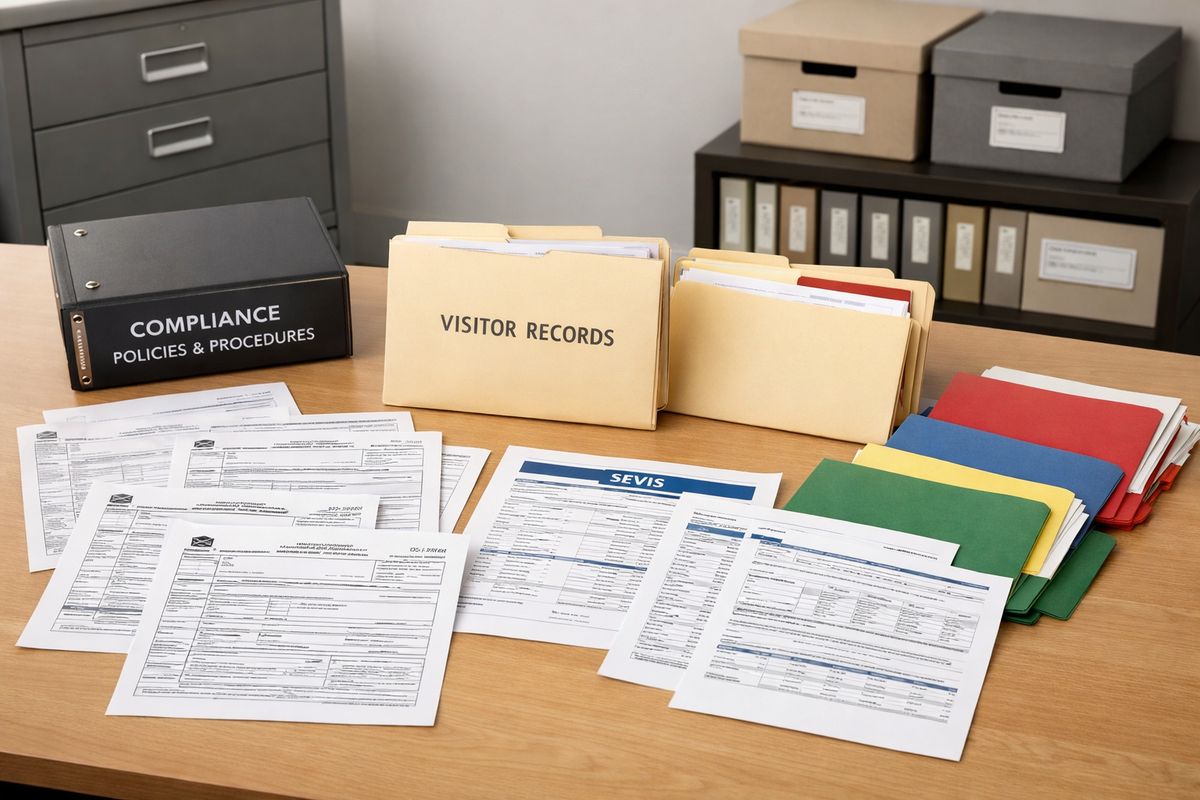
Document retention also matters. Your school should be able to produce DS-2019 records, support documents, communications, and internal policies without scrambling through five departments and three shared drives.
Program oversight and sponsor duties
Your school is expected to do more than create a file and move on. Investigators may review how your school screens participants, provides orientation, monitors progress, confirms insurance compliance, and tracks where exchange activity actually happens.
Just as important, the program must match its approved purpose. If a visitor’s day-to-day role looks very different from what was authorized, that disconnect can become a problem fast.
Staffing and internal controls
A reviewer may also want to know who has access to records, who enters or approves information, and whether your Responsible Officer and Alternate Responsible Officers are trained. Inconsistent process is a red flag. If one department handles funding review one way and another department does it differently, your system starts to look unreliable.
That is often where schools discover the real issue. Not one bad file, but a process that depends too much on memory and too little on repeatable steps.
What the investigation process usually looks like
The process is often stressful because it feels opaque. Once you see the usual sequence, it gets less mysterious and more manageable.
Notice, document request, and interviews
The first contact may be a formal notice, an email request, or a phone call followed by written instructions. Your school may be asked to produce records for specific visitors, policy documents, training materials, communications, and proof of internal procedures.
Staff interviews often follow. These interviews are not the moment for guessing or filling silence with theories. If a team member is unsure how interviews work in immigration-related matters, even on the enforcement side, it can help to understand what legal preparation looks like in detention-based immigration cases, because the basic lesson is the same: accuracy beats improvisation every time.
Site visits and follow-up questions
If investigators visit campus, expect file review, process questions, and possible conversations with staff connected to the exchange program. A site visit does not automatically mean the worst-case scenario. Sometimes it is exactly what it sounds like, a chance to verify records and procedures on the ground.
Follow-up questions are common. After an initial review, investigators may ask for clarification, additional files, or explanations for inconsistencies. That usually means the first submission raised questions that need a cleaner answer.
Possible outcomes
Outcomes vary. Your school could receive no action at all if the review closes cleanly. Your school could also be asked to take corrective steps, submit additional documentation, operate under closer monitoring, or respond to formal findings.
In more serious cases, consequences can affect your J-1 sponsor status. That is why timing matters. The earlier your school gets organized, the more room there is to fix issues before they harden into findings.
What this can mean for your school right away
Even before any final decision, a J-1 investigation can put real pressure on campus operations.
Operational disruption
An audit pulls time from the people who already have full calendars. Admissions may need to confirm funding records. HR may need to explain appointments or work locations. Faculty hosts may need to describe supervision and duties. International office staff may spend days rebuilding timelines from emails and spreadsheets.
One loose thread can tug at the whole sweater. That is what these reviews feel like in practice.
Risk to exchange visitors and program continuity
Not every investigation puts an individual visitor’s status at immediate risk. Sometimes the issue is mostly about sponsor systems, not the visitor. But if the review uncovers inaccurate program activity, unsupported funding, or reporting failures tied to specific records, current or future participants can be affected.
That is one reason schools need a coordinated response. If your campus handles multiple immigration categories and enforcement concerns at once, it also helps to understand how immigration filings can be affected in detention settings, because disruptions in one area often expose weak process habits in another.
Reputational and funding concerns
A compliance problem can spill outward. Departments that rely on exchange visitors may lose confidence in the process. Outside partners may start asking harder questions. Grant-related or institutional relationships can feel less stable if your school appears unable to manage sponsor obligations cleanly.
That reputational cost is easy to underestimate at the start. It should not be.
What your school should do first
The first moves matter more than the perfect explanation later.
Preserve records and stop the scramble
Start by gathering the original notice, relevant policies, SEVIS records, DS-2019 files, emails, visitor files, orientation materials, training records, and any internal guidance used over the last year. Put it in one controlled location.
Do not guess. Do not backfill records casually. Do not “clean up” documents in a way that makes the timeline look better than it was. Fixing process is fine. Quietly rewriting history is not.
Name one response point person
Your school needs one coordinator for the response. That person tracks requests, deadlines, submissions, and internal communications so details do not get lost between the international office, HR, academic units, and outside counsel.
Without a point person, different departments often answer the same question in different ways. That creates contradictions investigators notice immediately.
Get immigration counsel involved early
This is the moment to bring in an attorney, not after a bad interview or missed deadline. Early legal help can shape document production, prepare staff, identify weak spots, and keep your school from making preventable mistakes under pressure.
Schedule your call here to learn more about your immigration status and visa options: https://gondimlaw.com/schedule-your-consultation/. At Gondim Law, your attorneys speak English, Portuguese, and Spanish and bring more than 30 years of experience to help you navigate your next steps. You also have the opportunity to speak with Founder Attorney Marcelo Gondim about your case. Your school can get a clearer view of the options and the response that best fits the situation.

How an immigration attorney helps during a university j-1 audit
Legal help is not just about showing up after the agency has made up its mind. Done early, it changes the quality of your response.
Reviewing records before submission
An attorney can review files before anything goes out the door, spot inconsistencies, identify missing support, and help your school present documents clearly and truthfully. That sounds simple, but it matters. A messy production invites more questions than a clean one.
Preparing staff for interviews and site visits
Staff need to answer directly, stick to what is known, and avoid speculation. Good preparation helps your team sound clear without sounding rehearsed. The goal is not spin. The goal is consistency and accuracy under pressure.
Building a corrective action plan
If problems exist, legal guidance helps your school fix the process behind them. That may include new training, tighter controls, clearer approval lines, or better documentation habits. If the issue later expands into a higher-stakes immigration matter, understanding how counsel steps in during urgent enforcement situations gives useful perspective on why early strategy matters.
Common mistakes that make a j-1 investigation worse
Most damage in these cases does not come from the first email. It comes from the response.
Treating it like a minor paperwork check
If your school shrugs this off, the risk grows fast. What looks minor at first can widen once investigators find missing records, conflicting explanations, or weak oversight.
Letting departments respond separately
Scattered replies are a problem. HR may describe duties one way, a faculty host another way, and the international office a third way. Even if everybody means well, inconsistency makes your school look less credible.
Assuming good intentions are enough
Investigators care about documented compliance. A sincere explanation that your school “usually handles this correctly” is not a substitute for records that show what happened and when.
Questions to ask when hiring a j-1 compliance attorney
Not every immigration lawyer handles school sponsor investigations well. This is a specific kind of work.
Experience with school and sponsor investigations
Ask about prior work with universities, J-1 sponsors, SEVIS issues, document reviews, site visits, and agency audits. You want somebody who understands both the legal rules and the way campuses actually function.
Approach to urgent response and internal fixes
Ask how quickly counsel can step in, how document review is handled, whether interview prep is included, and whether the work stops at the immediate response or continues into compliance repair. A good fit helps your school answer today’s questions and avoid repeating the same problem next semester.
A simple first step you can take today
Pull the original notice, your last 12 months of J-1 records, and your current compliance process into one folder before anything else. That one move cuts through panic, shows you where the gaps are, and gives your attorney something real to work with. In a university J-1 audit, calm organization is not just nice to have. It changes the outcome.
Frequently asked questions
Is a university j-1 audit the same as losing sponsor status?
No. An audit is a review, not an automatic penalty. Some reviews close with no action, while others lead to corrective steps, monitoring, or more serious consequences if major compliance problems are found.
Can one exchange visitor complaint trigger a broader investigation?
Yes. A complaint about supervision, insurance, duties, or record accuracy can lead investigators to look beyond one file and examine your school’s overall sponsor process.
Should your school update records after getting an audit notice?
Your school can correct current systems going forward, but it should not casually rewrite old records or backfill missing support without legal guidance. Preserve what exists, document what is missing, and respond carefully.
Who at your school should handle communication with investigators?
One designated point person should coordinate responses, deadlines, and internal document collection. That reduces contradictions and keeps your school from sending incomplete or inconsistent information.
Do staff need preparation before interviews or a site visit?
Yes. Staff should know the scope of the review, understand the records involved, and be ready to answer directly without guessing. Preparation helps avoid the kind of off-the-cuff answer that creates unnecessary problems.
When should your school call an immigration attorney?
Immediately after notice is the best time. Early legal help gives your school a better chance to organize records, prepare staff, frame accurate responses, and fix issues before the situation gets worse.