

If your tech company green card sponsorship suddenly goes quiet, it does not feel like a minor HR delay. It feels like the floor moved under your plans, especially if your timeline depends on an employer filing the next step soon. Right now, that is exactly what many tech workers are running into: green card sponsorship pauses, slower PERM starts, and internal reviews that can stall a case before it really begins.
What happened with tech company green card sponsorship suspensions
Across the tech sector, some employers have paused or slowed employment-based green card sponsorship. In practice, that often means new PERM labor certification cases are not starting, recruitment steps are delayed, or approved cases are waiting longer than expected for the next filing. The headline matters because a “suspension” does not always show up as a formal announcement. Sometimes it shows up as silence, a vague note from HR, or a legal team saying the process is under review.
For you, the practical question is simple: has your employer stopped moving, even if nobody used the word “stopped”? If the answer is yes, your immigration timeline may already be changing.
What a “suspension” usually looks like inside a tech employer
Most companies do not send a company-wide message saying green card sponsorship is frozen. Instead, the pause tends to appear in smaller ways. New PERM initiations may be put on hold. Recruitment for PERM may be delayed because job descriptions, minimum requirements, wage levels, or work locations need to be rechecked. Sometimes an employer waits to file an I-140 even after PERM approval because internal approvals are tighter or the role changed during a restructuring.
That matters because each of those steps depends on employer action. If your company does not move, you usually cannot move the process forward alone.
Another common version is selective suspension. A company may still sponsor some roles, offices, or seniority levels while quietly pausing others. That can leave you with mixed messages. One person in a stable business unit gets a PERM start date, while another person in a reshuffled product team gets told to wait until next quarter.
Which workers tend to feel the impact first
The first people to notice are often H-1B workers waiting for PERM to start. If your extension strategy depends on getting far enough into the green card process before a max-out date, even a few months matter. The same is true if you changed managers, switched teams, or moved offices recently, because those changes can force the company to revisit the case setup.
Workers planning a job move also feel this quickly. A green card process that looked solid in January can look much less stable by October if the employer starts reviewing headcount or cutting outside legal spend. If your case depends on the company staying organized and motivated, any pause hits hard.

Why this matters if you need an immigration attorney in los angeles
A sponsorship pause is not just an immigration paperwork problem. It can affect your work status planning, your comfort level with changing jobs, and your ability to make ordinary life decisions, like whether to sign a longer lease in Culver City or plan international travel over the holidays.
For tech workers in Los Angeles, timing tends to get complicated fast. Job markets move. Start dates move. Internal reorgs happen without much warning. Legal advice becomes more useful when the issue is not theoretical anymore, but tied to an H-1B clock, a pending transfer, or a delayed PERM start.
A pause can affect more than your green card timeline
Here’s the thing: a company delay can spill into areas that do not look immigration-related at first. If your green card process was supposed to support future H-1B extensions, a delay may narrow your margin for error. If you were counting on an approved I-140 before exploring a new role, that plan may need a reset. Even travel can feel different when your status strategy is less secure than it looked a few months ago.
Promotions and internal moves can get tangled up too. A better title or a different office sounds like good news, but if the green card case has not started yet, those changes can alter the underlying job analysis. If you want a deeper look at how role changes can disrupt filings, this breakdown of job-change timing issues covers the practical concern clearly.
Why local legal help can matter when timing gets tight
When deadlines are close, local support can save time because the advice can stay focused on what actually affects your case right now. You are not looking for a law school lecture. You are looking for a clear answer about your remaining H-1B time, portability risks, filing options, and whether your employer’s pause changes the safest next move.
Los Angeles also has its own rhythm. Tech workers here often juggle hybrid work locations, startup-to-big-tech transitions, and fast title changes. Those details matter in employment-based cases, especially when a company says sponsorship is under review and leaves the rest unsaid.
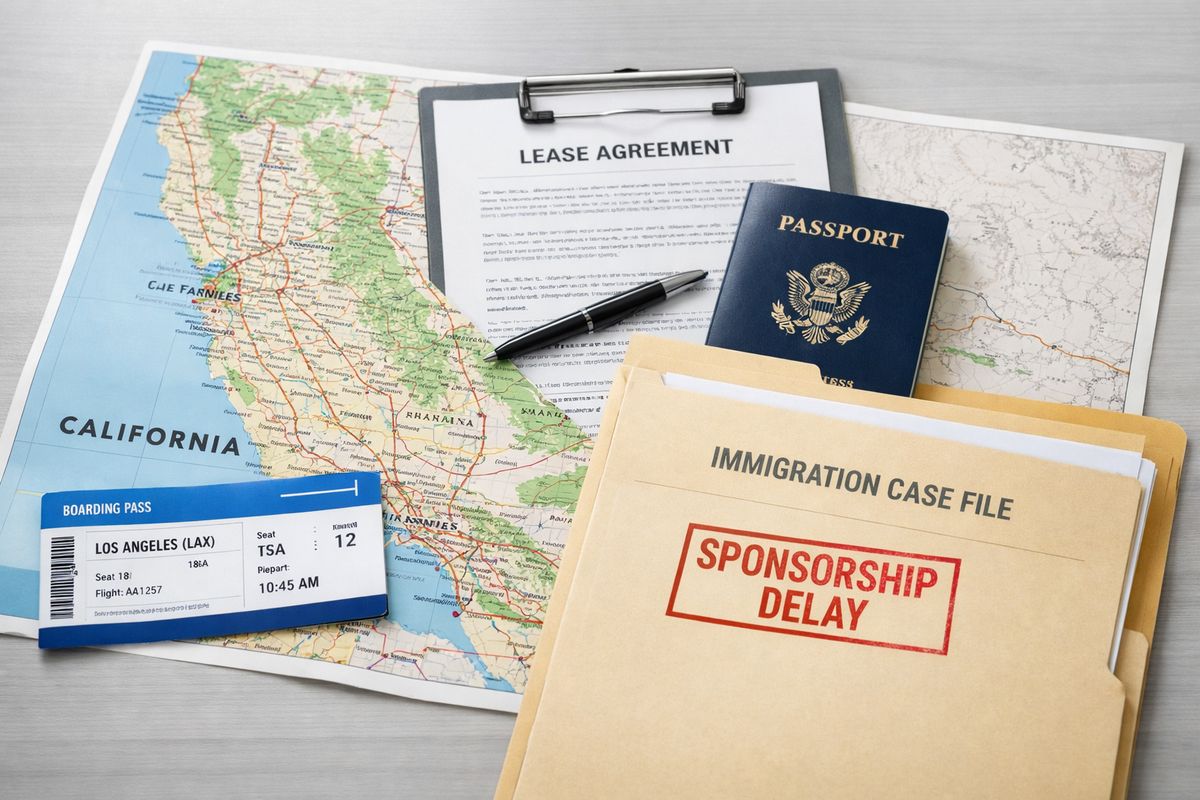
What led to these sponsorship pauses
These pauses did not come out of nowhere. In most cases, the reason is not one dramatic policy shift, but a mix of business caution, compliance pressure, and internal process changes. Employers cut risk where they can, and green card sponsorship often lands on the review list when budgets tighten or teams are reorganized.
Layoffs, reorganizations, and internal policy resets
Layoffs tend to trigger caution around PERM because the employer has to confirm the role still exists in the form being sponsored, the wage level still makes sense, and labor market testing can be defended. Under Department of Labor rules, PERM requires specific recruitment and job requirement analysis, and employers often grow more conservative after workforce cuts or big internal reshuffles (Department of Labor PERM overview).
Even if your own job survived, a nearby layoff can still slow your case. That is the frustrating part. The company may pause filings across a whole business unit while legal and HR recheck positions, reporting lines, and future hiring plans.
Higher scrutiny around PERM and job eligibility
PERM has always been document-heavy, but scrutiny feels sharper when a company has changed hiring patterns. If your role became more remote, more specialized, or more narrowly tied to one product line, internal counsel may ask for more support before signing off. The same goes for cases where minimum job requirements look unusual or where the sponsored role no longer matches your current day-to-day duties.
That is one reason many employers pause at the front end. Starting a PERM case that later falls apart is expensive and messy. So some companies slow down before the filing, not after it.
Budget pressure and longer decision cycles
Green card sponsorship costs real money. Attorney time, recruitment steps, filing work, and internal reviews all add up. When a company is watching spend closely, immigration cases often move from routine workflow into management approval territory.
That longer chain of approval can be enough to freeze progress. Not forever in every case, but long enough to create risk for you if your timing is already tight.
How the employment-based green card process gets disrupted
The legal process and the business decision are not the same thing. Your case can be perfectly viable under immigration rules and still stall because the employer has not decided to act. Once you separate those two ideas, the whole pipeline gets easier to understand.
PERM labor certification: the first major bottleneck
PERM is the employer-run labor market test that usually starts the green card process for many tech workers. The employer defines the role, requests a prevailing wage, completes required recruitment, and then files with the Department of Labor if the recruitment supports the case. Official process guidance from the Foreign Labor Application Gateway lays out those steps.
The catch is simple: if PERM never starts, nothing after it can happen. No PERM filing usually means no I-140 in that case category, and no progress toward the benefits tied to an approved immigrant petition.
I-140 petition delays after PERM approval
Even after PERM approval, employers can still slow down. An I-140 petition asks U.S. Citizenship and Immigration Services to recognize the job offer and the worker’s eligibility in the employment-based category. USCIS describes that filing on its Form I-140 page.
But approval is not automatic just because PERM cleared. If your role changed, if the company had layoffs, or if internal signoff is lagging, the employer may wait before filing. For some workers, that delay is especially painful because the case feels close to a major milestone and then just sits.
Adjustment of status and visa backlog issues
Even when sponsorship resumes, your timeline may still be affected by visa bulletin backlogs. Filing the adjustment of status application depends on immigrant visa availability, which the State Department updates through the Visa Bulletin. If your priority date is not current, resuming sponsorship does not mean immediate green card filing.
That distinction matters because an employer’s pause and government backlog can stack on top of each other. You can solve one problem and still be waiting on the other.

What credible signals show this trend is real
This story is not based only on rumor. The evidence tends to come from patterns rather than splashy announcements, which is why the trend can feel obvious to affected workers but oddly hard to pin down in one press release.
Public job listings and policy language changes
One visible signal is a shift in job posting language. A company that used to say sponsorship is available may quietly switch to phrasing like “no immigration sponsorship” or narrow eligibility to limited categories. Those changes do not prove every internal policy detail, but they often reflect a real change in posture.
When you see that kind of language across multiple openings, it usually means the company made an internal decision, not just a one-off exception for a single hiring manager.
Layoff reporting and public company updates
Public layoff reporting often lines up with slower sponsorship activity. Workforce reductions, cost controls, and location strategy changes can all lead employers to recheck future filings. Coverage of repeated tech layoffs from outlets like TechCrunch and The Information’s reporting cited in broader industry coverage has kept this issue in view, even when immigration details are not the headline.
If your company is cutting staff, consolidating teams, or reviewing office footprints, it is reasonable to read that as an immigration timing warning too.
Attorney and practitioner observations
Immigration attorneys and HR practitioners often notice the pattern before companies say anything clearly. Repeated delays in PERM initiation after layoffs, legal teams asking for more role documentation, and “temporary” holds that keep getting extended are all familiar signs.
If you want a broader look at how this pattern is being described, this overview of sponsorship pauses in tech gives useful context without pretending every company is doing the exact same thing.
What tech workers in los angeles should watch right now
If you work in tech in Los Angeles, you do not need a dramatic memo to know something changed. A few warning signs are enough to tell you your case deserves attention sooner, not later.
Your case has not started, but your role has changed
This is a common problem. Your title changes. Your salary changes. Your manager changes. Maybe your office location shifts from Santa Monica to a hybrid setup tied to another office. Any one of those facts can affect how the employer frames the sponsored role.
If PERM has not started yet, a role change can reset the discussion. What looked ready for filing can go back to internal review.
Your employer says sponsorship is “under review”
Treat that phrase like a yellow traffic light. Not a disaster, but not a harmless placeholder either. In practice, “under review” often means somebody inside the company has not decided whether new cases can start, whether pending cases can continue, or whether only certain roles will qualify.
That is why waiting passively can be a mistake. If your company will not commit to dates, you need to understand what that uncertainty does to your own timeline.
You are near a key deadline for h-1B time or portability
If your green card case was supposed to support more H-1B time, delays matter now, not later. The same is true if you are considering a new job and need to compare employers carefully. Like missing an exit on the 101, one delay can send you on a much longer route.
For workers thinking about mobility, this guide on changing H-1B employers in Los Angeles is useful because it focuses on the practical sequence, not just the legal label.
What your options may look like if a tech company pauses green card sponsorship
A company pause does not automatically mean your immigration path is over. But it does mean you need to stop assuming the old plan is still working. The smart move is to compare realistic options while you still have time.
Stay and wait with a clear timeline request
Sometimes waiting is reasonable, but only if you can get a concrete sense of what the company is actually pausing. Ask for specifics: Is the pause limited to new PERM starts? Are existing cases still moving? Is there an internal review date? Does your current role still qualify for sponsorship once the freeze lifts?
A vague promise is not a strategy. A specific answer with dates and scope is far more useful.
Change employers and compare sponsorship readiness
A new offer can solve one problem and create another if the new employer is just as uncertain. Not every company that says it sponsors green cards is ready to start quickly, and not every immigration policy applies evenly across teams.
If you are considering a move, compare more than salary and title. Ask how soon sponsorship starts, who approves it, and whether recent layoffs changed policy. If your current sponsor is stalling, this article on options after a case stops moving gives a grounded overview of what to evaluate next.
Review alternative immigration paths
Some workers have backup options that are easy to overlook when employer sponsorship seemed stable. Depending on your facts, that could mean a family-based path, a different employment category, a national interest waiver analysis, or a stronger look at extraordinary ability options. Not every case fits those routes, of course, but some do.
The point is not to panic-shop for visas. The point is to stop treating one employer’s delay as the only possible future.
Questions to bring to an immigration attorney before the pause gets worse
A good legal consult moves faster when you show up with a clear picture of what changed. You do not need to know every immigration term. You just need the right facts in one place.
What exactly has your employer paused?
Pin this down first. Did the company freeze only new PERM cases? Did it stop all employment-based green card sponsorship? Is the pause limited to one office, one business unit, or one job level? Those details can change the advice completely.
Which deadlines matter most in your case?
Your H-1B max-out date, any prior I-140 approval, expected travel, possible team change, and plans to change employers can all affect strategy. If your timeline depends on an extension path, that issue needs attention early. For a more specific look at the intersection of H-1B status and paused sponsorship, this explainer on H-1B workers facing green card delays helps frame the risk.
What documents should you gather now?
Start building your file before the situation gets messier. Offer letters, immigration approval notices, job descriptions, pay records, prior immigration filings, and any written statements about sponsorship policy can all help an attorney review the case quickly. Even a short email from HR saying the matter is under review can be useful context.
What happens next in this story
The next few months will matter because short pauses and long-term policy shifts do not look the same. Some employers will restart sponsorship once hiring stabilizes. Others may quietly narrow who gets sponsored and when.
Whether pauses turn into permanent policy changes
A temporary freeze is one thing. A lasting shift away from sponsoring certain roles or offices is another. Watch for repeat patterns, not just one delayed response. If the company keeps postponing starts, rewriting job posting language, or limiting sponsorship to a narrower set of positions, that points to a bigger policy move.
Whether hiring rebounds bring sponsorship back
Hiring growth can be a useful signal, but it is not a guarantee. A company may resume recruiting before resuming green card processing, especially if leadership wants flexibility without long-term immigration commitments. Still, increased hiring often tells you the business side is becoming more confident, which can help sponsorship return.
What to watch from your employer this quarter
Watch for internal policy notes, changed language in offer materials, title or location changes in your role, and written guidance from HR or immigration counsel. Then get those facts reviewed before the delay turns into a harder problem.
Schedule your call here to learn more about your immigration status and visa options: https://gondimlaw.com/schedule-your-consultation/. At Gondim Law, your attorneys speak English, Portuguese, and Spanish and bring more than 30 years of experience to help you navigate your next steps. You will also have the opportunity to speak with Founder Attorney Marcelo Gondim about your case. Your options become much clearer once your timeline, documents, and backup paths are on the table.
Frequently asked questions
Can a tech company pause green card sponsorship without formally notifying you?
Yes. In many cases, the pause shows up as delayed PERM starts, slower internal approvals, or vague “under review” language rather than a formal written suspension. That is why you should look at actions, not just announcements.
Does a layoff always stop a pending green card case?
Not always, but layoffs often trigger extra review. The employer may need to confirm the job still exists in the same form, that recruitment can still be defended, and that internal policy still allows the filing to continue.
If your PERM has not started yet, how serious is the delay?
Usually very serious. If PERM does not begin, the rest of the standard employer-sponsored green card process cannot move forward. For workers relying on green card progress to support future H-1B time, an early delay can become the biggest problem in the case.
Should you switch employers if your company says sponsorship is under review?
Not automatically. Sometimes the best move is to wait for a short, clearly defined internal review. But if your deadline is close or the company cannot give a concrete timeline, comparing other employers and backup strategies becomes a smart step.
Can your approved PERM or I-140 protect you if your employer slows down later?
An approved PERM is helpful, but the next filing still depends on employer action. An approved I-140 can create stronger options in some cases, especially for H-1B extensions or future planning, but the exact benefit depends on timing and facts.
What is the one thing you should do first if sponsorship suddenly stalls?
Get clear facts in writing. Find out what exactly is paused, when the company expects to review it again, and whether your role still qualifies. That one step makes the legal analysis much faster and much more useful.