

Seeing “submit” get blocked by a filing fee is brutal, especially when you already spent nights gathering records, passport photos, and old immigration notices at the kitchen table. If you can’t afford USCIS fees, you do have options, but the right move depends on your form, your income, and how urgent your case is.
USCIS fees are the government charges tied to immigration forms and related processing. In some cases, you can ask USCIS to waive the fee completely or reduce it. In other cases, no waiver exists, which means the real strategy is avoiding rejection, timing the filing carefully, and getting help where it counts.
Here’s what you’ll learn in this guide:
- Which USCIS costs catch people off guard
- Which forms may allow fee waivers
- The difference between waivers, reduced fees, and no payment plans
- How to tell if your income or hardship may qualify
- What proof usually helps most
- How to avoid simple mistakes on Form I-912
- Special rules for naturalization and green card filings
- What to do if no fee waiver is available
- When legal help can save time and money
When USCIS fees feel out of reach
A USCIS fee problem can stop everything cold. You may be ready to renew a work permit, replace a green card, or file for citizenship, then notice the cost is hundreds or even thousands of dollars once every form and extra expense gets added in.
Here’s the thing: “can’t afford USCIS fees” is not one single problem. It is usually one of three problems. Your form may qualify for a fee waiver. Your form may not qualify, but a reduced fee might exist. Or no relief may be available, which means your best next step is planning around timing, proof, and payment so your packet does not come back rejected.
That distinction matters more than most people realize. Filing the wrong fee waiver with the wrong form can waste weeks. Waiting too long to file because you assume no help exists can also create a bigger mess, especially if a card is expiring or a deadline is already running.

Start here: what USCIS fees you may be facing
Before trying to fix the fee issue, it helps to map the full bill. A lot of people focus on the main filing fee and miss the side costs until the very end.
The main USCIS filing fee
The filing fee is the core amount USCIS charges to accept a specific form. That could be a naturalization application, a work permit request, a green card renewal, a travel document application, or something else entirely. The amount depends on the exact form, and sometimes on how you file.
Some forms cost one amount if filed online and another if filed by mail. Some have separate charges for related requests. Some forms changed under recent fee rules, which is why checking an old blog post from last year can backfire. If you have been trying to budget based on what a cousin paid in 2023, stop there and verify the current fee on the live USCIS page.
Biometrics, medical exams, and other add-on costs
The filing fee is only part of the picture. You may also run into biometrics, which is the fingerprinting and photo appointment USCIS uses for background checks. Depending on the form and current fee structure, that cost may be separate or already included.
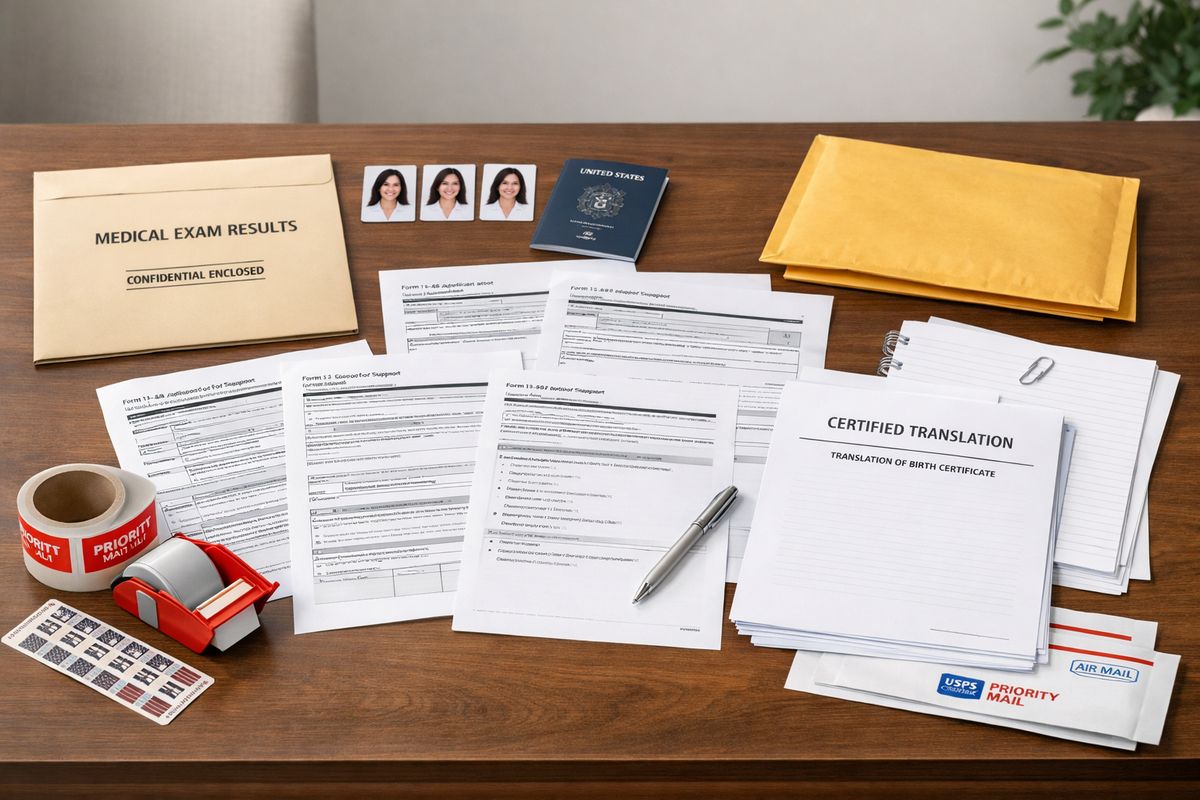
Then come the quiet little expenses that add up fast: passport photos, certified translations, copying large packets, mailing with tracking, notary fees in some situations, and travel to an Application Support Center or doctor’s office. If your case requires a medical exam, the civil surgeon fee can sting. That exam is not priced by USCIS, so local doctors set their own rates.
A sealed medical packet is one of those details that feels minor until it is not. You pay for the exam, pay again if vaccines are missing, then guard that sealed envelope like it is a winning lottery ticket.
Why your total cost is often higher than expected
Immigration filing costs often work like online checkout. The advertised price is one number, then a few clicks later there are five more charges attached. That is why so many people think they are close to filing, only to realize they are still hundreds of dollars short.
The fix is simple but not always easy: break your case into parts. List the main form, every related form, every likely supporting cost, and every deadline. Once you can see the whole price, your options become clearer. You can tell whether a fee waiver would solve the problem, whether only part of your case may qualify for fee help, or whether the real issue is the medical exam, translation bill, or attorney fee rather than the USCIS filing charge itself.

Which immigration forms may qualify for help
Not every USCIS form gets the same treatment. This is where many expensive mistakes happen.
Forms that often allow a fee waiver
USCIS may allow a fee waiver for certain benefit requests, especially where the form instructions say Form I-912 can be used. Common examples can include naturalization-related filings, replacement of certain documents in limited situations, and a range of humanitarian or public-benefit-based requests.
The exact list can change, so the safest move is checking the current form instructions and the USCIS fee waiver guidance directly at USCIS. If your form is listed as eligible, a proper fee waiver request may allow USCIS to excuse the filing fee entirely.
If you want a deeper breakdown of how fee relief works across different case types, this guide on asking USCIS to excuse a filing fee helps connect the rules to real filing situations.
Forms that usually do not qualify
A lot of forms do not qualify for a fee waiver at all, even when paying is genuinely hard. That includes many family-based petitions and employment-based filings. In those cases, submitting Form I-912 anyway can get the entire packet rejected and sent back.
That is the catch. Hardship alone does not create eligibility if the form itself is not on the waiver-eligible list. You can have a very real money problem and still not have a fee-waiver option under the rules for that specific filing.
This is where people lose time. A person sees “fee waiver” in a search result, assumes it applies across the board, mails everything, then gets the packet returned because the main form simply was never eligible.
Why employment-based and family-based filings can be different
Immigration fee rules often depend on more than the form number. They can also depend on the category of case, who is filing, and the legal basis for the benefit. A form connected to one type of immigration path may have different fee treatment than a similar-looking form used in another path.
Family-based cases can be especially frustrating because multiple forms may be filed around the same time, but not all of them follow the same waiver rules. Employment-based filings can be even stricter, with fees treated more like standard filing costs that must be paid in full.
So if your case involves a petition plus an application plus related benefits, do not assume one answer covers the entire packet. It often does not.
Fee waiver vs. fee reduction vs. paying in installments
Search results blur these terms together, but they are not the same thing. Getting this straight early saves a lot of confusion.
What a fee waiver means
A fee waiver means USCIS excuses the filing fee completely for an eligible form. You ask for that relief by submitting Form I-912 or, in some cases, a written request if the instructions allow it. If approved, USCIS accepts the filing without collecting the fee.
A waiver is all or nothing for the fee it covers. It is not a partial payment plan. It does not mean you can send half now and half later.
What a reduced fee means
A reduced fee is different. Instead of paying nothing, you pay less than the standard amount. This shows up most often in naturalization-related situations, where income may fall into a range that does not support a full waiver but still qualifies for a lower filing fee.
That middle ground matters. A lot of people assume they either qualify for a full waiver or nothing. Sometimes the real answer is a discounted filing amount.
What “can I pay later?” really means
For most USCIS forms, the answer is no. USCIS generally expects the correct fee upfront unless a specific waiver or reduced-fee rule applies. There is usually no installment plan, no “bill me later,” and no grace period where a packet gets accepted while you finish paying.
If a form requires payment and you submit the wrong amount, too little, too much in the wrong context, or no fee at all, rejection is a real risk. That is why the practical question is not usually “Can you pay later?” It is “Does your form allow a waiver, a reduced fee, or neither?”
How to know if you qualify for a USCIS fee waiver
USCIS generally looks at a few main paths when deciding whether a fee waiver request has enough support. You do not need to guess blindly.
If you receive a means-tested benefit
A means-tested benefit is a public benefit based on low income and limited resources. In plain English, it is the kind of benefit you get because your income falls below a certain level.
If you receive a qualifying means-tested benefit, that can support a fee waiver request. Proof usually matters just as much as the benefit itself. USCIS will want to see a current approval notice, benefit letter, or similar official document showing what you receive and, ideally, the dates involved.
The details matter here. Not every public program counts the same way, and the paperwork needs to be current enough to make sense when USCIS reviews it.
If your household income is low
Another common path is household income. USCIS often looks to the Federal Poverty Guidelines when reviewing whether income is low enough for a fee waiver or reduced fee. That means the actual cutoff can depend on household size.
Household size changes the math fast. A number that looks too high for one person may fit within the threshold for a larger household. That is why copying somebody else’s answer from a message board rarely helps.
USCIS publishes the form and fee guidance, but the underlying income framework often connects to federal poverty levels tracked by the government. Current annual figures are published by the U.S. Department of Health and Human Services.
If You’re facing financial hardship
Sometimes income alone does not tell the whole story. A recent layoff, unpaid medical bills, a housing emergency, domestic violence, a natural disaster, or another sudden financial hit can support a hardship-based fee waiver request.
This route is often the most personal, and also the one that benefits most from organization. USCIS is not looking for a dramatic story with pages of emotion. USCIS is looking for a clear explanation backed by documents that show what happened, when it happened, and how it affects your ability to pay now.
Think practical. A termination letter, emergency room bills, eviction notice, overdue utility statement, insurance denial, or bank statements showing a sharp drop in funds usually says more than a long paragraph alone.
How USCIS looks at your household
Household income usually means more than your personal paycheck. Depending on your situation, USCIS may consider a spouse’s income, a parent’s income, or another household member’s financial contribution. If you are a child, a student, or financially dependent on somebody else, that can affect how your request gets reviewed.
That part trips people up. You may feel broke personally, but if USCIS sees a larger household income available to support you, the agency may view the request differently. On the other hand, if the household is large, unstable, or carrying serious expenses, that context can also matter.
The trick is consistency. Your fee waiver request, your supporting documents, and your main immigration form all need to tell the same story about who lives with you, who supports you, and what money is actually available.

Forms, rules, and proof You’ll need
Good fee waiver requests are usually boring in the best way. Clear form, current evidence, no mystery.
Form I-912: request for fee waiver
Form I-912 is the main USCIS form used to request a fee waiver for eligible filings. It asks for identifying information, the form you want waived, the reason you qualify, and details about income or hardship.
Accuracy matters because USCIS must match the waiver request to the main filing. If names, form numbers, or A-Numbers do not line up, the packet can hit a wall early. USCIS provides the current form and instructions at USCIS Form I-912.
An incomplete fee waiver request can lead to rejection instead of a request for more information. That means the whole packet may come back rather than move forward to review.
When a written request may be allowed instead
In some situations, USCIS may accept a written fee waiver request instead of Form I-912, but only where the instructions allow it. That is not a shortcut you should assume exists. If the current instructions tell you to use Form I-912, use it.
The reason this matters is simple: fee rules and accepted formats can change. What was acceptable for one type of filing or one year may not be accepted now. Always follow the current instructions for the exact form you are filing.
Documents that can support your request
Proof is where a waiver request gets real. The strongest packets usually include current records that line up with the eligibility path you are using. Helpful documents often include benefit approval letters, tax returns, pay stubs, unemployment records, medical bills, rent notices, utility shutoff notices, child support records, and bank statements.
If you are using hardship rather than low-income benefits, choose records that show both the event and the financial impact. For example, a hospital bill plus a payment demand tells a stronger story than a general note saying money is tight.
If your form filing is happening during a period of changing government charges, it also helps to understand how recent filing-cost changes affect different cases, because a small misunderstanding about the amount due can undo a carefully prepared packet.
What counts as strong evidence of hardship
Strong evidence is current, specific, and easy to connect to your explanation. “Current” means recent enough to show your present situation. “Specific” means it includes actual amounts, dates, and names. “Easy to connect” means the officer does not have to guess why you included it.
For example, if you explain that you lost your job in June and have been behind on rent since July, your packet should show that timeline. A termination letter dated June, bank records showing reduced deposits, and a rent notice from July or August tell one clear story.
That kind of clarity matters more than volume. Ten random papers can be weaker than four documents that fit together cleanly.
How to fill out form I-912 without costly mistakes
Most fee waiver problems are not dramatic legal issues. They are simple mismatches, missing signatures, unclear numbers, or bad packet assembly.
Matching names, a-numbers, and form types
Your name should appear the same way across your main filing, fee waiver request, and supporting documents whenever possible. The same goes for your A-Number and other identifying details. USCIS needs to match the waiver request to the form you want filed.
Even small differences can cause problems. A missing middle name is not always fatal, but conflicting spellings, wrong form numbers, or attaching the waiver to the wrong application can create rejection risk.
Take five minutes and compare line by line. It is dull work. It is also one of the best ways to avoid your packet boomeranging back.
Explaining income clearly
If your income is regular, use that to your advantage. List wages clearly, include recent pay stubs, and make the math easy to follow. If your income is irregular, seasonal, cash-based, or reduced recently, explain that simply and back it up with whatever objective records you have.
Do not create confusion by overexplaining. USCIS does not need a novel. USCIS needs a clear picture of what comes into your household and what does not.
If you receive benefits, identify them and attach proof. If another person in your home helps pay bills, make that understandable too. Confusing household finances are one of the fastest ways to make a plausible request look weak.
Explaining financial hardship clearly
A hardship statement works best when it is short, factual, and supported. Start with what happened, when it happened, and how it affects your ability to pay the USCIS fee now.
For example, a useful explanation might say that your hours were cut in May, you fell behind on rent in June, and you are currently using unemployment benefits plus savings to cover food and utilities. Then your documents should support those exact points.
The trick is not sounding desperate. The trick is sounding organized.
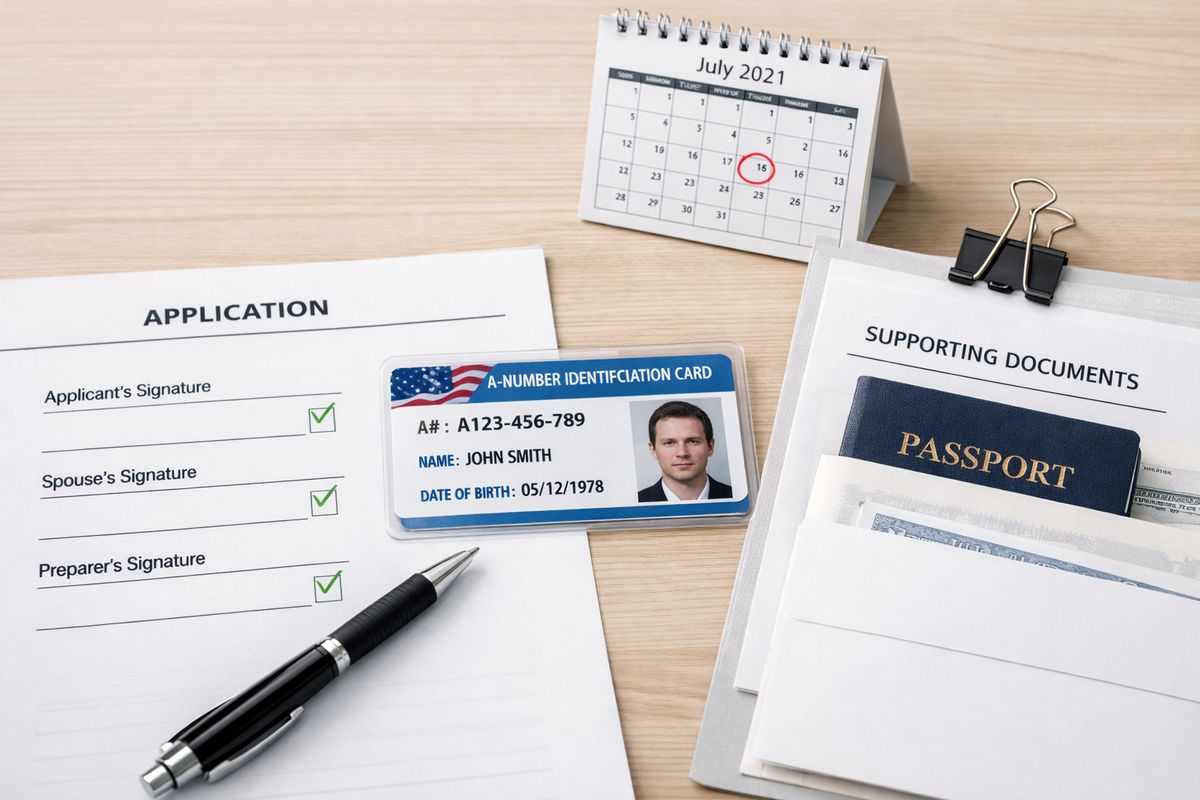
Signing everything in the right place
Unsigned forms get rejected fast. That includes the fee waiver request and the main immigration form. Missing dates can also cause problems.
Before mailing anything, check every signature line, every date field, and the packet order. Keep the fee waiver request where the filing instructions expect it. Include copies for your records.
If you are close to a deadline, this matters even more. A rejection for a simple signature issue can turn a manageable case into a scramble, especially where a mailing date and fee change collide. That is exactly why understanding how filing timing works under the USCIS postmark rule can make a real difference.
Naturalization applicants: special rules for citizenship fees
Citizenship filings are one of the most common places where fee questions come up, and for good reason. Naturalization is a major milestone, but the filing cost can be hard to manage.
When you may qualify for a reduced naturalization fee
For some Form N-400 applicants, a reduced fee may be available if household income falls within the required range. This is the middle option between paying the full amount and qualifying for a full waiver.
That reduced-fee path can be a big deal if your income is too high for a waiver but still low enough that the standard fee would delay filing for months. The exact amount and income range can change, so check the current N-400 instructions and fee schedule before relying on older advice.
When a naturalization fee waiver may apply
A full waiver may be available for certain naturalization filings if you qualify under the accepted fee-waiver standards, such as receiving a means-tested benefit, having low household income, or showing qualifying financial hardship. USCIS explains fee-waiver standards and current filing guidance at USCIS Fee Waiver Information.
The key point is that citizenship applicants often have more fee-relief possibilities than people filing some other types of cases. That is why it is worth checking carefully rather than assuming the answer is no.
What to watch for if You’re filing from a tight budget
Tight-budget naturalization cases can go sideways over small details. You need to know whether your filing includes biometrics under the current fee setup, whether you are filing online or by mail, and whether your payment matches the method and instructions.
You also want to avoid a half-correct filing. Sending a reduced fee when you really needed a full fee, or filing for a waiver without enough proof, can lead to delay and rejection. If you have just enough money to file once, treat accuracy like part of the budget.
If you Can’t afford a green card filing
Green card cases are often the most financially intense because the form fees are only part of the cost.
Adjustment of status costs at a glance
If you are filing for adjustment of status, your case may involve the main green card application plus supporting forms, passport-style photos, medical exam costs, certified translations, mailing, and possibly travel to appointments. If a work permit or travel document is also part of your plan, fee treatment depends on the current rule and the exact category of filing.
That is why adjustment of status can feel like a moving target. You are not just budgeting for one application. You are budgeting for an entire package.
Whether a fee waiver is available for your green card-related form
Some green card-related forms may allow fee relief in certain contexts, while others do not. The answer depends heavily on the specific form and the legal basis of your case. A related document request may be eligible where the main filing is not, or the reverse.
Do not assume “green card case” equals one fee answer. It rarely does. Every form in the package needs its own check against current USCIS instructions.
Common budget traps in green card cases
The most common budget traps are the ones people do not count upfront. Medical exams are a big one. Certified translations are another. Then there are replacement costs if something gets rejected and you have to reprint, remail, or in some situations update documents that have gone stale.
Travel also gets overlooked. A long drive to a civil surgeon, parking at appointments, time off work, or getting fresh identity photos can feel small one by one. Together, they can be the difference between filing this month and putting everything off again.
If you Can’t afford removal of conditions, work permits, or travel documents
These filings can seem more routine than a green card or citizenship case, but the money pressure is very real, especially when several forms overlap.
Removal of conditions on a green card
Removal of conditions cases can be expensive because the filing fee and related processing costs may hit at the same time you are already managing normal household bills. Whether fee relief is available depends on the form and current rules.
This is not a place for guessing. If your conditional green card deadline is approaching, a bad assumption about fees can cost more than money. It can affect your status and proof of lawful presence.
Employment authorization documents
Work permit fees vary by form category and case type. In some situations, the fee must be paid separately. In others, the work permit may be included with another filing or exempt under current rules for that case type.
That makes work permit budgeting more technical than people expect. A person renewing under one category may owe a fee, while another person filing through a different underlying case may not. Exact category matters.
Advance parole and travel documents
Travel document fees can also be separate, bundled, exempt, or unavailable depending on the form and the legal basis of the request. This is another area where old internet advice causes trouble because fee structures change and category-specific rules matter.
If travel is urgent, double-check every current instruction before filing. An avoidable rejection over payment can ruin timing fast.
If a fee waiver is not available, here are your other options
Sometimes the answer is frustratingly simple: no waiver is available for your form. That does not mean you are out of moves.
Check whether a reduced fee applies instead
Start by checking whether a lower fee exists even if a full waiver does not. Naturalization is the most common example, but it is not the only context where exact fee treatment matters.
You should also check the latest form instructions and fee schedule right before filing. Recent changes have affected who pays what, and when. If you are trying to plan around rising costs, this breakdown of who ends up paying more under newer USCIS fee rules is a useful reality check.
Look for nonprofit or community financial help
Some nonprofit groups, citizenship programs, religious organizations, and local immigrant support networks help with filing costs or connect people to grants, loans, or sponsorship support. Availability depends a lot on your area, but these programs do exist.
The trick is looking for help tied to your exact filing goal. Citizenship programs often have stronger support networks than other case types. Humanitarian cases may also have local organizations that understand the urgency.
Legal aid groups may not always cover the whole government fee, but even help with part of the cost, document prep, or application review can lower the total pressure.
Ask about legal fee arrangements separately from USCIS fees
Government filing fees and attorney fees are different things. USCIS will not usually let you pay the government fee in installments unless a specific rule creates that option. But legal fees may be more flexible depending on the firm and the type of case.
That distinction matters because spreading out attorney fees can sometimes make the overall filing possible. If your government fee must be paid in one shot, reducing pressure elsewhere can still get your case moving.
Consider timing the filing strategically
If no waiver exists, timing may be your best tool. Filing after a tax refund, after a paycheck cycle, after a benefit approval, or after a known seasonal income bump may help you avoid a rejected packet.
That is not glamorous advice, but it is practical. If you know the fee must be exact and upfront, sending the packet a week too early can be worse than waiting long enough to do it right.
Timing also matters when fee changes are on the horizon. If a new fee rule is already announced, understanding the real filing deadline can make a noticeable difference in what you pay.
How to pay USCIS fees when you do need to pay
When payment is required, treat the mechanics seriously. Plenty of cases get delayed over avoidable payment mistakes.
Check, money order, card, and online payment options
USCIS accepts different payment methods depending on the form and filing method. Some forms can be filed online with electronic payment. Mail filings may allow checks, money orders, or card payments using an approved authorization form where accepted.
Not every option works for every filing. The form instructions tell you what payment methods are accepted and where to send the package. Follow those instructions exactly.
Make sure the amount is exact
Underpaying can trigger rejection. Overpaying can also create problems, especially if the amount does not match the current form fee structure. Fees change, and filing methods can change the total.
So check the live USCIS fee page right before you submit, not a screenshot from months ago. USCIS maintains a fee calculator and filing fee information page that helps confirm current amounts.
Keep proof of payment
Save copies of checks, money orders, card authorization forms, online receipts, screenshots, and mailing tracking. If something goes missing or a payment issue comes up later, proof matters.
Keep your own filing packet too. Every page. That sounds excessive until the moment you need to answer a notice and cannot remember what you sent.
What happens after you submit a fee waiver request
After mailing a fee waiver request, the hardest part is often the silence. A slow response does not always mean a problem.
Receipt, review, and possible rejection
USCIS will review the submission to decide whether the request is properly filed and whether enough support exists to move forward. Sometimes the first issue is procedural, not financial. Missing signatures, wrong forms, or attaching a waiver to an ineligible application can lead to rejection.
A rejection usually means USCIS did not accept the filing package for processing. That is different from a denial, which comes after review of the request itself.
If USCIS accepts the waiver
If USCIS accepts the fee waiver, the underlying application can continue through normal intake and processing. That does not mean approval of the immigration benefit itself. It only means the fee issue was resolved in a way that allowed the case to move forward.
From there, your next steps depend on the type of form. You may get a receipt notice, biometrics appointment notice, or later follow-up tied to the main case.
If USCIS needs more information
Sometimes USCIS asks for more proof. That may come through a request for evidence or another type of notice depending on the case.
Quick, organized responses matter. Miss the deadline or send a messy reply, and a solvable problem can turn into a denial. If you are already struggling financially, having to start over is the last thing you want.
Rejection vs. denial: the difference can change your next step
These words sound similar. In practice, they can point you in totally different directions.
What a rejection means
A rejection usually means USCIS did not accept the package as properly filed. The common reasons are simple: missing signature, incomplete form, wrong edition, wrong fee logic, or a fee waiver attached to a form that is not eligible.
When that happens, the whole packet may come back. You are back at the starting line, which is frustrating but useful to understand because it often means the problem is fixable without arguing the merits.
What a denial means
A denial usually means USCIS actually reviewed the waiver request and decided the evidence did not support approval. In other words, the request was considered but not granted.
That distinction matters because a denial often calls for a different next move. The issue may be weak evidence, inconsistent household information, or lack of proof that matches the eligibility path you claimed.
How to decide whether to refile, pay, or get legal help
If the problem is clerical, refiling may be straightforward. If the problem is that your form does not qualify for a waiver at all, paying may be the only realistic path. If the problem is a weak hardship showing, a better-organized refile may work if time allows.
But if your deadline is tight, your status is at risk, or the filing is high stakes, legal help is often the smartest move. Guessing after a rejection or denial can burn the little time you have left.
Common reasons USCIS fee waiver requests get rejected
Most rejected fee waiver packets fail for reasons that are painfully preventable.
Missing signature or incomplete form
This is the classic problem. A signature line gets missed, a page is left out, a box that should be answered is blank, or the fee waiver request is not assembled correctly with the main form.
USCIS does not usually treat these as harmless details. If a required signature is missing, rejection can happen fast.
Not enough proof of income or hardship
Saying money is tight is not enough by itself. USCIS usually wants documents that support your income level, your benefit status, or your hardship.
Weak packets often include a short statement with no financial records, or records that are too old to show the current situation. If your hardship is recent, your documents should be recent too.
Filing for a form that Isn’t eligible
This is one of the biggest mistakes because no amount of hardship evidence can fix it. If the form is not fee-waiver eligible, USCIS can reject the packet even if every other part is perfect.
Always check the current instructions for the exact form you are filing. Not a similar form. Not a related form. The exact one.
Sending an outdated form or wrong fee rule
USCIS updates form editions and fee rules. Using an outdated form or old fee amount can trigger rejection even if you did everything else carefully.
If a change is already in motion, confirm both the form edition date and the current filing fee on the day you send the packet. That last-minute check is boring. It is also one of the cheapest ways to protect your case.
When deadlines make the situation more serious
Money problems are stressful on their own. Deadlines make them dangerous.
Expiring green card or work authorization
If your green card, work permit, or other proof document is expiring soon, waiting until you can “comfortably” afford the filing may create bigger problems. Loss of valid work authorization or expired proof of status can affect jobs, travel, identification, and daily life.
Time-sensitive renewals deserve a stricter standard. If the fee issue is slowing you down, treat that as a filing problem now, not a budget problem to revisit later.
Responding to a USCIS deadline
Requests for evidence, notices of intent, interview reschedules, and other USCIS deadlines have real consequences. Missing a response window can damage the whole case.
If paying for a required follow-up filing or obtaining needed evidence is the barrier, move quickly to understand your options. Delay rarely helps once a formal deadline is running.
When to move fast and get attorney help
Here is the direct answer: if the filing is urgent and the fee issue is blocking you, legal help can save time and prevent a bad filing. That is especially true if you already had a rejection, if multiple forms are involved, or if no waiver seems available and you need a strategy rather than generic advice.
If you are under pressure and need a clear plan, schedule your consultation. At Gondim Law, your attorneys speak English, Portuguese, and Spanish and bring more than 30 years of experience to help you understand your immigration status, visa options, and the next step that fits your case. You also have the opportunity to speak with Founder Attorney Marcelo Gondim about your situation.
When an immigration attorney can help most
A fee problem is rarely just about money. Usually, it is about choosing the right filing strategy under pressure.
Sorting out which forms actually qualify for a waiver
If your case involves multiple forms, a pending matter, or a category that changes the fee rules, legal review can help you avoid filing the wrong waiver with the wrong application. That alone can save weeks.
This becomes even more valuable when one part of the case may qualify for fee relief and another part clearly does not. You need the packet built correctly from the start.
Building a strong hardship package
Hardship cases are often won or lost on how well the documents match the explanation. An attorney can help organize the facts, trim unnecessary papers, and present the financial picture clearly.
That matters because a hardship packet should feel simple to the reviewing officer. If your documents are all over the place, even a true hardship can look unclear.
Planning around a rejection, denial, or tight deadline
Legal help adds the most value when the stakes are high. Prior rejection. Prior denial. Expiring documents. Confusing fee eligibility. A family-based case with several moving pieces. Those are the moments when filing again without a plan can cost more than a consultation.
Questions to ask before hiring immigration help for a fee problem
When money is already tight, paying for bad help hurts twice. You want clarity before committing.
Have you handled fee waivers for my type of case?
Ask about the exact form and situation, not just immigration law in general. A person who knows removal of conditions issues may not be the right fit for a naturalization fee waiver problem, and vice versa.
Specific experience matters because fee rules are form-driven. The closer the experience is to your actual filing, the better.
What will you need from me to prove hardship?
A good answer should sound practical. You should hear about current benefit letters, tax returns, pay stubs, medical bills, rent notices, bank statements, or whatever records fit your situation.
That question also helps you see whether the process will be organized or vague. If the answer is fuzzy, expect the filing to be fuzzy too.
Do you offer payment plans for attorney fees?
This is one of the most useful questions you can ask. Government fees may be fixed, but legal fees sometimes have room for structure.
Even a modest payment arrangement can make it easier to move ahead without choosing between legal help and the filing itself.
Quick checklist: what to do if you Can’t afford USCIS fees right now
When everything feels stuck, go back to a short checklist. Calm beats panic here.
Confirm whether your form allows a fee waiver or reduced fee
Start with the exact form instructions and current USCIS fee page. If your form allows a waiver, prepare the request carefully. If your form allows a reduced fee, confirm the income range and payment amount. If neither applies, stop trying to force a waiver that will only get rejected.
Gather income and hardship proof
Pull current documents that fit your situation. Benefit letters, tax returns, recent pay stubs, unemployment records, medical bills, rent notices, overdue utility statements, and bank records are usually more useful than general explanations.
Organize them by topic and date. That simple step makes the whole filing easier to understand.
Double-check the latest USCIS instructions
Confirm the form edition, filing address, payment amount, and fee-waiver rules right before filing. If timing matters because fees are changing or your case is close to a deadline, it helps to review how to beat a fee jump without missing the filing window.
Get legal help if the stakes are high
If your case involves a deadline, prior denial, confusing eligibility, or a high-risk filing, get legal help before sending anything. One good review can be cheaper than a rejection that forces you to start over.
Frequently asked questions
Can you file with USCIS if you can’t afford the fee?
Sometimes, yes. If your form is eligible, you may ask for a fee waiver or reduced fee. If your form is not eligible, USCIS usually expects the full correct amount upfront. The first step is checking the exact form instructions, not assuming every immigration form has the same rule.
Does USCIS offer payment plans or installments?
Usually no. USCIS generally does not offer standard installment plans for filing fees. In most cases, you must submit the correct fee with the form unless a valid fee waiver or reduced-fee rule applies.
What happens if USCIS rejects your fee waiver request?
A rejection usually means USCIS did not accept the filing package for processing, often because of a procedural problem such as a missing signature, wrong form, or ineligible filing. In many cases, the packet is returned and you must fix the issue and refile, or submit the correct fee.
Can you get a fee waiver for a green card application?
Some green card-related forms may allow fee relief, but many do not. The answer depends on the exact form and case category. Do not assume that every form in a green card case follows the same fee rule.
What proof helps most with a USCIS fee waiver?
Current, specific documents usually help most. Strong examples include recent benefit letters, tax returns, pay stubs, unemployment records, medical bills, eviction or rent notices, utility shutoff notices, and bank statements. The best evidence matches your explanation clearly.
Is it worth talking to an immigration attorney about a fee problem?
Yes, especially if your case is urgent, your form eligibility is unclear, you already had a rejection, or several forms are involved. A fee problem often turns into a strategy problem, and that is where legal guidance can make the biggest difference.
If your filing fee is the only thing keeping your case from moving, try one thing today: confirm whether your exact form allows a fee waiver, a reduced fee, or neither. That one answer usually tells you whether to prepare Form I-912, plan for payment, or get legal help before you lose more time.