

H-1B green card sponsorship feels like one process until your employer suddenly hits pause. Then the difference between your work visa and your green card case matters fast, and understanding that difference can save you from a lot of panic.
What “h-1B green card sponsorship suspension” actually means
An H-1B green card sponsorship suspension usually means your employer has paused, delayed, or stopped part of your employment-based green card process. It does not automatically mean your H-1B status disappears the same day.
That distinction matters more than most people realize. Your H-1B is a temporary work visa tied to a specific job and approved petition. Your green card sponsorship is the longer employment-based permanent residence process. The two are connected in practical life because both depend on your employer, but legally they are not the same thing.
So if HR says sponsorship is “on hold,” that usually means something in the green card track has stopped moving. Maybe the company will not start PERM. Maybe it will not file the I-140 yet. Maybe it filed something already and will not continue to the next step. None of that, by itself, cancels valid H-1B work authorization.
Here’s the thing: it is still a serious problem. A pause can affect how long you can stay in H-1B status, whether you can extend beyond the usual six-year limit, and how much of your green card progress you get to keep. But “serious” is not the same as “finished.”
Why employers suspend green card sponsorship
Most sponsorship suspensions happen because of business decisions, not because of your performance. That part is easy to forget when the email lands in your inbox.
Common reasons include layoffs, hiring freezes, budget cuts, internal restructuring, mergers, and compliance concerns. Sometimes the company worries that starting or continuing green card cases during a freeze will create inconsistency. Sometimes legal teams want to slow down because PERM timing or wage rules got messy. Sometimes leadership changes policy and immigration cases get caught in the middle.
PERM timing problems come up a lot. PERM is not just paperwork. It requires a prevailing wage determination, recruitment steps, careful job descriptions, and internal signoff. If anything changes, like your location, title, salary structure, or reporting line, the company may decide to stop and reassess rather than risk a filing problem. If job changes are part of the issue, it helps to understand how timing can shift when a role changes.
Another common reason is risk management. Employers sometimes freeze green card cases because the company expects layoffs, wants to avoid appearing inconsistent in hiring, or does not want to commit to permanent sponsorship while the business is unstable. That can feel personal. Often, it is not.
Company-wide freeze vs. case-specific pause
A company-wide freeze usually affects many foreign national employees at once. HR may say that no new PERM cases will start, or that all ongoing green card matters are paused pending review. In that situation, the issue is bigger than your file.
A case-specific pause is different. Maybe your job moved from Los Angeles to Irvine. Maybe your wage level needs to be rechecked. Maybe your role changed enough that the original case no longer fits. Maybe the company does not want to sponsor that specific position category right now.
Why does this difference matter? Because it tells you where to focus. If the problem is company-wide, pushing for an exception may be hard unless you have strong timing pressure. If the problem is specific to your case, the solution may be more practical, like correcting job details, refiling at the right wage level, or starting with a new employer.
What a suspension can look like in real life
Sometimes a suspension is obvious. You get an email saying sponsorship is “on hold until further notice.” Sometimes it is quieter. Months pass, and your PERM never gets filed even though your manager said it would start in Q1.
A real-life version often looks like this: at 4:45 p.m. on a Friday, in an office near downtown Los Angeles, HR sends a short message saying the company is pausing all employment-based green card filings. Your H-1B job continues on Monday. Your green card timeline does not.
It can also happen later in the process. You may already have an approved I-140, but no adjustment of status filing yet because your priority date is not current. Then the employer stops supporting later steps. Or your employer starts recruitment for PERM and never finishes it. A suspension is not one single event. It can happen at almost any stage.

Where sponsorship usually stops in the green card process
If you want to make sense of a pause, you need to know where the process stopped. Think of the green card path like a three-part relay race. If the baton never leaves the first runner’s hand, that creates one kind of problem. If it gets passed and then stalls later, that creates a different one.
For many H-1B workers in EB-2 or EB-3 categories, the process usually involves PERM labor certification, then the I-140 immigrant petition, then adjustment of status or immigrant visa processing when a visa number becomes available.
PERM labor certification
PERM is often the first major step. In plain English, it is the labor market test where the employer shows that the permanent job was tested in the U.S. market under specific rules. That includes a prevailing wage request and required recruitment steps.
This stage gets delayed or canceled all the time because it demands coordination and commitment. The job description has to be right. The wage has to work for the company. Recruitment has to be done on schedule. If the employer loses momentum here, the case often stops before anything is formally filed.
I-140 immigrant petition
The I-140 is the employer’s petition to immigration authorities saying it wants to sponsor you for a permanent position in a specific employment-based category. It is a formal statement that the company intends to move your case forward.
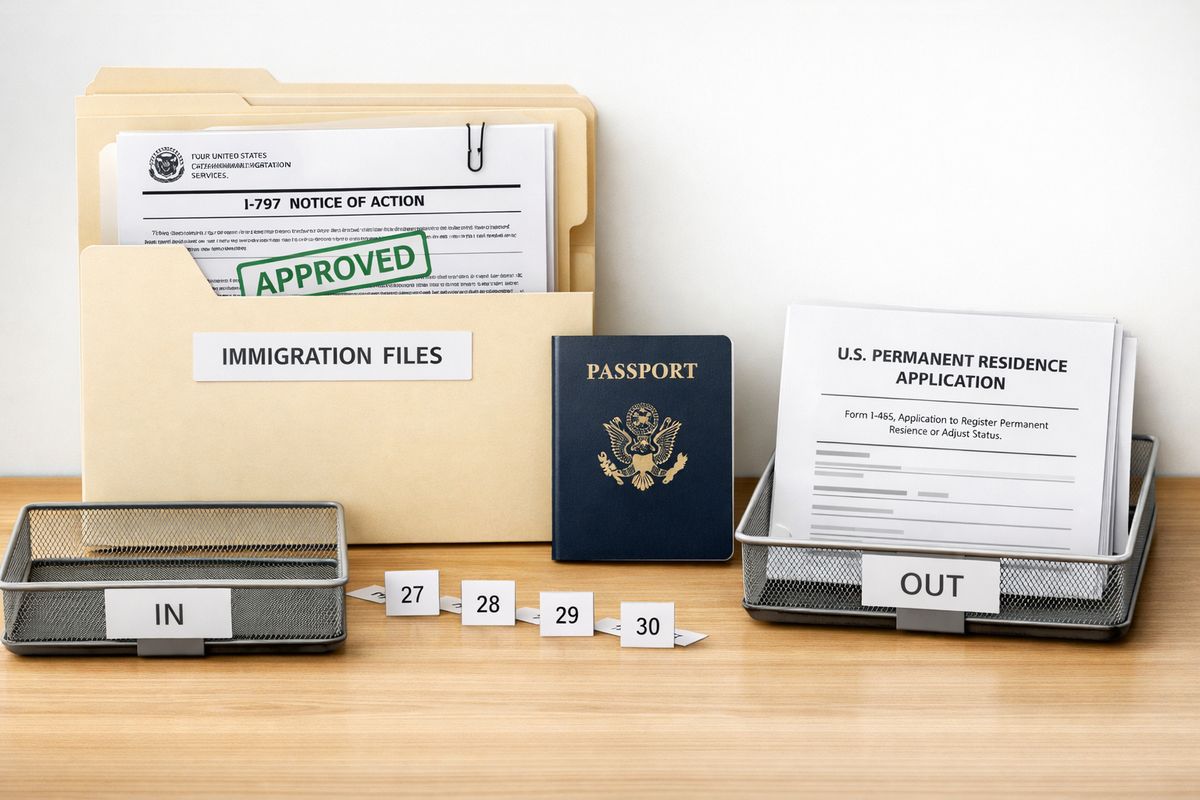
If the I-140 has never been filed, your progress may be limited to preparation work only. If it has been filed and is pending, the company can still decide not to continue later. If it is approved, that approval may preserve important benefits, especially for future H-1B extensions and priority date retention.
An approved I-140 is a big milestone, but it is not the end. It means the petition step succeeded. It does not mean a green card is automatically coming next.
Priority date and adjustment of status
Your priority date is your place in line for an immigrant visa. For many employment-based cases, that date is tied to the PERM filing or, in some categories, the I-140 filing. If you were born in a backlogged country, that line can be long.
Adjustment of status is the application to become a permanent resident from inside the United States once your priority date is current. This is why some H-1B workers feel stuck even after getting the I-140 approved. You can have progress, even major progress, and still be waiting for the next filing window.
So if your employer pauses sponsorship after I-140 approval but before adjustment of status, the case is not meaningless. But the path forward may change a lot.
What changes for you if your employer pauses sponsorship
A sponsorship suspension is a serious problem, but it is not automatically the end of your path to a green card. The real impact depends on your current H-1B status, how much time you have left, and how far the green card case got before the pause.
The first thing to check is simple: are you still employed in valid H-1B status, or has the pause come with a layoff or role change? That answer drives almost everything else.
If you are still in valid h-1B status
If your H-1B petition remains valid and your employment continues under the approved terms, you can often keep working even if your green card case is paused. That is the key point many people miss during the first wave of panic.
Your H-1B allows you to work for the sponsoring employer for a temporary period. Your green card sponsorship is a separate permanent residence track. Related, yes. Identical, no.
That said, a long pause can still hurt you later. If the company keeps delaying PERM or I-140 filing, you may lose the chance to secure benefits that help extend H-1B status beyond six years.
If your h-1B time is running out
This is where a pause can become urgent. H-1B status usually has a six-year limit, with some exceptions. Certain pending or approved green card filings can support extensions beyond that limit.
For example, an approved I-140 can often support three-year H-1B extensions in many situations. A PERM or I-140 that has been pending long enough before the end of your sixth year can also matter for one-year extensions. If the employer was supposed to file those steps and now will not, timing gets tight fast.
If you are close to the six-year mark, do not treat a sponsorship freeze like an abstract HR issue. It is a calendar problem. Down to months, sometimes weeks.
If there has been a layoff or job loss
If the sponsorship pause comes with termination, the stakes rise immediately. Once your H-1B job ends, your status situation changes and timing matters a lot.
You may have a limited grace period to find another option, such as a new H-1B employer, a change of status filing, or departure. A new employer can often move quickly with a transfer filing, but quick is not the same as automatic. If a job change is on the table, it helps to review how a move to another employer in Los Angeles usually works.
This is also the point where green card strategy and H-1B strategy start overlapping in real life. You are not just asking how to keep your old case alive. You are asking how to stay work-authorized while protecting whatever progress you already earned.
What happens to an approved I-140 during a suspension
One of the biggest questions after a sponsorship pause is whether earlier progress still counts. Often, some of it does.
An approved I-140 can be valuable even if your employer later stops sponsoring. In many situations, it can preserve your priority date for a future employment-based case. It can also support H-1B extensions beyond six years, depending on the facts and timing.
But the details matter. Approval date, withdrawal timing, and your later case strategy all make a difference.
Can you keep your priority date?
Usually, yes, in many situations. If your I-140 was approved, your priority date can often be carried into a later employment-based case filed by another employer. That can save years, especially if your category is backlogged.
Think of the priority date like your place in line at a crowded counter. If you can keep your place, starting a new case is frustrating but not the same as going back to the end of the line.
This is one reason an approved I-140 still matters even when everything else feels frozen.
Can the employer withdraw the petition?
Yes, an employer can withdraw an I-140. But timing matters a lot. If the petition has been approved for at least 180 days, some protections may still remain, including priority date retention in many cases and possible H-1B extension benefits depending on your situation.
If your employer is considering withdrawal, do not assume the answer is either “nothing changes” or “everything is lost.” The truth is more specific than that, and specific facts control.
Your main options after a sponsorship suspension
When sponsorship stops, stress makes everything feel blurry. A good way to cut through that is to think in lanes: wait, move, or change the path.
You do not need a perfect long-term immigration plan on day one. You do need a clear view of which lane you are in.
Stay and wait for the employer to restart
Waiting can make sense if the freeze is short-term, your employer is still supportive, and you have enough H-1B time left. If HR gives a real timeline, the legal team confirms your case stage, and your manager is pushing internally, a pause may be frustrating but manageable.
The catch is waiting without a real plan. “We’ll revisit next quarter” sounds reassuring until two quarters pass and your sixth year is getting close. If the company cannot give dates, or if the freeze is open-ended, waiting may cost more than it saves.
Change employers and restart sponsorship
A new employer can often file an H-1B transfer if you are still eligible, then later begin a new green card process. This is a common path when the current employer is not moving.
Some parts of your old case may help, especially an old priority date from an approved I-140. But most employer-sponsored green card cases do not transfer as-is. The new employer usually needs to start its own sponsorship process based on its own permanent job offer. If that option is becoming real, it helps to understand what to handle first before switching employers in LA.
Explore whether you qualify for a different green card path
Sometimes the best move is not waiting for employer sponsorship at all. Depending on your background, you may qualify for another path.
EB-2 NIW means a national interest waiver, where certain professionals can self-petition if the work has substantial merit and national importance. EB-1 includes categories for certain executives, outstanding professors or researchers, and people with extraordinary ability. Family-based options may also exist if you have a qualifying relative.
If your employer has stopped the case and you need a broader map, reviewing other immigration paths after sponsorship ends can help you sort the realistic options from the wishful ones.
Questions to ask HR or your immigration team right now
Vague reassurance is the enemy here. “We’re reviewing it” does not tell you anything useful. You need dates, stages, and a plain answer about what has and has not been filed.
This part matters because a lot of immigration problems are really information problems first.
What stage is my case in?
Ask exactly where your case sits today. Has the prevailing wage been filed? Was it issued? Did recruitment start? Was PERM filed? If so, on what date? Has the I-140 been filed or approved? What is your priority date?
You are looking for concrete milestones, not general comfort. “In process” is not a stage. A filing receipt date is.
Is this a temporary pause or a full stop?
Ask whether the company expects to restart cases, and if so, when. Ask whether the pause is company-wide or only for certain groups, locations, or job levels. Ask whether exceptions are being made for employees nearing H-1B limits.
The goal is to separate “not now” from “not ever.” Those are completely different situations.
How does this affect my h-1B extension timeline?
This is one of the most practical questions you can ask. Find out exactly how much H-1B time remains and whether any pending or approved filings can support future extensions.
If HR cannot answer, ask immigration counsel for the calculation in writing. That one document can change how urgently you need to act.
Common misunderstandings about h-1B green card sponsorship
A lot of unnecessary panic comes from myths. Clearing those up makes the next decision easier.
“If sponsorship stops, I automatically lose my h-1B”
Not usually. If your H-1B petition and employment remain valid, your H-1B generally remains valid too. A green card sponsorship pause does not automatically cancel your temporary work authorization.
The big exception is when the sponsorship issue comes with a layoff, a major role change, or some other separate employment problem. That is a different issue from the green card pause itself.
“An approved I-140 guarantees a green card”
No. An approved I-140 is a major step, but it is not the finish line. You still need visa availability, continued eligibility, and the later filing steps.
This misunderstanding causes a lot of confusion during backlogs. Approval means progress. It does not mean automatic permanent residence.
“A new employer can just pick up the same green card case”
Usually not. Some benefits can carry over, like the priority date from an approved I-140 in many cases. But the underlying sponsorship is based on a specific employer and a specific permanent job offer.
That is why a new employer often starts fresh with its own process, even if part of your earlier progress still helps.
When it makes sense to talk to an immigration attorney in los angeles
Sometimes you do not need a lawyer to understand the basics. Sometimes you absolutely do.
If HR is giving mixed messages, if a layoff may be coming, if your sixth year in H-1B status is getting close, if your employer may withdraw an I-140, or if you are planning to change jobs, legal review becomes much more than a nice idea. It becomes a timing tool.
That is especially true if you work in Los Angeles, Santa Monica, Century City, Pasadena, or Irvine, where job changes can move quickly and immigration documents often lag behind business decisions. A short delay in reviewing notices, filing dates, or old approval documents can cost real options. If you want a broader read on current trends, recent updates on sponsorship freezes at tech employers can help put your situation in context.
Schedule your call here to learn more about your immigration status and visa options. At Gondim Law, attorneys speak English, Portuguese, and Spanish and bring more than 30 years of experience to help you navigate your next steps. You’ll also have the opportunity to speak with Founder Attorney Marcelo Gondim about your case. You’ll get help understanding your options and identifying the visa that best fits your situation: https://gondimlaw.com/schedule-your-consultation/
What to bring to that first consultation
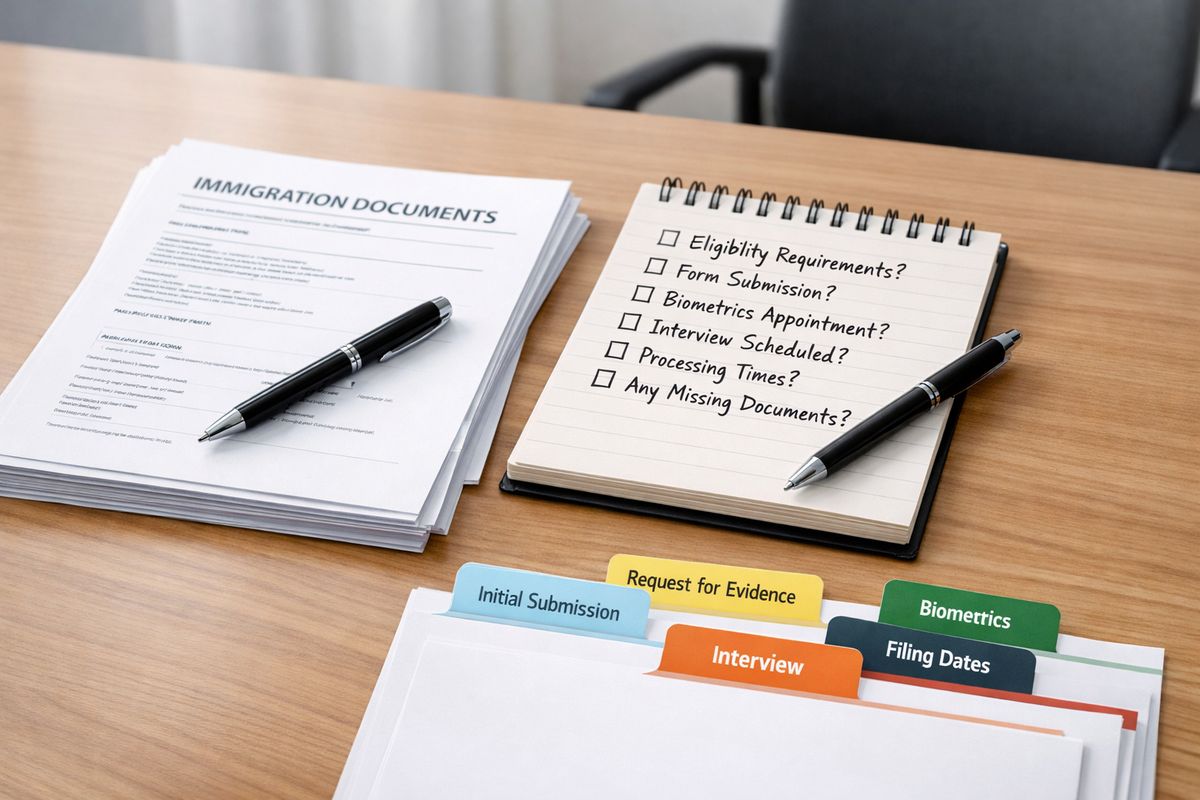
Bring your H-1B approval notices, visa stamp, I-94 record, recent pay stubs, offer letter, and any amendment or transfer approvals. Bring PERM or I-140 receipt notices if you have them, plus prior immigration filings and any email or letter about the sponsorship suspension.
Organization helps more than people expect. If your documents are easy to review, the consultation can move from guessing to strategy much faster.
Frequently asked questions
Can your employer stop green card sponsorship while keeping you on h-1B?
Yes. Your employer can pause or stop the green card process while you continue working in valid H-1B status, as long as your H-1B employment and petition remain valid.
Does an approved I-140 still help if you change jobs?
Often, yes. In many situations, an approved I-140 lets you keep your priority date for a future employment-based case, and it may also help with certain H-1B extensions.
Can you force your employer to continue your green card case?
Usually, no. Employer-sponsored green card cases depend on the employer’s willingness to offer and support the permanent position through the process.
How do you know if the pause is temporary or permanent?
Ask for your exact case stage, filing history, and any company timeline in writing. A real timeline and confirmed next step usually suggest a temporary pause. Vague answers often suggest a longer or indefinite stop.
If you are laid off, does your green card case end immediately?
The employment-based sponsorship path often becomes much harder once the sponsoring job ends, but not every prior benefit disappears. An approved I-140 may still preserve your priority date in many cases, and you may still have options through a transfer, a new case, or a different category.
A simple next step if your sponsorship is on hold
Try one thing right away: ask for your exact case stage, all filing dates, and your remaining H-1B time in writing. That one step turns a foggy problem into something you can actually evaluate, and it gives you the facts you need if you decide to stay, switch employers, or get legal advice fast.