

The EB-3 process is the employment-based green card path for workers with the right job offer, qualifications, and employer sponsorship. It sounds simple when you say it fast, but in real life it is a long, document-heavy process with government timing, employer obligations, and several spots where one small mistake can reset months of work. If you are looking at this route because you want permanent residence through a job, this guide shows you what actually happens, how long it usually takes, and where cases tend to go sideways.
What the EB-3 Process Is and Who It’s For
The EB-3 process is a path to U.S. lawful permanent residence based on employment. In plain English, it is a green card process tied to a permanent, full-time job offer from a U.S. employer. That part matters because EB-3 is not a temporary visa like a visitor visa or many work visa categories. The goal is a green card.
The reason the process feels heavy from day one is that the government is not just checking you. It is also checking the job, the employer, the wage, the hiring process, and the availability of U.S. workers. Think of it less like filling out one application and more like building a case file layer by layer. If one layer is weak, the whole thing gets shaky.
For a broader overview of the category itself, it helps to see how this employment-based green card path works before focusing on the filing steps.
The 3 EB-3 Categories at a Glance
EB-3 has three subgroups, and the difference between them is not just technical paperwork.
Skilled workers are for jobs that require at least two years of training or experience. Professionals are for jobs that require at least a U.S. bachelor’s degree or a foreign equivalent, and the degree requirement usually cannot be swapped out for experience. Other workers are for jobs requiring less than two years of training or experience.
Your category affects the documents you need, the way the job is described, and sometimes the wait time. The “other worker” category, in particular, can move more slowly because that subcategory often has longer backlogs. So even before anything gets filed, the case strategy depends on which box fits the job honestly.
EB-3 vs. H-1B and Other Work Visa Paths
A lot of confusion starts here. EB-3 is an immigrant path, meaning it leads to permanent residence. H-1B, O-1, L-1, and E-2 are nonimmigrant categories, meaning temporary status, even if some can work alongside long-term green card planning.
If your goal is to live and work in the U.S. permanently, EB-3 can be a strong fit because it is built for that end result. But it is not fast, and it depends heavily on employer sponsorship. If you need short-term work authorization right away, another visa route may need to come first. For example, timing issues often look very different from other visa wait patterns in 2026, especially when a green card backlog is involved.
Basic EB-3 Eligibility Requirements
At the most basic level, you need a real, permanent, full-time job offer from a U.S. employer willing to sponsor you. You also need to meet the job’s minimum requirements, and the employer must be willing to go through the labor certification process before the immigrant petition even starts.
That last part is where some cases die early. Plenty of employers like the idea of sponsorship until they realize it means wage determinations, recruitment rules, records, filing fees, and a timeline that can stretch well past a year before the final green card stage. An employer that is enthusiastic in April but disorganized by September can become a serious risk to the case.
What Your Employer Has to Prove
Your employer has to prove the job is real, permanent, and full-time. The wage offered also has to meet at least the government-required level for that occupation and location. If the role is in Los Angeles, for example, the accepted wage can look very different from the same title in a smaller market.
During PERM labor certification, your employer also has to test the U.S. labor market and show there are no able, willing, qualified, and available U.S. workers for the job after the required recruitment steps. This is not casual hiring. It is regulated hiring with documentation.
What You Have to Prove
Your side of the case is about matching the job requirements exactly and proving it clearly. That can include diplomas, transcripts, experience letters, professional licenses, certifications, and identity and immigration records. Consistency matters more than most people realize.
A mismatch between your résumé and the employer’s job requirements can become a major issue. If your experience letter says “assistant manager” but the résumé says “operations lead,” and the duties do not line up, that can trigger questions about whether you really qualify. Small inconsistencies are easy to ignore at the start and painful to fix later.
The EB-3 Process Step by Step
The EB-3 process usually moves through five main stages: prevailing wage determination, PERM labor certification, Form I-140, waiting for your priority date to become current, and then the final green card step through adjustment of status or consular processing.
That is the road map. The catch is that each stage has its own evidence, timing, and failure points. A clean case still takes patience. A messy case can take years.
Step 1: Prevailing Wage Determination
Before recruitment starts, your employer usually requests a prevailing wage determination from the Department of Labor. That is the government-set minimum wage for the job based on the role, duties, and work location.
In plain English, prevailing wage is the floor. Your employer cannot offer less than that amount for the sponsored role in the PERM process. The number shapes the rest of the case because it affects budgeting, job posting language, and the employer’s later duty to show the ability to pay.
Step 2: PERM Labor Certification
PERM is the labor market test. Your employer has to advertise the job, follow required recruitment steps, review applicants, and document why any U.S. applicants did not meet the minimum requirements.
This stage is often the most technical part of the whole process. If you want a deeper look at how the labor certification stage works in EB-3 cases, that is where most timeline surprises begin.
Step 3: Form I-140 Immigrant Petition
Once PERM is approved, your employer files Form I-140 with USCIS. This petition is the employer’s request to classify you under the EB-3 category.
At this stage, USCIS looks at whether the job offer is valid, whether you met the job requirements as of the relevant date, and whether your employer can pay the offered wage. PERM approval helps, but it does not guarantee I-140 approval.
Step 4: Waiting for Your Priority Date
Your priority date is basically your place in line. For most EB-3 cases, it is tied to the PERM filing date. If your category and country are backlogged, you may need to wait until that date becomes current before you can take the last step.
This is where people get frustrated. An approved I-140 can feel like the finish line, but it often is not. Sometimes it is just the point where the waiting gets quieter.
Step 5: Adjustment of Status or Consular Processing
When your priority date is current, you move to the final green card stage. If you are in the U.S. and eligible, you may file for Adjustment of Status. If you are outside the U.S., or if Adjustment of Status is not available to you, the case usually finishes through consular processing at a U.S. embassy or consulate.
The practical difference is huge. Adjustment of Status may come with work and travel benefits while the case is pending. Consular processing often means a long document phase followed by one very important interview abroad.

PERM Labor Certification Explained Without the Jargon
PERM exists to protect the U.S. labor market. That is the formal explanation. In everyday terms, it is the government’s way of making sure an employer is not handing a permanent job to a foreign worker when a qualified U.S. worker is available.
Accuracy matters more than speed here. A rushed PERM is like mailing a tax return with the wrong Social Security number. It is not “almost right.” It is wrong in a way that can force a full restart.
Recruitment Rules and Why Tiny Errors Matter
PERM recruitment has strict rules about what must be posted, where ads must run, how long they must run, and how recruitment must be documented. Dates matter. Wording matters. File retention matters.
A typo may not always destroy a case, but some mistakes absolutely do. An ad with the wrong work location, a posting outside the required timeframe, or missing recruitment records can lead to denial or an audit. And when PERM fails, your case often does not get patched up. It gets restarted.
Job Requirements Must Be Realistic and Defensible
The job requirements have to be the employer’s real minimum requirements, not a custom-built list designed around your exact background. If a role normally needs a bachelor’s degree, adding unusual experience or highly specific skills without a solid business reason can create trouble.
The government may question whether the requirements are normal for the occupation or whether they were inflated to screen out U.S. applicants. Overstating duties can also backfire because it may push the job into a different wage level or create inconsistency with industry norms.

I-140 Filing: What Happens After PERM Is Approved
After PERM approval, the I-140 stage feels more straightforward, but it still deserves careful attention. USCIS reviews the approved labor certification, your qualifications, and the employer’s financial evidence.
If USCIS has questions, it may issue a Request for Evidence. Knowing how to respond without making the case weaker becomes especially important at this point, because rushed or incomplete answers can turn a fixable problem into a denial.
Employer Financial Ability to Pay
One issue that catches employers off guard is the ability to pay requirement. Your employer must show the financial ability to pay the offered wage starting from the priority date. Common evidence includes federal tax returns, annual reports, or audited financial statements.
If your employer is small, recently expanded, had a rough tax year, or employs several sponsored workers at once, this can become a pressure point. It is one of those hidden problems that may not be obvious when the job offer is made but becomes very obvious when USCIS reviews the file.
Premium Processing: What It Speeds Up and What It Doesn’t
Premium processing can speed up the I-140 decision. It does not speed up PERM. It does not move your priority date forward. It does not erase a visa backlog.
That myth needs to die. Premium processing buys a faster answer on the petition stage only. If your case is stuck because the Visa Bulletin is backlogged, paying for premium processing will not unlock the final green card step.
Priority Dates, Visa Bulletin Backlogs, and Real Timelines
This is the part that tests your patience. Even if your PERM is approved and your I-140 is approved, you may still have to wait for a visa number to become available.
Employment-based green cards are limited by category and country. When demand is higher than supply, a line forms. Your priority date is your spot in that line, and the Visa Bulletin tells you when that spot is finally close enough to move.
How to Read the Visa Bulletin
The Visa Bulletin usually has two charts that matter: Final Action Dates and Dates for Filing. Final Action Dates show when a green card can actually be approved. Dates for Filing show when you may be allowed to submit the final application earlier, depending on what USCIS announces for that month.
Here’s the trick: the chart you can use for Adjustment of Status can change month to month. So you cannot look once and assume the answer stays the same. If you are finishing abroad, consular processing uses its own timing flow after a visa number is available.
Typical EB-3 Timeline by Stage
Timelines move, but a practical estimate helps. Prevailing wage determination may take several months. Recruitment and PERM preparation add more time, and the PERM decision itself can take many more months, especially if an audit happens. I-140 may move relatively fast with premium processing or more slowly without it. After that, the biggest variable is often the priority date backlog.
In real life, a smooth case can still stretch well beyond a year before the final green card filing stage. A backlogged case can take much longer. A case tied to a busy consulate abroad can feel different from one wrapping up through Adjustment of Status in the U.S., just like travel-related immigration steps can change depending on where you process.
Adjustment of Status vs. Consular Processing
Both paths can lead to the same destination, a green card. But the day-to-day experience is very different.
Adjustment of Status usually happens inside the U.S. through USCIS. Consular processing happens through the State Department and a U.S. consulate abroad. One route may fit your life much better than the other, depending on your status, location, and travel needs.
Adjustment of Status if You’re in the U.S.
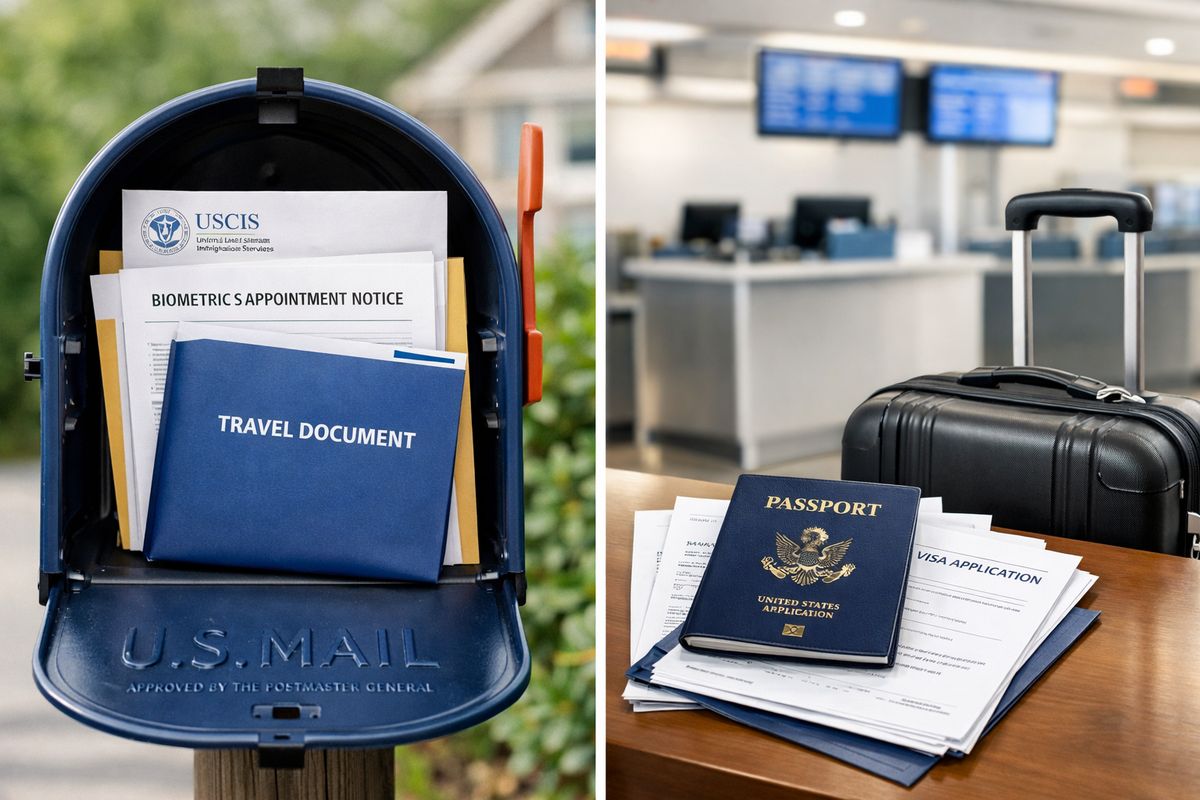
Adjustment of Status typically involves filing Form I-485 when your priority date is current and you are eligible to file inside the U.S. Many applicants also file for work authorization and travel permission. Biometrics usually follow, and sometimes an interview does too.
Travel is a common trap here. Leaving the U.S. at the wrong time can create problems if you do not have the right travel document in place. It helps to understand when travel permission is actually safe during a pending case before booking a flight.
Another common concern is staying employed and maintaining status while the case is pending. Some people can rely on pending Adjustment benefits later in the process, but that does not erase earlier status issues. Timing matters a lot.
Consular Processing if You’re Outside the U.S.
Consular processing usually moves through the National Visa Center after petition approval and visa availability. That stage often means fee payments, document collection, civil record uploads, and waiting for interview scheduling.
It can feel like months of scanning birth certificates, police clearances, translations, and financial paperwork for one appointment that suddenly carries all the weight. At the interview, your documents, your background, and the job-based petition all need to line up cleanly.
Common EB-3 Pitfalls That Cause Delays or Denials
Most EB-3 problems are not dramatic. They are usually boring, fixable-looking issues that become serious because nobody dealt with them early. That is why this process rewards careful preparation more than optimism.
Inconsistent Job History or Weak Experience Letters
Experience letters are a major weak spot. If your past employer letter is vague, missing dates, unsigned, or unclear about duties, USCIS may not count the experience the way you expected. Title changes can also create confusion if the duties do not support the title.
This is one of the easiest issues to spot early and one of the hardest to patch at the last minute. If your résumé says one thing, your LinkedIn says another, and your employer letter says something softer, credibility starts slipping fast.
Employer Compliance Problems
Employer-side mistakes can derail everything. Missed recruitment steps, poor records, layoffs that affect the labor market test, wage issues, or job descriptions that are too tailored can all cause trouble.
Sometimes the employer is the weak link, not you. That can be a hard truth, especially if you trusted the company to have done this before. A clean process depends on employer discipline from start to finish.
Status, Travel, and Interview Missteps
Final-stage problems often come from bad timing. Unauthorized work, missed biometrics, moving without updating your address, traveling without the right approval, or treating the interview casually can all create avoidable trouble.
If a problem shows up late, the stakes rise quickly. A missed deadline or poorly handled government notice may lead to extra review, denial, or the need for a much more difficult procedural fix.
Costs, Fees, and Who Usually Pays for What
Money questions come up early, and they should. EB-3 is not just a legal process. It is also a budgeting process.
Some costs, especially PERM-related recruitment and labor certification expenses, generally must be paid by the employer. Other costs may fall to you, such as medical exams, document translation, some government fees tied to the final stage, and travel for a consular interview. Legal fee arrangements can vary, but the structure needs to be clear from the start.
Employer Costs vs. Employee Costs
On the employer side, think recruitment costs, prevailing wage and PERM preparation, and often petition-stage legal work and filing costs. On your side, think civil documents, medical exam, translations, consular fees if processing abroad, and travel costs. Adjustment of Status can also involve filing fees and related expenses depending on the case setup and filing date.
The main point is simple: ask who is paying for what before the case starts, not halfway through it.
Why the Cheapest Route Can Get Expensive Fast
Trying to save money by cutting corners on documentation is a bad bargain. If weak experience letters, sloppy recruitment records, or rushed filings lead to denial, you may end up paying twice, once for the failed attempt and again for the repair.
This is where good legal guidance often pays for itself. If you are unsure what an immigration lawyer actually does in a case like this, the answer is not just filling forms. It is spotting the landmines early enough to avoid a reset.
Can Your Spouse and Children Come With You?
Yes, in many EB-3 cases your spouse and unmarried children under 21 may qualify as derivative beneficiaries. That means your family can often get green cards through your case rather than needing separate employment-based petitions.
If filing through Adjustment of Status, family members in the U.S. may often file with you when the timing allows. If processing abroad, family members usually go through related consular steps connected to your immigrant visa case. Your spouse may also be eligible for work authorization in some situations after filing in the U.S., and children can usually attend school.
What Family Timing Can Complicate
Family timing gets tricky when a child is close to turning 21, when some family members are inside the U.S. and others are abroad, or when priority dates move slowly. Coordination matters because one case can split into different procedural tracks.
If your family situation is complicated, do not treat it as a side note. It needs planning early, not after the main case is already moving.
When It Makes Sense to Talk to an Immigration Lawyer
Some EB-3 cases are straightforward on paper and still become difficult in practice. That is why legal help is often less about drama and more about process control. The point is to avoid preventable mistakes before the government sees them.
Gondim Law is one of the leading immigration law firms in Los Angeles, and scheduling a consultation can help you spot weak points in your EB-3 process before they become delays, denials, or costly restarts.
Red Flags That Mean You Should Get Help Before Filing
You should get help early if you have prior status violations, unauthorized employment, criminal history, prior visa denials, unusual job requirements, missing experience letters, employer layoffs, or records that do not match cleanly across forms and documents.
Another red flag is not knowing who is steering the case. If your employer says “HR will handle it” but nobody can explain timing, recruitment steps, or document strategy, that is not reassuring. It is a warning sign. It also helps to know how to choose useful questions for a legal consult so your first meeting is actually productive.
What to Ask in an EB-3 Consultation
Ask who handles PERM strategy, how audit risks are identified, how the case timeline is tracked, what documents tend to cause trouble, and what happens if USCIS issues an RFE or a consulate raises concerns. Ask how job requirements are reviewed before recruitment starts. Ask how family timing is handled if your spouse or children are in a different location.
Then do one simple thing before the first call: gather your job offer, résumé, education documents, prior immigration history, and any experience letters you already have. That one step makes the consultation much more useful.
Frequently Asked Questions
How long does the EB-3 process usually take?
A smooth case can still take well over a year, and many take longer. The biggest variables are prevailing wage timing, PERM processing, whether the case is audited, I-140 processing speed, and visa backlog by country and category.
Can you start working as soon as the EB-3 case is filed?
No. Filing an EB-3 case does not automatically give you work authorization. You need separate valid work authorization, a temporary work visa, or a pending Adjustment of Status stage that includes employment authorization.
Can you change employers during the EB-3 process?
Usually, changing employers during the PERM or I-140 stages means the process has to start over because the green card case is tied to the sponsoring employer and specific job offer. Portability may exist later in some Adjustment of Status situations, but timing and eligibility rules matter.
What happens if the employer withdraws sponsorship?
If the employer stops sponsoring the job before the case reaches the right stage, the EB-3 case may end. In many situations, a new employer means a new PERM and a new petition, though sometimes an approved I-140 can still preserve an earlier priority date.
Is premium processing available for the whole EB-3 process?
No. Premium processing can speed up the I-140 petition decision if available, but it does not speed up PERM labor certification and it does not eliminate visa bulletin backlogs.
Is the EB-3 process something you should try to handle without a lawyer?
Some parts of the process, especially PERM, are technical enough that mistakes can become expensive fast. If there are status issues, documentation gaps, unusual job requirements, or family timing concerns, legal guidance is usually the smarter route. For a wider reality check on when filing alone becomes risky, it helps to look at how immigration cases go off track in practice.