
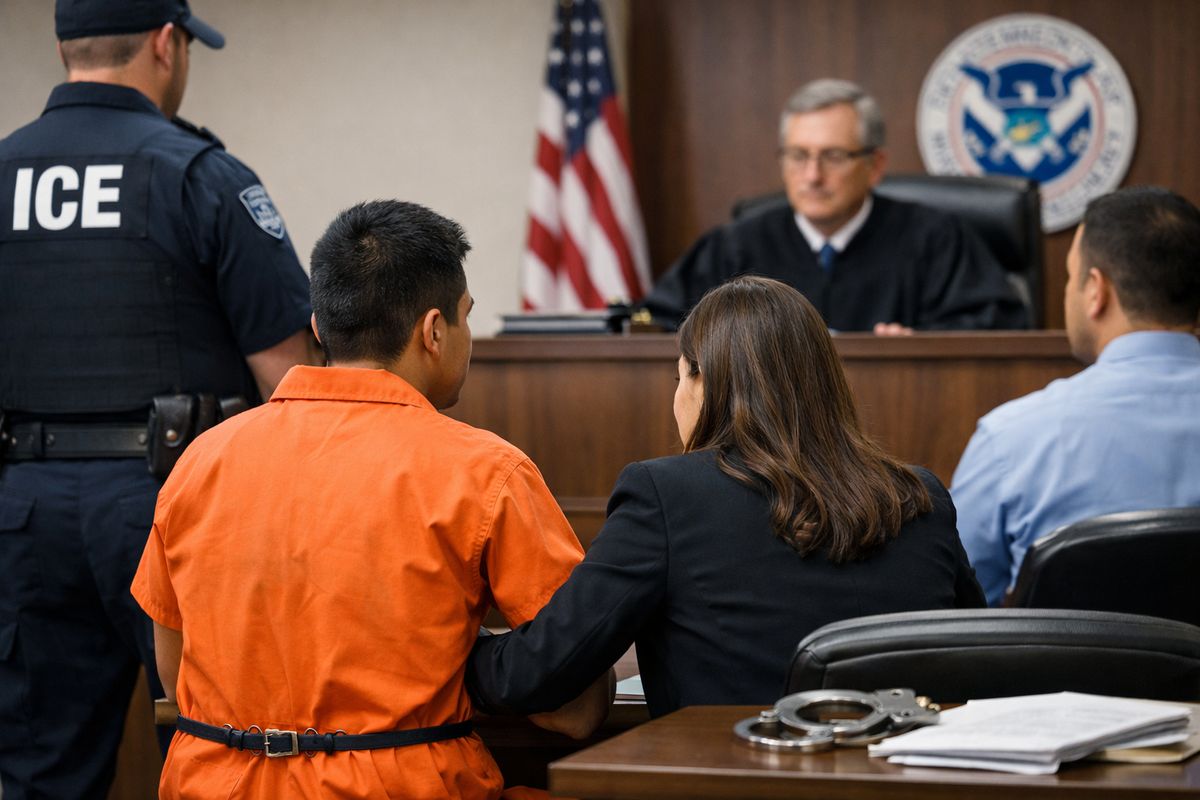
An ICE bond hearing is a court hearing where an immigration judge decides whether you can be released from immigration detention while your case keeps moving, and if so, how much bond you have to pay. If you are trying to make sense of a loved one sitting in detention, a judge on a video screen, and a pile of unfamiliar paperwork, this is one of the most important hearings in the whole case.
What an ICE Bond Hearing Is
An ICE bond hearing is not about deciding your whole immigration case. It is about custody. In plain English, the judge is deciding one narrow but huge question: do you stay detained, or can you be released while your case continues?
That distinction matters because people often hear the word “bond” and assume it works like criminal court bail. It does not. Immigration detention runs through a different system, in a different court, with different rules, and the judge is looking at a different set of concerns.
The point of the hearing is practical. If bond is granted and paid, you can usually leave detention and fight your immigration case from home instead of from inside a facility. That can change almost everything about how the case unfolds.
ICE bond hearing vs. immigration bond vs. criminal bail
These terms get mixed together constantly, so it helps to separate them right away.
An immigration bond is the amount of money set as a condition of release from immigration detention. Think of it as the price attached to getting out while your case is still pending.
A bond hearing is the court event where an immigration judge reviews custody and decides whether bond should be set, denied, lowered, or kept the same. The hearing is the process. The bond is the amount.
Criminal bail is something else entirely. That happens in criminal court after a criminal arrest, under criminal law rules. Immigration court does not decide criminal guilt or innocence, and criminal court does not decide immigration bond eligibility. A person can move through both systems at the same time, which is part of why this gets confusing fast.
Why this hearing matters so much
Bond can change the entire course of an immigration case. That is not an exaggeration.
From detention, even basic tasks become harder. Calling family can be limited. Gathering identity documents takes longer. Reaching a lawyer can feel like trying to solve a problem through a keyhole. Something as simple as getting a birth certificate, school records, or proof of address can take days or weeks longer than it should.
Once released, preparing a case usually becomes more realistic. You can meet with counsel, collect records, show up more prepared, and keep family life from collapsing completely. If children depend on you, or a parent needs care, or rent is due at the end of the month, custody is not an abstract legal issue. It is the whole landscape.
How Immigration Detention and Bond Usually Work
The process usually starts before anybody says the words “bond hearing.” A person gets taken into immigration custody, moved into detention, processed into the system, and then the custody question starts to take shape.
It helps to picture the timeline like an airport gate change that keeps getting announced over a loudspeaker, except with much higher stakes. You start in one place, paperwork shifts, locations change, and unless somebody maps it out, it can feel impossible to follow.
How someone ends up in ICE custody
“Custody” just means the government is physically holding you. In immigration cases, that usually happens in a few common ways.
Sometimes ICE arrests somebody directly at home, at work, after a check-in, or after some other contact with immigration authorities. Sometimes a local jail releases somebody after a criminal case or after criminal custody ends, and ICE picks that person up instead of letting the person go home. Sometimes a person is detained after arriving at or near the border.
The path in matters because it can affect what custody rules apply. A recent border arrival may face a very different bond analysis than somebody who has lived in the United States for years and was transferred to ICE after release from a county jail.
What happens before a bond hearing is scheduled
After detention begins, there is usually a booking and intake process. Personal information gets entered. Fingerprints and identifying details may be collected. The person is assigned or confirmed in the immigration system, often using an A-number, which is the alien registration number used to track the case.
Then comes detention placement. A person might stay in one facility or get transferred, sometimes with very little notice. This alone can delay everything, because family may be trying to locate somebody while counsel is trying to figure out which court now has control over custody.
ICE sometimes sets a bond amount on its own before any judge gets involved. In some cases, ICE will decide no bond should be offered. In others, ICE may set an amount that is technically a release option but realistically far too high to pay. If the person is eligible for a hearing before an immigration judge, the court can review custody and decide whether to change that result.
If the detention is tied to removal proceedings, other parts of the case may be moving too. That is why it helps to understand the bigger picture of defending against removal and the deadlines that come with it.
Where bond hearings happen
Bond hearings happen in immigration court, but that does not always mean everybody is in the same room. Very often, the judge sits in a courtroom and the detained person appears by video from a detention center.
A concrete example helps. You might have a judge sitting in an immigration courtroom in Los Angeles while the person in custody appears on a screen from a detention facility somewhere else in California. The lawyer may be in the courtroom, on video, or on the phone depending on the setup. Family might attend in person if the court allows it, or might not be able to attend at all.
That distance can make the process feel colder than it is. But the hearing is still real, still formal, and still one of the first big chances to push for release.
Who Can Ask for an ICE Bond Hearing
This is usually the first question people ask, and for good reason: not everybody in immigration detention gets the right to ask an immigration judge for bond.
The short version is simple. Many detained people can ask. Some cannot. And the hardest part is that eligibility often turns on technical details that are not obvious from the outside.
People generally eligible for a bond hearing
Many people placed in regular removal proceedings under immigration law can ask an immigration judge to review custody. This often includes people who are detained but are not subject to mandatory detention and are not in special border-related custody categories.
In practice, that can include somebody who has been living in the United States, gets placed in removal proceedings, and is detained by ICE. If no automatic bar applies, that person may be able to request a bond hearing and ask the judge to set a reasonable amount or order release.
A lot depends on the exact charge, the person’s entry history, and the stage of the case. A small wording difference in immigration paperwork can matter more than most people expect.
People who may be blocked from bond
Some people are detained under rules that make bond much harder or unavailable through the immigration judge. Common problem areas include certain criminal convictions, certain prior immigration violations, recent arrival classifications, and old removal-related complications.
Even here, the answer is not always obvious from one arrest report or one notice to appear. Immigration law cares about details. A dismissed criminal case is different from a conviction. A conviction can matter differently depending on the exact offense and sentence. A prior order of removal can trigger a different custody framework from a first-time case.
This is one reason legal help matters so much. Detention eligibility can get technical fast, and sorting out the right path often starts with knowing how to prepare for that first legal meeting.
The difference between being eligible and actually getting bond
Eligibility only gets you to the starting line. It does not mean the judge will release you.
A person can qualify for a bond hearing and still lose. The judge still has to decide whether release is appropriate, usually by looking at two big concerns: danger to the community and flight risk. In plain English, is this person likely to hurt somebody or break the law if released, and is this person likely to come back to court?
That is why a bond hearing is not just a box to check. It is an argument backed by documents, facts, and credibility.
Who Usually Does Not Qualify
Some custody categories come with hard limits. These are the situations that most often block a standard ICE bond hearing before an immigration judge.
It is frustrating, because from the outside detention can all look the same. But inside the legal system, custody categories matter a lot.
Mandatory detention
Mandatory detention means the judge may not have authority to release you on bond, even if your family is ready to house you, support you, and make sure you get to court.
This often comes up in cases involving certain criminal convictions or specific immigration histories. The keyword there is certain. Not every arrest triggers mandatory detention. Not every conviction does either. Immigration law often focuses on the exact statute, the sentence, and the timing.
That is why people get tripped up by assumptions. A person can say, “It was years ago,” or “It was only probation,” and still face a detention problem. On the other hand, a case that sounds bad in everyday language may not actually fit the mandatory detention rule once the records are reviewed.
Recent arrivals and border-related custody rules
Some people who recently entered the United States, or who are treated as “arriving” applicants under immigration law, may not get a standard bond hearing in immigration court.
Instead, different custody rules can apply. In some asylum-related or border-related cases, parole rather than bond becomes the key issue. Parole in this context is not criminal parole. It is a separate immigration release decision made under a different framework.
That distinction catches families off guard all the time. Somebody hears “bond hearing” from a neighbor or a friend, assumes that is the next step, and then learns the case is under a different custody rule altogether.
Prior removal orders and related barriers
Old deportation or removal orders can create another major barrier. If a prior removal order is being reinstated, or if the person is being held under a different custody category tied to prior removal, a normal bond hearing may not be available.
This is one of those areas where paperwork matters more than appearances. A person may have lived in the United States for years since the old order, built a life, raised children, worked steadily, and still run into a major custody barrier because of that earlier order.
If a prior order is part of the picture, it also helps to understand when deportation can be paused through a legal hold or what options may exist after an old removal order.
What Happens at an ICE Bond Hearing
This is the part most people want demystified. Court can feel intimidating even when you know the language and the system. In detention, with limited time and pressure everywhere, it can feel much worse.
Still, the hearing usually follows a basic structure.
How the hearing starts
The judge begins by calling the case, identifying the person in custody, and confirming that the matter before the court is a bond hearing. The judge may confirm the A-number, ask whether an attorney is present, and make sure interpretation is available if needed.
Sometimes the opening is brief and businesslike. Sometimes there is discussion about whether the court has bond authority at all. That can become the first fight in the hearing. Before anybody argues about family support or risk, the judge may need to decide whether the person is even legally eligible for bond review.
If the person does not yet have a lawyer, the hearing may still go forward. Immigration court does not provide a government-paid attorney in the way criminal court sometimes can. That alone makes preparation matter even more.
What the judge looks at
At the heart of the hearing, the judge is usually focused on two main questions.
First, are you a danger to the community? Second, are you likely to come back for future hearings and follow immigration court orders?
Those questions sound simple. The evidence behind them is not. The judge may look at criminal history, but also at what actually happened in those cases. The judge may look at prior missed hearings, but also at whether notices were sent to the wrong address. The judge may consider family support, work history, church attendance, caregiving duties, and how long you have lived in one place.
In other words, the judge is trying to decide whether release is realistic and responsible, not whether your life is perfect.
What evidence can be submitted
Documents matter because they turn vague promises into something concrete.
Letters of support can show that people know you, trust you, and are willing to help you stay on track. Proof of address can show where you will live if released. Proof of employment or past work history can help show stability and community ties.
Medical records can explain health issues that detention makes worse or show treatment history if substance use is part of the concern. Rehabilitation records can help if the judge is worried about past conduct and wants proof that things have changed. Proof of family ties, especially children, a spouse, elderly parents, or other dependents, can show both stability and responsibility.
Immigration filings matter too. If there is a pending application or form of relief, that can suggest you have a real reason to keep showing up and fighting the case. That does not guarantee release, but it can help.
What ICE argues
At the hearing, a government attorney appears for the Department of Homeland Security, often still casually referred to as “ICE” in everyday conversation. That attorney argues for the government’s custody position.
If the government opposes release, the attorney may point to criminal history, old allegations, police reports, probation violations, prior immigration violations, or missed court dates. If ICE already set a bond amount, the government may argue that the amount should stay the same or go higher.
Sometimes the government’s strongest argument is danger. Sometimes it is flight risk. Sometimes it is simply that the judge lacks authority to grant bond at all.
What the detained person or lawyer argues
The case for release is usually built around stability and trustworthiness.
The person in custody, or the lawyer, tries to show there is a safe place to live, a real sponsor or family member ready to help, and strong reasons to return for every court date. The argument may include long residence in the United States, children in school, a spouse or parent depending on support, a job history, treatment records, or evidence that old criminal issues are either minor, resolved, or misunderstood.
This part often works best when it feels grounded, not polished. A utility bill, school letter, employer note, or certificate from a treatment program can do more than broad claims ever will.
How long the hearing takes
Some bond hearings are surprisingly short. Others stretch out because documents are missing, interpretation takes time, or the judge wants more evidence before ruling.
A simple hearing with clear records and no major legal dispute may take only a brief period. A more contested hearing, especially one involving criminal history or eligibility fights, can take longer or get continued to another date.
That unpredictability is part of the stress. It is also why good preparation pays off.

How Judges Decide Whether to Grant Bond
Once you understand the hearing flow, the next question is what actually drives the decision. Judges do not just pick a number based on instinct. The ruling is supposed to track specific custody concerns.
The legal language can sound formal. The basic idea is not.
Danger to the community
Danger to the community usually means the judge is asking whether release would create a meaningful public safety risk.
Past violent conduct can matter a lot. So can repeated driving offenses tied to alcohol or drugs, domestic violence allegations, weapons issues, or a pattern of criminal behavior that suggests instability. Even without a conviction, certain allegations may still come up in the record and force an explanation.
But this part is not only about bad facts. Judges can also consider positive evidence that addresses those concerns. Completion of treatment, counseling records, anger management certificates, steady employment, community support, and a long period with no new incidents can all help.
The trick here is honesty. If the record shows a problem, pretending it does not exist usually backfires. A direct explanation plus evidence of change is often stronger.
Flight risk
Flight risk is not about airplanes or crossing a border overnight. It simply means the judge is worried you will not come back to court.
A stable place to live helps. Family nearby helps. A long residence history helps. Past compliance with immigration check-ins, criminal court dates, or other official requirements can help too. Even small details, like consistent school attendance for children or evidence that you are the daily caregiver for a parent, can make you look rooted rather than likely to disappear.
Missed hearings hurt, but context matters. If a prior hearing was missed because notice went to an old address, that is different from intentionally avoiding court. Immigration history has a long memory, though, so old problems often need real explanation.
Ties that can help your case
Judges are not just looking for paperwork. They are looking for signs that your life is anchored somewhere.
Family ties matter because they show people are invested in your appearance and support. Church or community involvement can help because it shows routine and connection. School records can matter for younger adults or parents with enrolled children. Caregiving duties can be powerful, especially if somebody in the household depends on you for day-to-day support.
Health needs can matter too. If detention interrupts necessary care, treatment, medication, or mental health support, those details may help explain why release is appropriate and manageable.
This is where the case starts to feel human. Not in a dramatic way, just in a real one.
The burden of proof
In most bond hearings, the person asking for release has to persuade the judge that bond should be granted. That means you usually have to bring enough evidence to show you are not a danger and not a flight risk, or at least that the facts support release.
That burden matters because silence does not help. If records are incomplete or confusing, the government’s version may fill the gap. If there is an old arrest but no proof of the final outcome, the judge may be left with an uglier picture than the truth.
So even though the hearing can be short, the preparation behind it cannot be casual.

How Much an ICE Bond Can Be
Getting bond granted is only half the fight. The amount matters just as much.
A bond that is technically available but impossibly high can feel like being handed a key that does not fit the lock.
The minimum bond amount
Immigration bond typically starts at a statutory minimum of $1,500 in many standard custody cases. But that is only the floor, not the usual result.
Judges and ICE officers can set a much higher amount depending on the facts. In some cases, the number may climb into several thousand dollars or far beyond that. The amount is supposed to reflect the judge’s view of risk and the level of incentive needed to make sure the person appears for future proceedings.
Why one person gets a lower bond and another gets a higher one
Bond amounts vary because cases vary. A person with no criminal record, strong family support, a stable address, and years in one community may get a lower bond than somebody with past missed hearings or a more serious record.
Criminal history can push the amount up. Prior immigration violations can push it up too. Weak documentation, unclear housing plans, or limited family support can make the judge less comfortable and lead to a higher number.
Financial reality matters in a frustrating way. Judges may know that a high bond can act like a locked door even when release is technically granted. But a high amount is still often used as a middle-ground decision, especially when the judge wants some assurance without outright denying release.
Can a bond amount be changed later?
Yes, in some situations. If circumstances change, or if stronger evidence becomes available, a request can sometimes be made to lower the bond or seek another custody review.
For example, maybe the original hearing happened before criminal disposition records were available, before family letters were gathered, or before treatment documents could be obtained. New evidence can matter. So can changed facts, such as a confirmed sponsor, a verified address, or a stronger relief application in the underlying case.
If the immigration case is also moving through applications or filings with USCIS, it helps to keep records organized and understand how requests for more proof can affect the larger case timeline.
How to Ask for a Bond Hearing
The mechanics of asking for a hearing are simple in theory and messy in practice.
Somebody has to get the request in front of the right court, at the right time, with enough information to move things forward. That sounds straightforward until a detention transfer, a missing A-number digit, or the wrong court location slows everything down.
Asking the immigration court for a hearing
A bond hearing request is often made to the immigration court that has custody jurisdiction over the detention facility. If a lawyer is involved, counsel usually handles the request. In some situations, the request may be made orally in court or through filings directed to the court.
Timing depends on where the person is detained, whether ICE already set bond, whether the court has authority, and how crowded the court calendar is. Some courts move faster than others. Some detention settings are more predictable than others. And sometimes the person gets transferred before the hearing happens, which can scramble the schedule all over again.
What documents help before the hearing
Before the hearing, it helps to gather anything that answers the judge’s two big concerns: danger and flight risk.
That can include identity documents, proof of address, sponsor information, letters from family or community members, employment history, school records, treatment records, medical records, and certified criminal disposition records if there is any criminal history. If immigration relief may be available, copies of filings or proof that a filing is being prepared can help show there is a real case to pursue.
A missing criminal disposition is one of the most common problems. If all you have is an arrest record, the judge may not know whether the case was dismissed, reduced, or resolved in a less serious way. The final court paperwork often matters more than the arrest itself.
Why legal help can make a big difference
A bond hearing looks simple from ten feet away. It is not.
The custody category may be disputed. The criminal record may be misunderstood. The person may qualify for bond, parole, or neither. A lawyer or legal service provider can help sort out eligibility, track down court records, frame the facts clearly, and avoid arguments that accidentally make things worse.
That does not mean no lawyer means no chance. People do appear without counsel. But immigration detention law gets technical fast, and having guidance can make a real difference, especially if the case also involves urgent steps after detention or a removal threat.
What Happens If Bond Is Granted
The judge says bond is granted, everybody exhales, and then comes the part many people do not expect: release is not instant.
There are still logistics, and those logistics matter.
How the bond gets paid
Immigration bond is usually paid by a person in lawful status, often a family member or other supporter, at a designated ICE office. Payment is generally not made at the detention center itself.
The person paying the bond needs identification and must follow the office’s payment rules, which can change by location. That means families often need to confirm where payment is accepted, what form of payment is allowed, and what documents are required before making the trip.
This part can be unexpectedly stressful. A bond may be set in court in the morning, but if the right office is hours away or closes early, the release process can get delayed.
What release can look like in real life
Even after payment is accepted, the person may not walk out immediately. Detention facilities still need time to process the release, confirm the payment, complete paperwork, and handle transportation or discharge procedures.
Sometimes release happens the same day. Sometimes it takes longer. Family may spend hours waiting in a parking lot, phone in hand, hoping for the call that says the doors have opened. That waiting is normal, even though it feels endless.
A granted bond is a major step, but it is not the final step.
Conditions after release
Release does not end the immigration case. It simply moves the case forward outside detention.
You still have to attend immigration court hearings, follow any reporting instructions, update your address if you move, and keep every document connected to the case. Missing a hearing after release can create a disaster very quickly. So can ignoring mail from the court or DHS.
If the broader case later involves an application for relief, petitions filed by family, or filings through USCIS, keeping track of timing matters. Delays and paperwork issues can spill into everything, which is why many people also end up dealing with problems like case slowdowns at the agency level.

What Happens If Bond Is Denied
A bond denial is a hard moment, but it is not always the end of the custody fight.
There may still be options, depending on why bond was denied and what evidence can be developed next.
Appealing the bond decision
A denied bond decision can sometimes be appealed to the Board of Immigration Appeals, often called the BIA. In plain English, that means asking a higher immigration body to review the judge’s decision.
Appeals are not do-overs in the casual sense. The reviewing body looks at the record, the arguments, and whether the judge got the law or the facts wrong. Deadlines can be short, so delay is risky.
This is one of those points where a case can shift from stressful to extremely technical. Acting quickly matters.
Asking for another bond hearing later
In some situations, another bond hearing can be requested later if circumstances change materially. That might mean stronger family support, better records, corrected criminal dispositions, new evidence of rehabilitation, or changes in the underlying immigration case.
The key is that there usually needs to be something new, not just disappointment with the first result. A second hearing works best when it answers a specific problem from the first one.
Staying in detention while the case continues
If bond is denied and no immediate release option exists, the immigration case still goes on. Hearings continue. Filing deadlines still matter. Communication with counsel and family becomes even more important.
Detention makes preparation harder, not impossible. It means the system moves with extra friction. Calls are shorter. Document collection is slower. Everything takes more effort. That is exactly why early organization matters so much.

Special Situations That Change the Bond Analysis
Some cases do not fit the usual pattern. These are the situations that create the most confusion and the most mixed information online.
Asylum seekers and bond hearings
Asylum seekers can face a more complicated custody picture, especially after a recent border arrival or when classified as arriving applicants.
In some of these cases, a standard bond hearing before an immigration judge may not be available. Instead, the release path may involve parole, which is a separate immigration custody decision. That difference is frustrating because people use the words interchangeably, but the legal route can be totally different.
If the case also connects to a family petition, marriage case, or another path to status later on, it helps to understand how detention fits within the larger process of seeking status from inside the United States.
People with criminal records
Not every criminal record blocks bond. That point is worth saying plainly.
An arrest is not the same as a charge. A charge is not the same as a conviction. A conviction is not the same as a sentence. Immigration law may care about all of those, but in different ways. A dismissed case may still show up in a database. An old arrest may sound worse than the final court result. A minor plea can still create immigration problems if the statute is a bad fit.
That is why certified records matter so much. The actual disposition can change the whole detention analysis.
Prior missed hearings or old removal orders
Past immigration trouble makes judges nervous. If you missed an old hearing or have an old removal order, the court may see that as a sign you might not return if released now.
Still, context matters. Some missed hearings happened because notices were mailed to the wrong address. Some old orders were entered after people moved and never got proper notice. Others were real failures to appear, and those are harder to explain away.
Either way, old immigration history can affect both eligibility and credibility.
Juveniles and families
Juveniles and family units often fall under different custody frameworks from standard adult detention cases. That means the usual adult bond hearing model may not apply in the same way.
If a minor is involved, or if a parent and child are being processed together, separate rules, protections, and placement issues can shape the custody decision. This is not an area for guesswork.
Common Misunderstandings About ICE Bond Hearings
A lot of confusion around bond hearings comes from people using the right words for the wrong system, or hearing one family’s experience and assuming it applies everywhere.
Here are the misunderstandings that cause the most trouble.
“If bond is set, the case is over”
No. Bond only affects custody.
If the judge sets bond and it gets paid, you can be released from detention. Your immigration case still continues. You still have to go to court, meet deadlines, and prove whatever form of relief you are seeking. Bond is about where you wait, not whether you win.
“Paying bond guarantees no more detention”
Also no.
Paying bond does not make detention impossible in the future. If you miss court, violate instructions, get arrested again, or run into a different custody issue, detention can come back into the picture. Bond is a temporary custody decision tied to compliance.
“A criminal case and an immigration bond hearing are the same thing”
They are different systems with different judges, different laws, and different consequences.
Criminal court deals with criminal charges and penalties. Immigration court deals with removability, relief, and immigration custody. A person can finish a criminal case and still be detained by ICE. A criminal judge cannot decide an immigration bond hearing, and an immigration judge cannot dismiss a criminal charge.
“No lawyer means no chance”
No lawyer does not mean no chance. People can and do appear without counsel.
But legal help can improve the odds of a better-prepared hearing, a clearer custody argument, and fewer mistakes. That is especially true when detention eligibility is disputed, the criminal record is messy, or a prior removal order is part of the picture.
For families trying to make sense of next steps, Gondim Law Corp is a Los Angeles-based immigration law firm focused exclusively on United States immigration law. Led by Marcelo Gondim, a highly recommended immigration attorney with more than 20 years of experience, the firm has helped countless clients navigate complex immigration cases with professionalism, dedication, and care. Schedule a consultation with one of the best immigration law firms in Los Angeles and learn how Gondim Law Corp can help with your case.
What to Gather This Week If a Bond Hearing May Be Coming
When everything feels scattered, the best move is not to solve the whole case in one night. The best move is to gather the documents that answer the judge’s biggest concerns.
Start there.
A simple document checklist
If a bond hearing may be coming, collect these basics as quickly as possible:
- Full name and A-number
- Detention location
- Sponsor’s full address and contact details
- Letters from family or community members
- Proof of residence or housing plan
- Proof of community ties
- Certified criminal disposition records, if any
- Proof of pending immigration applications or possible relief
- Medical or treatment records, if relevant
- Work history or employer letters, if available
Keep copies, not just originals. And keep them in one place.
The one move that saves time later
Start one folder today. Paper, digital, or both. Just one place for every court notice, detention paper, custody document, support letter, and record you can get your hands on.
That simple step saves time later because immigration cases rarely stay neat. Dates change. Facilities transfer people. Someone asks for the same document twice. When that happens, a single organized folder can feel like finding your keys before you are already late.
Try that one thing this week. If a bond hearing comes quickly, you will be glad you did.
Frequently Asked Questions
How fast can a bond hearing happen?
It varies a lot by court, detention center, transfer history, and whether the court agrees it has authority to hear the bond request. Some hearings are scheduled fairly quickly. Others take longer because of court backlog, missing records, or custody-category disputes.
Can family attend the hearing?
Sometimes, yes, but attendance rules depend on the court and whether the hearing is held in person or by video. Even if family cannot attend, support still matters through letters, proof of address, sponsor information, and other documents.
Can you get bond with no criminal record?
Yes. Having no criminal record can help, but it does not automatically mean bond will be granted. The judge still looks at flight risk, immigration history, family support, and whether you are legally eligible for a bond hearing in the first place.
Do you get bond money back?
Often, the person who paid the bond can get the money back after the immigration case ends, as long as the bond conditions were met. The process has its own paperwork and timing rules, so records about the payment should be kept carefully.
What if the bond amount is too high to pay?
A high bond can sometimes be challenged through a request to lower it, especially if stronger evidence becomes available. Legal help can make a big difference here, because release on paper is not the same as actual release if the amount is out of reach.
Does winning bond help you win the immigration case?
No. Bond only decides release from detention while the case continues. It can make it much easier to prepare your case, gather proof, and stay connected with counsel, but it does not decide the final immigration outcome.