

Yes, you can apply for relief while detained, and that matters more than most people realize. If ICE custody has turned everything upside down, the key thing to know is simple: detention does not automatically end your immigration case, and it does not automatically erase your options. Here’s what “relief” means, what kinds of cases can still move forward from detention, and what usually makes the process harder.
What it means to seek immigration relief while in detention
To apply for relief while detained means asking for a legal way to stay in the United States, avoid removal, or sometimes get released while your case continues. “Immigration relief” is a broad phrase, but in plain English it means some kind of protection, status, defense, or legal exception that could change the outcome of your case.
That could mean applying for asylum because returning home would be dangerous. It could mean asking a judge for cancellation of removal because of your long ties to the United States. It could mean pursuing a green card through family or another path if you qualify. In some situations, it could also mean asking for voluntary departure instead of a removal order.
Here’s the part that trips people up: detention is about custody, not the final answer in your case. Being detained is serious, of course. But it is not the same thing as being ordered removed. A locked door and a pending case are two different problems, even though they often show up at the same time.
How detention changes the process
You can file from detention, but the process gets harder fast. Phone access may be limited. Getting records from family, doctors, employers, or old court files can take longer than the court gives you. Hearings can come quickly, especially in detained dockets, and missing even one deadline can cause real damage.
Think of it like trying to move apartments while your phone battery is at 8 percent. The tasks are still possible, but every small delay hurts more.
Detention also changes how you prepare. Instead of organizing paperwork at your kitchen table, you may be working through legal mail, short phone calls, detention staff procedures, and strict visitation rules. That is why timing matters so much once ICE custody begins. If you need a fuller overview of which filings can still move forward from inside detention, that bigger picture helps before getting into case strategy.
Detention does not decide your case by itself
A common misunderstanding is that detention means the government has already decided everything. Not true. Custody answers one question: are you being held while the case moves forward? Relief answers a different question: do you qualify under immigration law for protection, status, or another legal outcome?
Those questions overlap, but they are not the same. You can be detained and still qualify for relief. You can also be released and still lose the case if the legal requirements are not met. That distinction matters because it changes what you focus on next.
The court, ICE, and USCIS may all play different roles
Immigration court usually handles removal proceedings and many forms of relief raised as a defense to removal. ICE controls detention, decides some release requests, and prosecutes the case through government attorneys. USCIS, the immigration agency that handles many applications outside court, may still play a role in certain petitions or applications connected to your case.
That split can feel confusing because you are dealing with one immigration problem but multiple agencies. The catch is that sending the right form to the wrong place can waste precious days, and detained cases often do not give you extra time to fix mistakes.

The main types of immigration relief you may be able to apply for
The right option depends on your history, your current case type, your family ties, any criminal record, and what happened before detention. Still, a few forms of relief come up again and again in detained cases.
Asylum, withholding of removal, and protection under CAT
Asylum is for people who cannot safely return to the home country because of persecution or a well-founded fear of persecution tied to a protected ground such as political opinion, religion, nationality, race, or membership in a particular social group. Withholding of removal is similar, but harder to win and narrower in what it provides.
Protection under CAT means protection under the Convention Against Torture. In plain terms, it applies when returning to the home country would likely lead to torture. It does not give the same benefits as asylum, but it can still stop removal to that country.
These claims often move through fear screenings, court filings, declarations, country condition evidence, and testimony. In detention, all of that has to come together under pressure.
Cancellation of removal
Cancellation of removal is a request for the immigration judge to stop removal because you meet strict legal rules. There are two main versions.
For lawful permanent residents, the issue is usually whether you have had green card status long enough, lived in the United States long enough after admission, and avoided disqualifying criminal convictions.
For non-permanent residents, the standard is different and often tougher in practice. You generally need many years of physical presence, good moral character, and proof that removal would cause exceptional and extremely unusual hardship to a qualifying relative such as a U.S. citizen or lawful permanent resident spouse, parent, or child. That is a very high bar.
Adjustment of status
Adjustment of status is the process of becoming a lawful permanent resident, usually without leaving the United States, if a visa path is available and the law allows it. In detention, this can arise through a family-based petition, employment-based path, or another eligibility route.
But here’s where it gets tricky. Not every approved petition leads to adjustment in court. Some people face bars because of prior entries, removal orders, unlawful presence, criminal issues, or how the case is currently set up procedurally. Even so, detention does not automatically block adjustment. It just makes the route narrower and more technical.
Relief for victims of crime, abuse, or trafficking
Harm you suffered can sometimes open a legal path. VAWA protections may help certain abused spouses, children, or parents connected to U.S. citizens or lawful permanent residents. U visas may help victims of certain crimes who have been helpful to law enforcement. T visas may apply to survivors of trafficking.
These cases can still matter during detention or while removal proceedings are pending. Sometimes the immediate goal is not instant approval, but creating a legal basis to pause, reopen, or defend against removal while the underlying application moves.
Voluntary departure and other case-specific options
Voluntary departure means leaving the United States by agreement within a set period instead of receiving a removal order. That is not the right answer for everyone, but in some cases it avoids harsher consequences tied to a removal order and preserves better options later.
Other case-specific tools may include waivers, motions to reopen, motions to terminate, motions to suppress, or requests tied to old orders and procedural defects. These options are real, but they are highly dependent on the facts. One detail in your file can change everything.
Can you also ask to be released while your relief case is pending?
Yes, in some cases. But asking for relief and asking for release are related, not identical. One deals with whether you can ultimately stay. The other deals with whether you can wait for that decision outside detention.
A lot of panic starts when these two ideas get blurred together. If you are focused on getting legal help fast after ICE detention starts, that usually means looking at both tracks at once: custody and case strategy.
Immigration bond
An immigration bond is money paid as a guarantee that you will show up for future immigration hearings and follow the court process. It is a bit like a security deposit for release. If you appear as required and the case ends properly, the bond can eventually be returned to the person who posted it.
Not everybody qualifies. Some people are barred from bond because of mandatory detention rules, certain criminal issues, or the type of case involved. In bond cases, the judge or ICE may look at flight risk, danger concerns, family ties, community support, and where you will live if released.
Parole and release in special situations
Parole is another possible release route, though the word means something specific in immigration law. In some expedited removal cases, especially after a positive credible fear finding, ICE may consider parole if you show identity, a sponsor or place to stay, and that you are not a danger or flight risk.
Other release routes can exist depending on the posture of the case, medical issues, or policy changes. The legal labels matter less than the practical point: release may still be possible even if bond is not.
What happens after release
Release does not end the case. You still have to attend hearings, update your address, meet filing deadlines, and comply with any reporting conditions. Some people feel a huge wave of relief after getting out, then miss a hearing notice a month later. That mistake can undo a lot.
The smartest way to think about release is this: getting out gives you room to fight the case more effectively, but it does not finish the fight.
What the application process usually looks like from detention
The process feels less overwhelming once you break it into pieces. Most detained cases follow a sequence, even if the details vary.
Figure out what kind of case you are in
Start with the type of proceeding. Regular removal proceedings usually mean you will appear before an immigration judge in immigration court. Expedited removal works differently and often begins with fear screening issues if you are expressing fear of return. Cases involving prior removal orders can trigger reinstatement or other special procedures that sharply limit some forms of relief.
This matters because the available relief, the deadlines, and the agency involved can change a lot based on case type. Before anything else, you need to know the procedural lane your case is in.
Gather records, evidence, and sponsor information
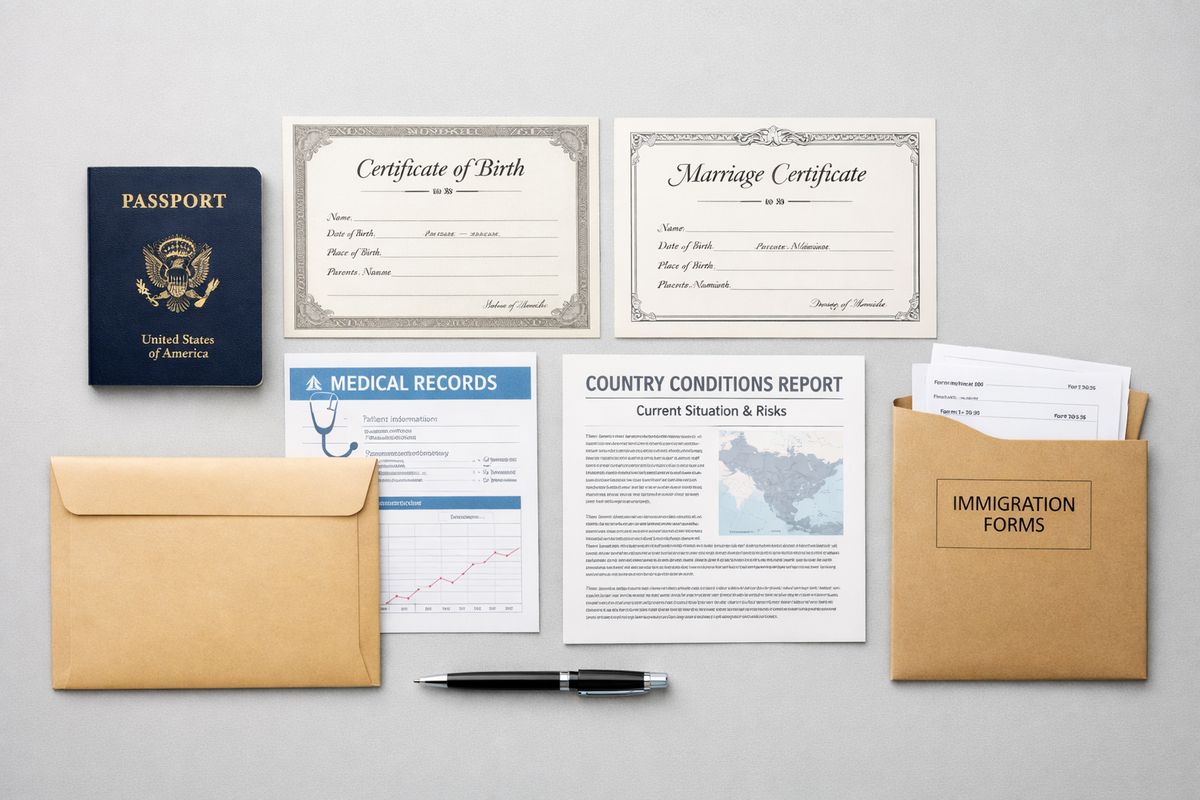
Once you know the lane, the next job is proof. That often includes identity documents, passports, birth certificates, marriage records, proof of how long you have lived here, criminal court records, medical records, proof of family hardship, and country condition evidence for fear-based claims.
If release is part of the plan, sponsor information matters too. A sponsor may need to show identification, address, immigration status or lawful presence if relevant, and ability to support you with housing or transportation. Sometimes a simple packet sent to a detention center mailroom in Lumpkin, Georgia can make the difference between a vague claim and a documented one.
File the right forms in the right place
Some forms go to the immigration court. Some go to ICE. Some go to USCIS. That sounds obvious until you are under deadline and trying to sort out overlapping procedures from detention.
Filing in the wrong place can cost you real time. In some situations, the judge can only consider relief after an underlying petition is approved elsewhere. In others, the judge expects direct filing with the court. This is one reason many families start by reviewing what to ask when detention case strategy needs immediate legal review.
Attend hearings and meet deadlines
In immigration court, an early hearing is often called a master calendar hearing. That is usually where pleadings, scheduling, and basic requests get discussed. A later individual hearing is more like a trial, where testimony and evidence are presented in detail.
Detained cases can move quickly. Missing a deadline from inside detention can hurt just as much as missing one outside, and sometimes more because the court may assume you had your chance already. The process is still legal process, even when it feels rushed.

What can make relief harder while You’re detained
Detention does not make relief impossible, but it adds friction everywhere. Small problems become big ones because you have less control over communication, timing, and access.
Fast-moving deadlines and limited access to evidence
Detained dockets often move faster than non-detained dockets. That means less time to request records, contact witnesses, translate documents, or gather declarations from family members. Trying to build a case under those conditions can feel like trying to fix a flat tire in the rain.
And evidence matters. A strong claim with weak proof can still fail. That is why families often need to move quickly on documents, especially for hardship, identity, prior filings, and criminal dispositions.
Prior removal orders, criminal history, or mandatory detention
Some legal issues make cases harder right away. A prior removal order can limit what relief is available. Criminal history can affect both release and eligibility for relief. Mandatory detention can block bond even when you have strong family support and a place to live.
Still, these facts do not always end your options. They change the strategy. Sometimes the focus shifts from bond to parole. Sometimes it shifts from one form of relief to another. Sometimes the first goal is reopening an old order before anything else can happen.
Language barriers and detention center logistics
If English is not your first language, detention can magnify every misunderstanding. Interpretation problems, delayed legal mail, short call windows, and trouble reaching witnesses all make the process harder.
Even basic logistics can get in the way. A missed legal mail delivery, a delayed signature, or a sponsor who cannot answer the phone during business hours can slow down a case. That daily friction is exactly why a broader update on detention filings and related immigration changes can be helpful when you are trying to see the full picture.
Common misunderstandings about applying for relief while detained
Panic creates bad assumptions. A few show up over and over.
“If you’re detained, it’s too late”
No. Detention does not automatically erase valid relief options. You can absolutely still have asylum, cancellation, adjustment, victim-based relief, waiver arguments, or motions worth pursuing.
The real problem is not that it is too late. The real problem is that time usually gets tighter, and mistakes get more expensive.
“Getting a bond means you win your case”
A bond win only means release from custody, not victory in the immigration case. You can get out and still lose later if the relief case is weak or deadlines are missed.
Bond helps because it gives you better access to documents, family, work history, and counsel. But it is not lawful status by itself.
“Only asylum can be filed from detention”
Asylum is one major option, but far from the only one. Depending on your history, you may also be looking at cancellation, adjustment, victim-based protections, waivers, reopening old orders, or voluntary departure.
That is why a detention case should never be reduced to a single buzzword. The facts decide the path.
When to talk to an immigration attorney
Legal support becomes especially important when hearings are coming fast, you fear return to your home country, you have criminal history, there is a prior removal order, bond was denied, or a family-based option needs precise filings. Detained cases leave less room for trial and error.
For direct legal guidance, schedule your call here to learn more about your immigration status and visa options: https://gondimlaw.com/schedule-your-consultation/. At Gondim Law, attorneys speak English, Portuguese, and Spanish and bring more than 30 years of experience to help you navigate your next steps. You’ll also have the opportunity to speak with Founder Attorney Marcelo Gondim about your case. You’ll get help understanding your options and identifying the visa or relief path that best fits your situation.
What to bring or ask about in that first conversation
Bring your A-number, detention location, next court date, charging documents, prior immigration history, criminal case records, and any facts related to fear of return, abuse, crime victimization, or family ties in the United States. If release is part of the plan, have possible sponsor information ready too.
One simple thing to do right away: get your A-number and next hearing date in front of you before making the call. That one step can save precious time and make the first conversation far more useful.
Frequently asked questions
Can you apply for asylum while in immigration detention?
Yes. If you fear persecution or torture in your home country, you may still seek asylum, withholding of removal, or CAT protection while detained. The process may involve a fear interview, immigration court filings, testimony, and supporting evidence.
Can you get a bond and still apply for relief?
Yes. Bond and relief are separate issues. Bond is about release from custody while the case continues. Relief is about whether you can stay in the United States or avoid removal in the long run.
What if you already have a prior removal order?
A prior order can change the process a lot, but it does not always end your options. Some cases involve reopening, reconsideration, or special procedures tied to reinstatement. The exact path depends on the type of prior order and what happened afterward.
Do you need documents from family members outside detention?
Usually, yes. Many detained cases depend on outside records such as birth certificates, marriage certificates, medical records, proof of residence, criminal court papers, hardship evidence, or sponsor documents. Getting those records quickly can make a major difference.
Can USCIS still be involved if you are detained?
Yes. Even during detention, some underlying petitions or applications may still involve USCIS, while immigration court handles the removal case and ICE handles custody issues. That split is one reason detained cases can feel confusing.
What if you miss a hearing or filing deadline while detained?
Missing a hearing or deadline can seriously harm your case, even in detention. The court may move forward without giving much extra time. That is why tracking dates, confirming where documents must be filed, and getting legal help quickly matters so much.
What changes once you understand this
Once you understand the difference between detention, release, and relief, the case stops looking like one giant emergency and starts looking like a set of legal questions that need answers in the right order. That shift matters. It helps you focus on the things that actually move a case: identifying the type of proceeding, protecting deadlines, gathering proof, and matching the facts to the right form of relief.
If you remember one thing, make it this: detention does not automatically mean your options are gone. Get your A-number, your next hearing date, and your key documents together, then act quickly.